Artwork
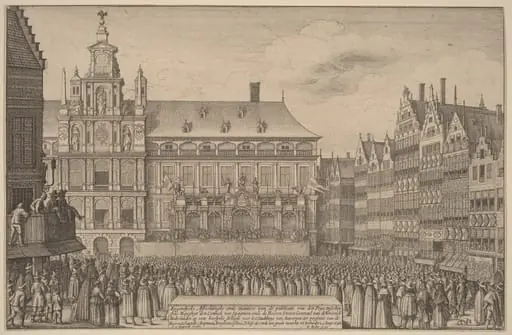
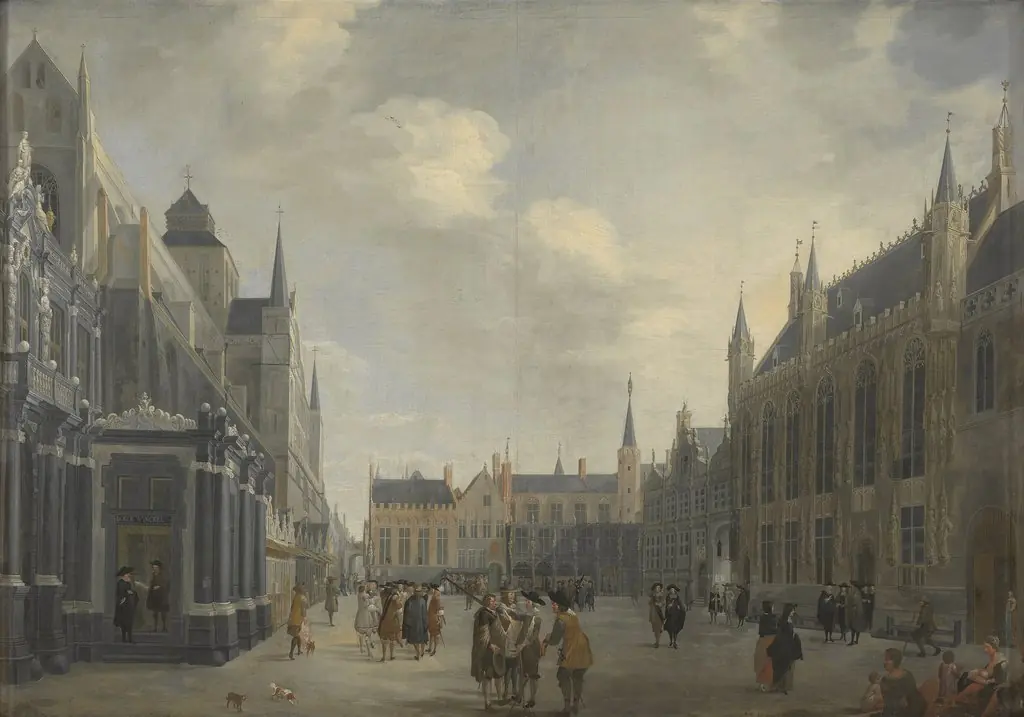
The Proclamation of the Peace of Münster at the Grote Markt in Antwerp
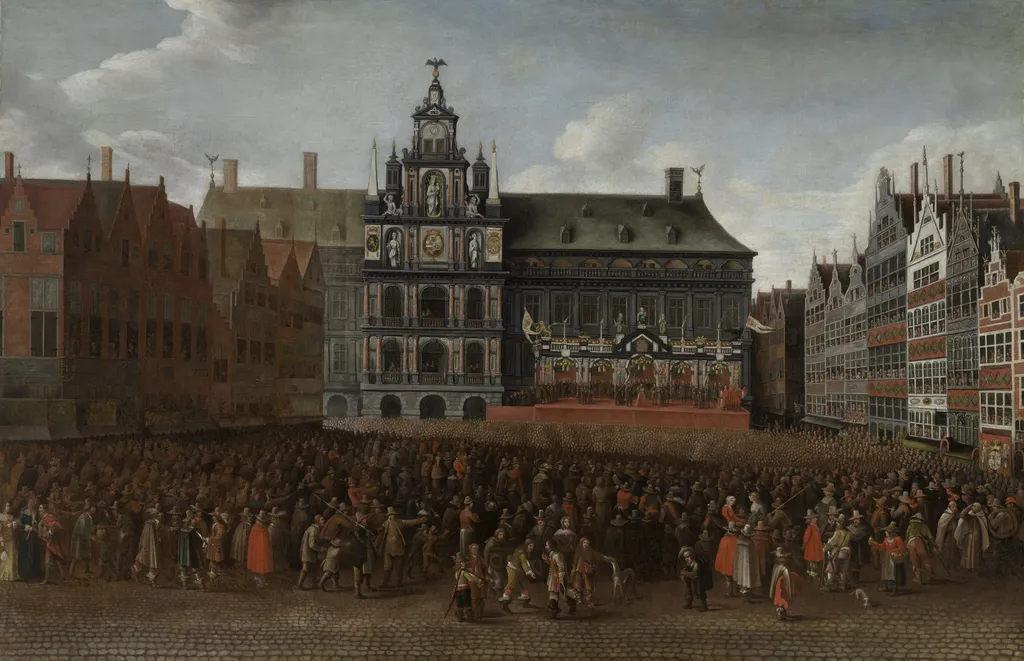
The Proclamation of the Peace of Münster at the Grote Markt in Antwerp is an oil painting by the Flemish Baroque painting artist Maximiliaen Pauwels. It dates from 1649 and is held in the collection of the Royal Museum of Fine Arts Antwerp.
About this work
Overview
Created in 1649 by the Flemish painter Maximiliaen Pauwels, this oil on canvas records a public ceremony in Antwerp’s central square. The work captures a moment when citizens gathered to hear the proclamation of the Peace of Münster, a treaty that concluded the Eighty‑Years’ War. Today the painting is part of the collection of the Royal Museum of Fine Arts in Antwerp.
Subject & Meaning
Figures in formal robes stand on a raised, red‑tiled stage, flanked by banners, while the surrounding crowd—families, merchants, soldiers—looks on attentively.
The composition centers on the bustling Grote Markt, where a temporary platform has been erected before a prominent civic building. Figures in formal robes stand on a raised, red‑tiled stage, flanked by banners, while the surrounding crowd—families, merchants, soldiers—looks on attentively. The scene conveys the communal significance of the peace announcement, emphasizing civic pride and collective relief after decades of conflict.
Technique & Style
Pauwels employs a restrained chiaroscuro, using soft shadows to model the figures and suggest depth within the crowded square. The light falls gently on the platform and the faces of the onlookers, while darker tones recede into the background, creating a realistic atmospheric perspective. Fine details, such as the rooster‑shaped weather vane atop the clock tower, demonstrate the artist’s careful observation.
History & Provenance
The painting was likely commissioned shortly after the treaty’s signing to commemorate the public celebration in Antwerp. It entered the Royal Museum of Fine Arts Antwerp’s holdings in the early twentieth century, where it has been displayed as part of the museum’s Flemish Baroque collection, illustrating civic art of the mid‑seventeenth century.
Context
The Peace of Münster, concluded in 1648, ended the protracted war between the Dutch Republic and Spain, reshaping the political map of the Low Countries. Antwerp, a major commercial hub, marked the occasion with a public proclamation in its main market square. Pauwels’ work reflects contemporary practices of documenting civic ceremonies, providing visual evidence of the city’s social hierarchy and public life during the period.
Own this work as a print
Artist & collection
Artist
This Flemish painter captured a turning point in history with *The Proclamation of the Peace of Münster at the Grote Markt in Antwerp*.

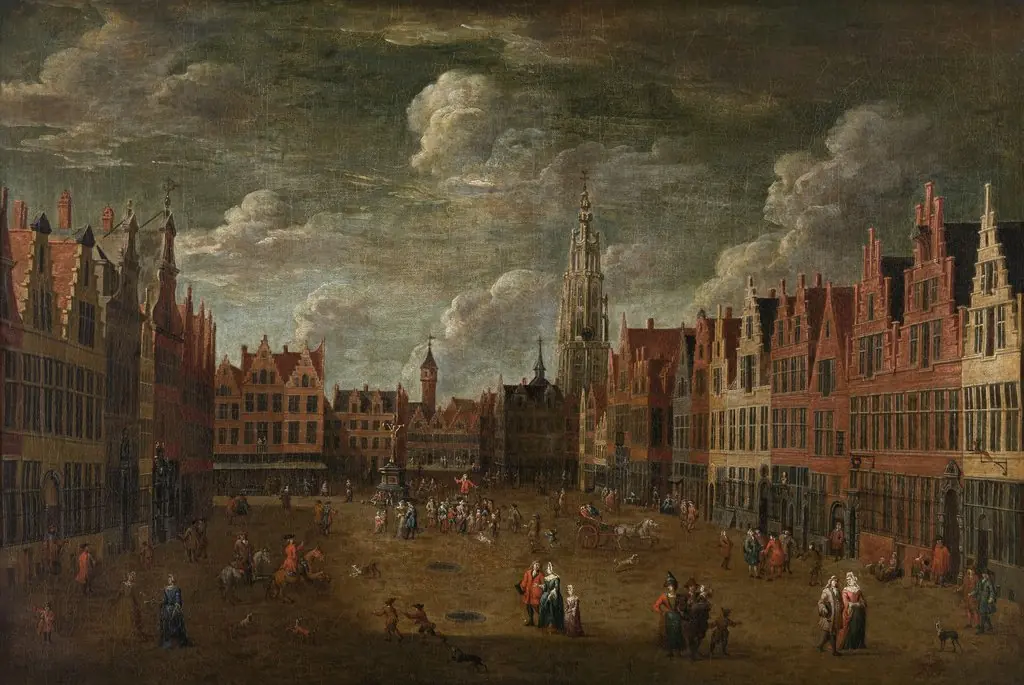 A View of the Meir
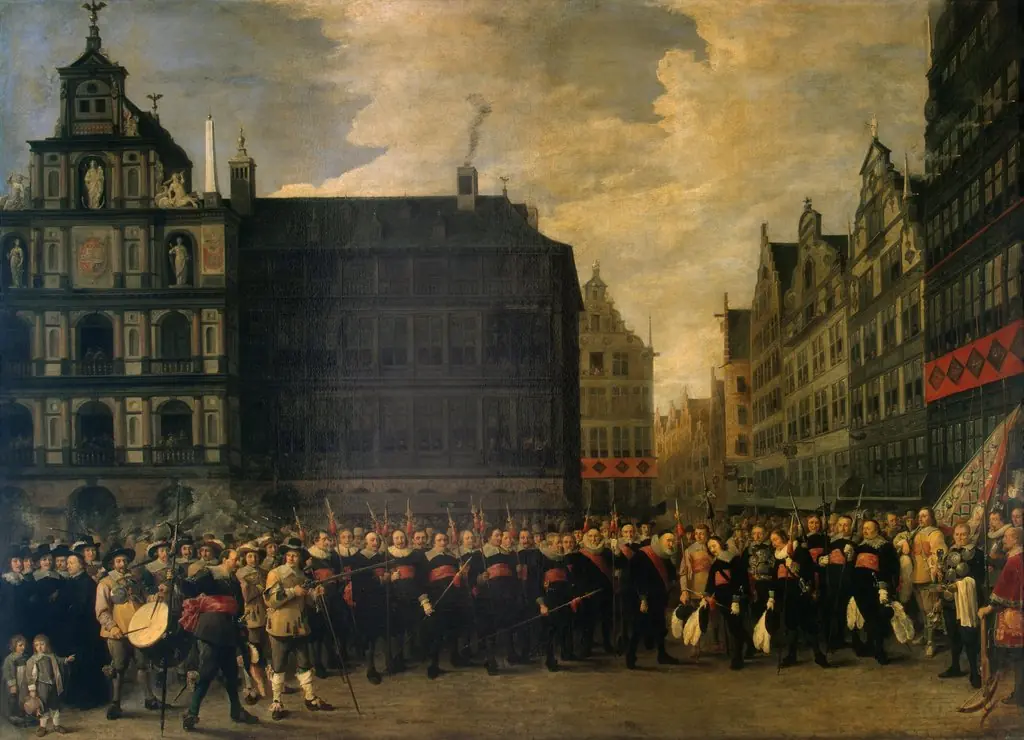 Portrait of the Members of the Guild ''Oude Voetboog'' ("Old Arbalest") in Antwerp
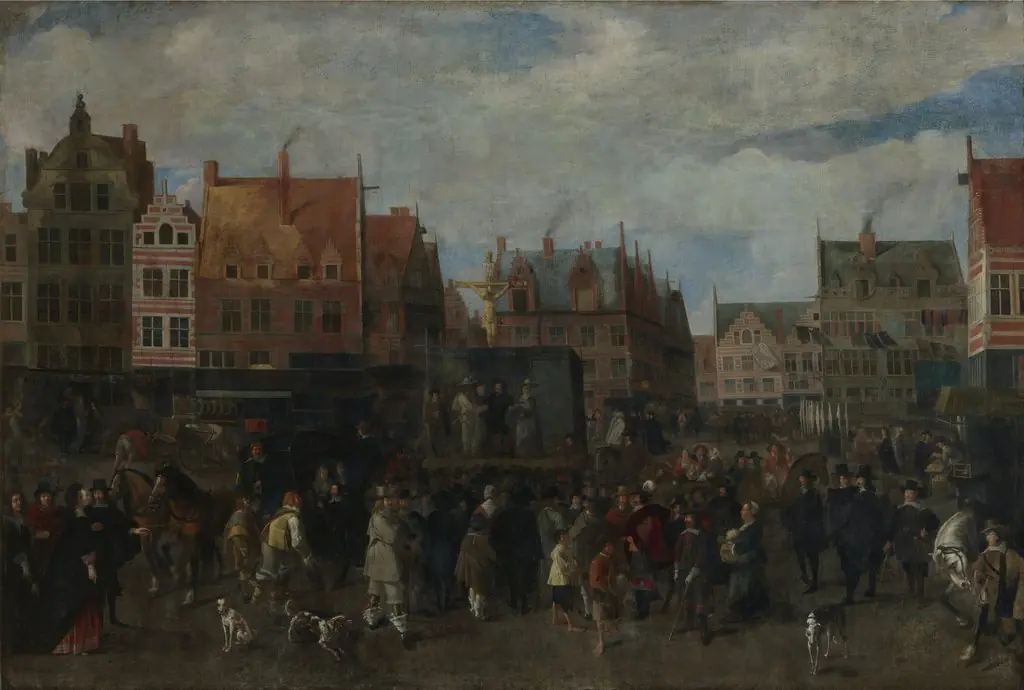 Fair on the Antwerp Meir
 The Dam in Amsterdam
 Joyous Entry of François, Duke of Anjou into Antwerp, 19 February 1582, with a Triumphal Arch on St. Jan's Bridge
 View of Dam Square, with the Old Weigh House
 View of the Dam in Amsterdam
 The Burg in Bruges