Artwork
Shepherds
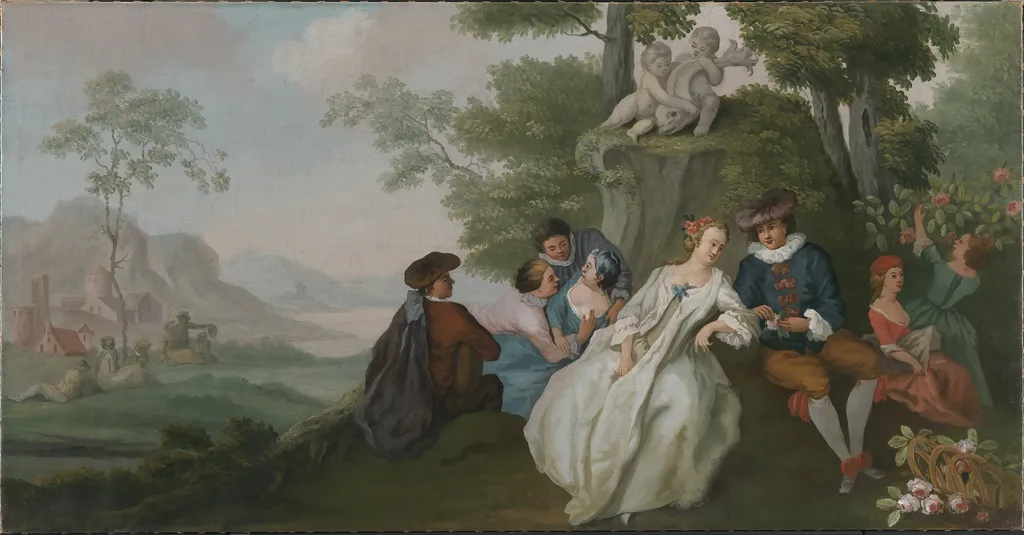
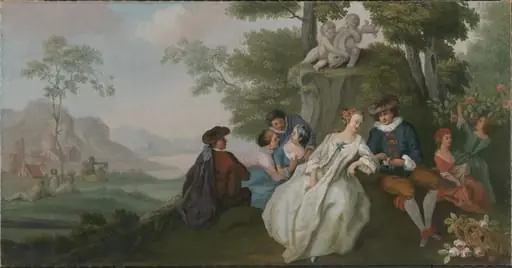
Shepherds is an oil painting by the Rococo painting artist Unknown. It dates from 1750 and is held in the collection of the Statens Museum for Kunst.
About this work
Overview
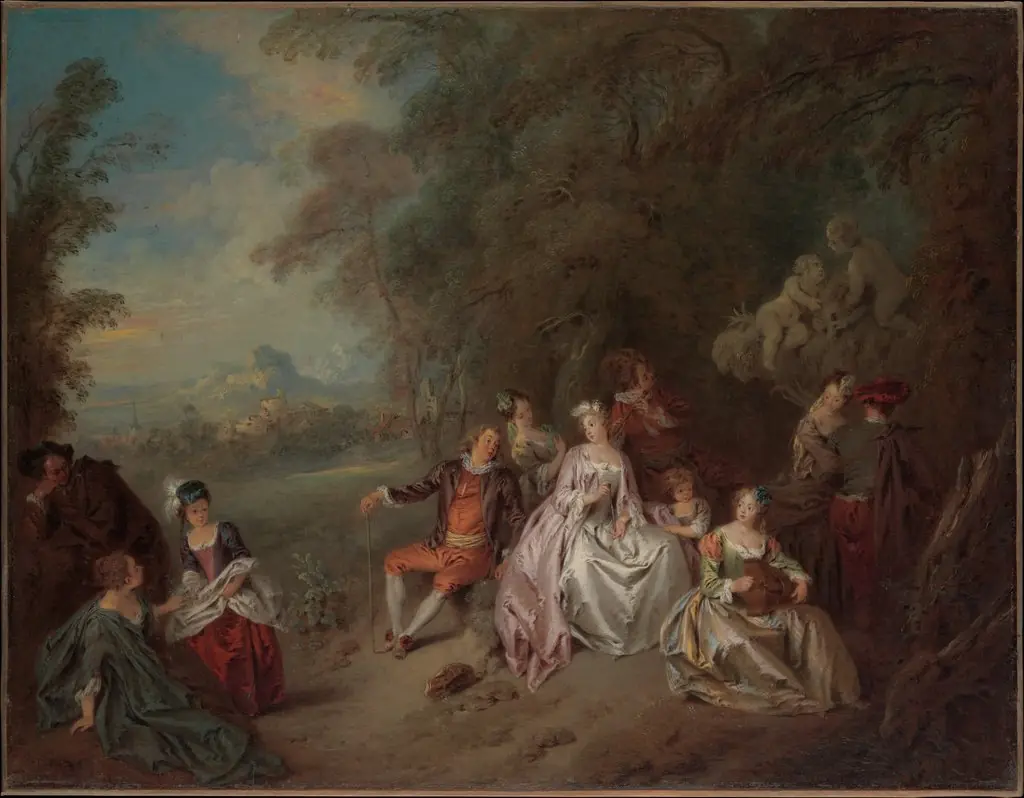
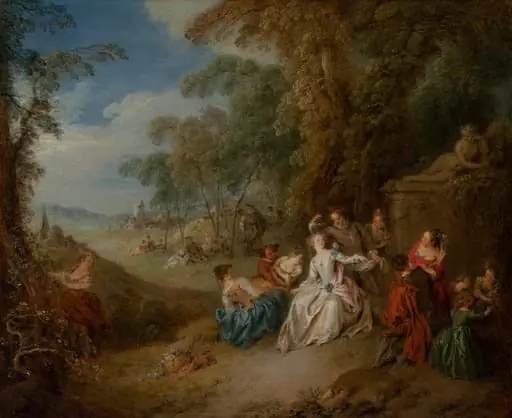
Distant hills, scattered trees, and modest buildings frame the scene, while a cherubic figure perched on a tree stump adds a decorative accent.
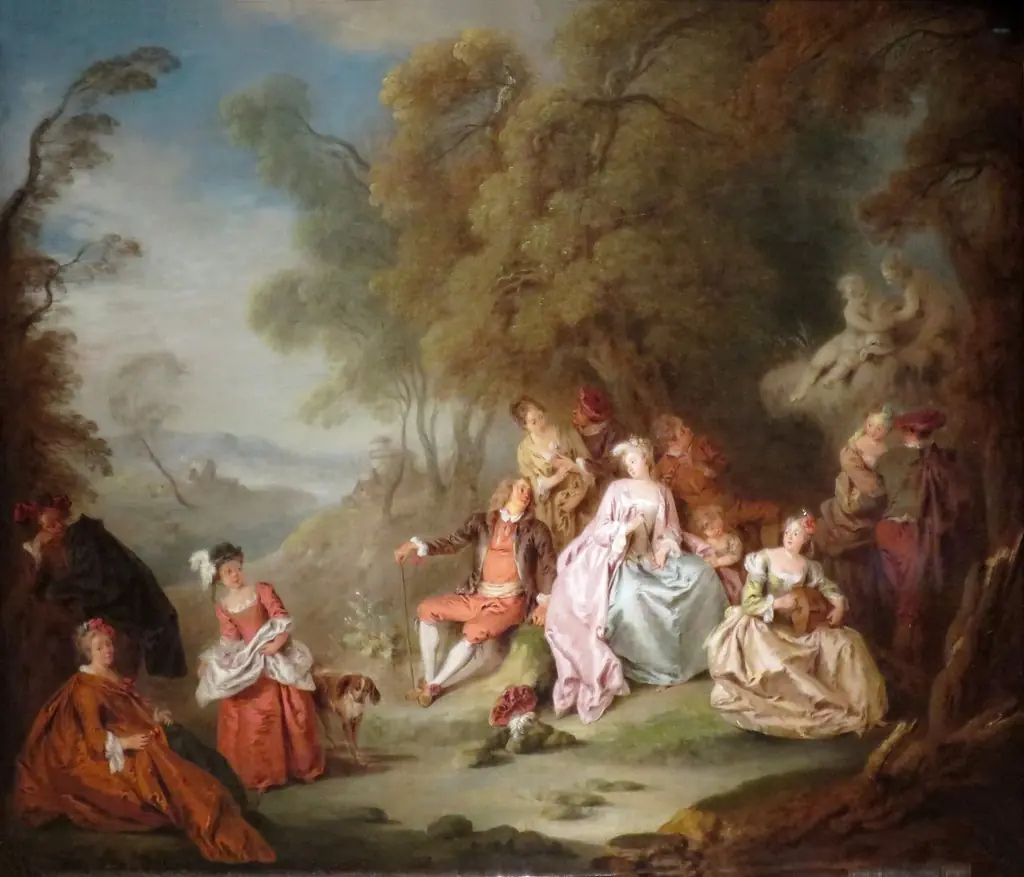
The work is an oil painting titled *Shepherds*. It presents a peaceful rural tableau where a small group of figures gathers in a verdant landscape. Central to the composition is a woman in a white dress, surrounded by other individuals who sit or stand nearby. Distant hills, scattered trees, and modest buildings frame the scene, while a cherubic figure perched on a tree stump adds a decorative accent.
Subject & Meaning
The composition depicts an idyllic shepherding setting, suggesting themes of pastoral simplicity and communal harmony. The white‑dressed woman may symbolize purity or a focal point of gathering, while the cherub, a classical motif, introduces a subtle reference to divine protection or innocence within the countryside. Together, the figures and landscape convey a tranquil, almost timeless vision of rural life.
Technique & Style
Executed in oil on canvas, the painting employs a muted yet lush palette of greens and earth tones to render the foliage and rolling terrain. Soft modeling of forms and gentle chiaroscuro create a sense of depth, while the delicate rendering of the cherub on the stump demonstrates a careful attention to ornamental detail. The overall style leans toward a romanticized naturalism typical of pastoral genre works.
History & Provenance
Specific details regarding the artist, date of creation, and ownership trail are not provided in the source material. Consequently, the painting’s exhibition history, acquisition by collections, or any documented restorations remain unknown at this time.
Context
Pastoral scenes featuring shepherds have a long tradition in Western art, often serving as allegories for virtue, simplicity, or the idealization of rural existence. The inclusion of a cherubic figure aligns the work with classical iconography, linking the natural world to celestial or moral symbolism. Such compositions were popular in the 18th and 19th centuries, reflecting contemporary romantic interest in nature and the countryside.
Legacy
Without recorded provenance or critical commentary, the painting’s influence on later artists or its role within a specific artistic movement cannot be precisely assessed. Nonetheless, its adherence to established pastoral conventions situates it within the broader continuum of genre painting that celebrates bucolic tranquility.
Artist & collection

 Domestic Scene
 Giacomo and Cardinal Marco, investing Andrea, Abbot of San Zeno, with his Benefice
 The Nymph of Fontainebleau
 Portrait of a Woman
 Madonna and Child with Saints in the Enclosed Garden
 Venus and Minerva
 Family Group of Four on Sofa
 Wall painting from Room H of the Villa of P. Fannius Synistor at Boscoreale