Artwork
Fêtes Vénitiennes
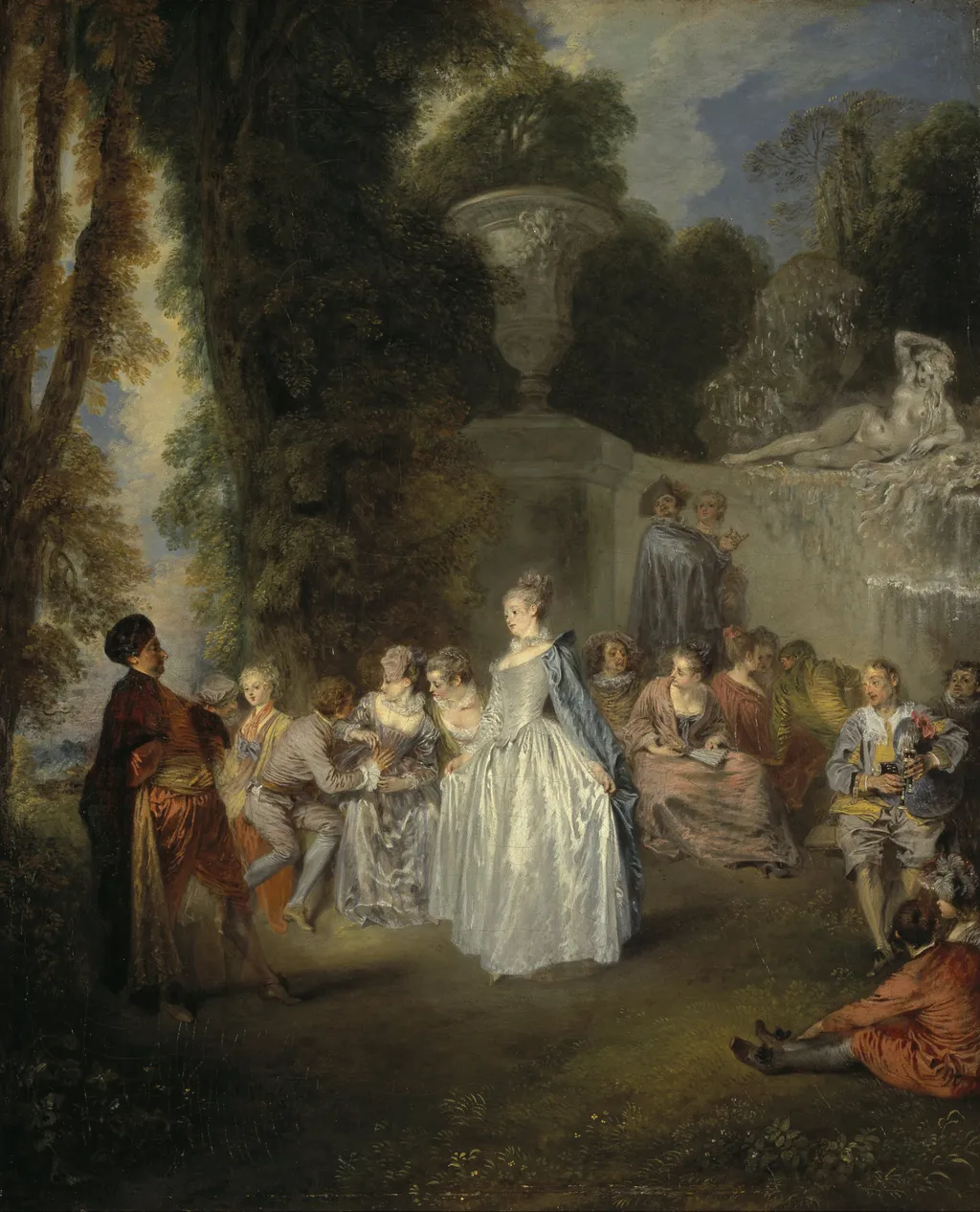
Fêtes Vénitiennes is an oil painting by the Rococo painting artist Jean Antoine Watteau. It dates from 1718 and is held in the collection of the National Galleries Scotland.
About this work
Overview
Antoine Watteau’s oil painting Fêtes Vénitiennes, executed in 1719, is held by the Scottish National Gallery in Edinburgh. The work entered the collection through the 1861 bequest of Lady Murray of Henderland, the widow of John Murray, Lord Murray. Its title, applied after a 1732 engraving by Laurent Cars, references the Venetian costumes and dance motifs that dominate the scene.
Subject & Meaning
The composition depicts a small gathering of elegantly dressed figures in a shaded garden, centered on a couple performing a minuet.
The composition depicts a small gathering of elegantly dressed figures in a shaded garden, centered on a couple performing a minuet. The female dancer, traditionally identified as the Comédie‑Française actress Charlotte Desmares, and the male partner, sometimes linked to the painter Nicolas Vleughels, are surrounded by onlookers: a courting pair, two women conversing with an actor, and a presumed self‑portrait of Watteau playing bagpipes, an instrument that historically carried erotic connotations.
Technique & Style
Rendered in Watteau’s characteristic fêtes galantes manner, the painting balances delicate brushwork with a muted palette, allowing the white dress of the central woman to stand out against the darker garments of the surrounding figures. The soft modeling of foliage and the partially ruined statue in the background contribute to a sense of fleeting leisure and atmospheric intimacy.
History & Provenance
After its creation, the canvas remained in private hands until Lady Murray of Henderland bequeathed it to the Scottish National Gallery in 1861. The work’s title derives from Laurent Cars’s 1732 engraving, which popularized the association with Venetian costume and dance.
Context
Fêtes Vénitiennes belongs to the fêtes galantes genre that Watteau pioneered, portraying aristocratic amusement in idyllic park settings. The inclusion of theatrical elements such as commedia dell’arte‑inspired attire reflects the early 18th‑century fascination with performance and the blending of visual and stage arts.
Own this work as a print
Artist & collection
Artist
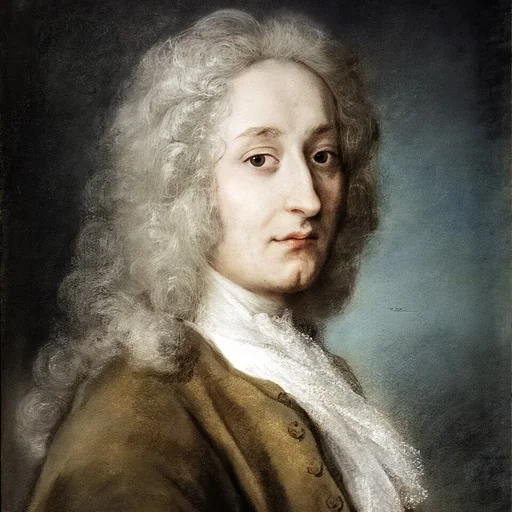
Jean-Antoine Watteau was a French painter and draughtsman whose brief career spurred the revival of interest in colour and movement, as seen in the tradition of Correggio and Rubens.