Artwork
Sundareshvara as a siddha feeding sugarcane to the elephant.
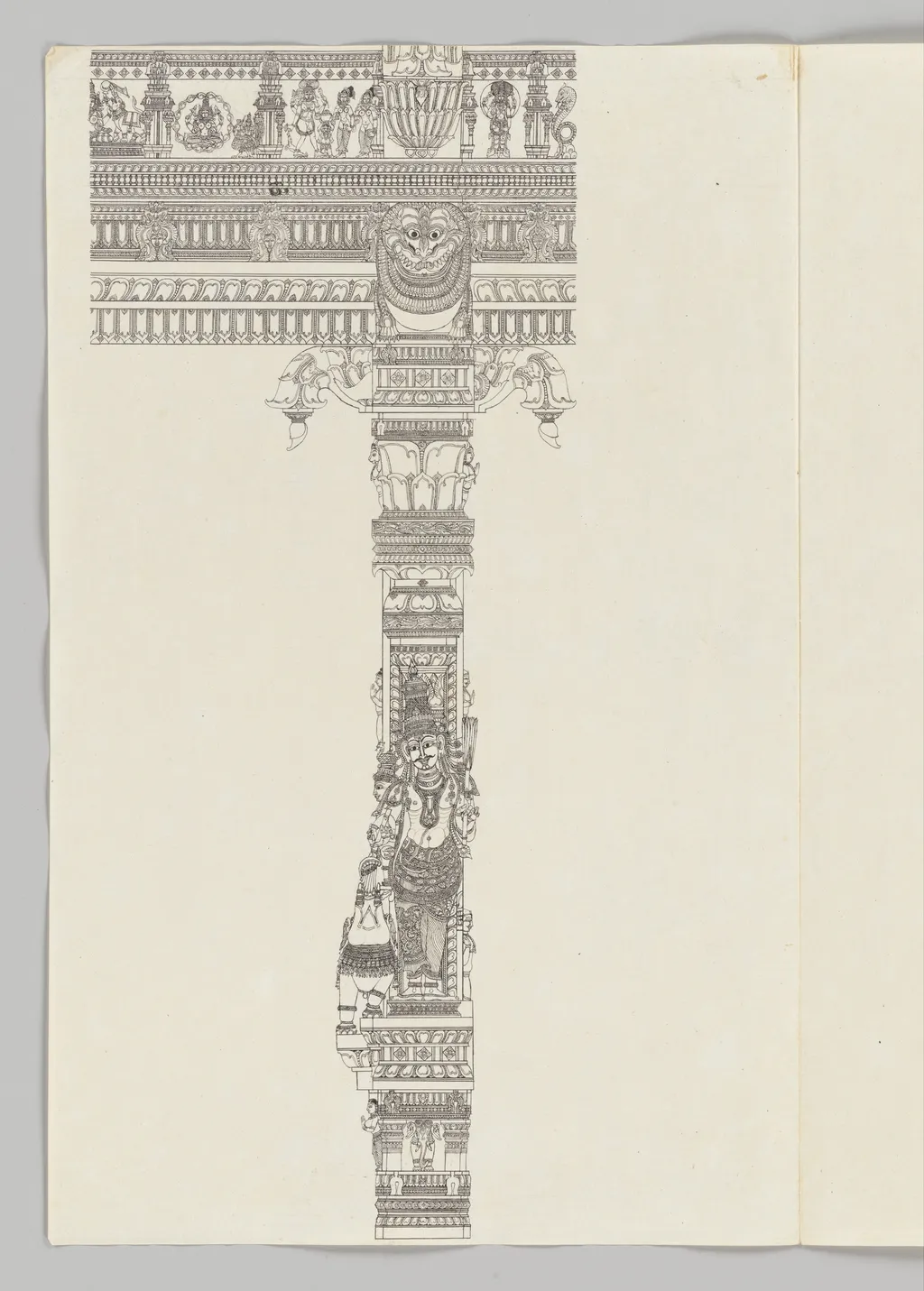
Sundareshvara as a siddha feeding sugarcane to the elephant. is an unspecified painting by Unknown. It dates from 1800 and is held in the collection of the Metropolitan Museum of Art.
About this work
Overview
The work depicts a slender, elaborately carved column whose shaft is densely covered with geometric motifs, vegetal scrolls and miniature figures.
The work depicts a slender, elaborately carved column whose shaft is densely covered with geometric motifs, vegetal scrolls and miniature figures. At the capital, a compact narrative tableau unfolds: a man offers a stalk of sugarcane to a standing elephant, surrounded by ancillary creatures. The composition merges architectural ornamentation with a brief mythic episode, presenting both structural and storytelling elements within a single visual field.
Subject & Meaning
The central vignette illustrates the Hindu deity Sundareshvara in his role as a siddha, a perfected being, engaged in the humble act of feeding sugarcane to an elephant. This gesture may symbolize the harmony between spiritual authority and the natural world, emphasizing generosity and the sustenance of life. The surrounding decorative figures reinforce a cosmic order, situating the divine act within a broader, orderly universe.
Technique & Style
Executed in a linear drawing technique, the artist employs fine incised lines to render intricate patterns across the column’s surface. Repetitive geometric and vegetal designs create a rhythmic backdrop, while the narrative scene is rendered with slightly bolder strokes to draw attention. The style reflects a synthesis of architectural relief carving and two‑dimensional illustration, characteristic of South Indian temple art where sculptural motifs are often transposed onto painted media.
Context
Columns bearing narrative reliefs were common in medieval South Indian temple architecture, serving both structural and didactic purposes. This piece adapts that tradition, translating a three‑dimensional column into a two‑dimensional format, likely for devotional or instructional use. The inclusion of a deity performing a quotidian task aligns with the bhakti movement’s emphasis on accessible, humanized divine figures during the period.
Legacy
By integrating architectural ornamentation with a concise mythic episode, the drawing exemplifies a visual strategy that persisted in later temple murals and manuscript illustrations. Its emphasis on detailed patterning alongside narrative content influenced subsequent regional art, reinforcing the practice of embedding moral or theological stories within decorative frameworks.
Artist & collection

 Domestic Scene
 Giacomo and Cardinal Marco, investing Andrea, Abbot of San Zeno, with his Benefice
 The Nymph of Fontainebleau
 Portrait of a Woman
 Madonna and Child with Saints in the Enclosed Garden
 Venus and Minerva
 Family Group of Four on Sofa
 Wall painting from Room H of the Villa of P. Fannius Synistor at Boscoreale
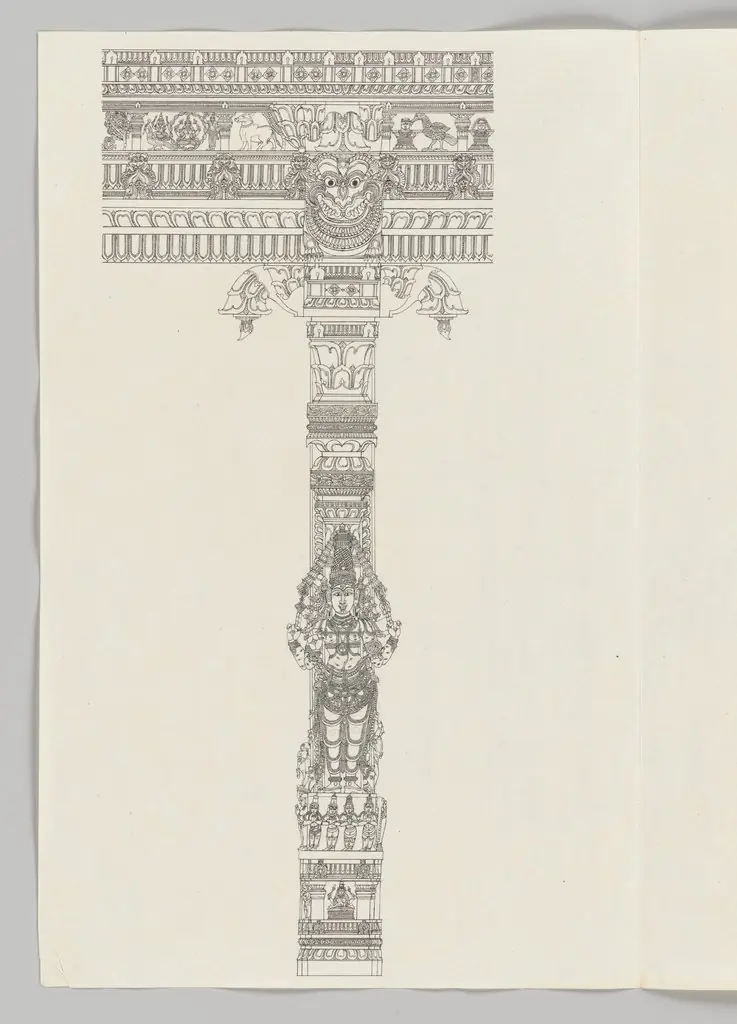 Subramanya
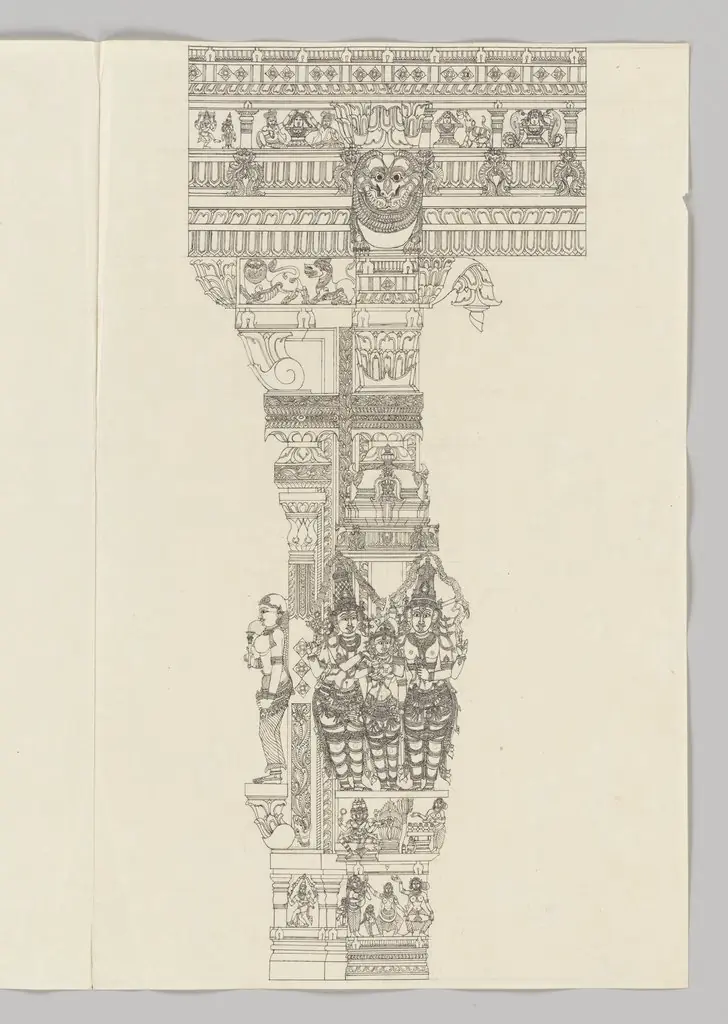 Marriage of Minakshi and Sundarehsvara, attended by Vishnu
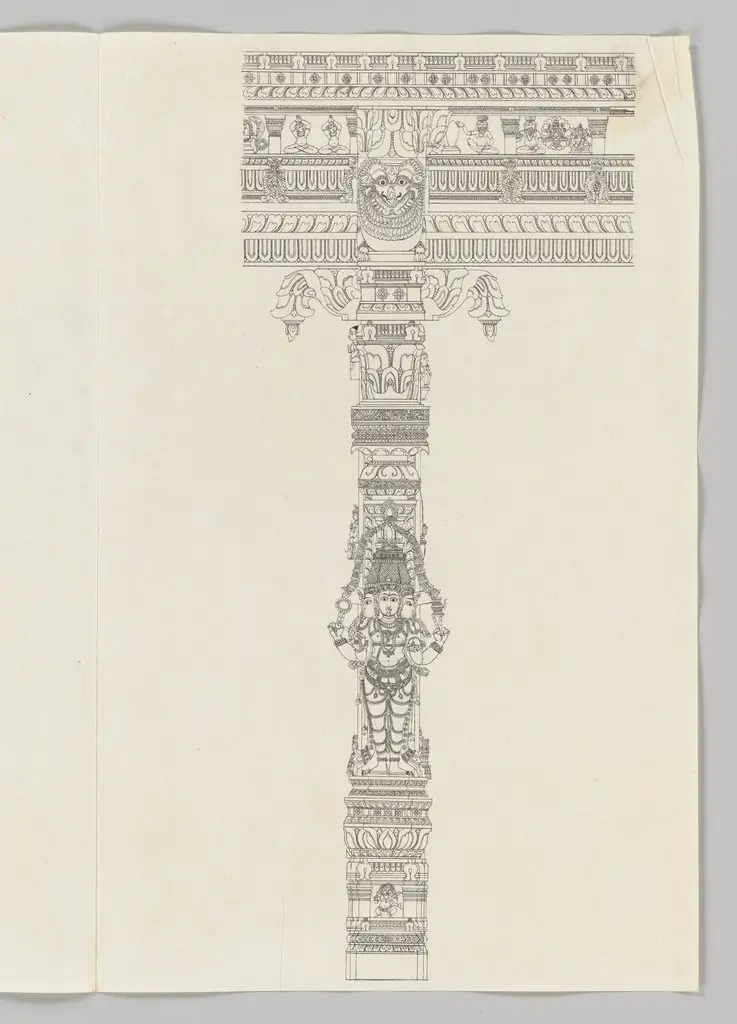 Brahma
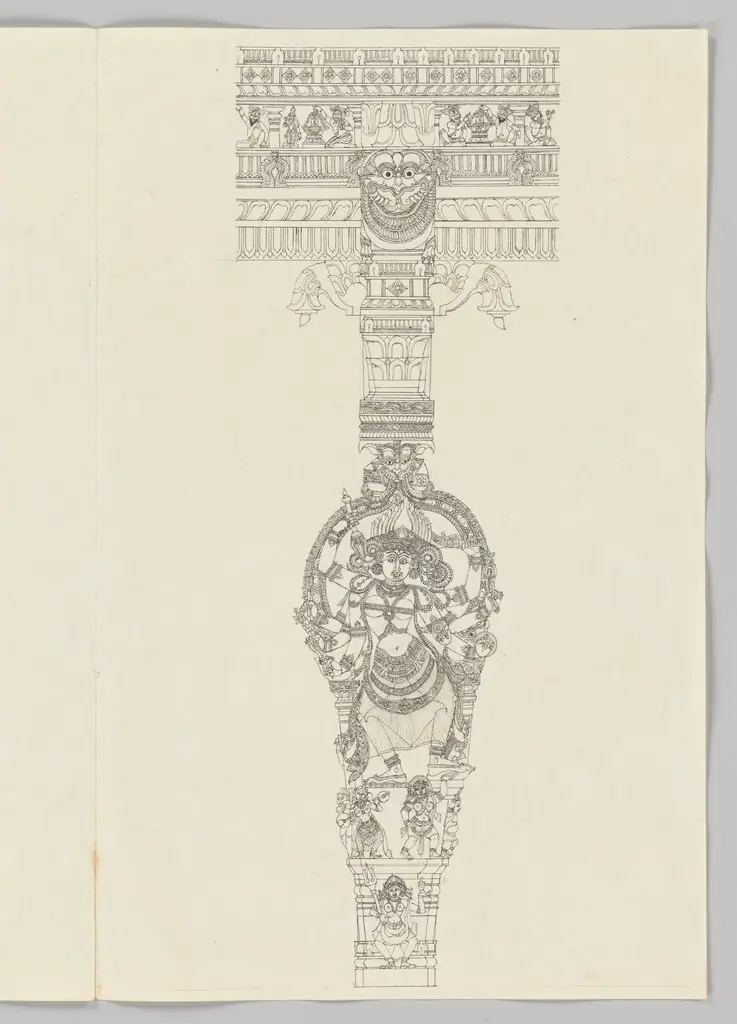 Kali
Kali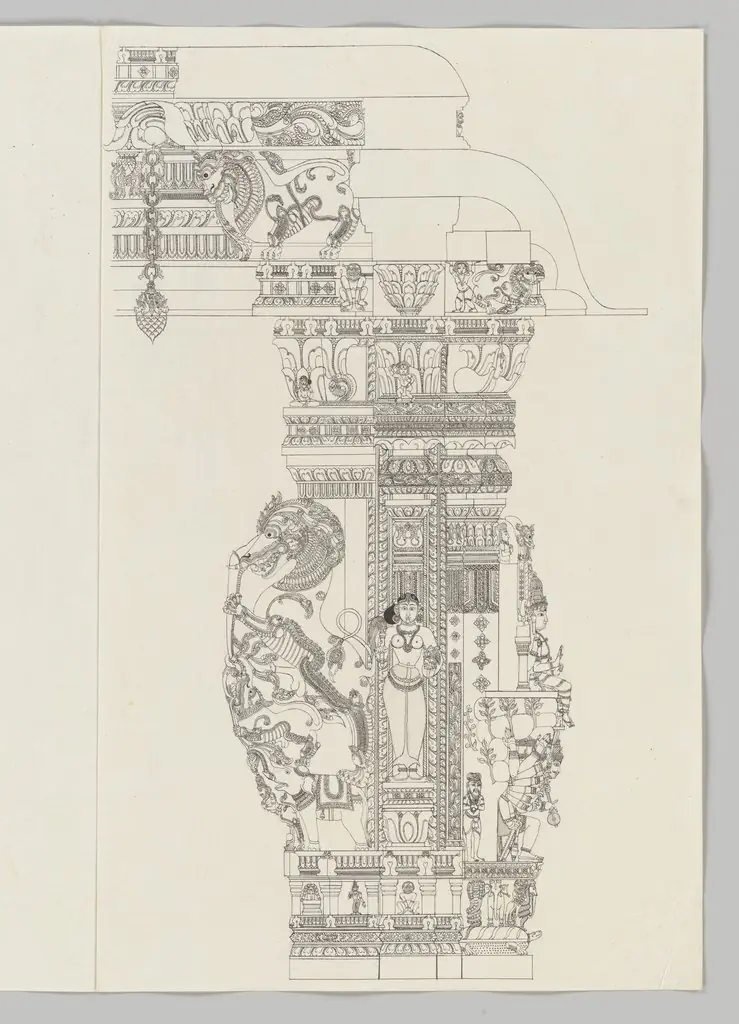 Shiva Ravananugrahamurti; woman holding a flywhisk; rearing yali
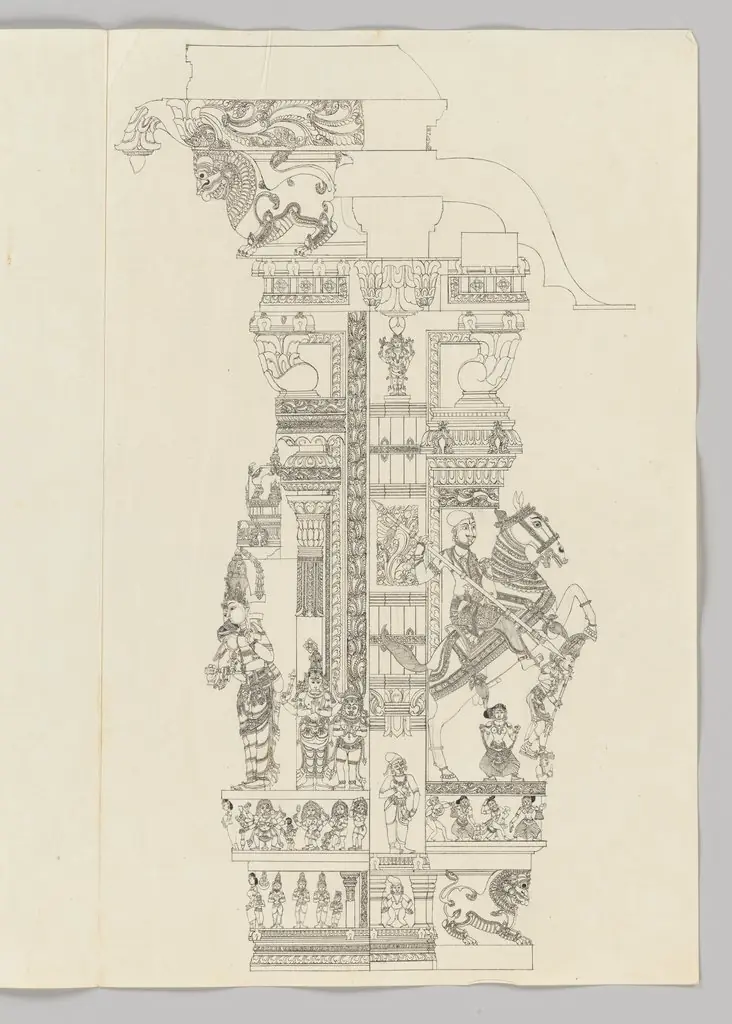 Marriage of Minakshi and Sundareshvara; equestrian warrior with spear
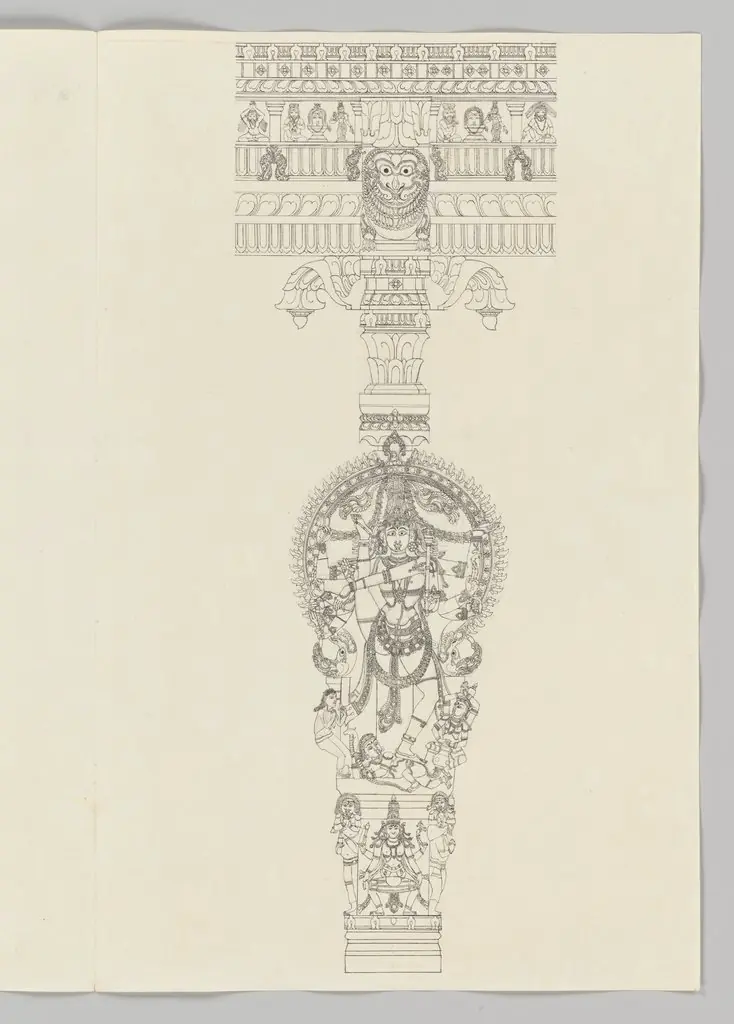 Shiva Urdhvatandava
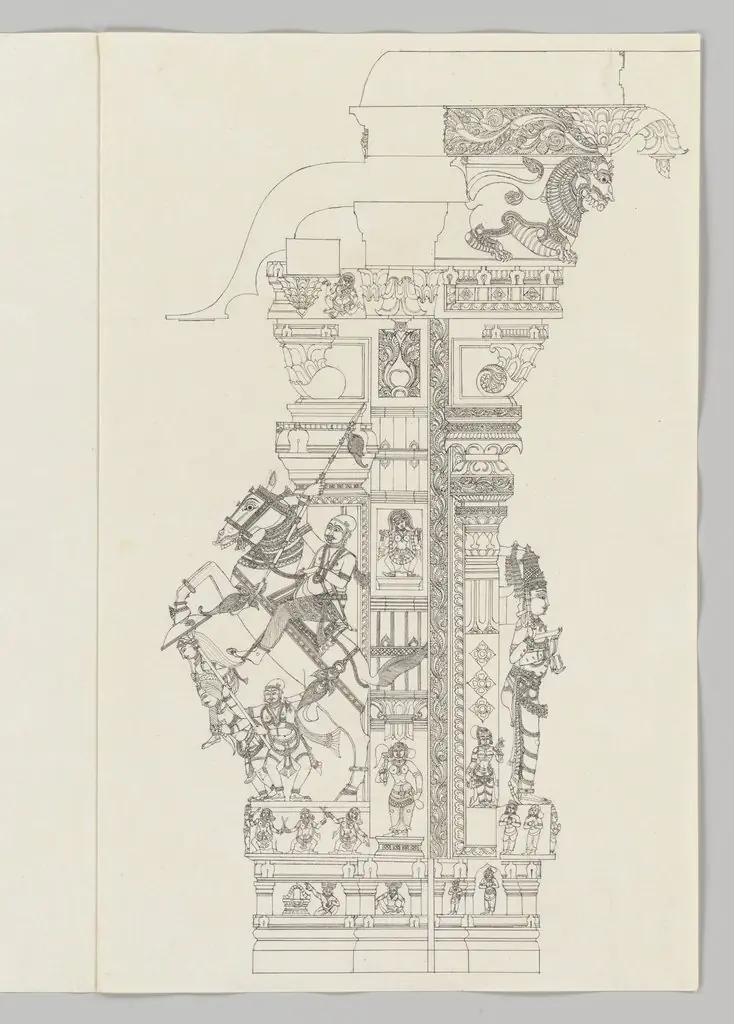 Subramanya: equestrian warrior with raised spear
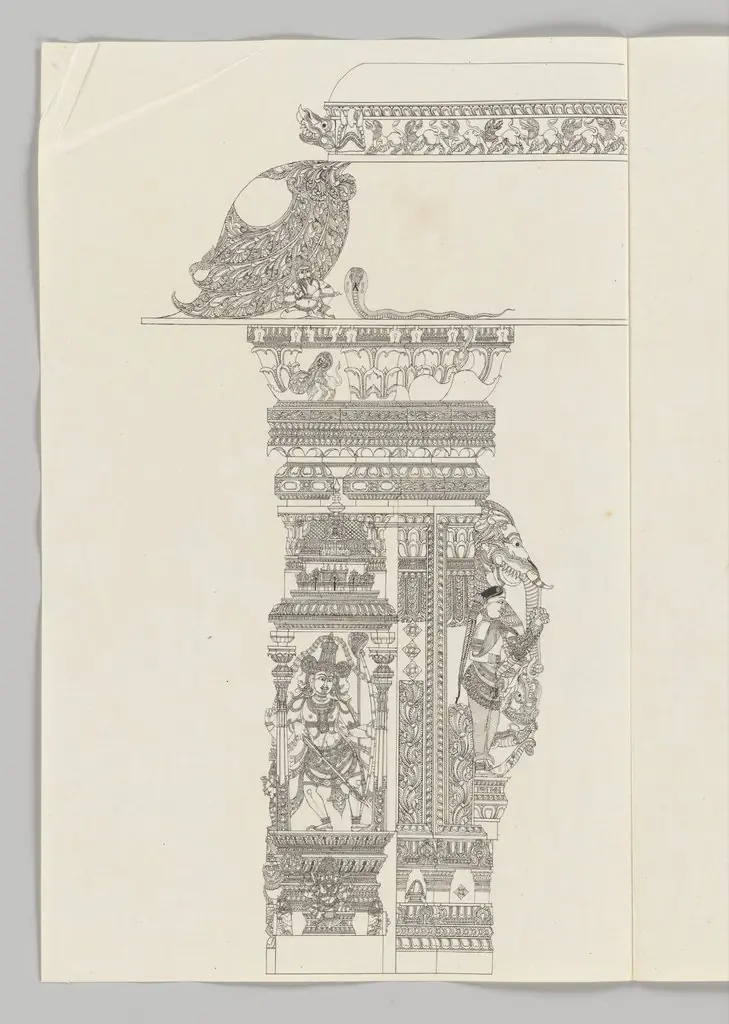 Shiva as Tripsurasamhara; woman holding a flywhisk; rearing yali