Artwork
Louise Margarethe (1730-1820) Prinzessin Arenberg, Dreiviertelporträt
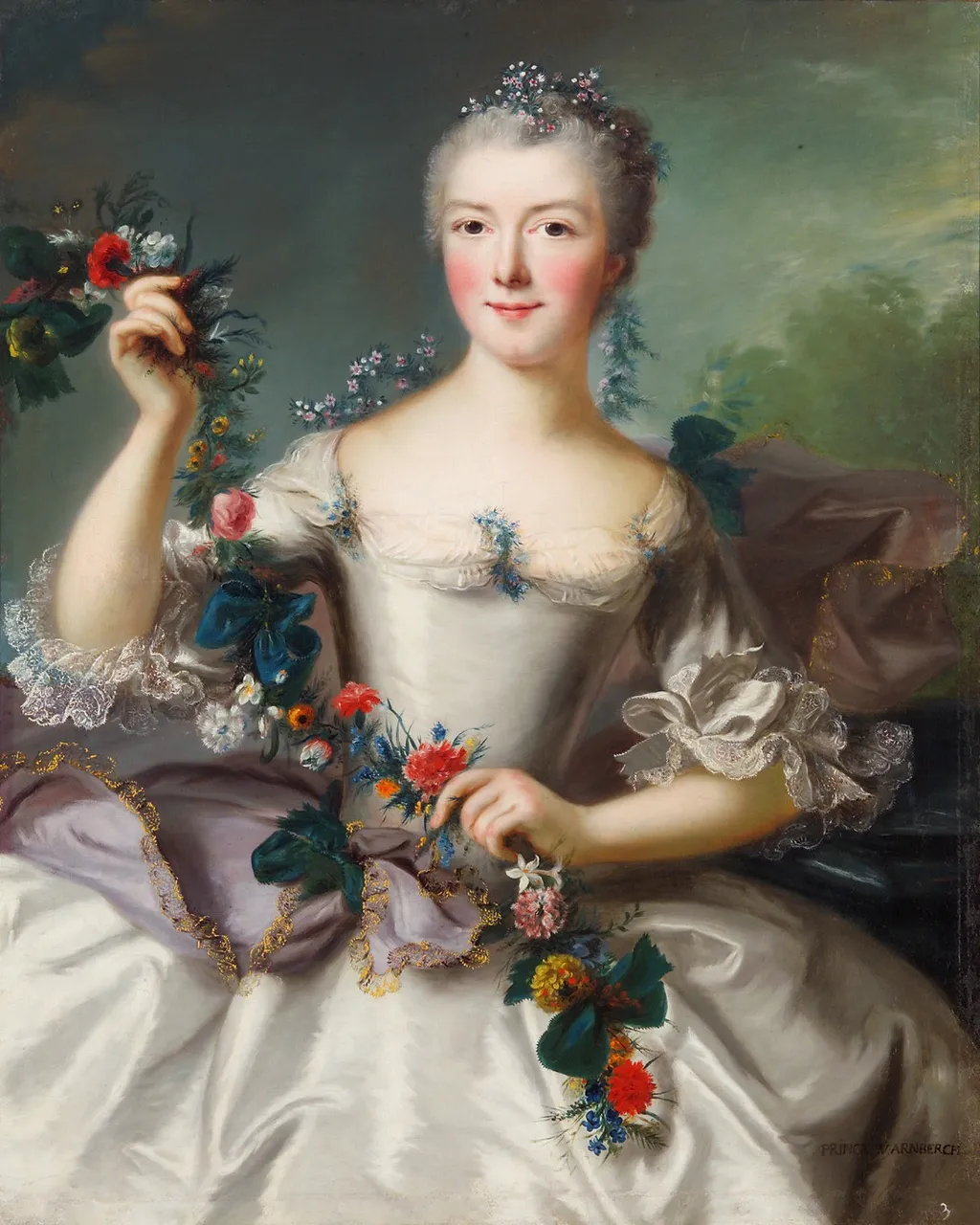
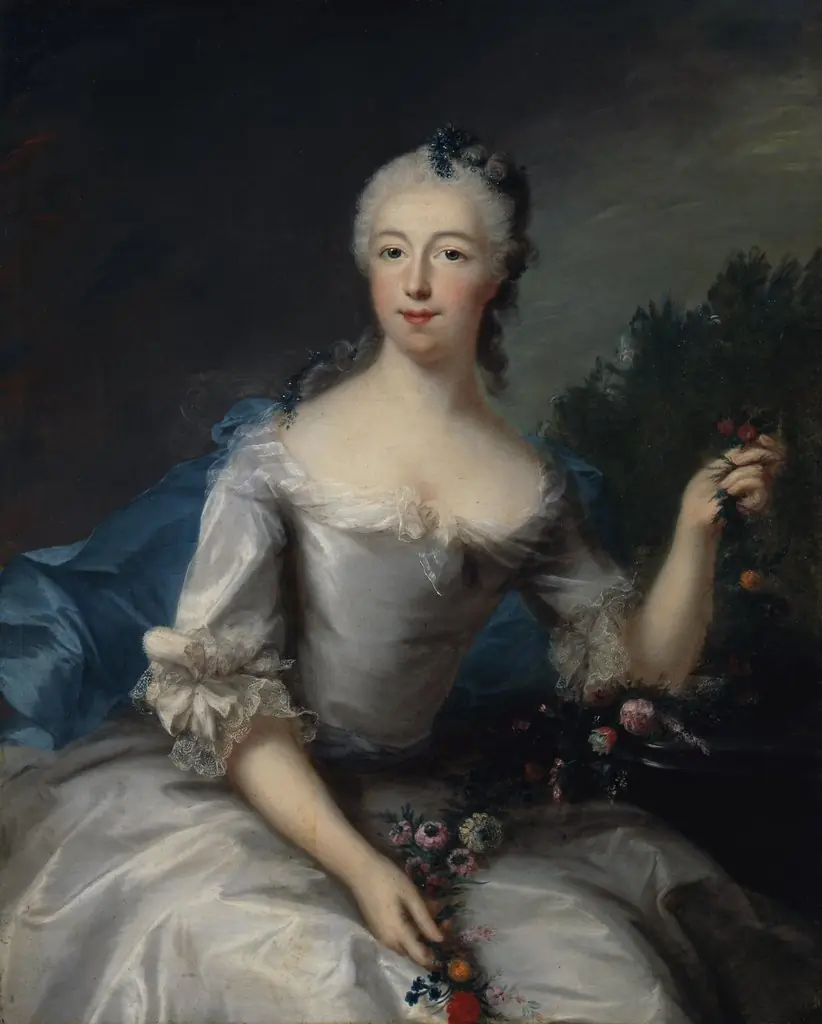
Louise Margarethe (1730-1820) Prinzessin Arenberg, Dreiviertelporträt is an unspecified painting by the Rococo painting artist Unknown. It dates from 1748 and is held in the collection of the Kunsthistorisches Museum. This portrait depicts Louise Margarethe, Princess of Arenberg, captured in a three-quarter view seated in a soft armchair.
About this work
Overview
This portrait depicts Louise Margarethe, Princess of Arenberg, captured in a three-quarter view seated in a soft armchair.
This portrait depicts Louise Margarethe, Princess of Arenberg, captured in a three-quarter view seated in a soft armchair. Painted around the mid-18th century, it presents her in elegant, refined attire with delicate floral embellishments. The composition directs focus to her poised demeanor and the naturalistic rendering of light across skin and fabric, while the softly blurred background isolates her figure with quiet intimacy.
Subject & Meaning
The princess is shown holding a bouquet of red roses, blue irises, and white blossoms, symbols often associated with love, fidelity, and purity. A wreath of leaves and flowers rests lightly over her shoulders, suggesting harmony with nature and seasonal renewal. Her gentle smile and composed posture convey grace without ostentation, reflecting aristocratic ideals of cultivated serenity rather than overt power.
Technique & Style
The artist employs fine brushwork to render the textures of lace, silk, and petals with subtle precision. Light falls softly across her face and dress, creating a sense of volume and realism without dramatic contrast. The background is deliberately muted and indistinct, enhancing the three-dimensionality of the figure and reinforcing the portrait’s focus on personal presence over environmental context.
History & Provenance
Louise Margarethe, born in 1730 and a member of the Arenberg family, was a noblewoman of the Holy Roman Empire. The painting likely originated in a German or Austrian court setting, possibly commissioned to mark a significant personal occasion. It entered the collection of the Kunsthistorisches Museum in Vienna, where it remains as part of its 18th-century aristocratic portraiture holdings.
Context
This portrait aligns with the Rococo aesthetic prevalent in Central European courts during the 1730s–1770s, emphasizing delicacy, naturalism, and refined leisure. Unlike formal state portraits, it favors intimacy and personal expression, reflecting a shift toward private, emotional representation among noblewomen. Similar works by artists like Jean-Baptiste Greuze or Anton Raphael Mengs share this quiet, psychological tone.
Legacy
The portrait endures as an example of how aristocratic women were portrayed in the late Baroque to early Neoclassical transition—not as political figures, but as embodiments of cultivated beauty and emotional restraint. Its preservation in the Kunsthistorisches Museum allows continued study of gender, class, and visual culture in 18th-century Europe.
Artist & collection

 Domestic Scene
 Giacomo and Cardinal Marco, investing Andrea, Abbot of San Zeno, with his Benefice
 The Nymph of Fontainebleau
 Portrait of a Woman
 Madonna and Child with Saints in the Enclosed Garden
 Venus and Minerva
 Family Group of Four on Sofa
 Wall painting from Room H of the Villa of P. Fannius Synistor at Boscoreale
 Madame du Barry
 Portrait of a Young Woman
 Madame Louise of France
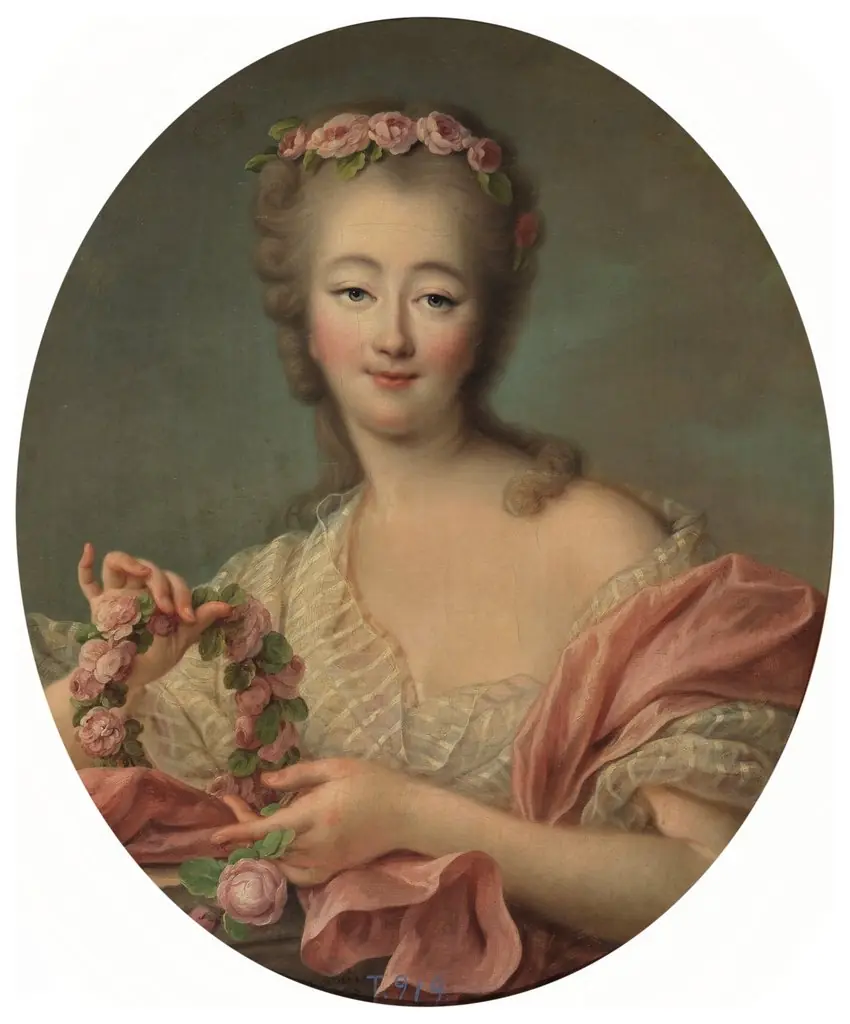 Portrait of Madame du Barry (1743-1793)
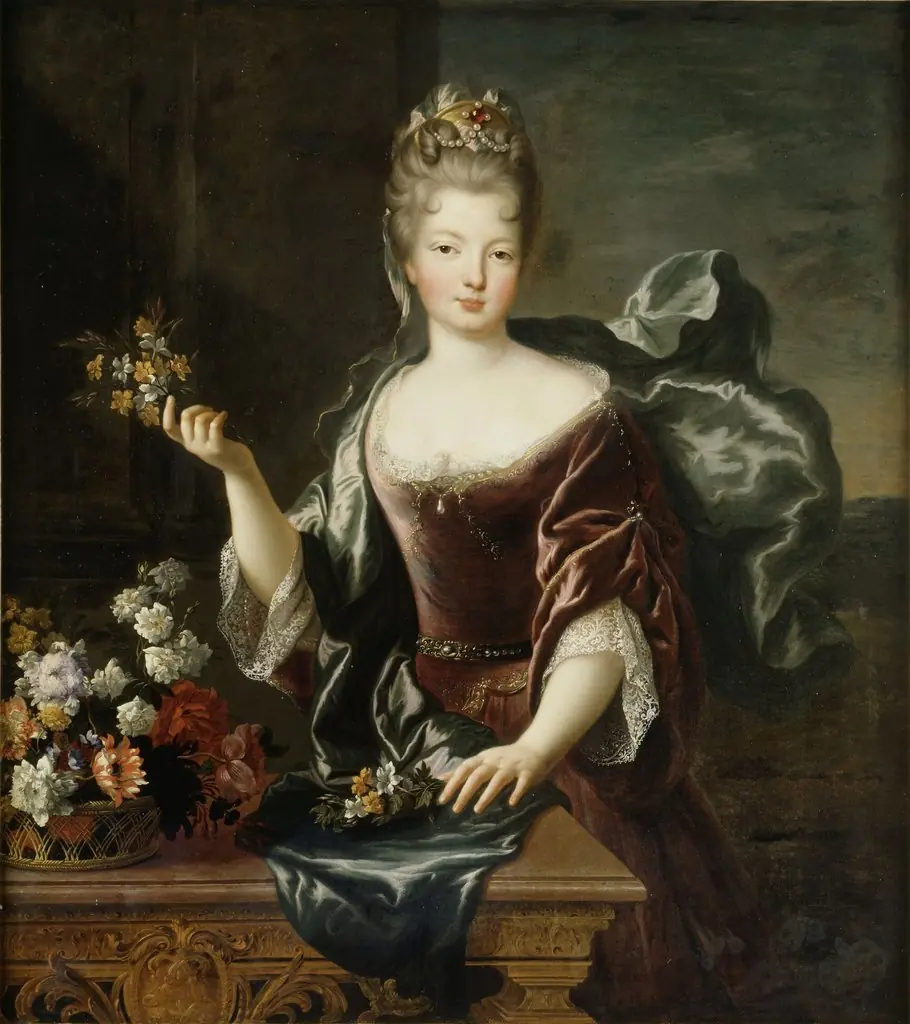 Françoise-Marie de Bourbon, Mademoiselle de Blois, Duchess of Orleans
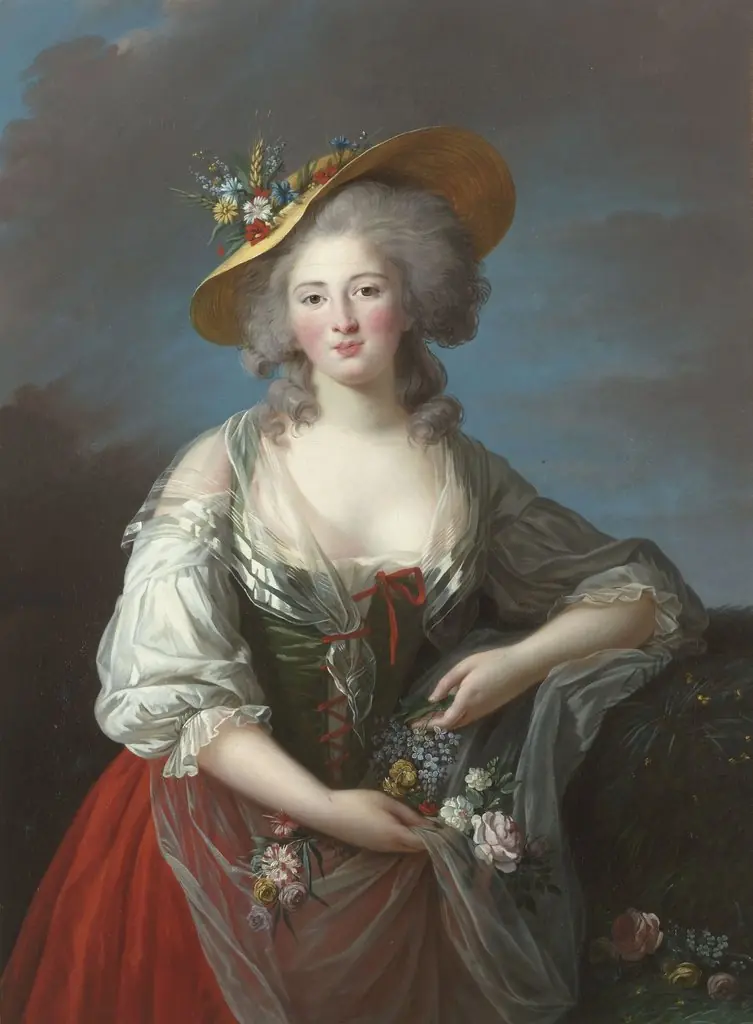 Elisabeth-Philippe-Marie-Hélène de France, dite Madame Elisabeth
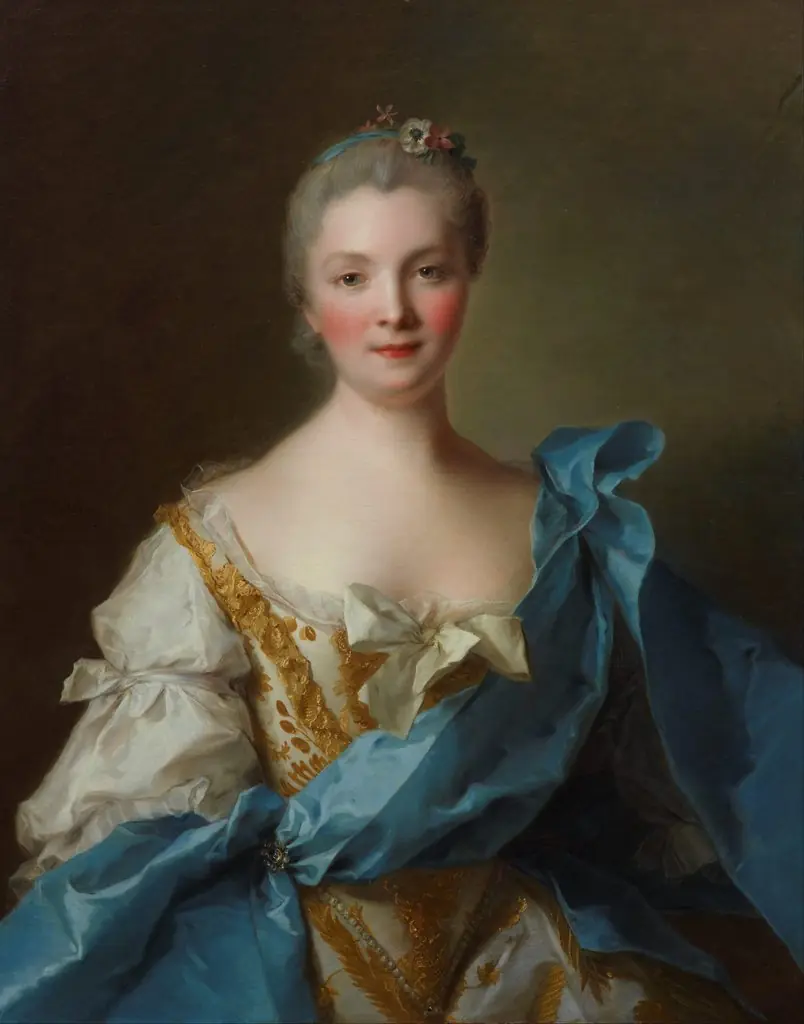 Madame de La Porte
 Madame Sophie of France
 Marie Françoise de La Cropte de St. Abre, Marquise d'Argence
 Portrait of a Young Woman as a Vestal Virgin
 Marie-Antoinette
 Maria Clara Philippina von Ingelheim