Artwork
Christ Crowned with Thorns
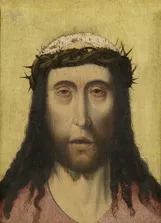
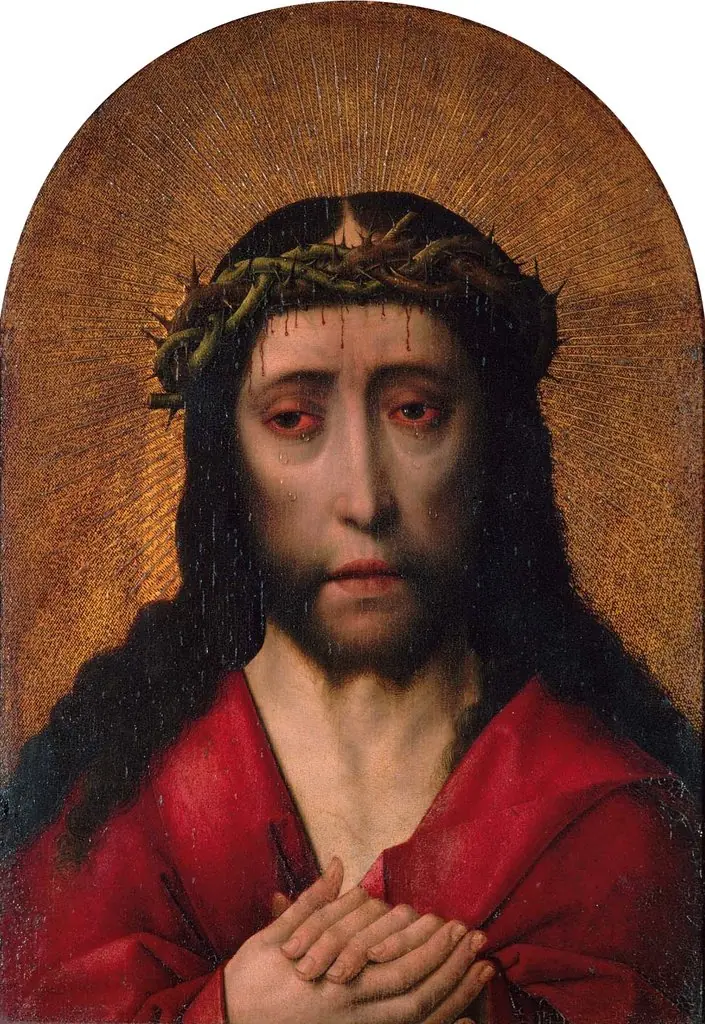
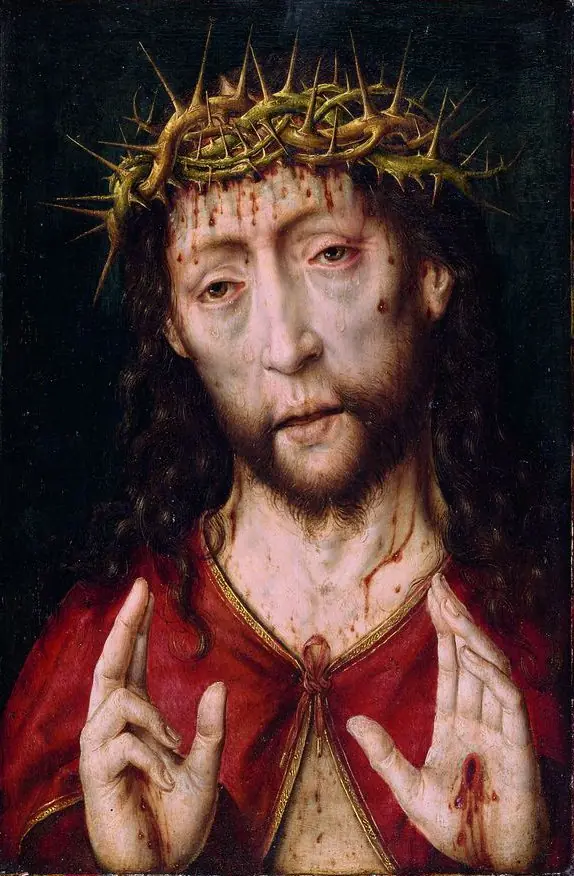
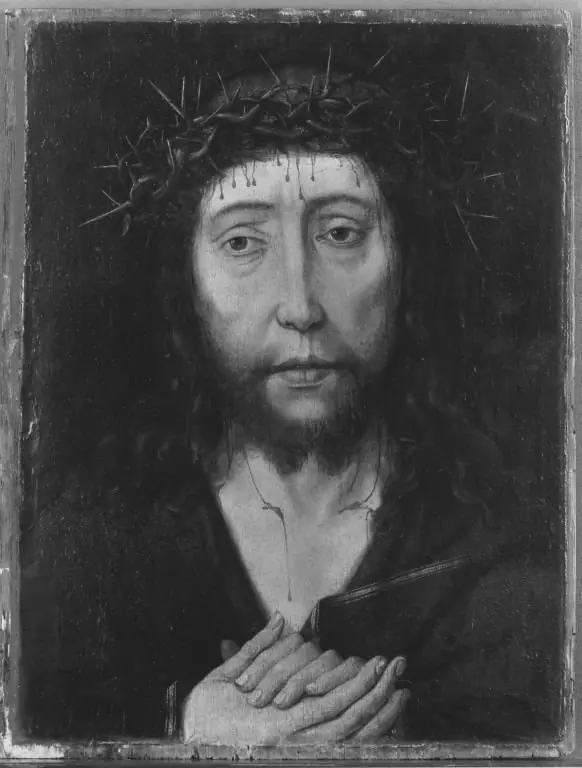
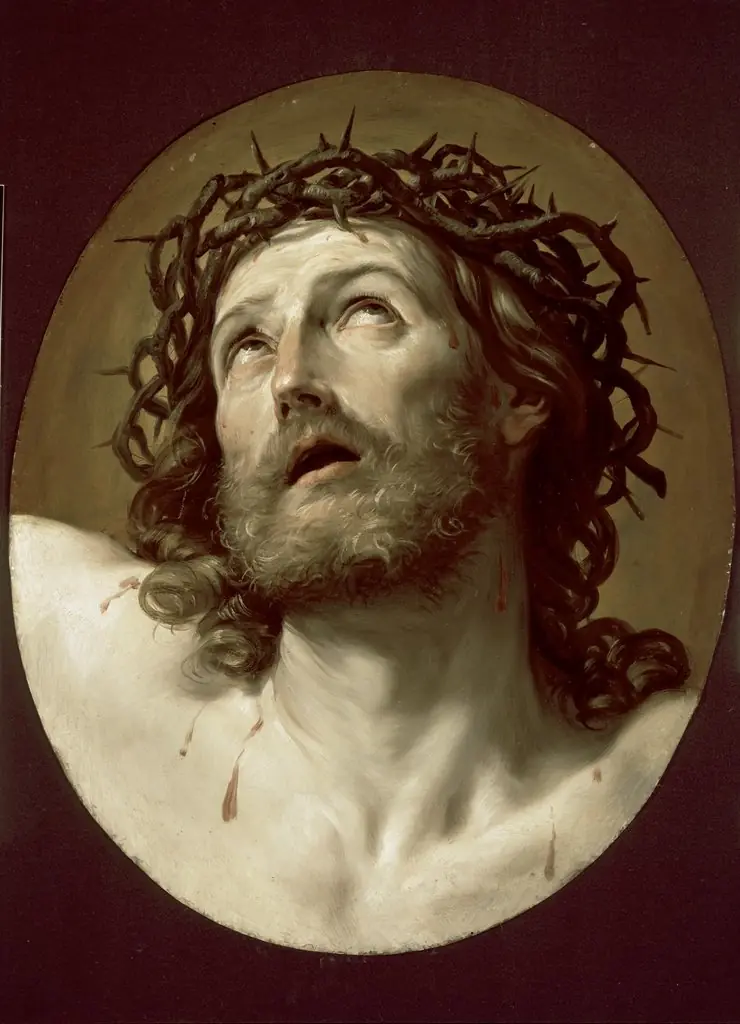
Christ Crowned with Thorns is an oil painting by the Northern Renaissance artist Unknown. It is held in the collection of the Royal Museums of Fine Arts of Belgium. This oil painting portrays a solitary figure identified as Christ, depicted in a moment of quiet suffering.
About this work
Overview
This oil painting portrays a solitary figure identified as Christ, depicted in a moment of quiet suffering. Dressed in a pink robe and crowned with thorns, he faces the viewer with a composed, unflinching gaze. The background is a muted, pale yellow, creating a restrained spatial depth that focuses attention entirely on the figure. The tone is solemn, emphasizing introspection over drama.
Subject & Meaning
The subject is Christ during the episode of his mocking by Roman soldiers, prior to crucifixion. The crown of thorns, pressed into his scalp, symbolizes humiliation and sacrifice. His neutral expression and direct gaze suggest resignation and inner resolve, inviting contemplation rather than emotional outcry. The absence of violence or spectators intensifies the spiritual weight of the moment.
Technique & Style
The artist employs chiaroscuro to model the figure’s form, using subtle contrasts of light and shadow to define the face and robe without harsh transitions. The pink garment is rendered with soft, blended brushwork, while the thorns are delicately outlined to suggest their sharpness. The background remains uniformly pale, avoiding distraction and reinforcing the figure’s isolation.
History & Provenance
The painting’s origin and early ownership are not documented in available records. Its style aligns with early 17th-century devotional works, possibly from a Spanish or Italian workshop influenced by Caravaggio’s naturalism. No known exhibition history or collector lineage has been established, limiting precise attribution.
Context
Created during a period when religious imagery emphasized personal devotion and emotional restraint, this work reflects Counter-Reformation ideals. It avoids theatricality common in Baroque altarpieces, instead favoring intimacy and psychological presence. Such images were used for private meditation, encouraging viewers to confront suffering through quiet reflection.
Legacy
Though not widely reproduced or studied, the painting contributes to a tradition of contemplative Christological imagery that prioritizes inner experience over spectacle. Its restrained palette and focused composition echo later minimalist devotional works, offering a quiet counterpoint to more dramatic interpretations of the Passion.
Artist & collection

Museum
Royal Museums of Fine Arts of Belgium
Continue through works from the same source collection.
 Domestic Scene
 Giacomo and Cardinal Marco, investing Andrea, Abbot of San Zeno, with his Benefice
 The Nymph of Fontainebleau
 Portrait of a Woman
 Madonna and Child with Saints in the Enclosed Garden
 Venus and Minerva
 Family Group of Four on Sofa
 Wall painting from Room H of the Villa of P. Fannius Synistor at Boscoreale