Artwork
Christ Bound and Crowned with Thorns
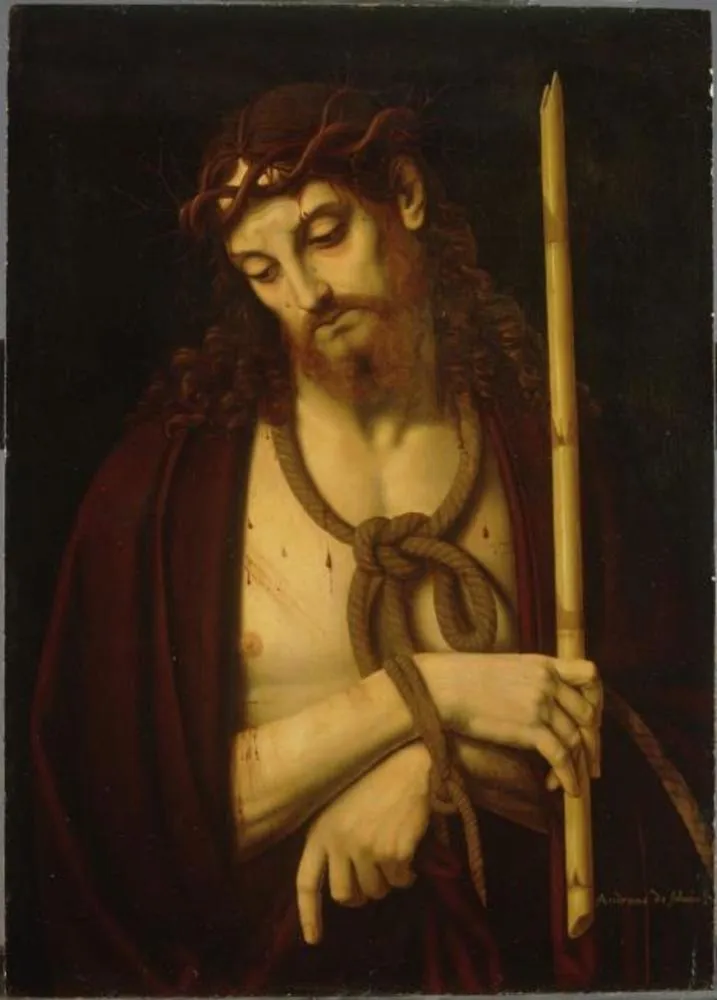
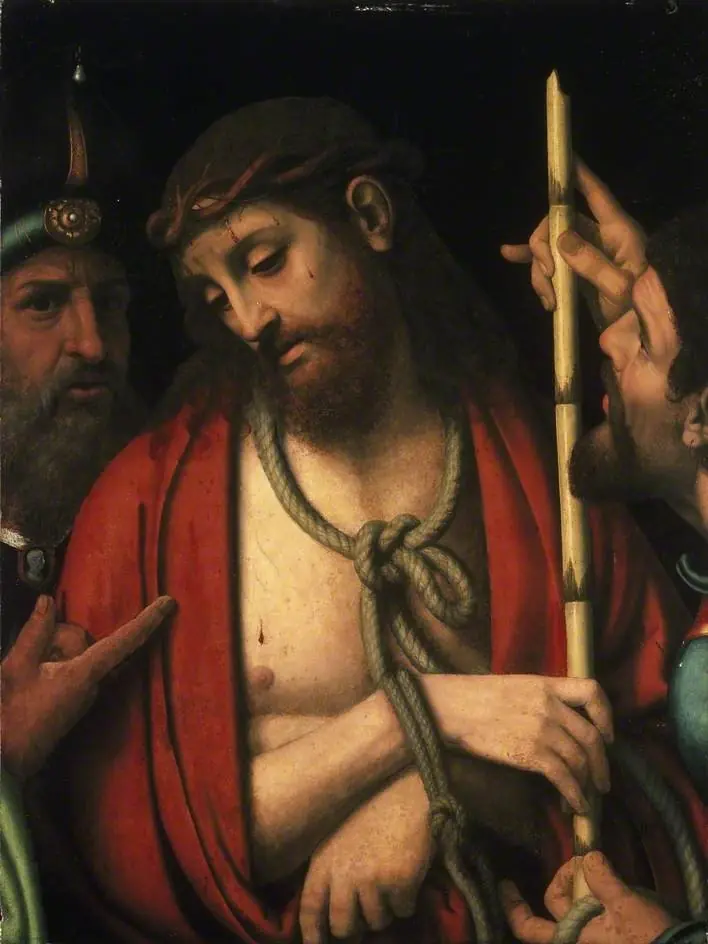
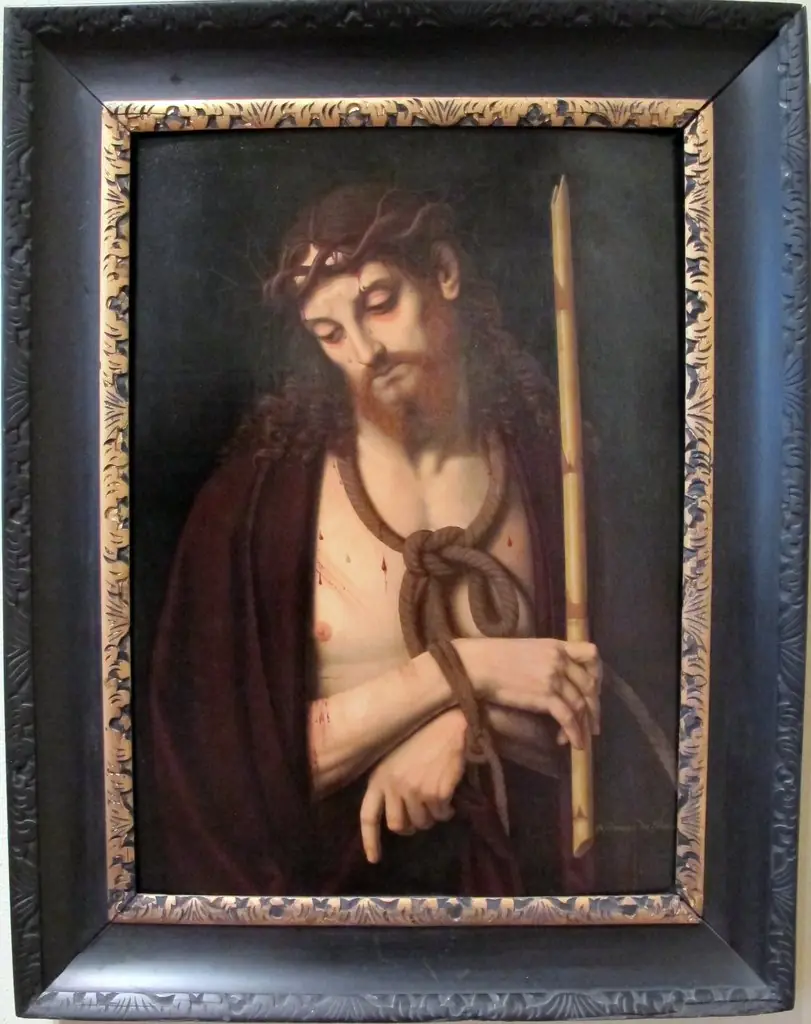
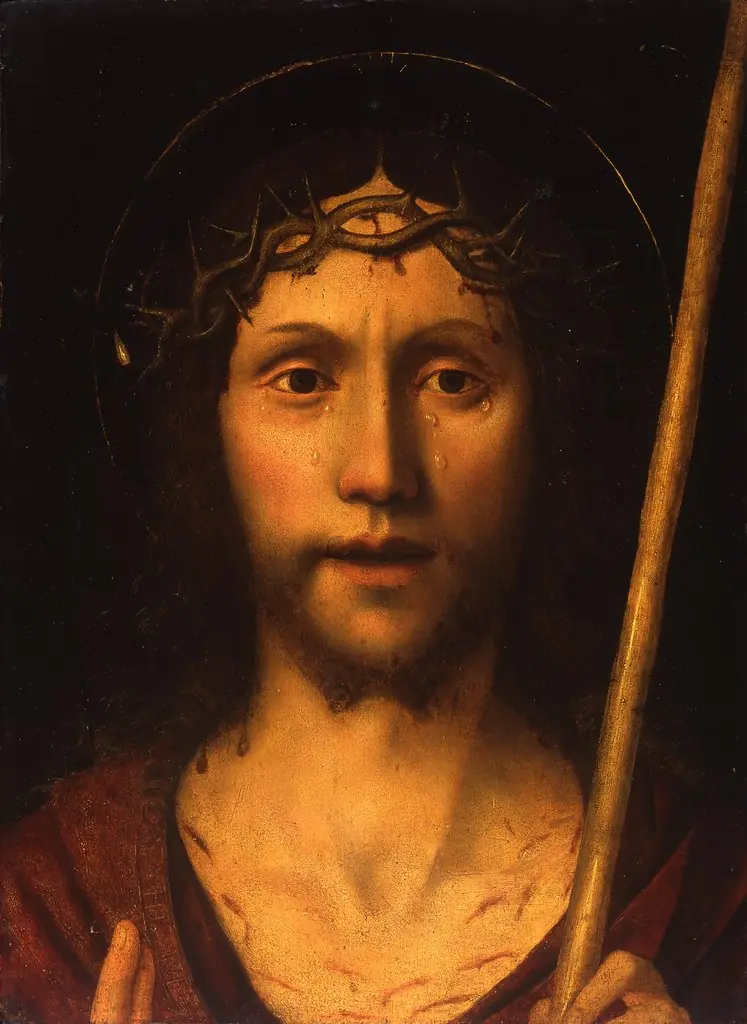
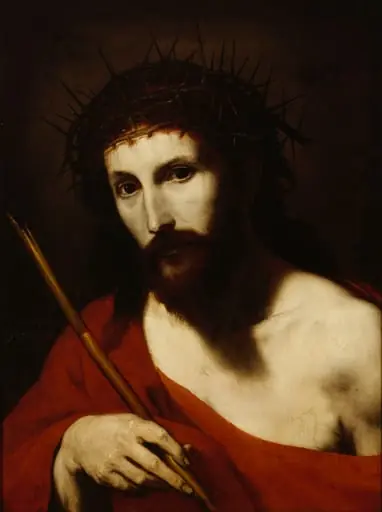
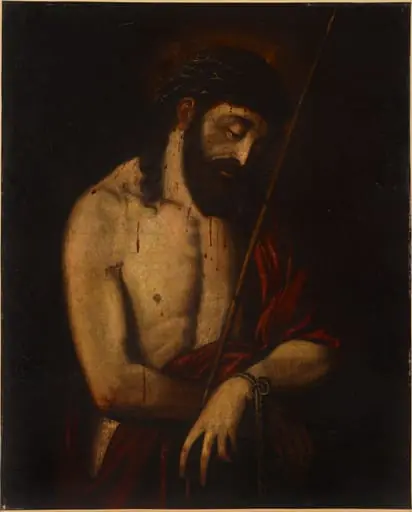
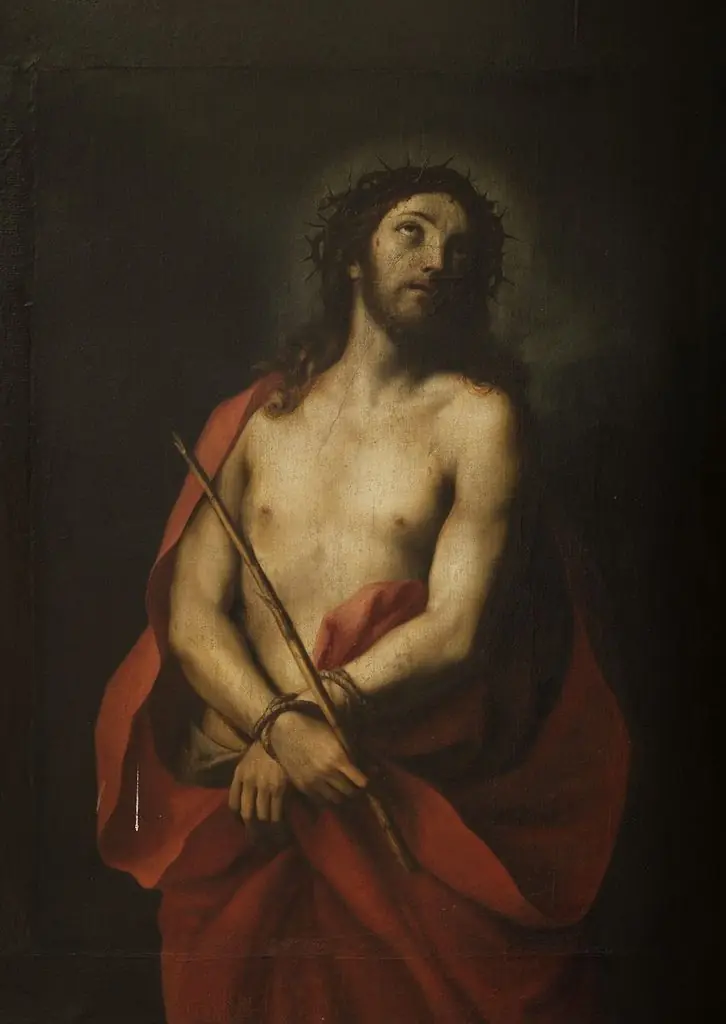
Christ Bound and Crowned with Thorns is an oil painting by the High Renaissance artist Andrea Solari. It dates from 1504 and is held in the collection of the Philadelphia Museum of Art.
About this work
Overview
Painted in 1504 by Andrea Solari, this oil-on-panel work is a quiet yet intense portrayal of Christ after his scourging and before the crucifixion.
Painted in 1504 by Andrea Solari, this oil-on-panel work is a quiet yet intense portrayal of Christ after his scourging and before the crucifixion. Executed in the Milanese tradition of the High Renaissance, it reflects the period’s growing interest in human emotion and physical realism. The painting’s compact scale and focused composition invite intimate contemplation, distinguishing it from larger altarpieces of the era.
Subject & Meaning
The image captures Christ in a moment of passive suffering, his eyes closed and hands bound before him. The crown of thorns, the rope binding his torso, and the wounds on his skin convey physical torment, while his stillness suggests spiritual resignation. The thin object he holds may reference the reed scepter of mock royalty, reinforcing the irony of his kingship. The absence of other figures isolates him, emphasizing solitude and inner endurance.
Technique & Style
Solari employs chiaroscuro with precision, using deep shadows and subtle gradations of light to model the figure’s form. The pale skin emerges starkly against the near-black background, heightening the tactile quality of bruises and blood. The red robe, rendered with layered glazes, contrasts sharply without overwhelming the scene. Brushwork is controlled yet sensitive, particularly in the rendering of facial expression and the texture of the thorns.
History & Provenance
The painting entered the Louvre’s collection in the 19th century, having likely passed through private Italian and French hands since its creation. Its survival in relatively intact condition is notable, given the fragility of early oil panels. While its early patrons are undocumented, its presence in major European collections attests to its sustained recognition among connoisseurs of Renaissance devotional art.
Context
Created during a period of intense religious reflection in northern Italy, the painting aligns with contemporary devotional practices that emphasized Christ’s humanity. Solari, influenced by Leonardo da Vinci’s studies of anatomy and expression, adapted these ideas into a more restrained, emotionally direct format. Unlike grand public altarpieces, this work was likely intended for private meditation, reflecting a shift toward personal piety.
Legacy
Though less widely known than works by Florentine or Venetian contemporaries, Solari’s painting exemplifies the Lombard school’s contribution to Renaissance religious imagery. Its psychological depth and technical refinement influenced later Northern European depictions of Christ’s passion. Today, it remains a key example of how quiet, intimate compositions could convey profound spiritual weight without theatricality.
Artist & collection
Artist
Andrea Solari (also Solario) (1460–1524) was an Italian Renaissance painter of the Milanese school.