Artwork
Leda and the Swan
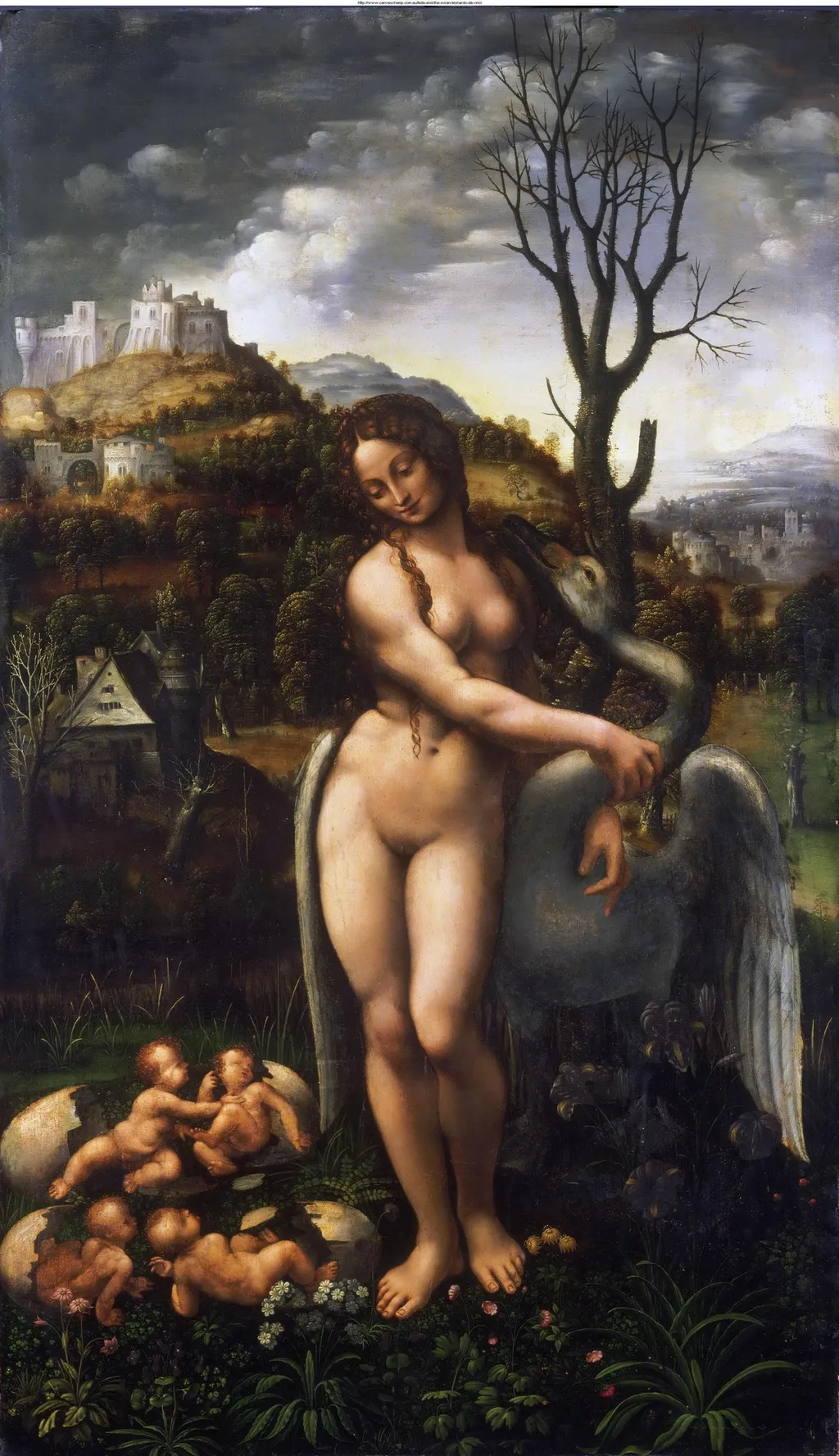
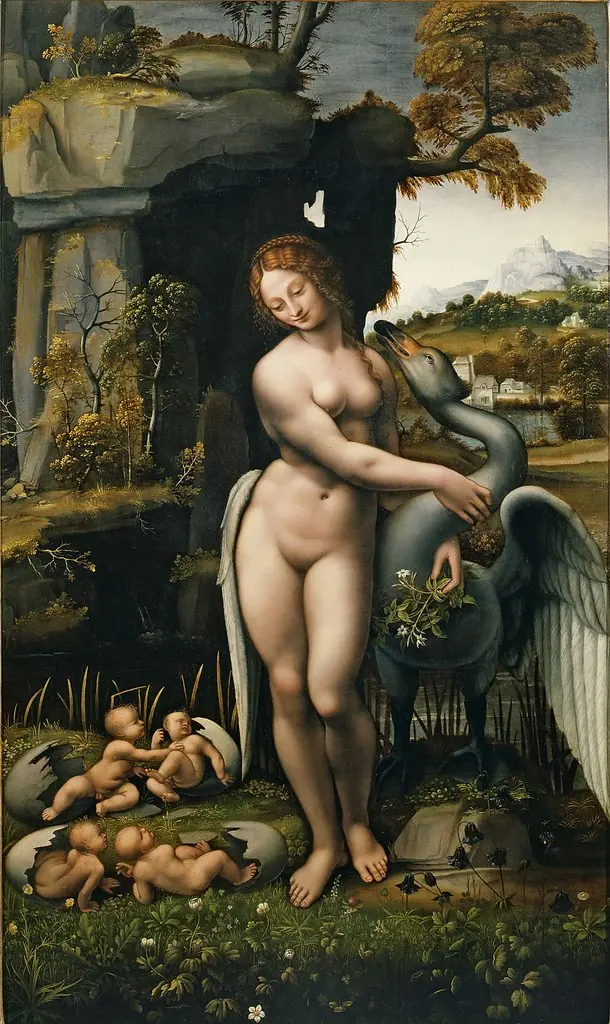
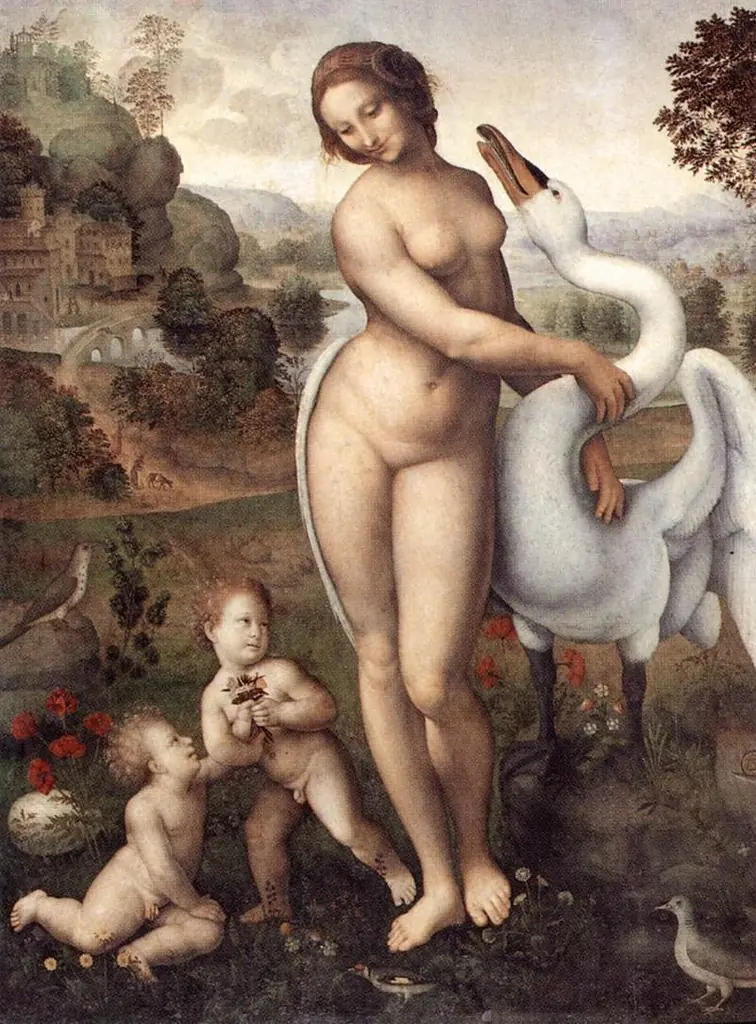
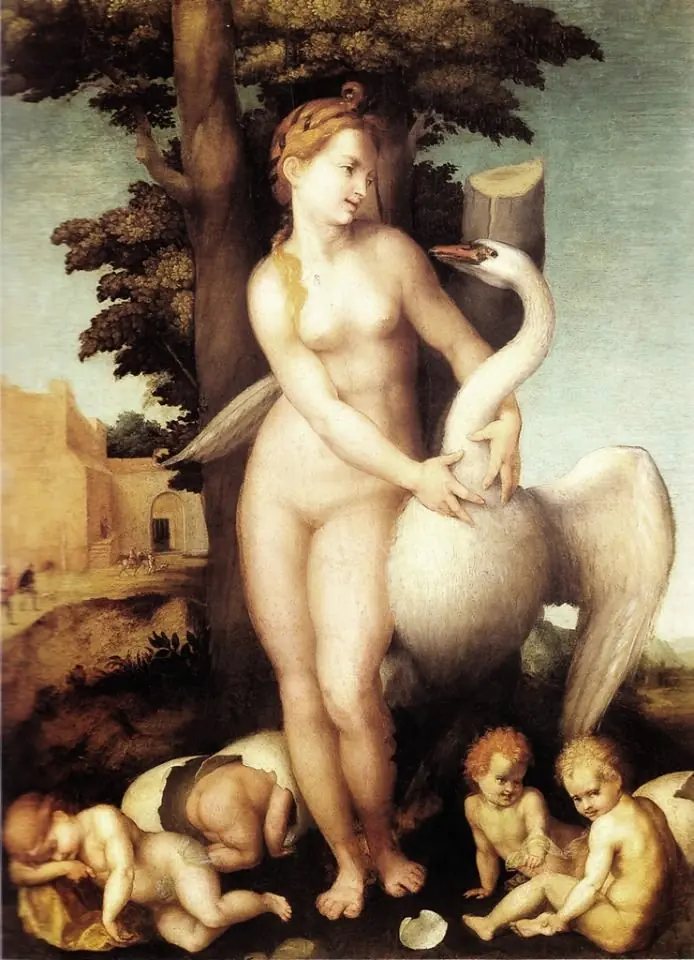
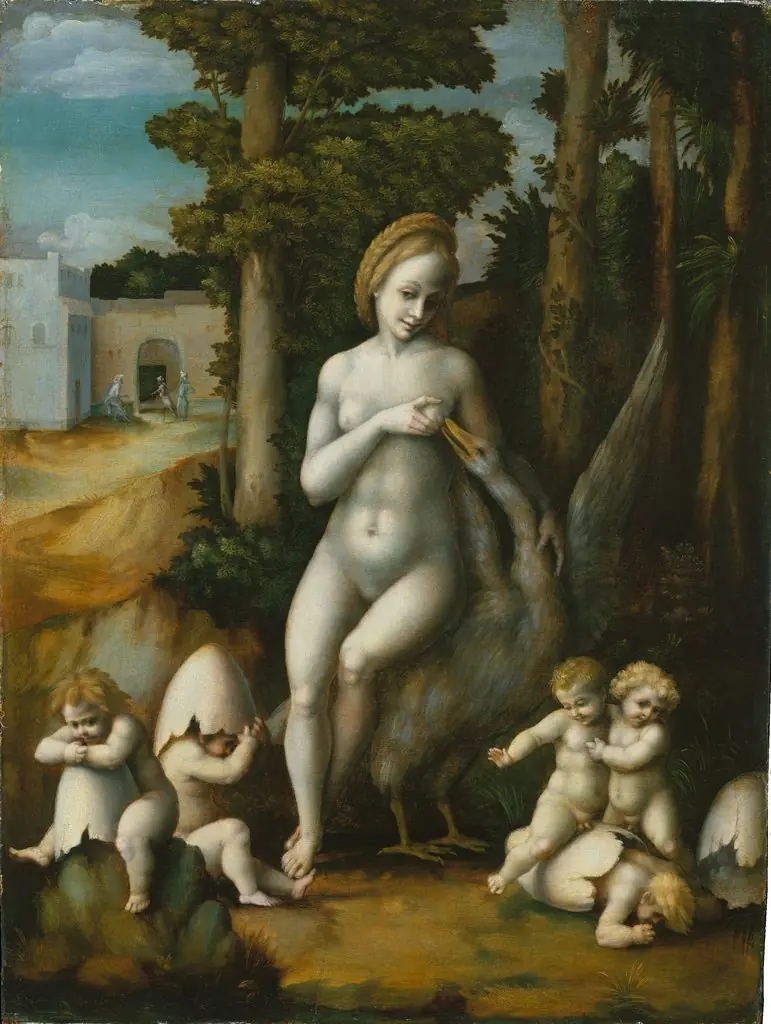
Leda and the Swan is an oil painting by the Mannerist artist Unknown. It dates from 1550 and is held in the collection of the Philadelphia Museum of Art. This oil painting depicts the mythological encounter between Leda and a swan, rendered in a serene natural setting.
About this work
Overview
The composition centers on a nude female figure, her posture and interaction with the bird suggesting a moment of quiet intimacy.
This oil painting depicts the mythological encounter between Leda and a swan, rendered in a serene natural setting. The composition centers on a nude female figure, her posture and interaction with the bird suggesting a moment of quiet intimacy. Cherubs in the foreground interact with a shattered egg, while a distant castle and soft landscape establish spatial depth. The lighting emphasizes form through subtle contrasts, guiding attention to the central figures.
Subject & Meaning
The scene references the Greek myth in which Zeus, in the form of a swan, approaches Leda. The presence of the broken eggshell alludes to the future hatching of Helen of Troy and Pollux, children born from this union. The calm demeanor of Leda and the gentle posture of the swan soften the myth’s violent undercurrents, framing the moment as a tranquil, almost sacred encounter rather than an act of coercion.
Technique & Style
The artist employs chiaroscuro to model the figures with soft gradations of light and shadow, enhancing the three-dimensionality of skin and feathers. Brushwork is smooth and controlled, particularly in the rendering of hair and fabric-like plumage. The landscape background is rendered with atmospheric perspective, using muted tones and blurred edges to create distance, while the foreground elements remain sharply defined.
History & Provenance
The painting’s origins trace to the Renaissance period, likely commissioned by a noble patron interested in classical mythology. Its survival through centuries suggests it was carefully preserved, possibly within a private collection before entering a public institution. No definitive record of its first owner exists, but stylistic analysis aligns it with late 16th-century Italian or Northern European workshops.
Context
During the Renaissance, mythological subjects like Leda and the Swan were popular among humanist patrons seeking to connect contemporary aesthetics with ancient literature. Artists often reinterpreted these stories with idealized forms and harmonious compositions. The inclusion of cherubs and symbolic elements like the egg reflects a broader trend of embedding allegory within visually pleasing scenes.
Legacy
The painting contributes to a long tradition of visual interpretations of Leda, influencing later depictions in both academic and romantic styles. Its restrained emotional tone and focus on naturalism set it apart from more dramatic or eroticized versions. Though not widely reproduced, it remains a studied example of how classical narratives were adapted to Renaissance ideals of beauty and order.
Artist & collection

 Domestic Scene
 Giacomo and Cardinal Marco, investing Andrea, Abbot of San Zeno, with his Benefice
 The Nymph of Fontainebleau
 Portrait of a Woman
 Madonna and Child with Saints in the Enclosed Garden
 Venus and Minerva
 Family Group of Four on Sofa
 Wall painting from Room H of the Villa of P. Fannius Synistor at Boscoreale