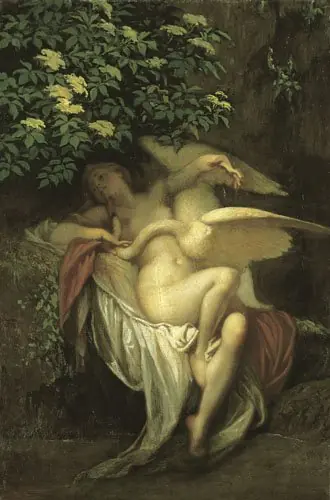
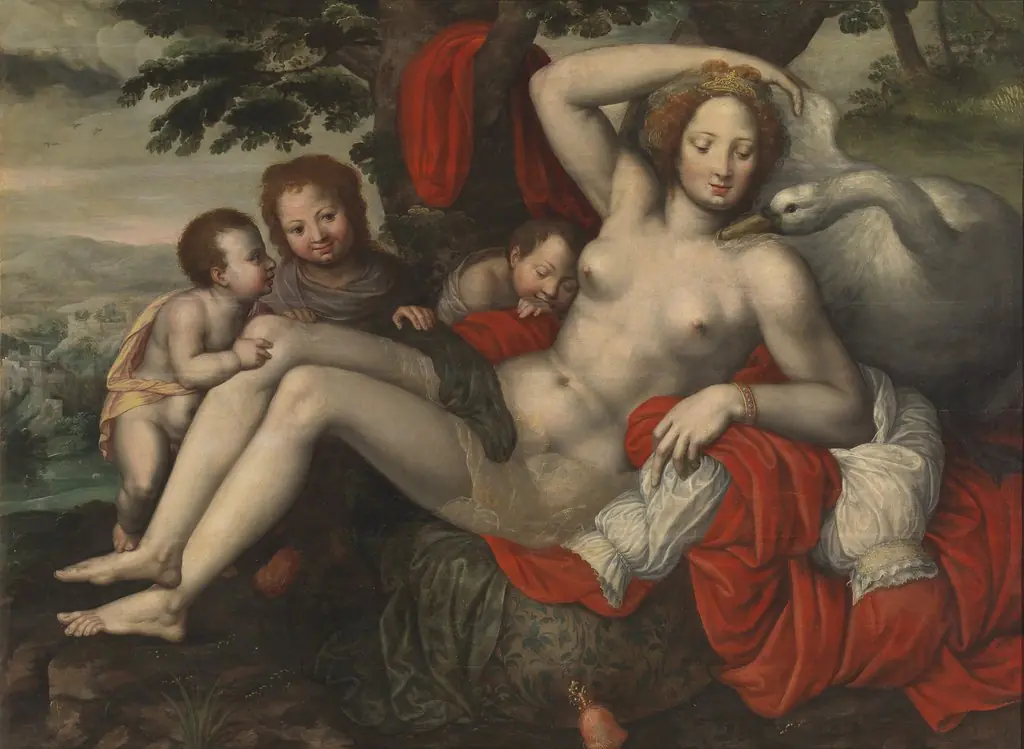
Artwork
Leda and the swan
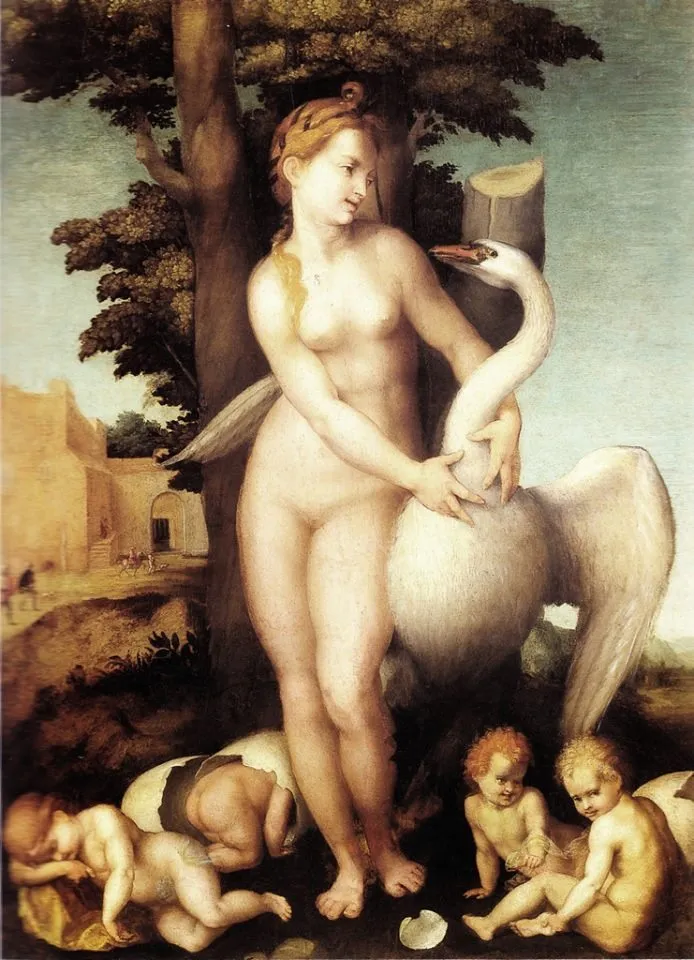
Leda and the swan is an oil painting by the High Renaissance artist Andrea del Sarto. It dates from 1496 and is held in the collection of the Royal Museums of Fine Arts of Belgium.
About this work
Overview
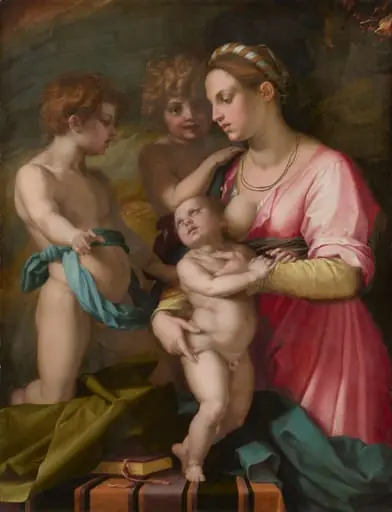
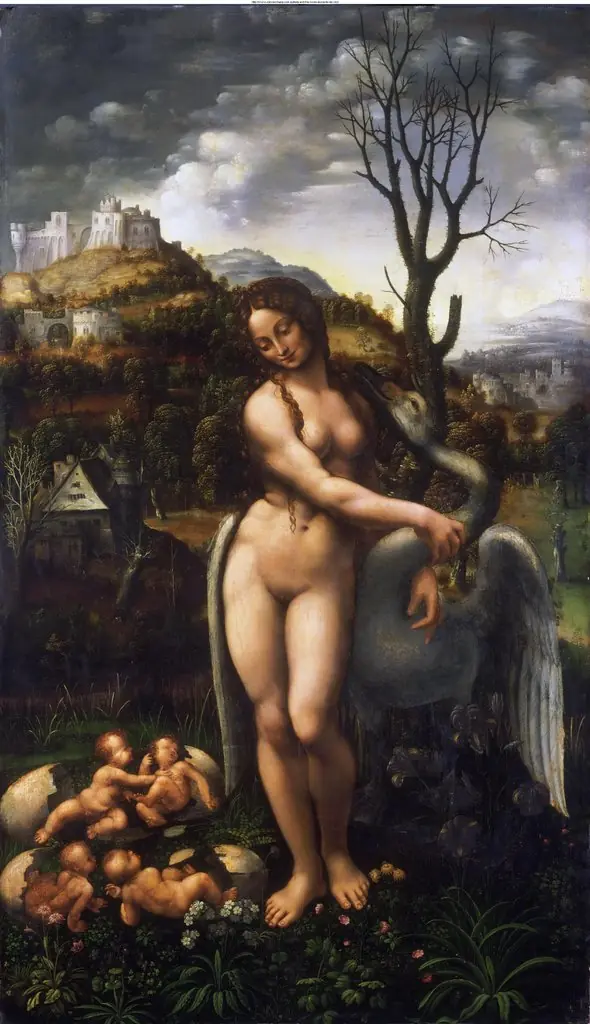
The setting is a quiet, wooded landscape rendered in subdued earth tones, conveying stillness and intimacy rather than drama.
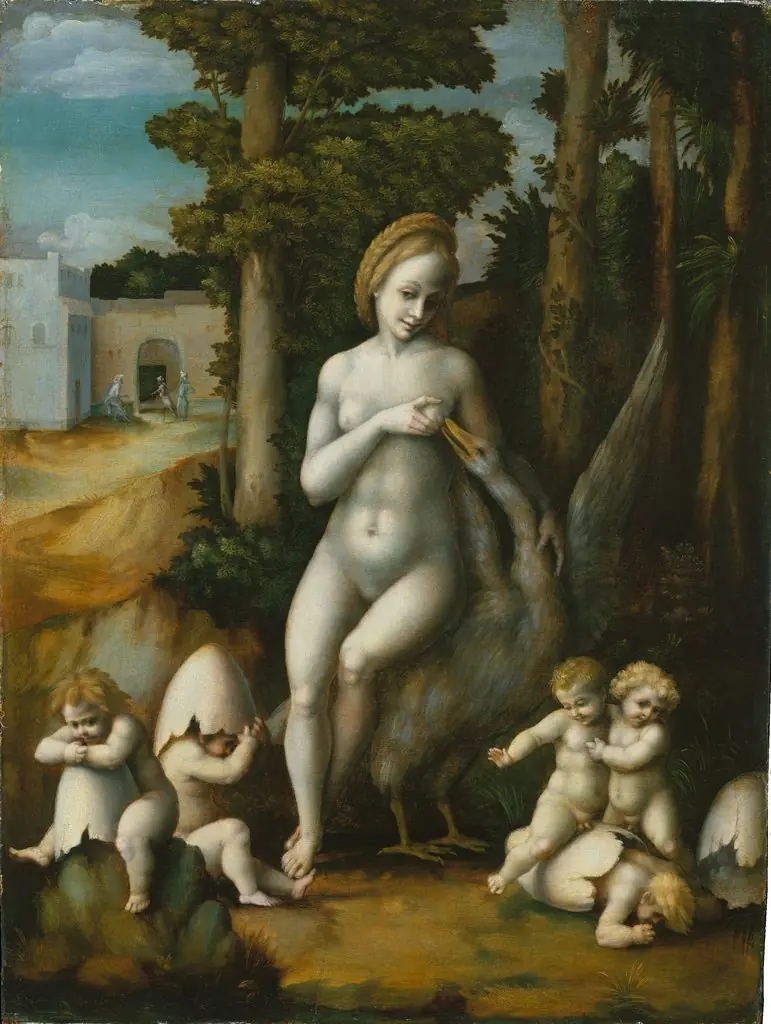
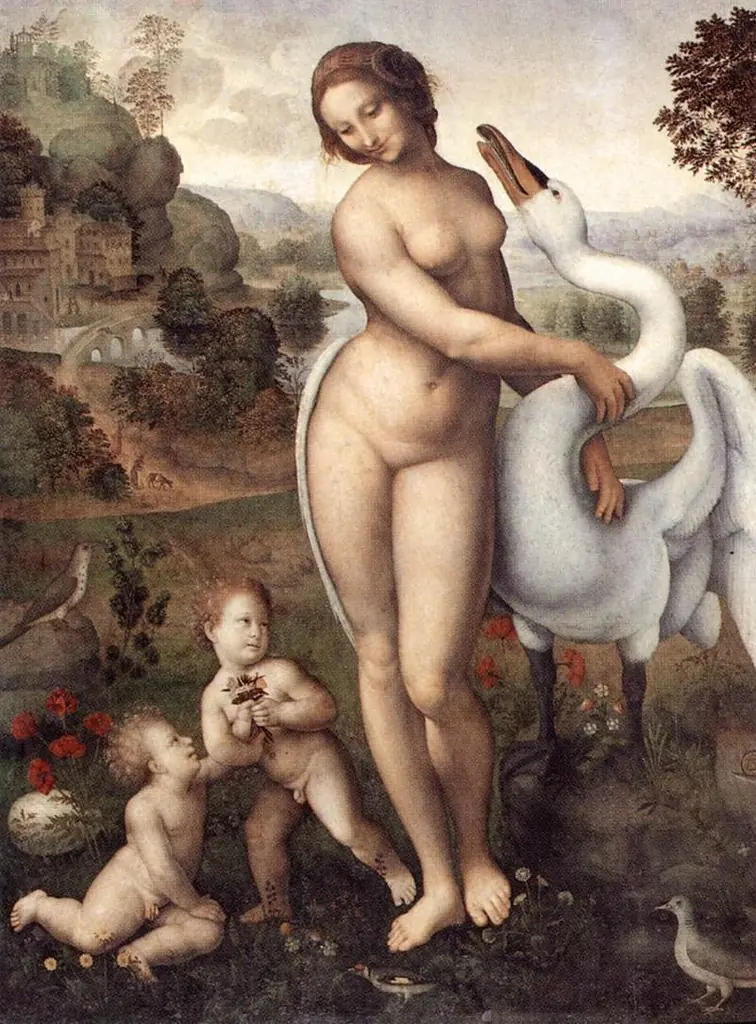
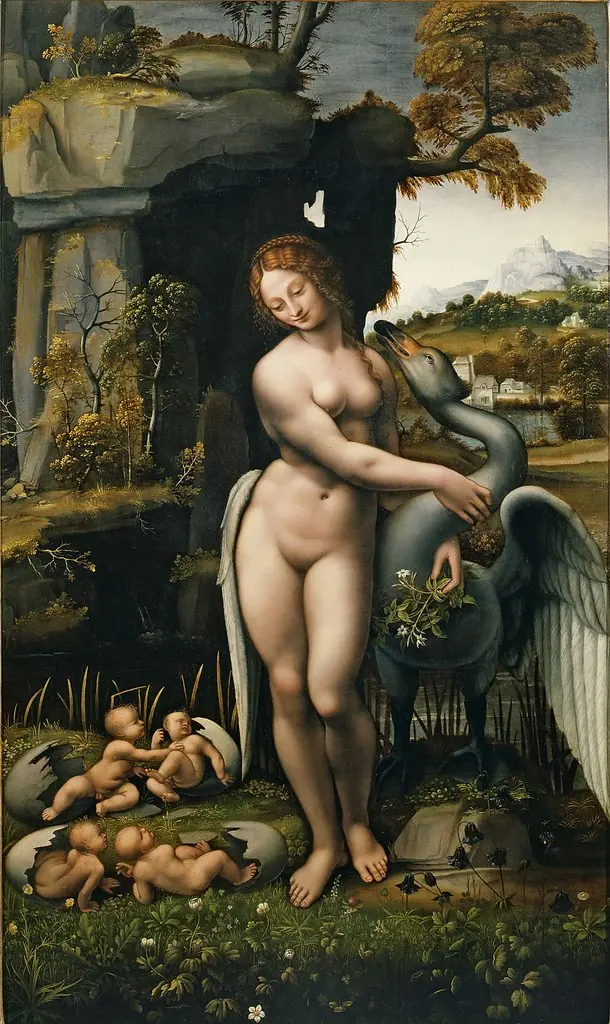
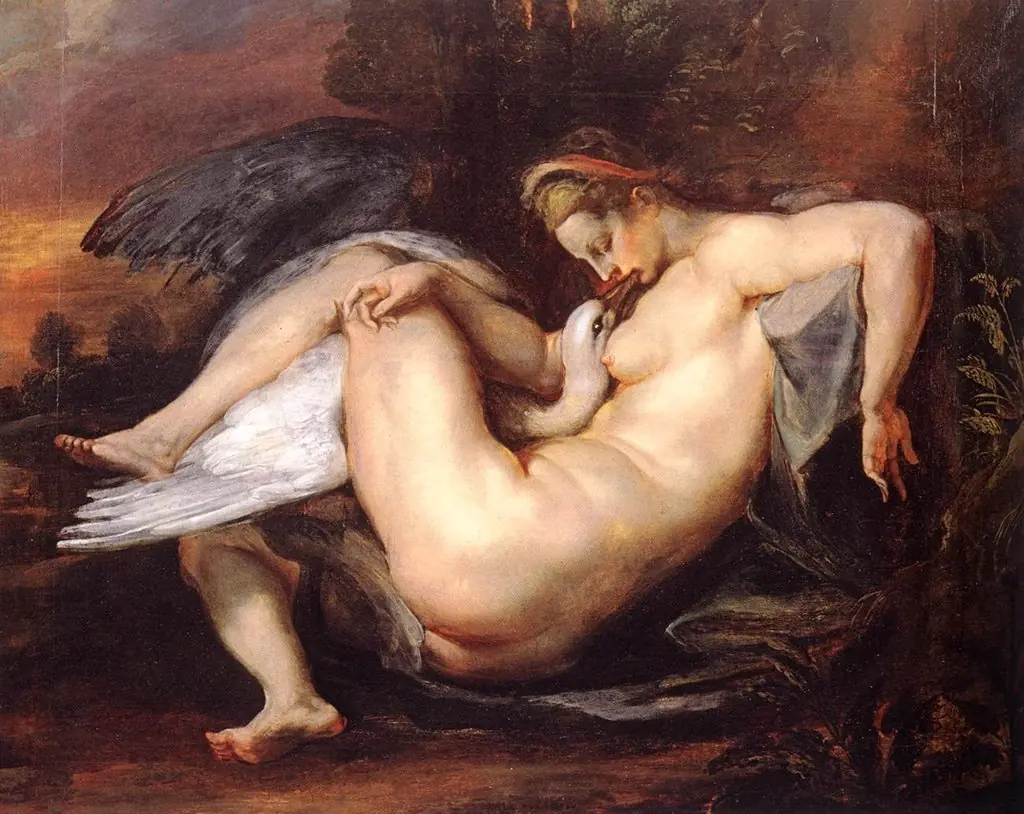
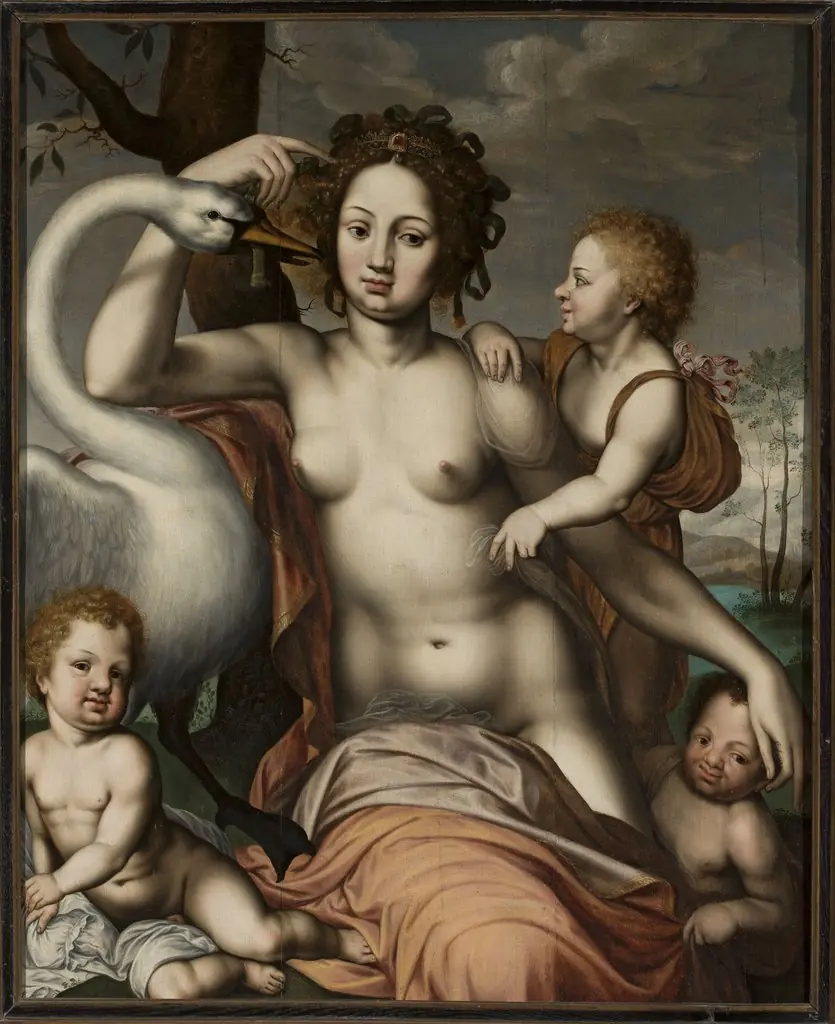
Painted in 1496 by Andrea del Sarto, this oil-on-panel work depicts the mythological encounter between Leda and a swan. It resides in the Royal Museums of Fine Arts of Belgium. The composition centers on a nude female figure interacting with a large swan, while three infants play nearby. The setting is a quiet, wooded landscape rendered in subdued earth tones, conveying stillness and intimacy rather than drama.
Subject & Meaning
The scene illustrates the myth in which Zeus, in the form of a swan, approaches Leda. The calm demeanor of the figures suggests a moment of tender union rather than violence, aligning with Renaissance interpretations that emphasized grace over force. The presence of the three infants alludes to the offspring born from this union—Castor, Pollux, and Helen—linking the moment to broader mythological lineage and divine intervention in human affairs.
Technique & Style
Del Sarto employs chiaroscuro to model the figures with soft transitions between light and shadow, lending volume and realism to the forms. The palette is restrained, dominated by ochres, olives, and muted grays, enhancing the tranquil atmosphere. Brushwork is smooth and controlled, with attention to the texture of skin, feathers, and foliage. The figures are arranged in a balanced, pyramidal composition that directs focus toward the central embrace.
History & Provenance
The painting was created early in del Sarto’s career, likely during his formative years in Florence. It entered the collection of the Royal Museums of Fine Arts of Belgium in the 19th century, having passed through private hands in Italy and possibly the Low Countries. Its survival in relatively intact condition reflects careful stewardship, though little is documented about its immediate post-creation history.
Context
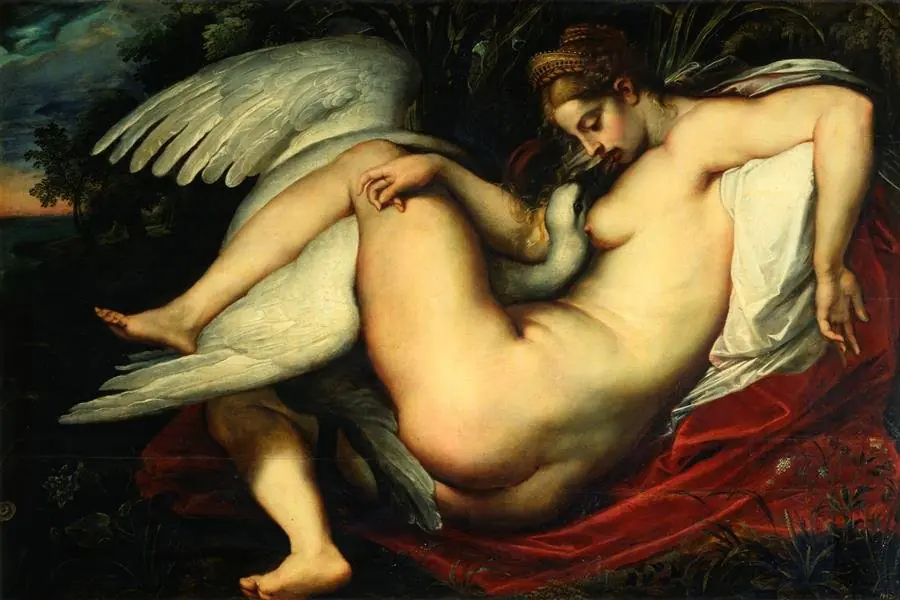
In late 15th-century Florence, mythological subjects were increasingly favored among humanist patrons, blending classical themes with Christian-era aesthetics. Del Sarto’s approach reflects the influence of Leonardo da Vinci’s serene compositions and anatomical precision. The painting’s quiet tone contrasts with more dramatic renditions of the same myth, revealing a regional preference for introspective, harmonious narratives in early High Renaissance art.
Legacy
Though not among del Sarto’s most widely reproduced works, this painting exemplifies his early mastery of naturalism and emotional restraint. It contributed to the evolving depiction of mythological subjects in Northern Italian and Flemish collections, influencing later artists who favored subtlety over spectacle. Its preservation offers insight into how classical myths were adapted for private devotion and intellectual contemplation in Renaissance households.
Artist & collection
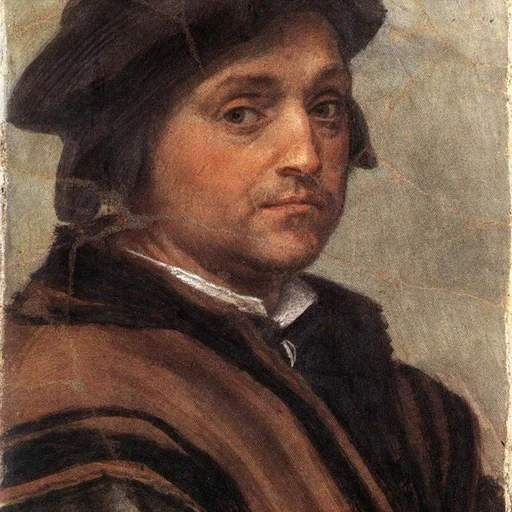
Artist
Andrea del Sarto was an Italian painter from Florence, whose career flourished during the High Renaissance and early Mannerism.

Museum
Royal Museums of Fine Arts of Belgium
Continue through works from the same source collection.