Artwork
Page from Tales of a Parrot (Tuti-nama): text page
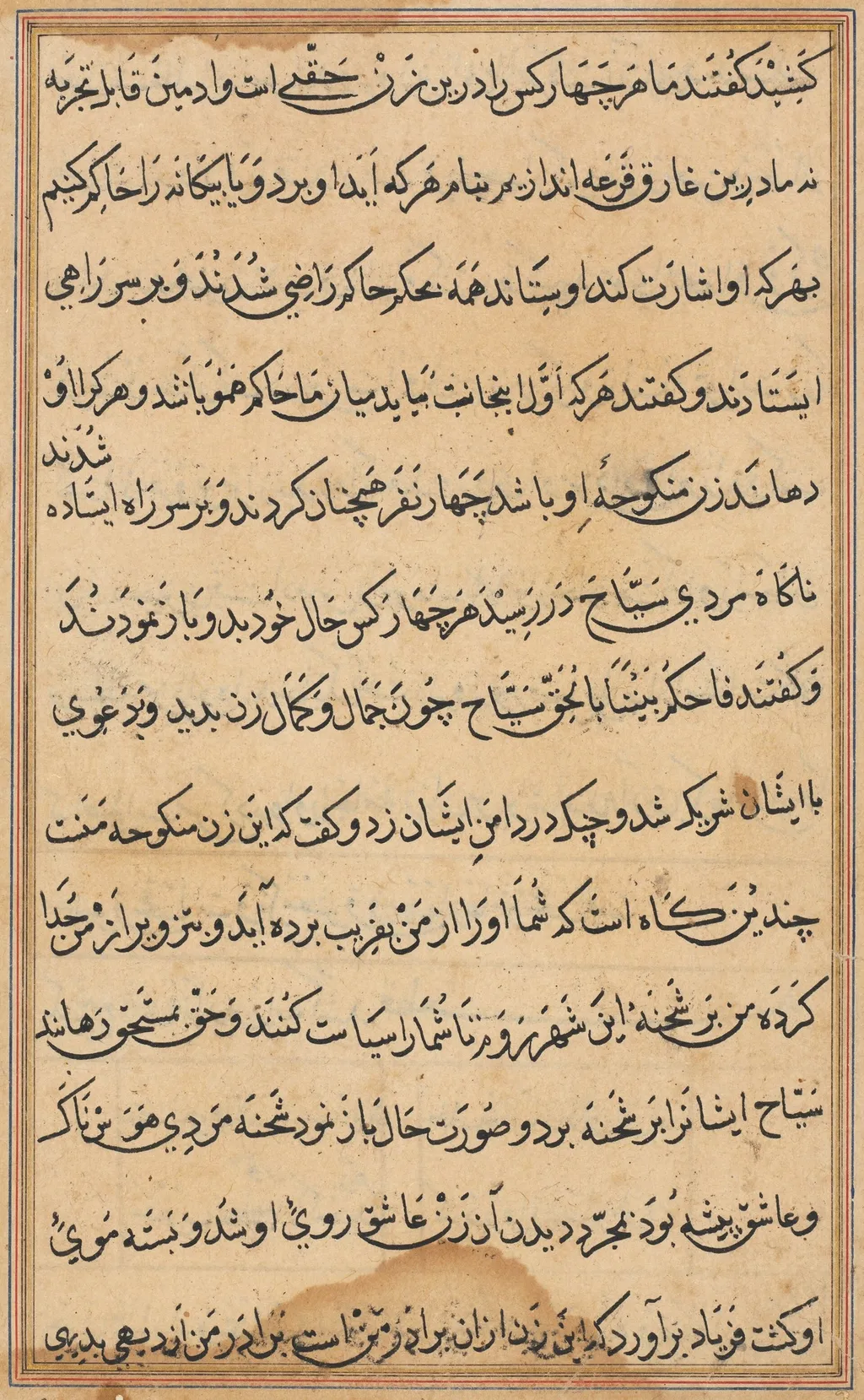
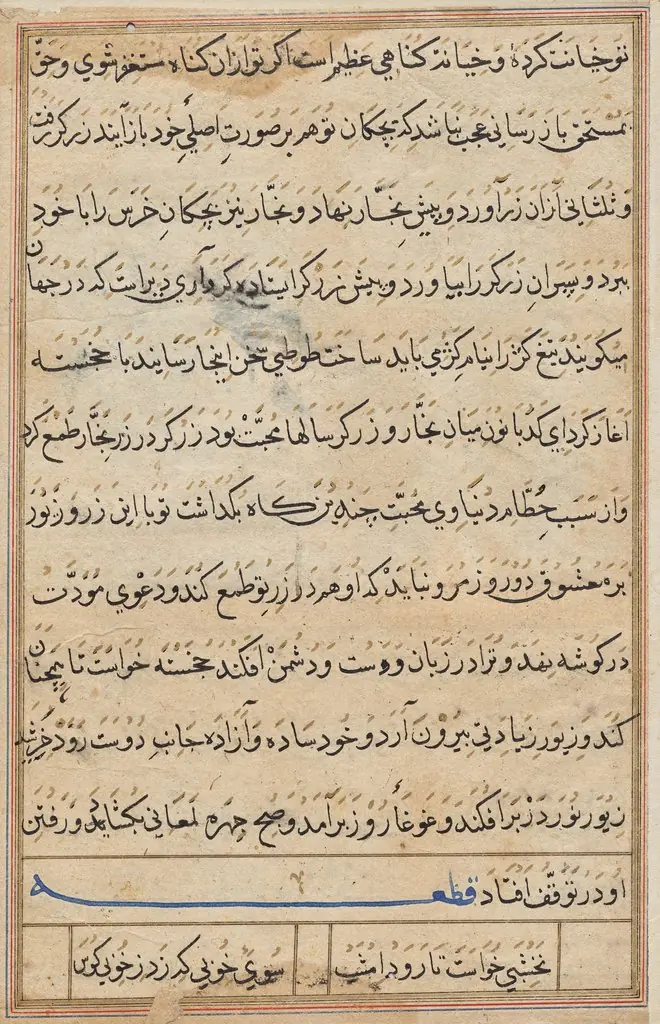
Page from Tales of a Parrot (Tuti-nama): text page is an unspecified painting. It dates from 1560 and is held in the collection of the Cleveland Museum of Art. The object is a single folio from the 16th‑century Indian manuscript known as the Tales of a Parrot (Tuti‑nama).
About this work
Overview
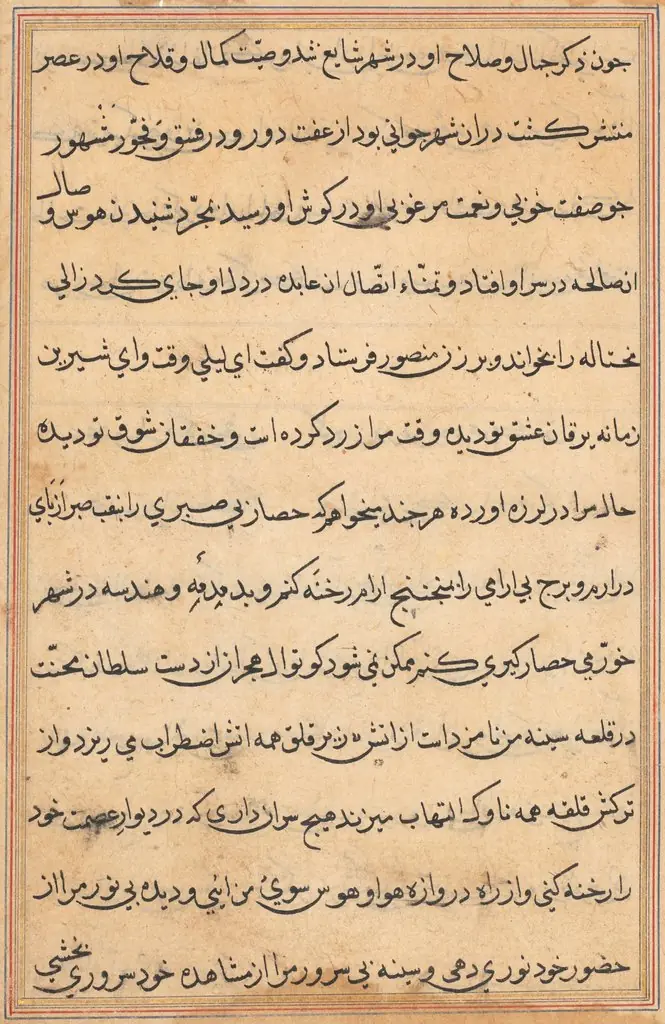
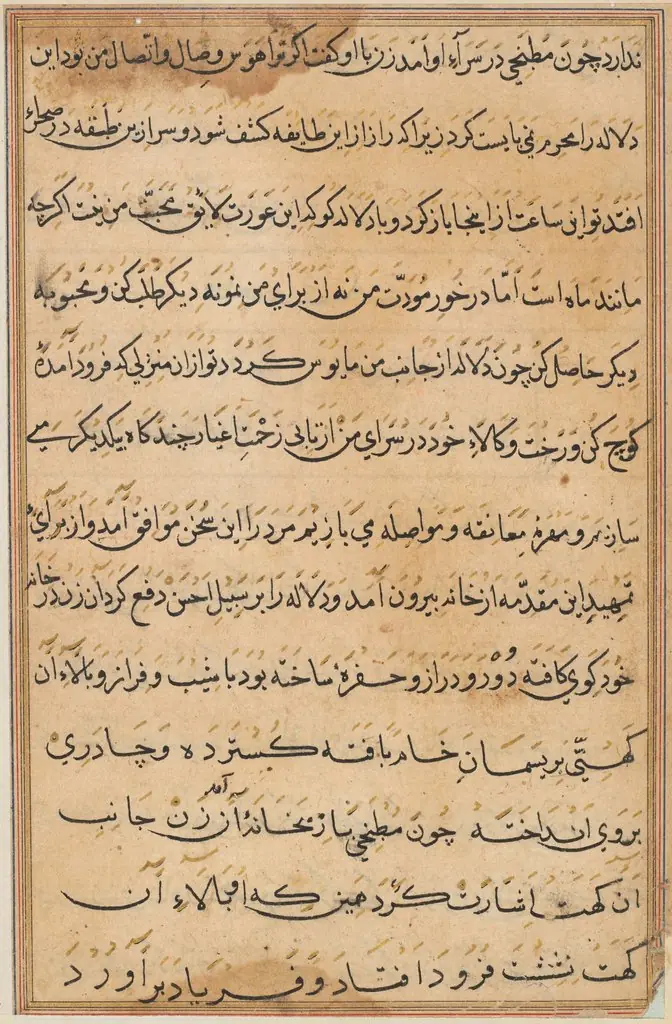
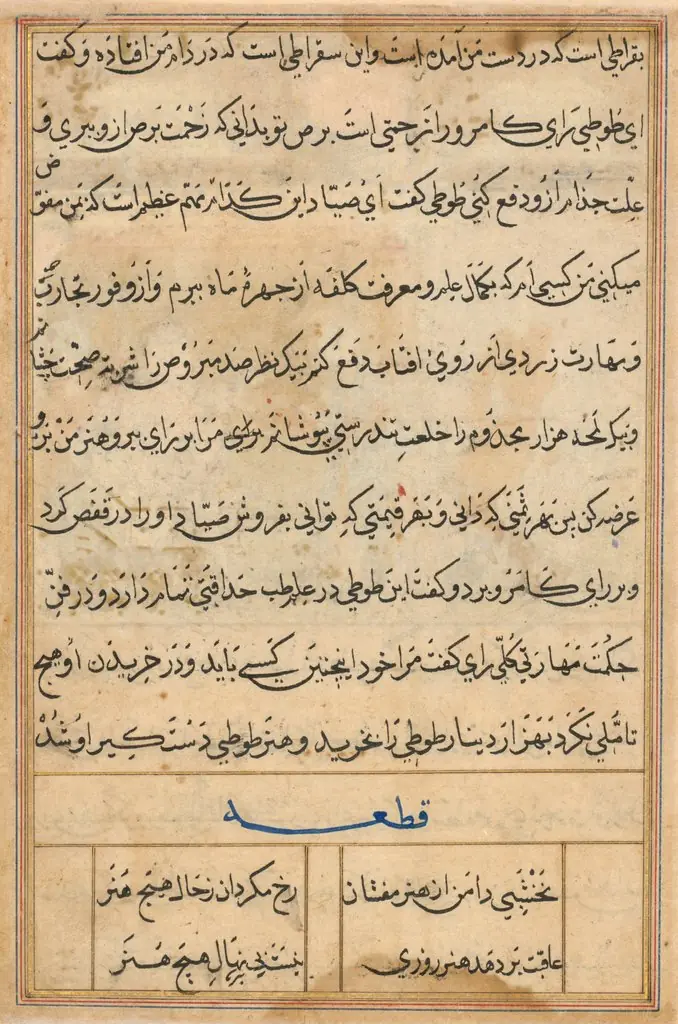
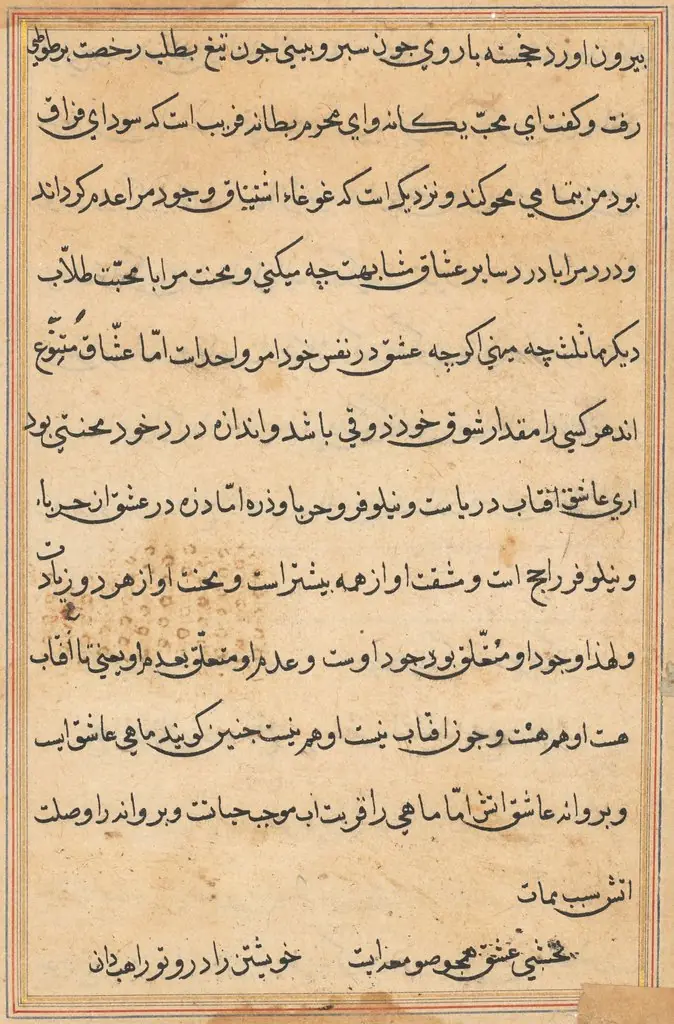
The object is a single folio from the 16th‑century Indian manuscript known as the Tales of a Parrot (Tuti‑nama). Executed as a painted page, it presents a block of black‑ink text on a warm beige surface, framed by a narrow inner line and a broader outer margin. Gold highlights accentuate selected words, adding visual emphasis to the script.
Subject & Meaning
The page contains a narrative passage from the Tuti‑nama, a collection of moral and didactic stories traditionally illustrated for elite audiences. The highlighted gold terms likely mark key moral points or names, guiding the reader’s attention and underscoring the instructional purpose of the text within the broader literary work.
Technique & Style
The manuscript page was rendered with black ink applied in a fluid, cursive hand, characteristic of Persian‑influenced Indian calligraphy of the period. Gold leaf or pigment was used to accentuate particular phrases, while the beige parchment shows age‑related discoloration and stains, indicating the material’s organic origin and the historic handling of the document.
History & Provenance
Created in the 1500s for a wealthy or noble patron, the folio survived through private collections before entering the Cleveland Museum of Art. Its rarity as a surviving 16th‑century Indian manuscript page makes it a valuable example of courtly literary production and the patronage networks that supported such works.
Context
During the Mughal era, illustrated manuscripts like the Tuti‑nama blended Persian literary traditions with Indian artistic sensibilities. The use of gold and refined calligraphy reflects the courtly taste for luxury objects that combined visual elegance with moral instruction, situating this page within the broader cultural and artistic currents of early modern South Asia.
Artist & collection

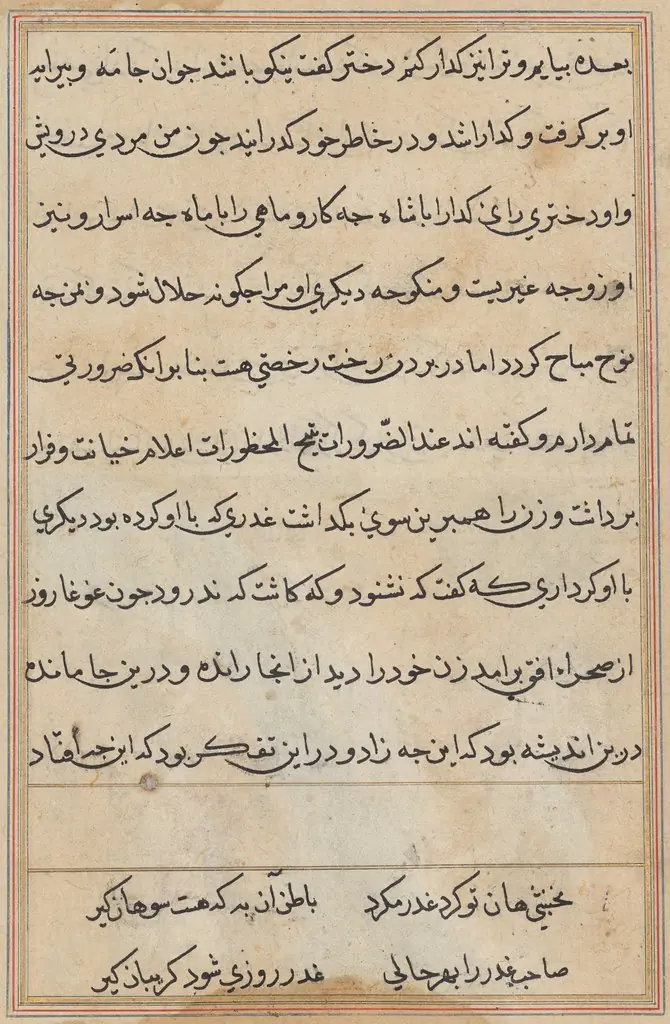 Page from Tales of a Parrot (Tuti-nama): text page
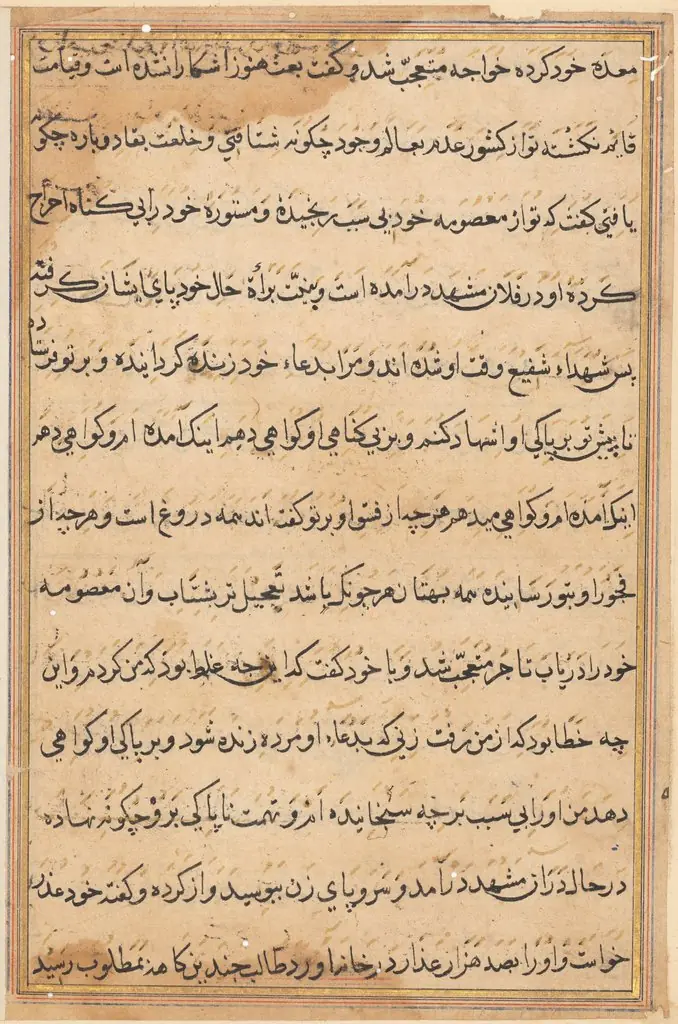 Page from Tales of a Parrot (Tuti-nama): text page
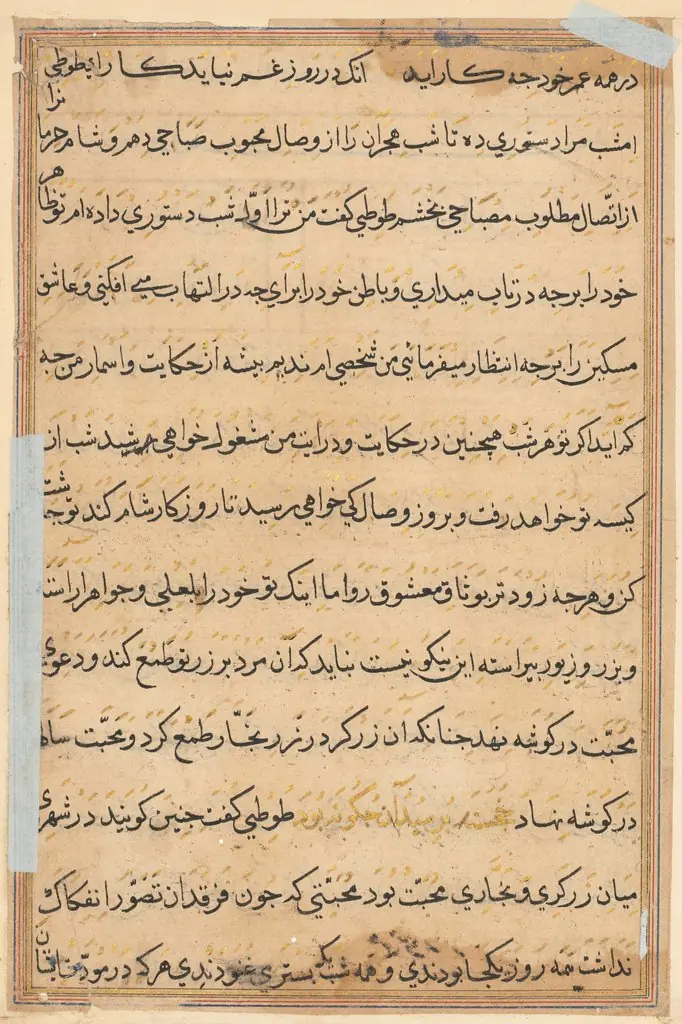 Page from Tales of a Parrot (Tuti-nama): text page
 Page from Tales of a Parrot (Tuti-nama): text page
 Page from Tales of a Parrot (Tuti-nama): text page
 Page from Tales of a Parrot (Tuti-nama): text page
 Page from Tales of a Parrot (Tuti-nama): text page
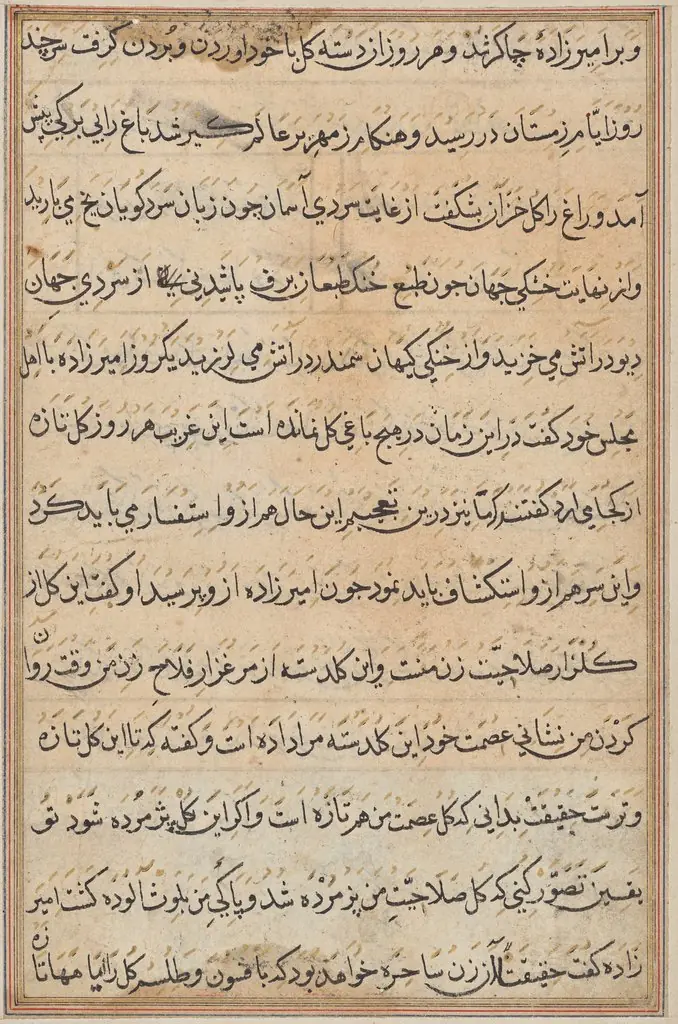 Page from Tales of a Parrot (Tuti-nama): text page
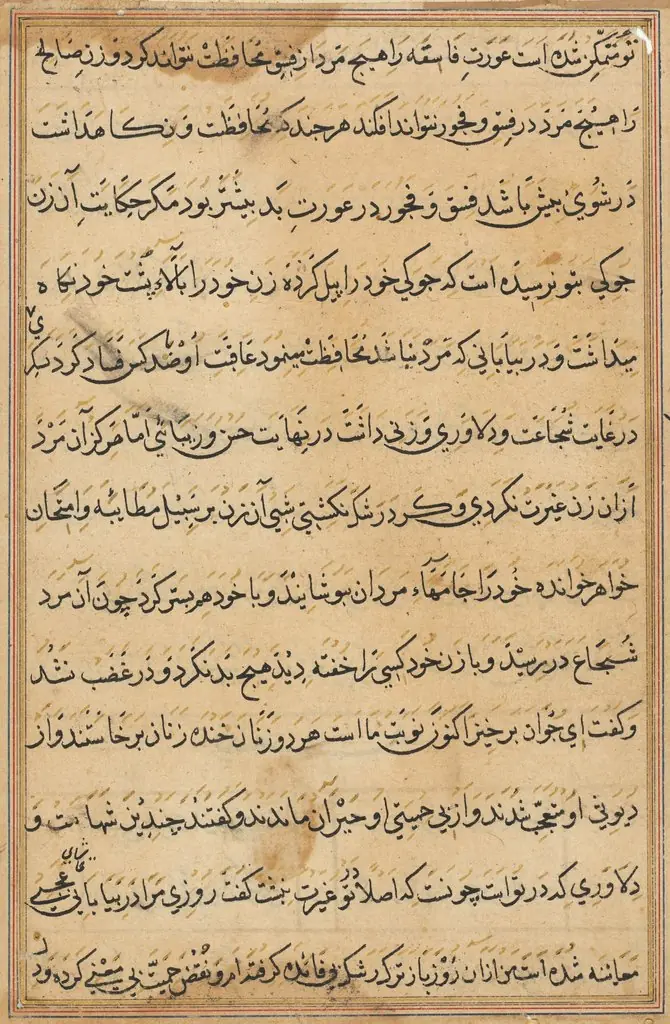 Page from Tales of a Parrot (Tuti-nama): text page
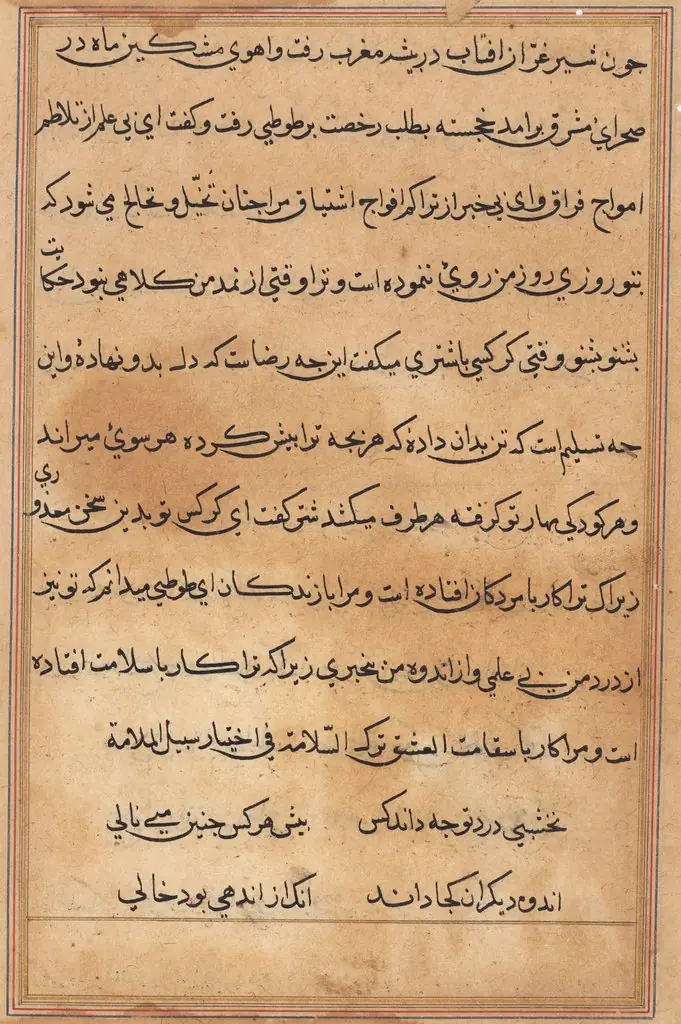 Page from Tales of a Parrot (Tuti-nama): text page
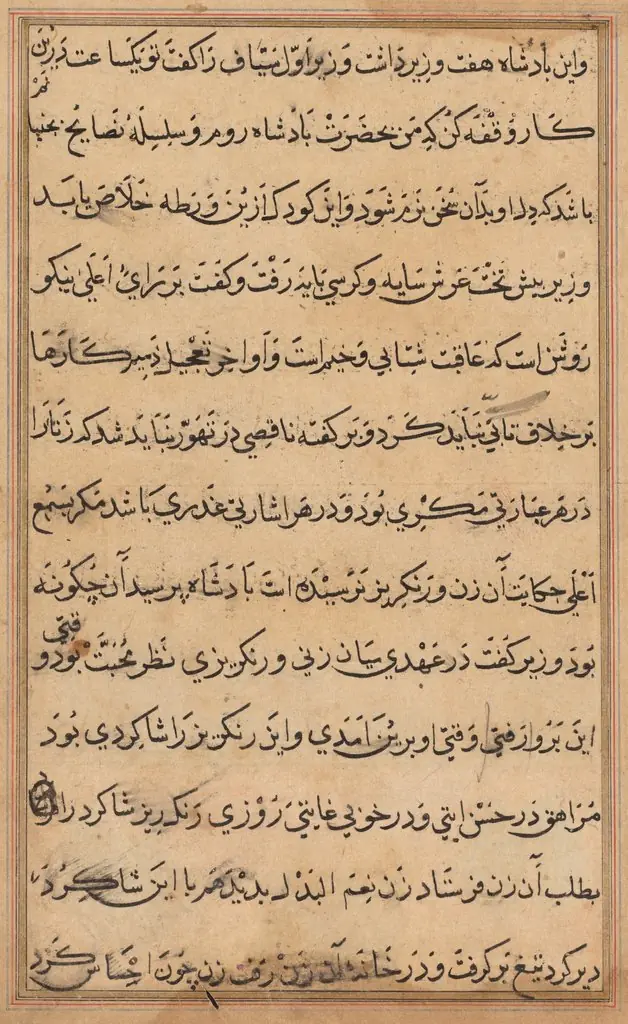 Page from Tales of a Parrot (Tuti-nama): text page
 Page from Tales of a Parrot (Tuti-nama): text page