Artwork
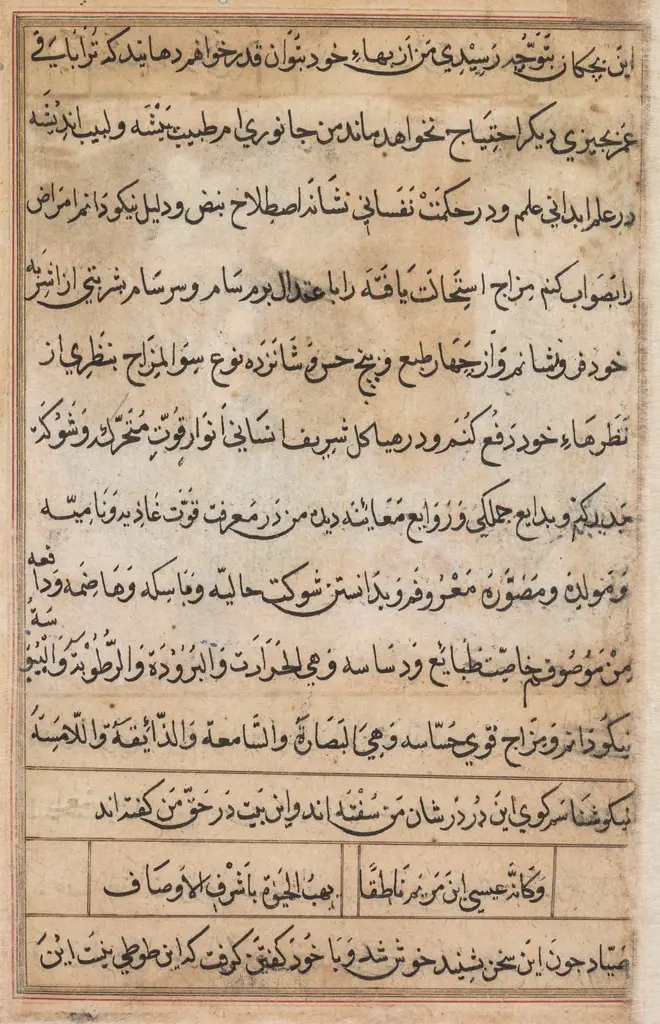
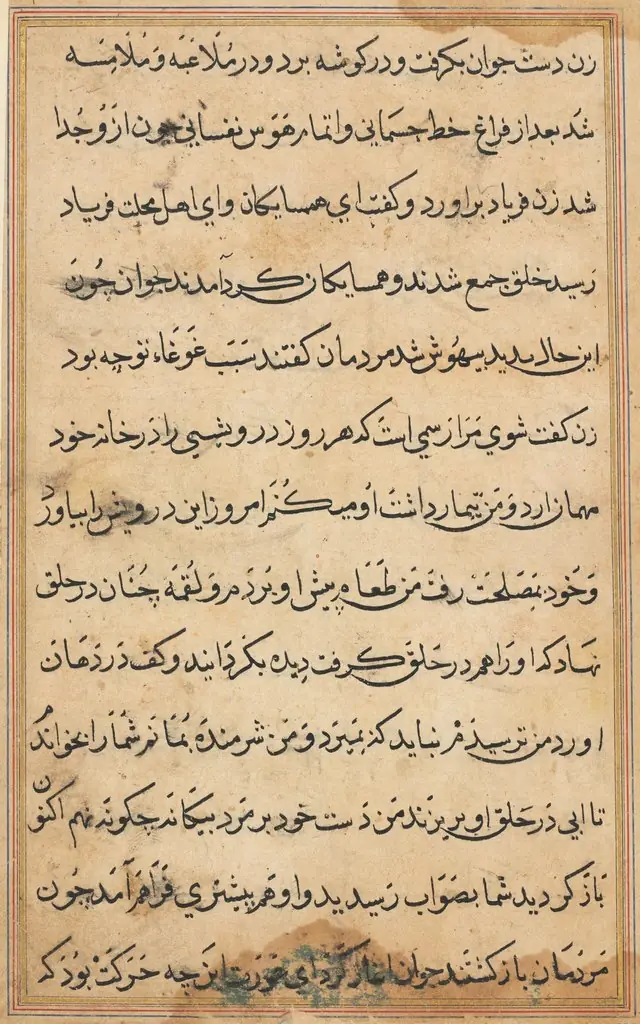
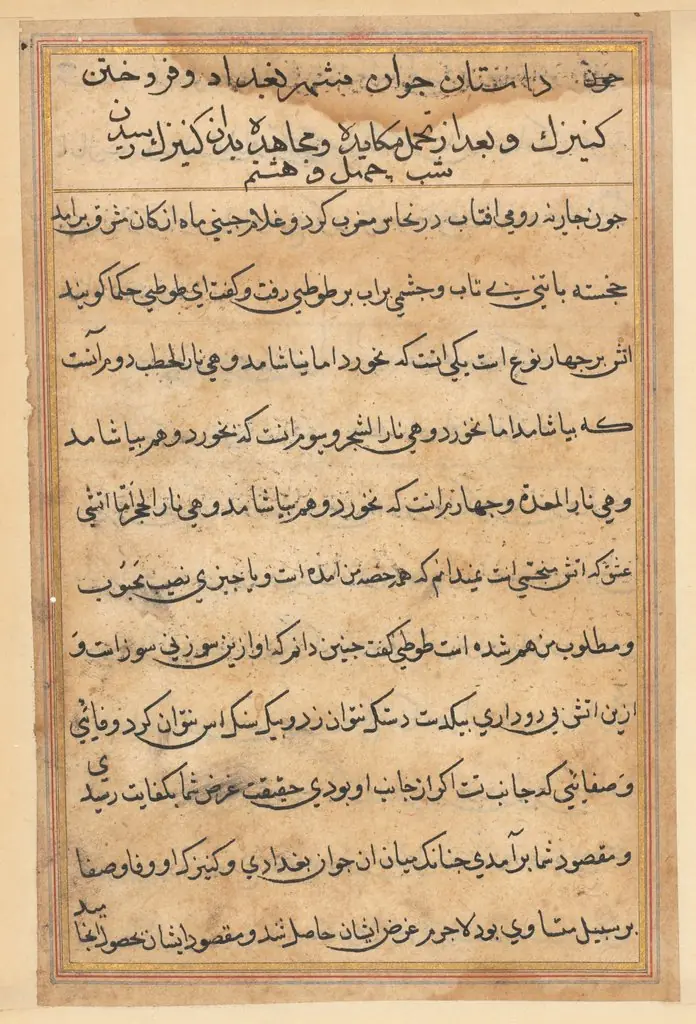
Page from Tales of a Parrot (Tuti-nama): text page
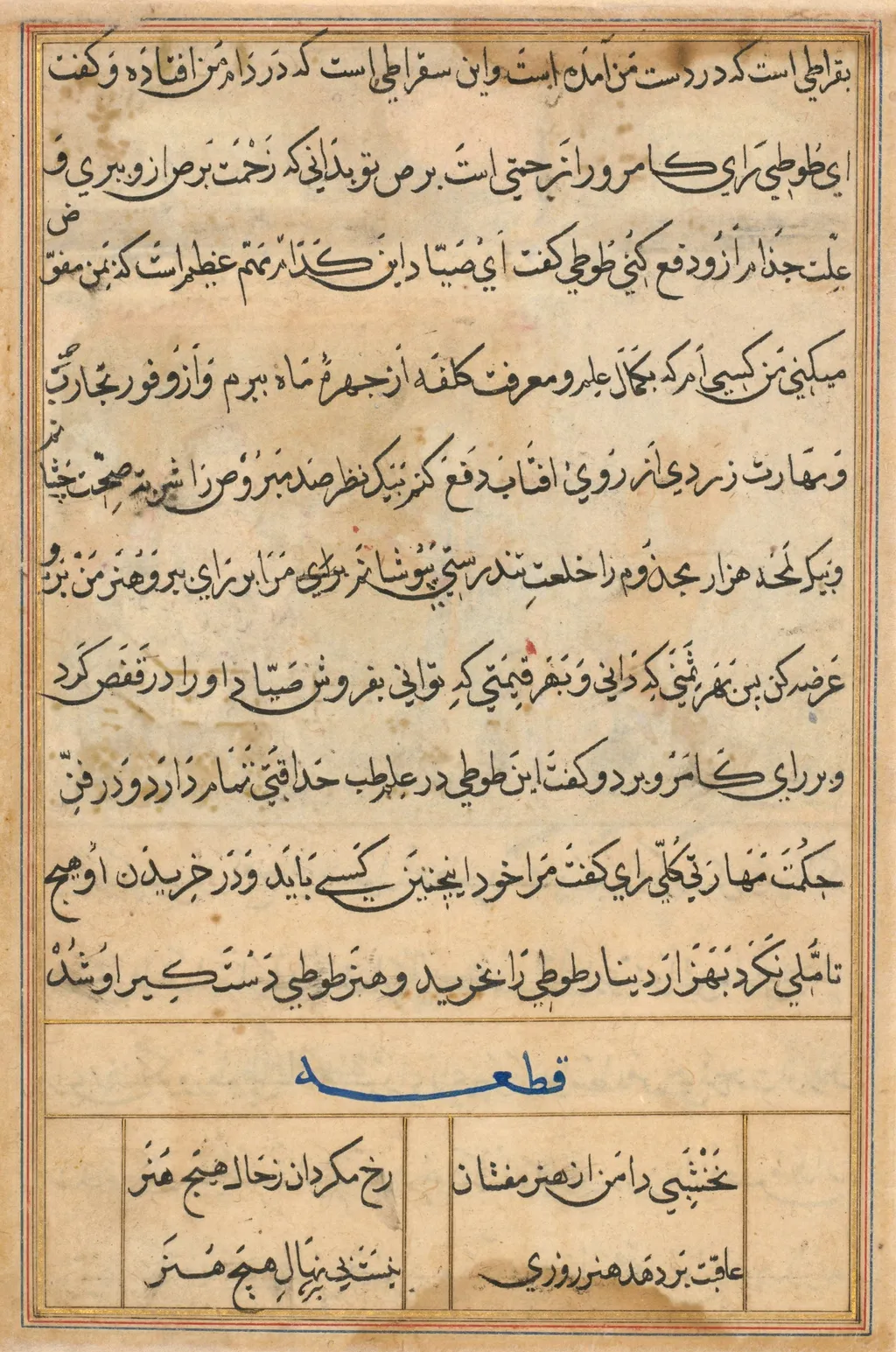
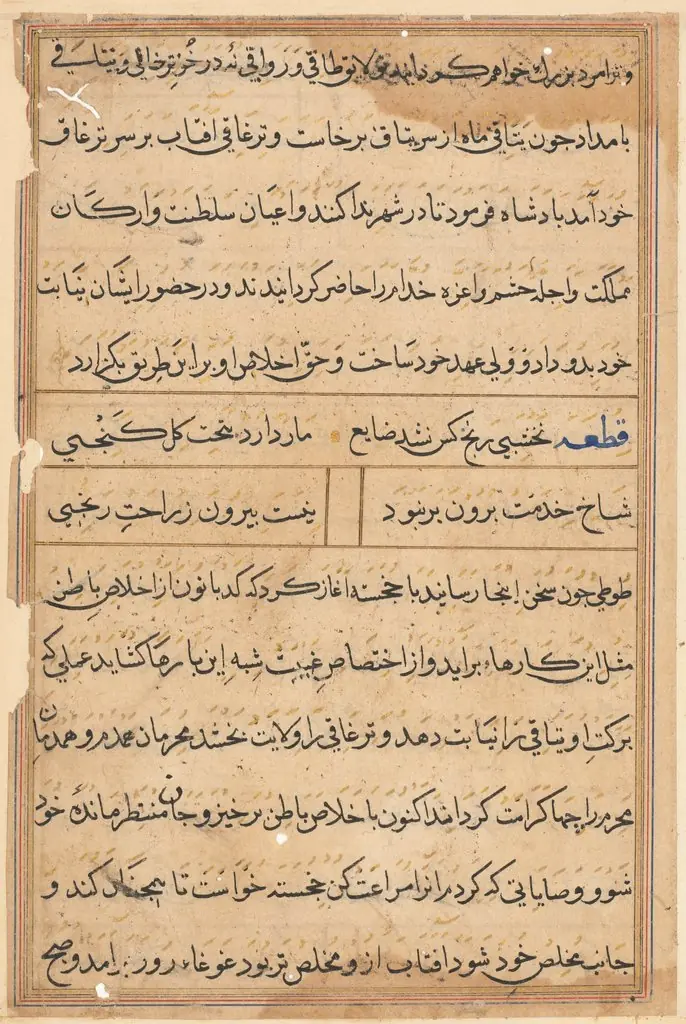
Page from Tales of a Parrot (Tuti-nama): text page is an unspecified painting by the Mughal Painting artist Basawan. It dates from 1560 and is held in the collection of the Cleveland Museum of Art. This object is a painted page from the illustrated manuscript known as the *Tales of a Parrot* (Tuti‑nama).
About this work
Overview
This object is a painted page from the illustrated manuscript known as the *Tales of a Parrot* (Tuti‑nama). Executed by the Mughal artist Basawan around 1560, the work now belongs to the collection of the Cleveland Museum of Art. The page presents a single sheet of text rendered in ink and pigment on a light‑colored paper support.
Subject & Meaning
The sheet contains a passage of Persian narrative prose, the language of the *Tuti‑nama* collection of moral stories. Though the exact content is not transcribed here, the text functions as a literary illustration, pairing the tale’s didactic purpose with visual ornamentation typical of Mughal courtly books.
Technique & Style
Basawan employed a fine black ink to compose the calligraphic text, which is richly embellished with curvilinear flourishes, swirls and decorative dots. Accents of red and blue pigment frame the margins, adding visual contrast. The paper has acquired a warm, yellowed patina, indicating extensive handling, while the brushwork suggests a skilled hand using a pointed pen or brush.
History & Provenance
Created in the mid‑sixteenth century for a Mughal patron, the page later entered the European art market before being acquired by the Cleveland Museum of Art. Its provenance traces a path from South Asian manuscript production to a Western institutional collection, where it is preserved as a representative example of Basawan’s oeuvre.
Context
During the reign of Emperor Akbar, Mughal workshops produced lavishly illustrated manuscripts that combined Persian literary traditions with Indian artistic sensibilities. Basawan, a leading painter of the imperial atelier, contributed to this cultural synthesis, and the *Tuti‑nama* exemplifies the period’s emphasis on moral instruction through richly decorated textual pages.
Artist & collection
Artist
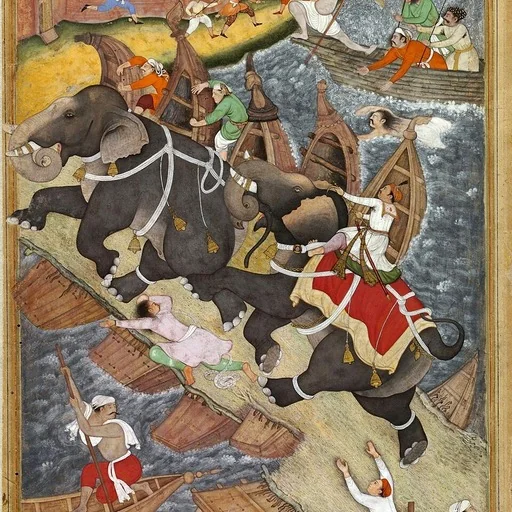
Basāwan, or Basāvan, was an Indian miniature painter in the Mughal style. He was known by his contemporaries as a skilled colorist and keen observer of human nature, and for his use of portraiture in the illustrations…

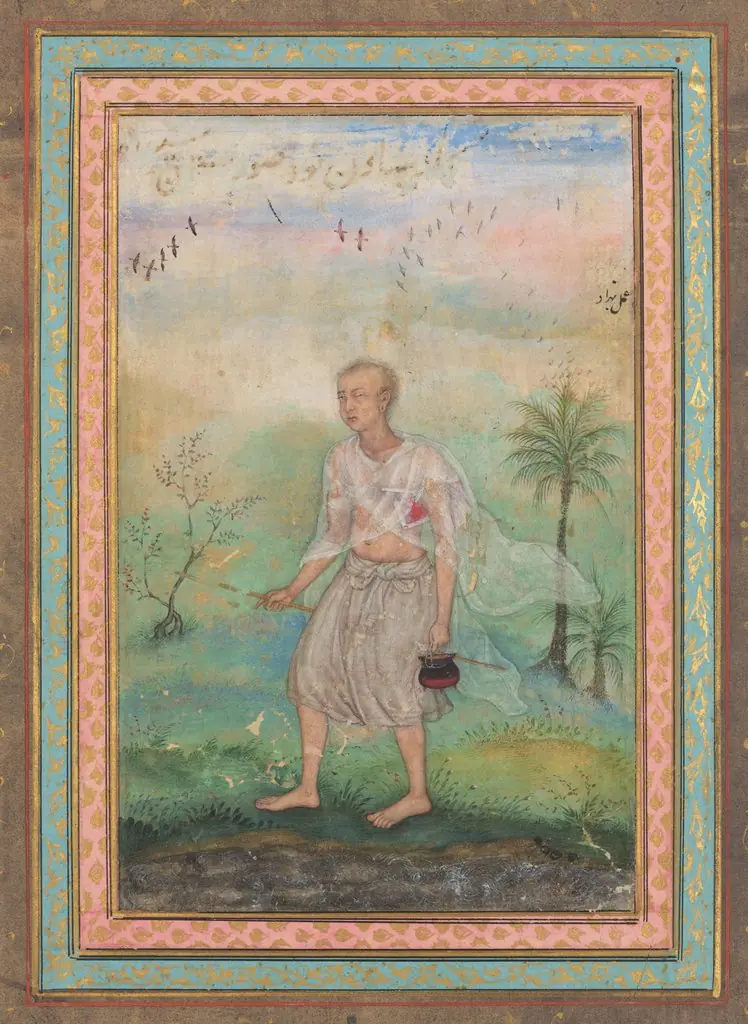 Jain Ascetic Walking Along a Riverbank
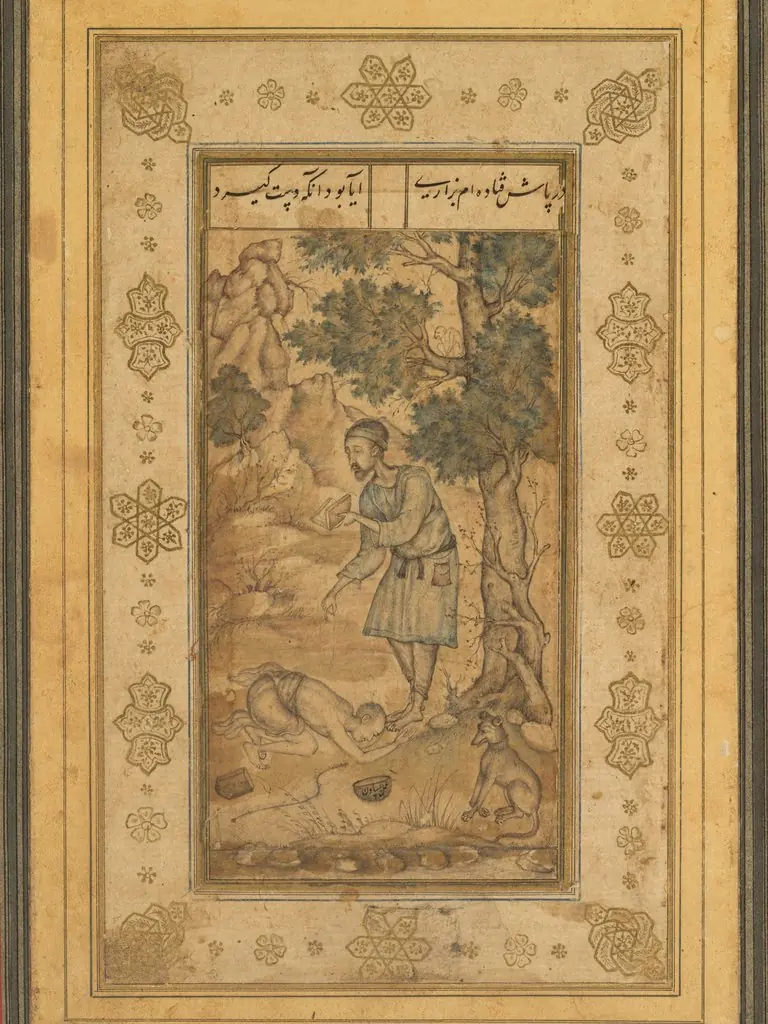 A mendicant bowing before a holy man, from the Prince Salim Album
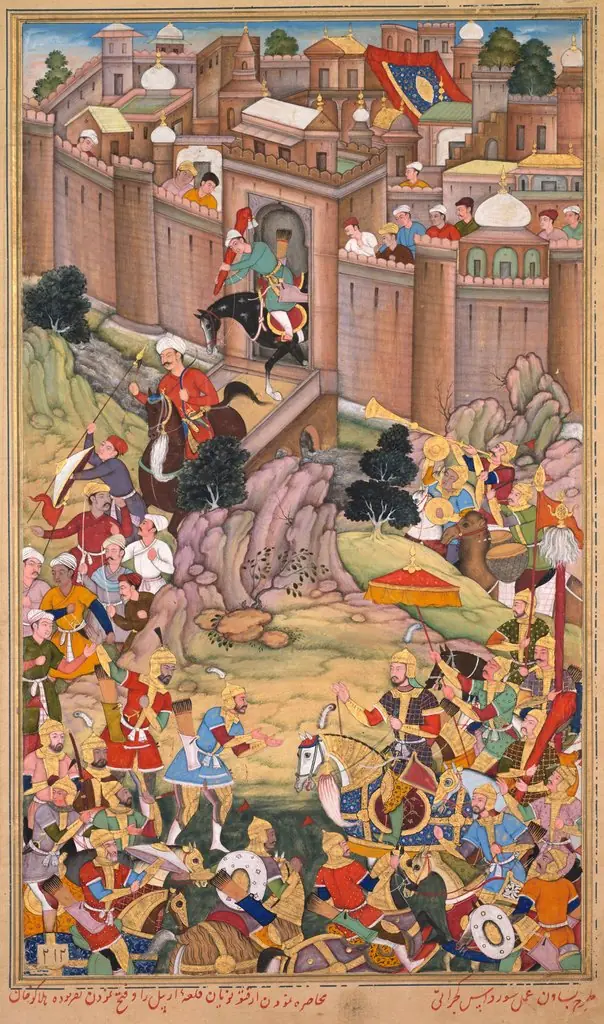 The siege of Arbela in the era of Hulagu Khan, from a Chingiz-nama (Book of Chingiz Khan) of the Jami al-tavarikh (Compendium of Chronicles) of Rashid al-Din (Persian, 1247–1318)
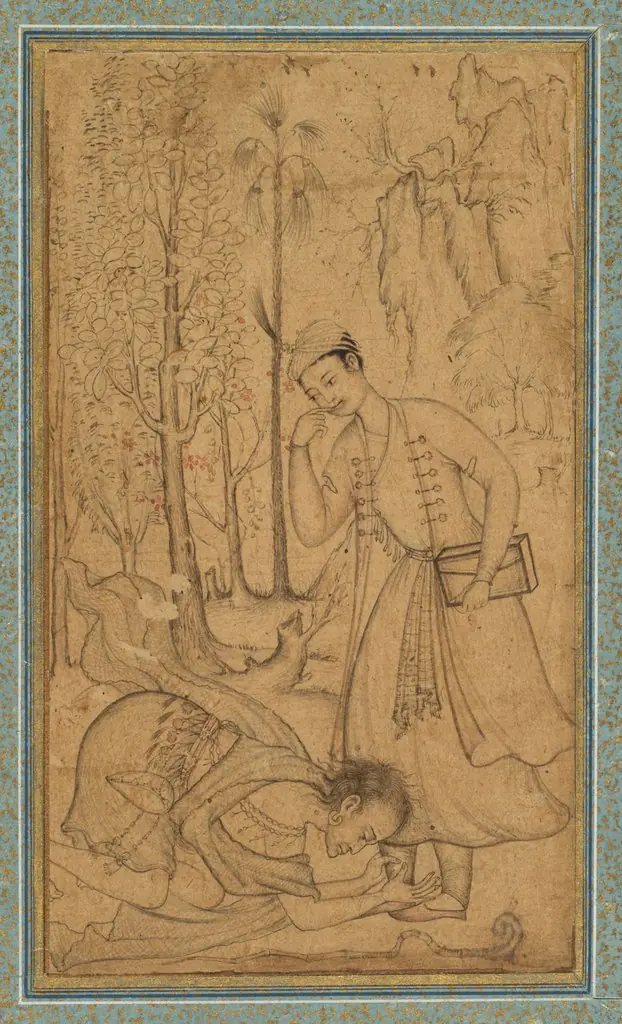 A holy man prostrating himself before a learned prince
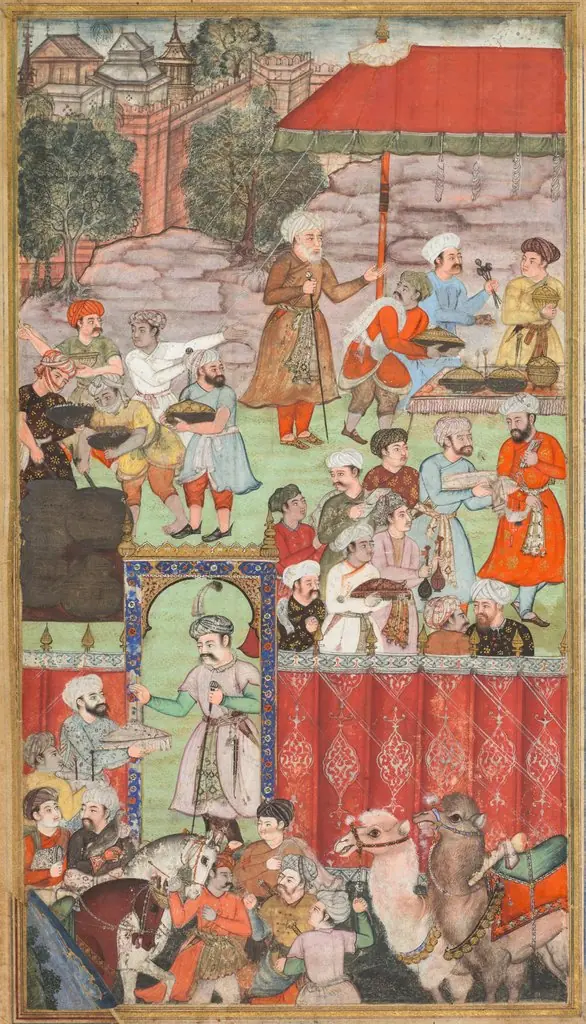 A feast for Babur hosted by his half-brother Jahangir Mirza in Ghazni in May 1505, from a Babur-nama (Memoirs of Babur)
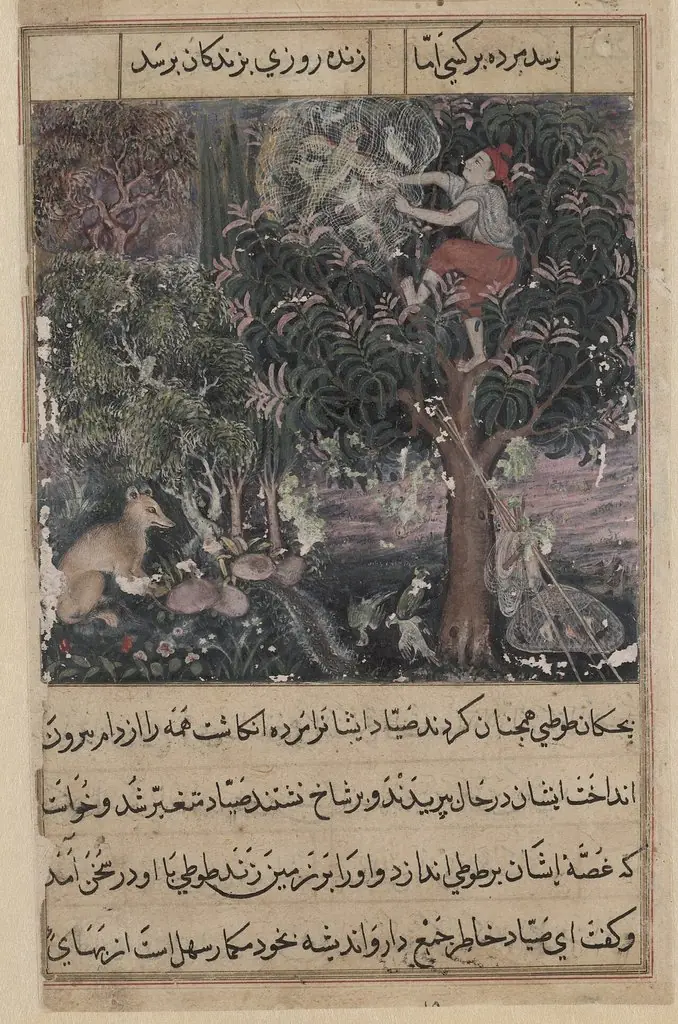 The hunter throws away the baby parrots, who pretend to be dead, and captures the mother, from a Tuti-nama (Tales of a Parrot): Fifth Night
 Page from Tales of a Parrot (Tuti-nama): text page
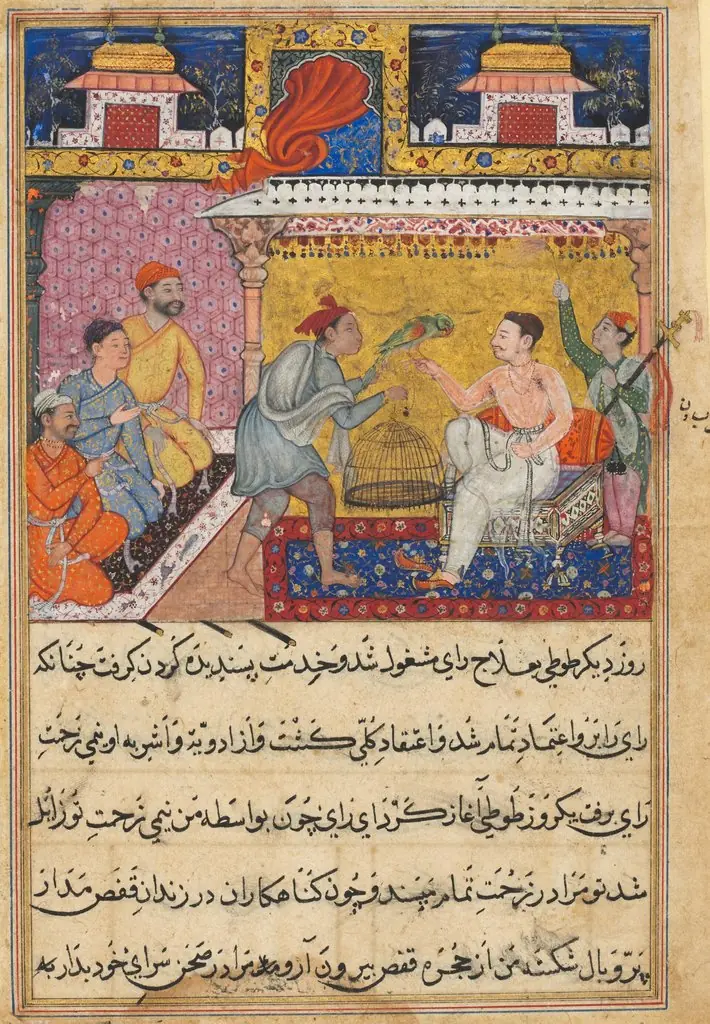 The hunter offers the mother parrot to the king of Kamarupa, from a Tuti-nama (Tales of a Parrot): Fifth Night
 Page from Tales of a Parrot (Tuti-nama): text page
 Page from Tales of a Parrot (Tuti-nama): text page
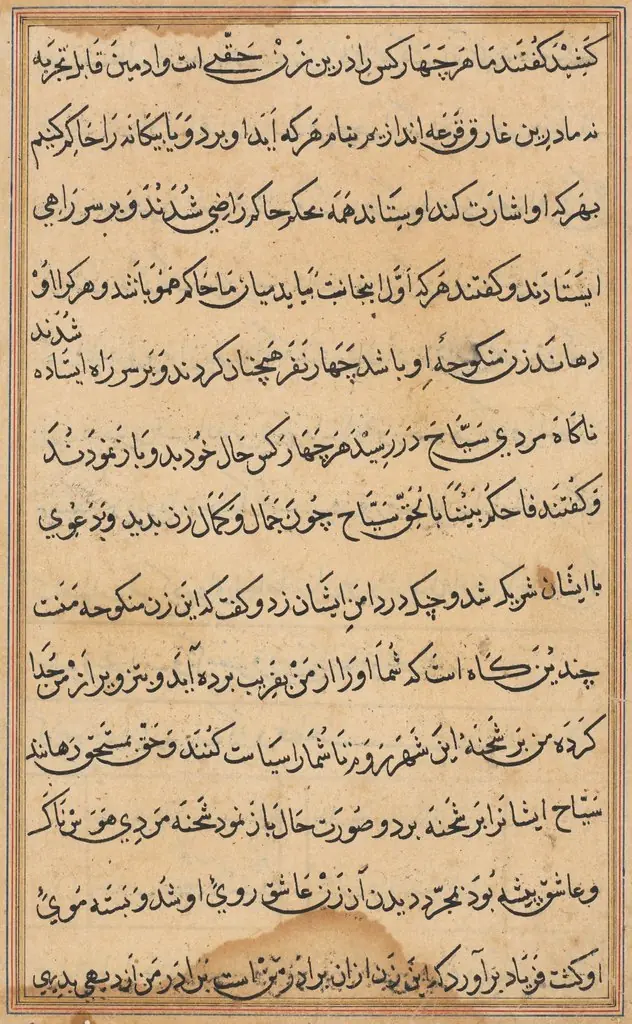 Page from Tales of a Parrot (Tuti-nama): text page
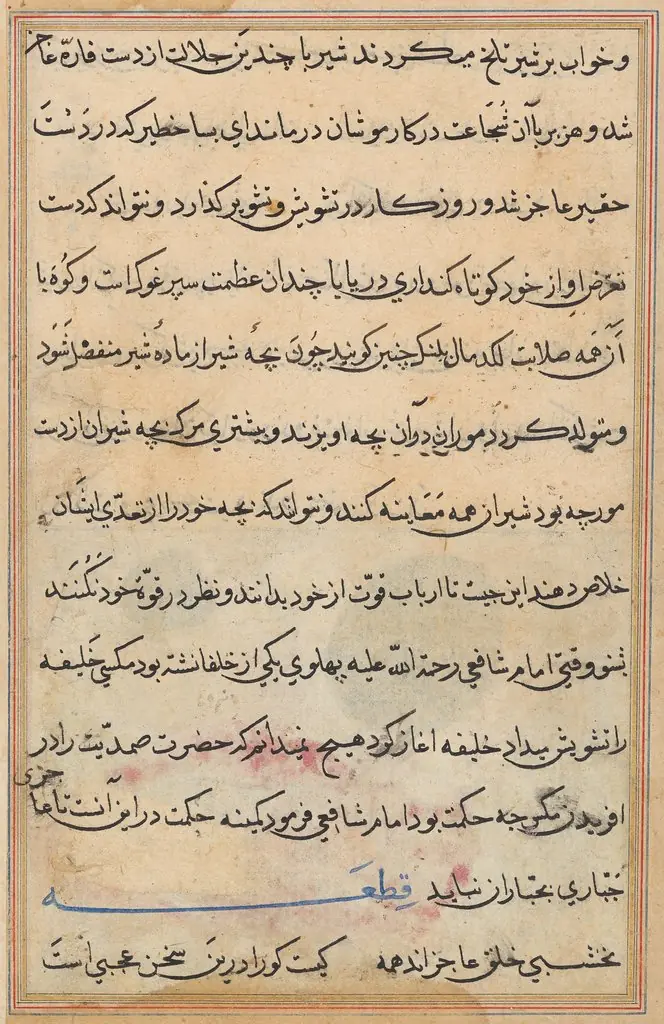 Page from Tales of a Parrot (Tuti-nama): text page
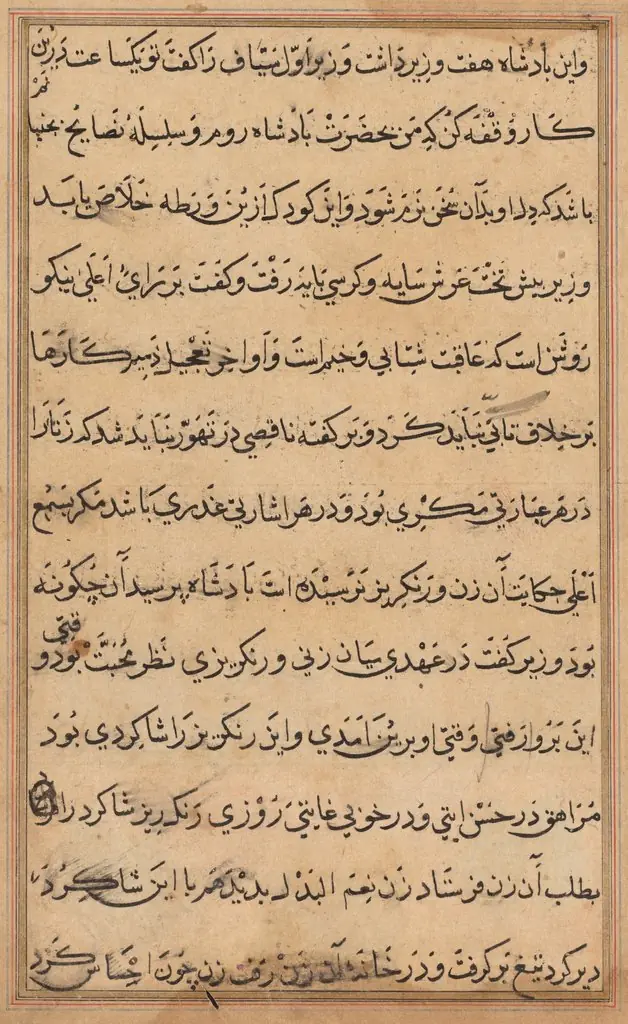 Page from Tales of a Parrot (Tuti-nama): text page
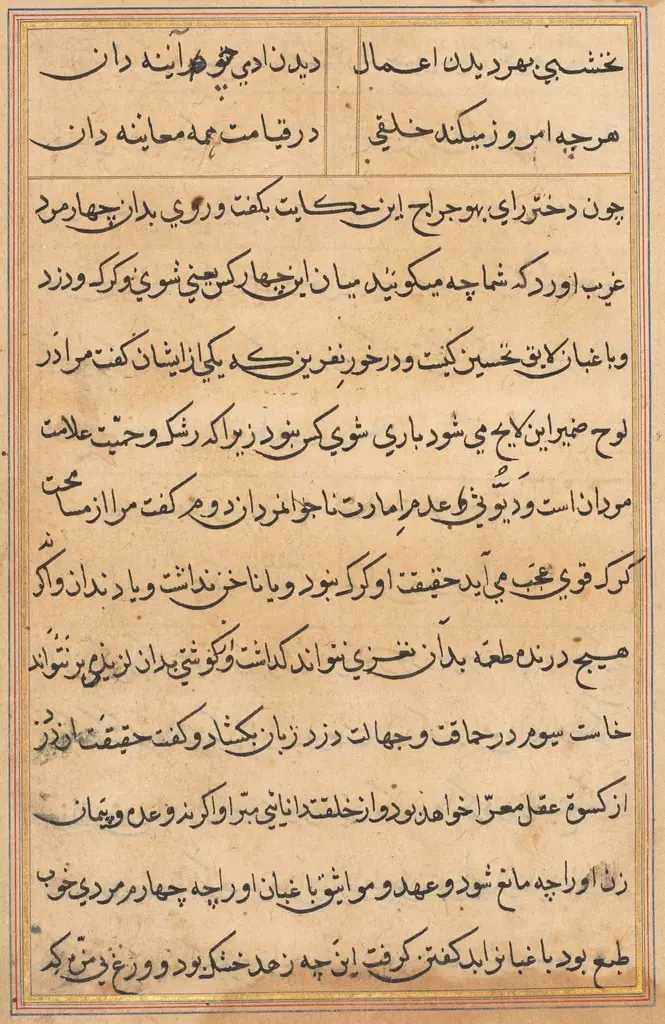 Page from Tales of a Parrot (Tuti-nama): text page
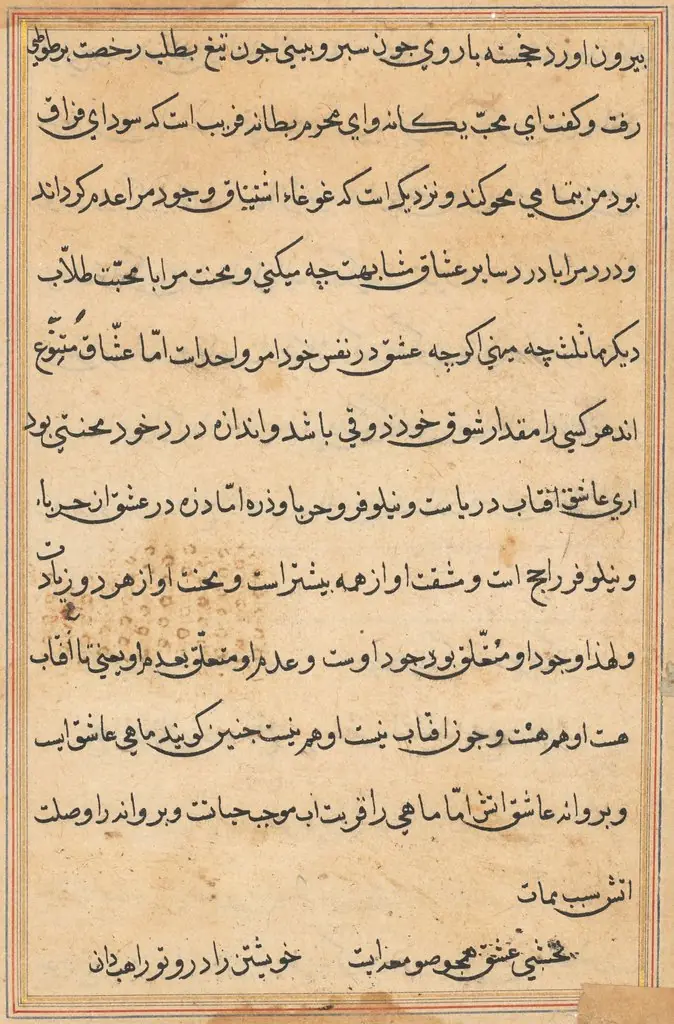 Page from Tales of a Parrot (Tuti-nama): text page
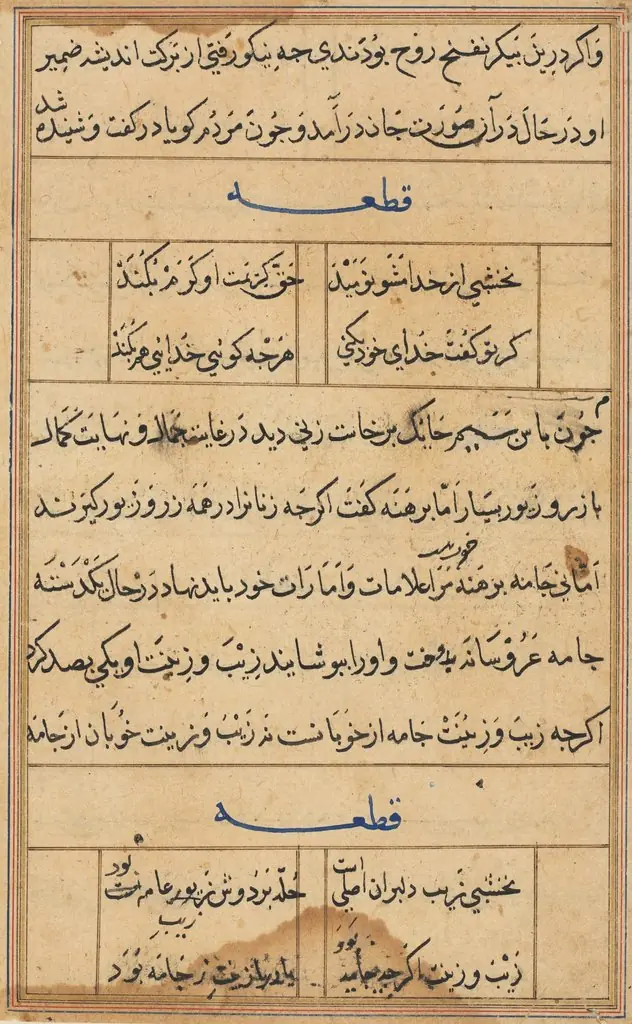 Page from Tales of a Parrot (Tuti-nama): text page
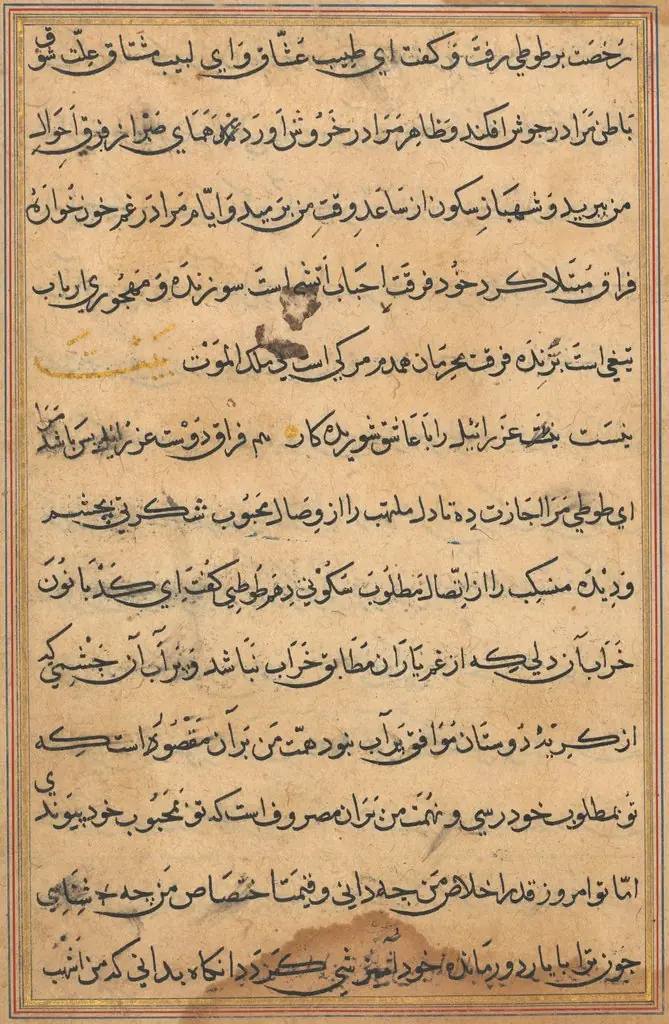 Page from Tales of a Parrot (Tuti-nama): text page
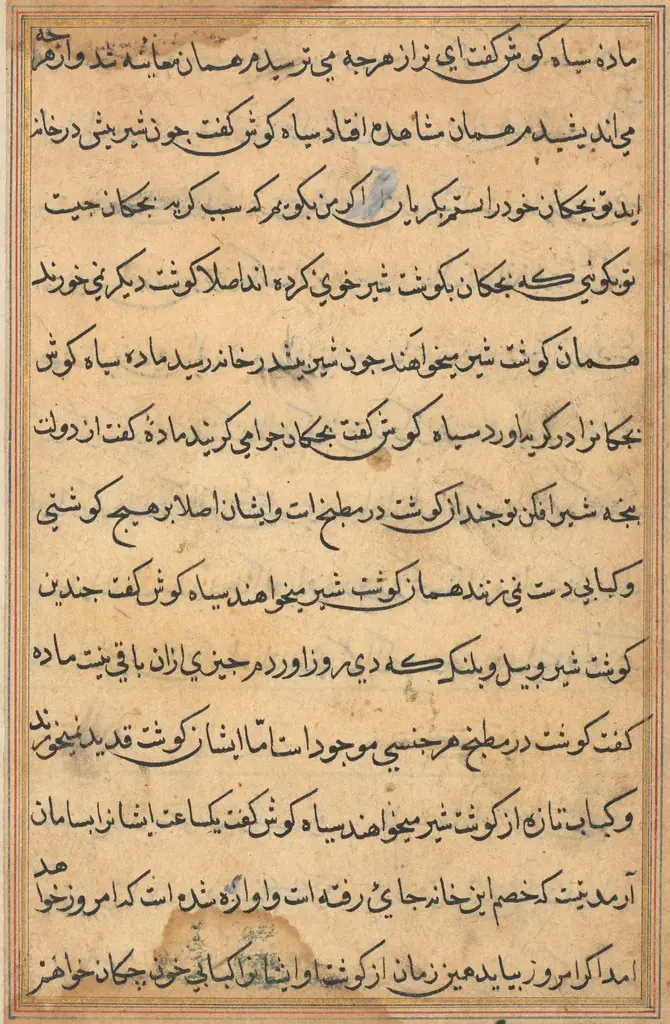 Page from Tales of a Parrot (Tuti-nama): text page
 Page from Tales of a Parrot (Tuti-nama): text page