Artwork
Landscape with a Ruined Tower, Sunset
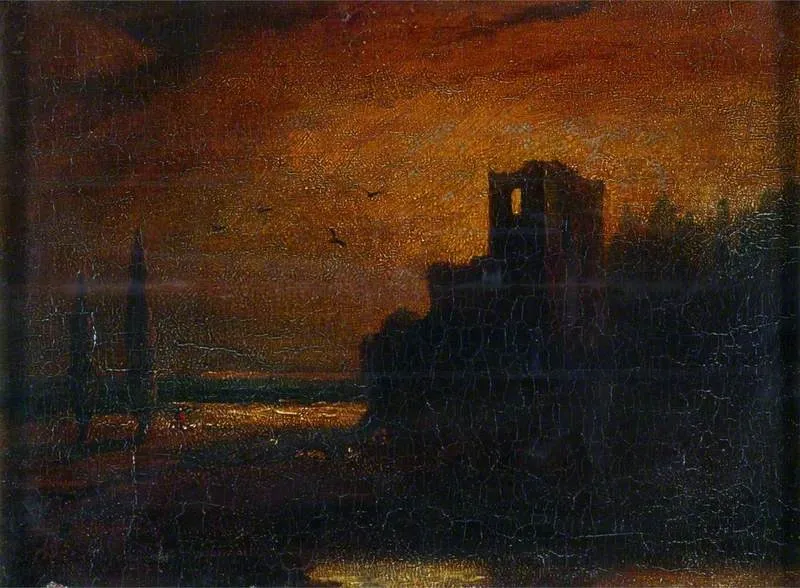
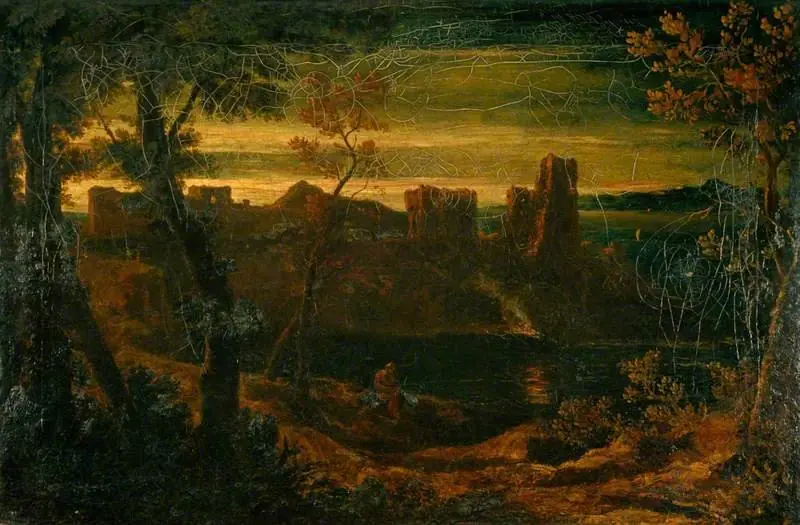
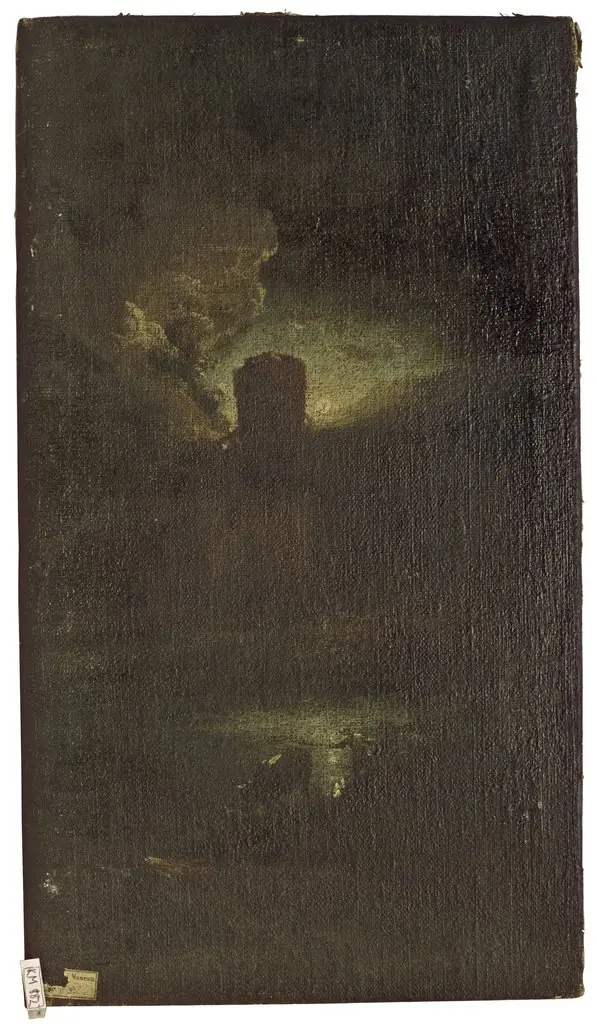
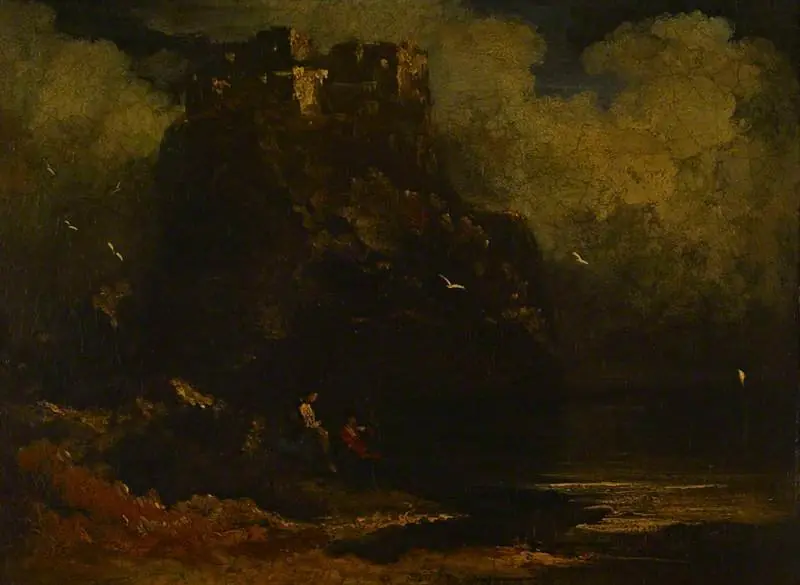
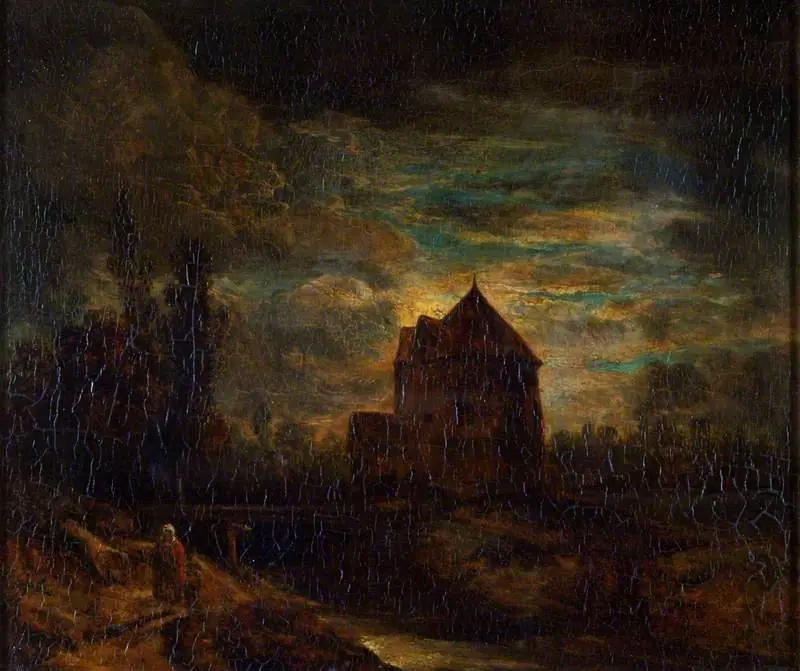
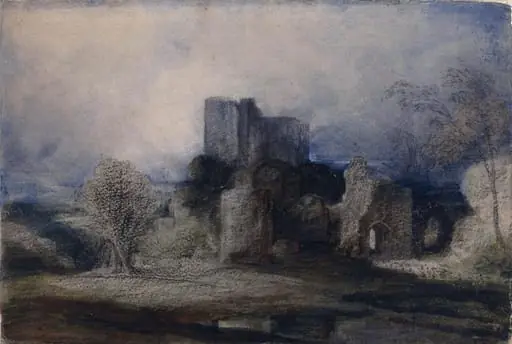
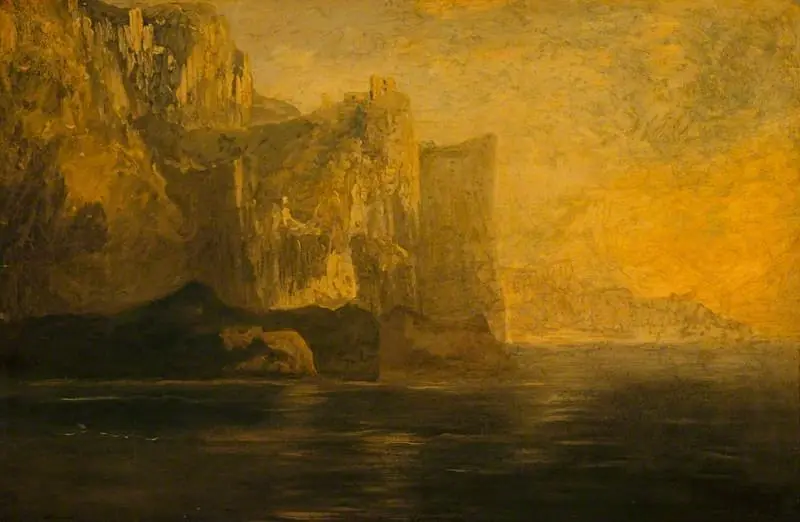
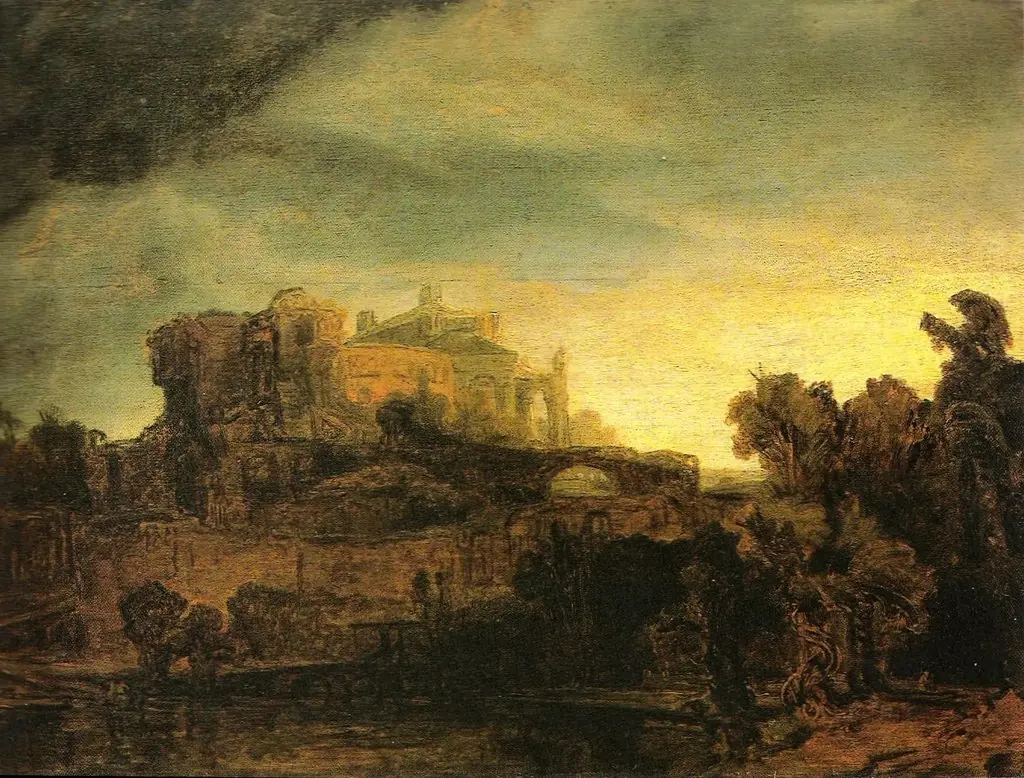
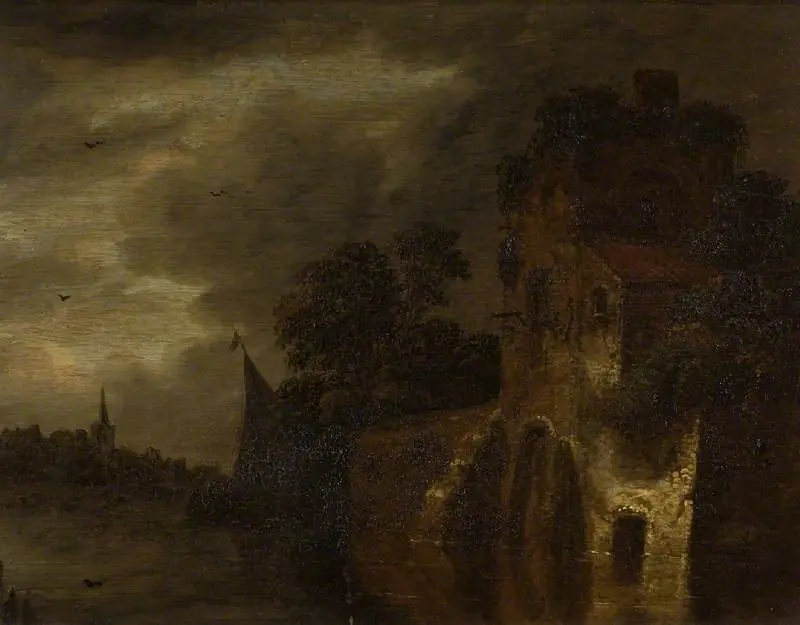
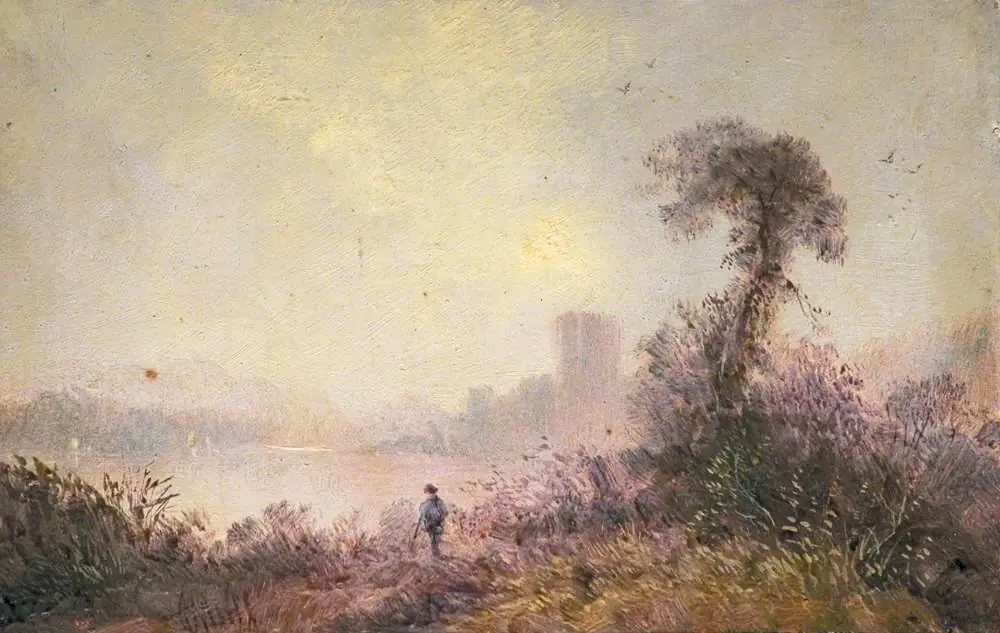
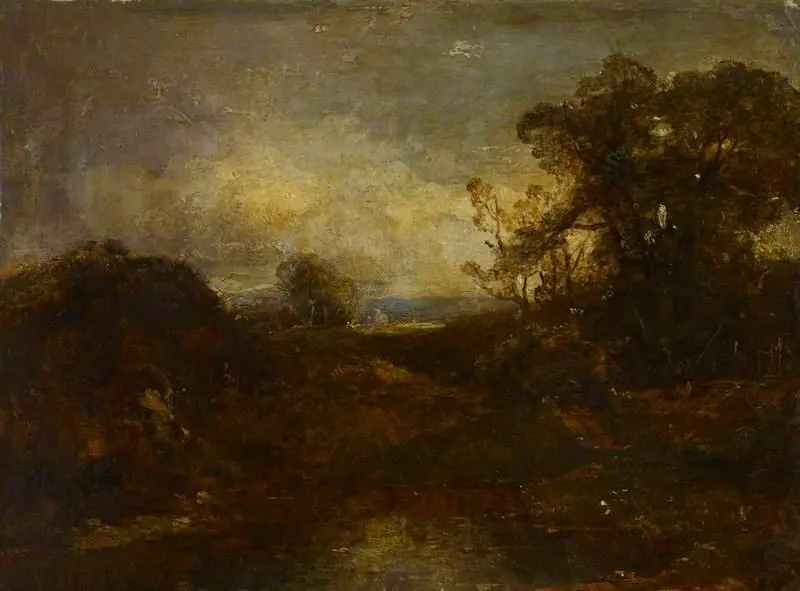
Landscape with a Ruined Tower, Sunset is an oil painting by Unknown. It dates from 1821 and is held in the collection of the Victoria and Albert Museum. This oil painting depicts a quiet landscape at twilight, centered on a crumbling stone tower.
About this work
Overview
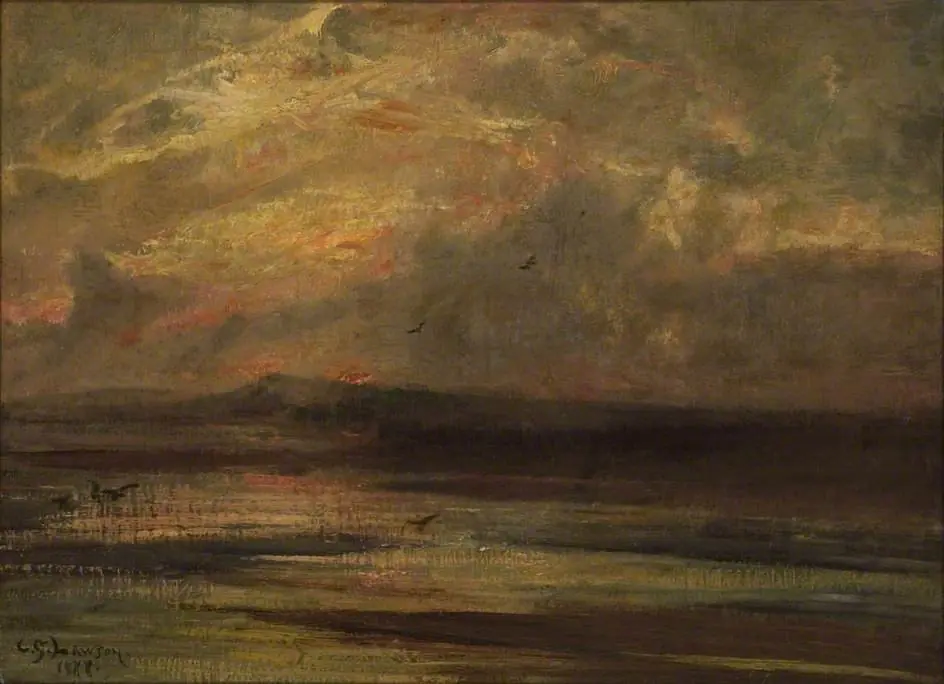
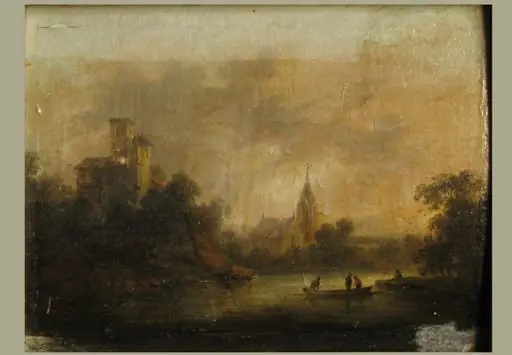
This oil painting depicts a quiet landscape at twilight, centered on a crumbling stone tower. The scene is bathed in the fading light of sunset, with the sky rendered in dense, tactile brushwork that suggests both warmth and transience. A still body of water in the foreground mirrors the sky’s hues, reinforcing the painting’s mood of quiet contemplation and temporal passage.
Subject & Meaning
The ruined tower stands as a silent witness to time’s erosion, its fractured walls contrasting with the vibrant, fleeting glow of the sunset. The absence of human figures emphasizes solitude and decay, while the reflective water deepens the sense of stillness. Together, these elements evoke a meditation on impermanence, where nature reclaims the traces of human endeavor.
Technique & Style
The composition uses atmospheric perspective to draw the eye from foreground to horizon, deepening the spatial illusion.
The artist employs thick, layered brushstrokes to build the sky’s luminous glow, creating a palpable texture that distinguishes it from the smoother, cooler tones of the water. The tower’s rough surfaces are suggested with dry, fragmented strokes, enhancing its sense of disintegration. The composition uses atmospheric perspective to draw the eye from foreground to horizon, deepening the spatial illusion.
History & Provenance
The painting’s early ownership is undocumented, but it is known to have been part of a private collection in northern Europe by the late 19th century. It entered a public museum’s holdings in the early 20th century, where it has remained since. Its attribution to a specific artist remains uncertain, though stylistic elements align with regional landscape traditions of the period.
Context
Created during a time when Romantic ideals still influenced landscape painting, the work reflects a broader cultural fascination with ruins as symbols of historical memory. Unlike grand historical scenes, this painting finds poetry in quiet decay, aligning with emerging sensibilities that valued emotional resonance over narrative spectacle.
Legacy
Though not widely exhibited, the painting has influenced later artists interested in the emotional weight of landscape and ruin. Its restrained palette and focus on atmosphere contributed to a quieter strand of 19th-century landscape painting, one that prioritized mood over spectacle, and stillness over drama.
Artist & collection

 Domestic Scene
 Giacomo and Cardinal Marco, investing Andrea, Abbot of San Zeno, with his Benefice
 The Nymph of Fontainebleau
 Portrait of a Woman
 Madonna and Child with Saints in the Enclosed Garden
 Venus and Minerva
 Family Group of Four on Sofa
 Wall painting from Room H of the Villa of P. Fannius Synistor at Boscoreale