Artwork
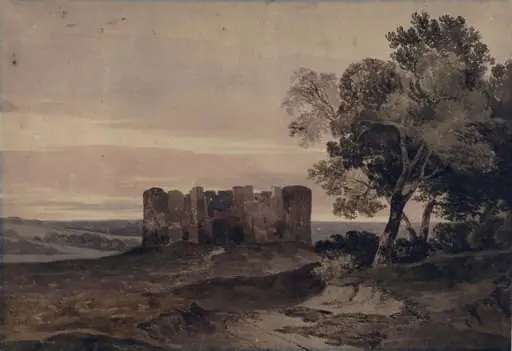
Ruins of a castle
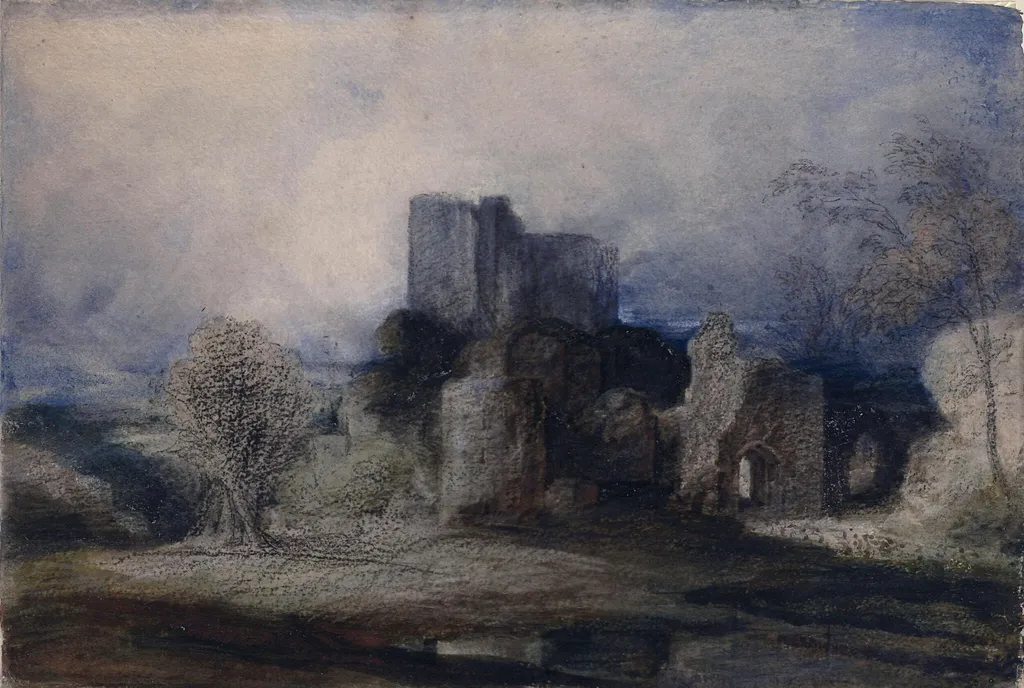
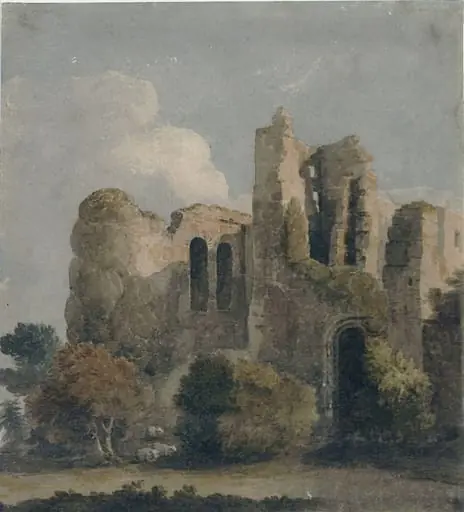
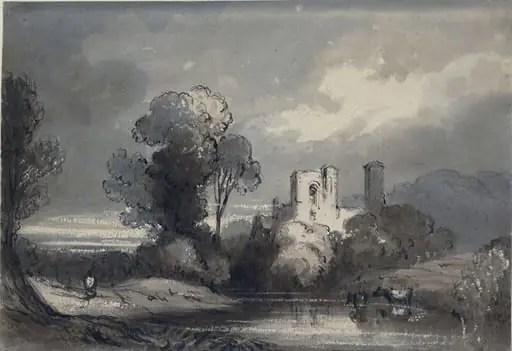
Ruins of a castle is a watercolor work on paper by the British Romanticist artist Samuel Reynolds. It dates from 1800 and is held in the collection of the Victoria and Albert Museum.
About this work
Overview
Samuel Reynolds’ 1800 watercolour, titled *Ruins of a Castle*, depicts the skeletal remains of a medieval fortress. The composition centers on a partially collapsed structure, its surviving tower rising above a landscape of muted earth tones. Sparse, leafless trees frame the scene beneath a pale, hazy sky, creating a quiet, contemplative atmosphere.
Subject & Meaning
The work presents a solitary, decaying castle, half‑buried in the ground, suggesting the passage of time and the impermanence of human achievements. The solitary tower, still upright amid crumbling walls, may symbolize resilience or the lingering memory of past grandeur, while the barren surrounding trees enhance the sense of desolation.
Technique & Style
Reynolds employs soft, blended brushstrokes characteristic of early 19th‑century watercolour, achieving a muted palette of greys, browns, and subtle greens. Crayon accents add texture to the foliage and sky, while the delicate layering creates a tranquil, almost mist‑filled ambience. The central placement of the ruins draws the viewer’s eye directly to the focal point.
History & Provenance
Created in 1800, the piece reflects Reynolds’ interest in historic architecture and the Romantic fascination with decay. It entered the museum’s collection through a 19th‑century acquisition from a private estate, where it had been displayed alongside other landscape studies, underscoring its role in the period’s broader artistic trends.
Artist & collection
Artist
Samuel Reynolds never left England, but he spent years sketching crumbling abbeys and old manor houses in watercolor, always adding a single tiny human figure—often a woman in a long dress—on a distant path.