Artwork
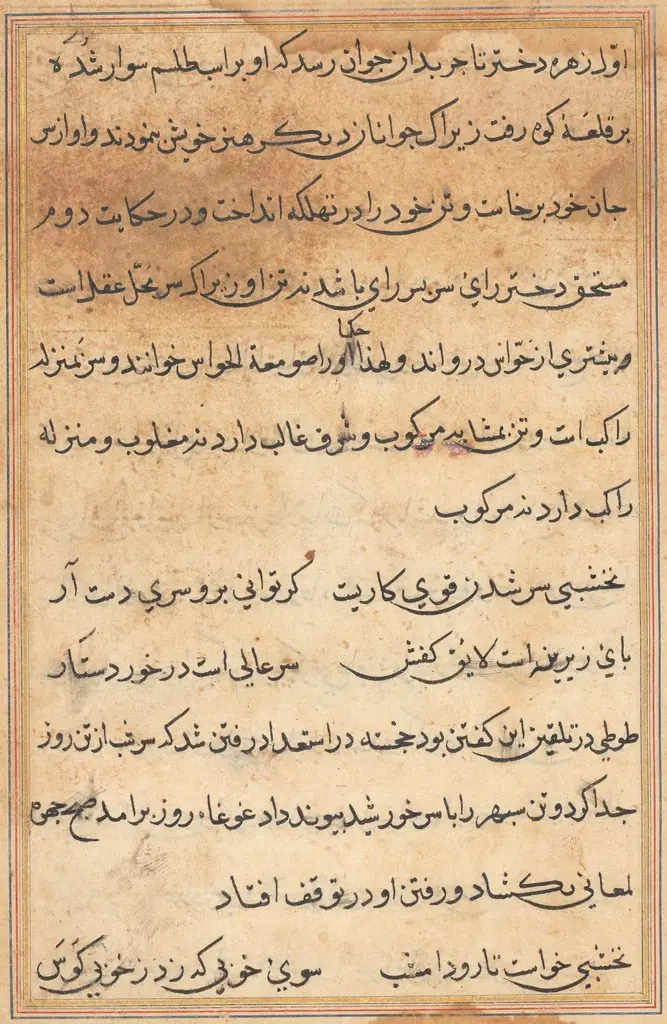
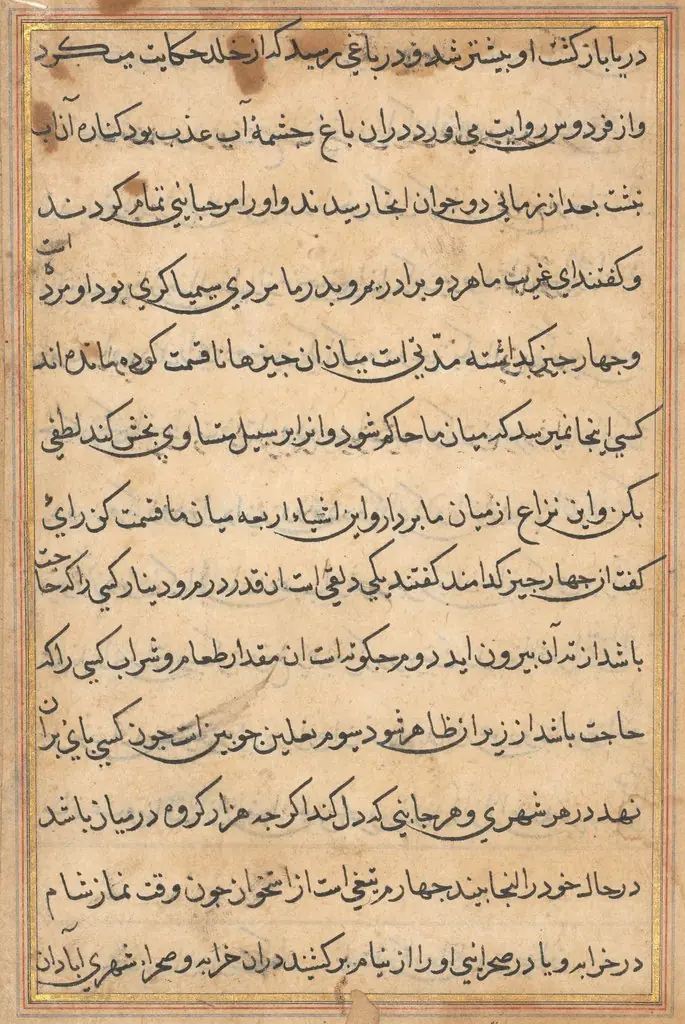
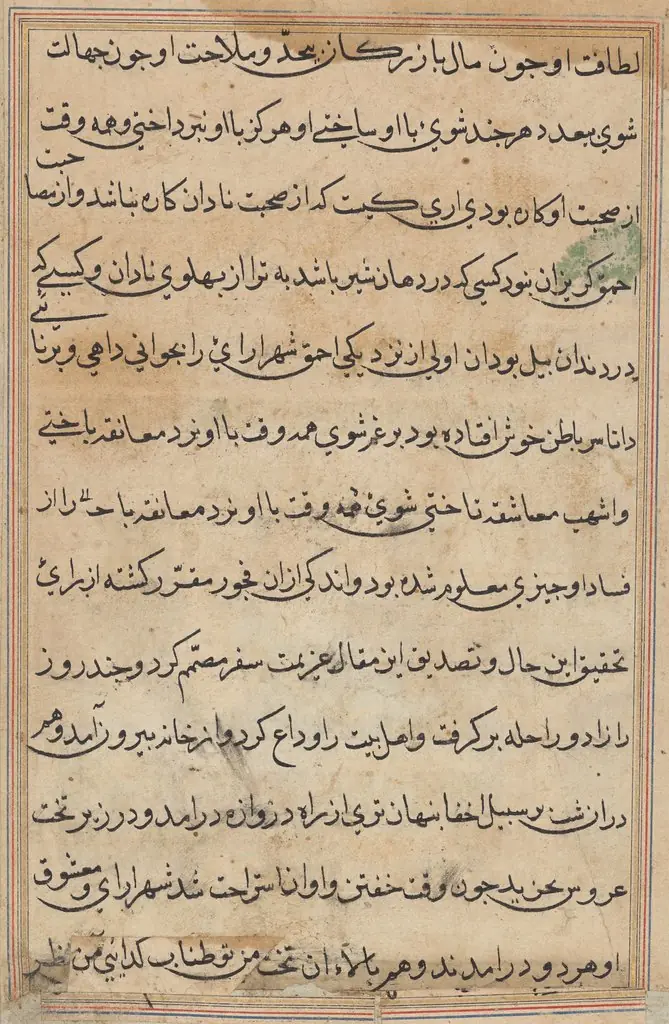
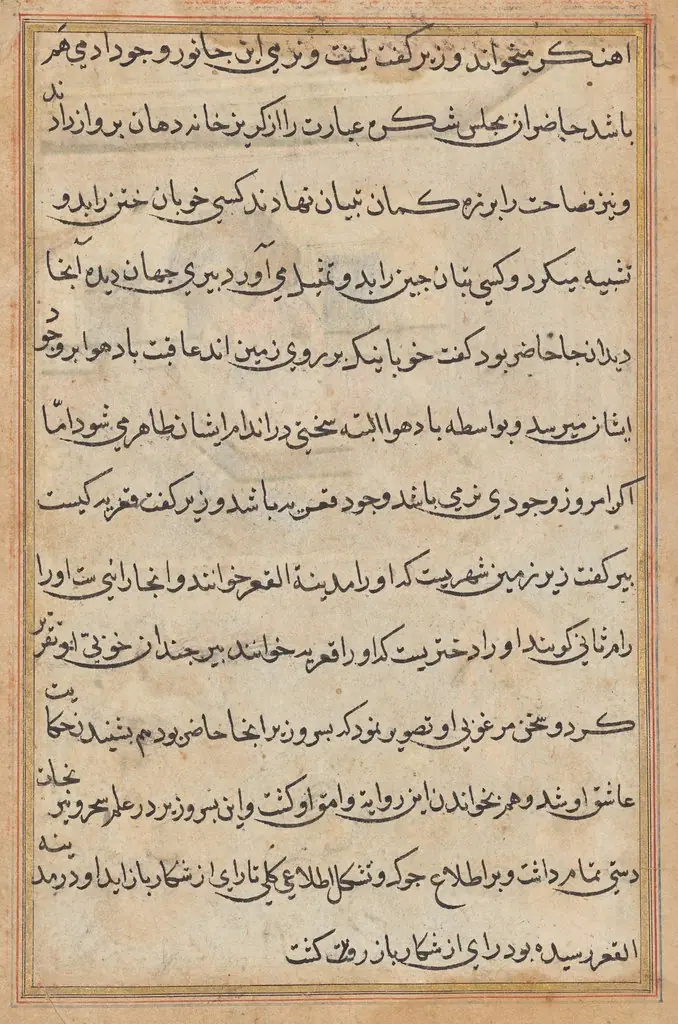
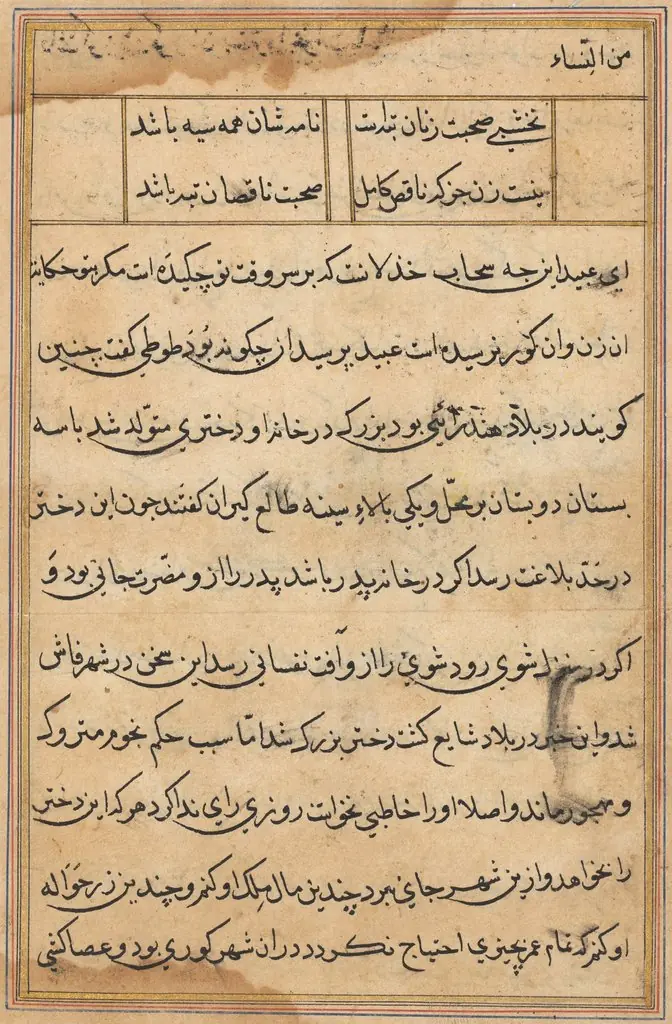
Page from Tales of a Parrot (Tuti-nama): text page
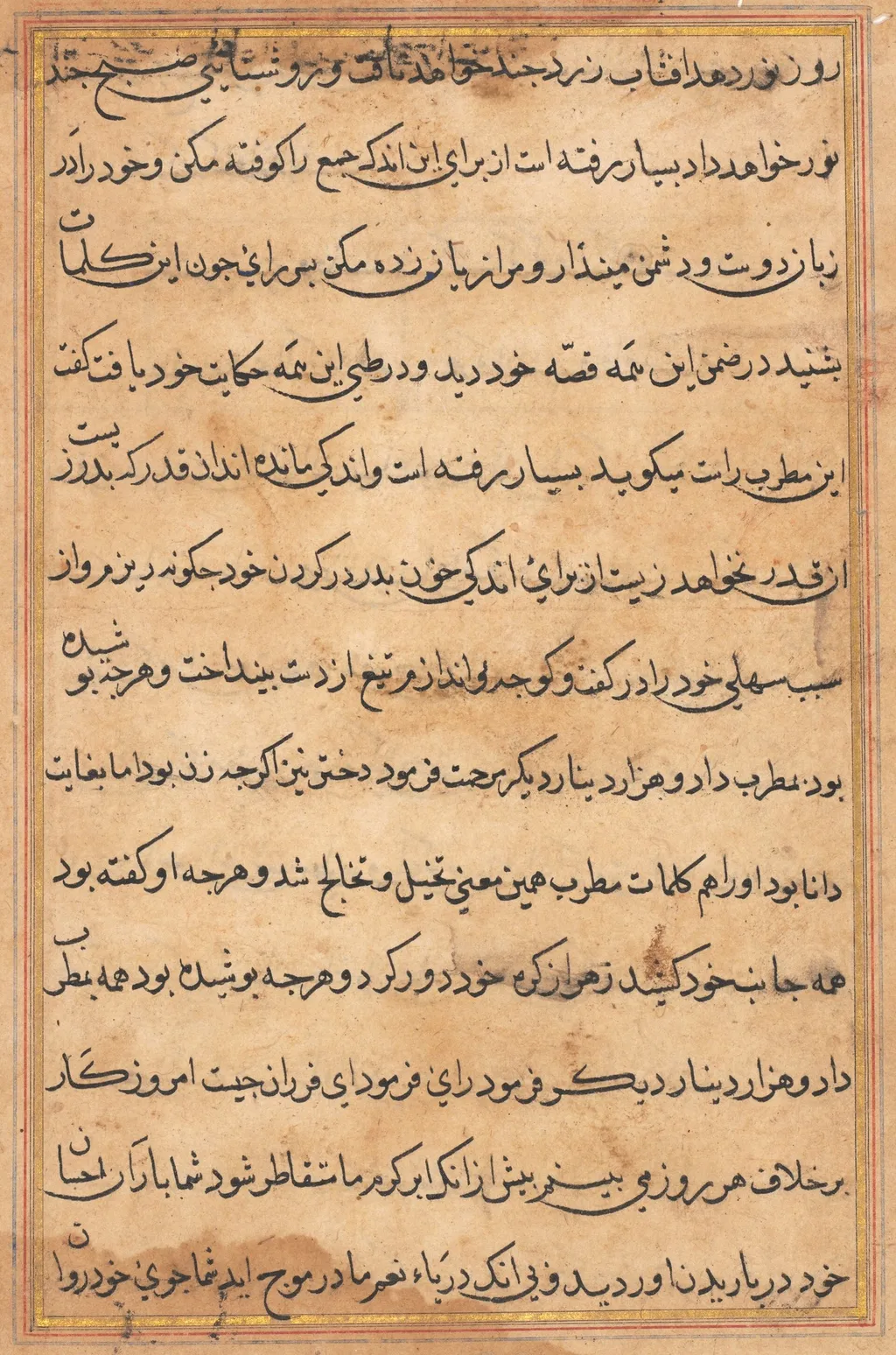
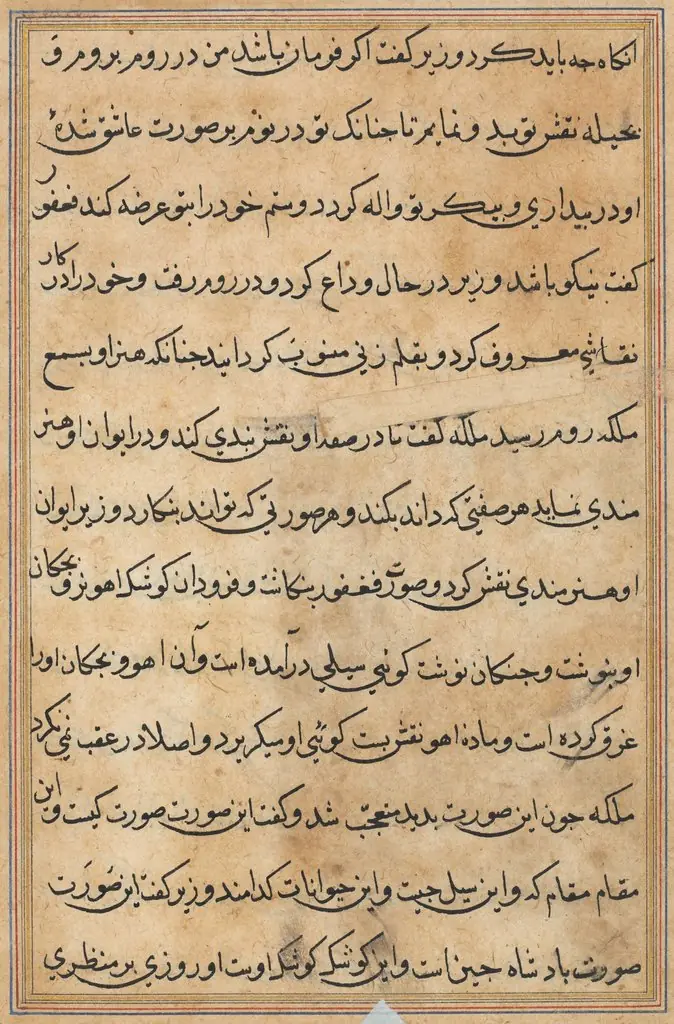
Page from Tales of a Parrot (Tuti-nama): text page is an unspecified painting. It dates from 1560 and is held in the collection of the Cleveland Museum of Art.
About this work
Overview
The script is arranged in tight, orderly rows, its lines intertwining like vines across the surface, and the page is edged with a narrow red border.
This illuminated page, drawn from the Persian manuscript *Tales of a Parrot* (Tuti‑nama), consists of a single sheet of light‑beige paper densely covered with black calligraphic text. The script is arranged in tight, orderly rows, its lines intertwining like vines across the surface, and the page is edged with a narrow red border. Signs of age such as faint stains and creases indicate extensive handling.
Subject & Meaning
The written passage forms part of a narrative composed for Prince Salim, a royal patron of the early seventeenth century. The story, centered on a clever parrot, functions both as entertainment and as a vehicle for moral instruction, reflecting the courtly tradition of using literary gifts to convey wisdom and reinforce the prince’s cultural education.
Technique & Style
The calligraphy exemplifies the refined Persian script of the period, executed with a steady hand that produces fluid, vine‑like connections between letters. The red marginal band, applied with a fine brush, frames the text and adds a decorative contrast without detracting from the dense script. The overall aesthetic balances legibility with ornamental elegance.
History & Provenance
Originally created in Persia for Prince Salid, the page later entered the collection of the Cleveland Museum of Art, where it is currently conserved and displayed. Its journey from a royal library to a public institution illustrates the broader movement of Persian manuscripts into Western collections during the nineteenth and twentieth centuries.
Context
*Tales of a Parrot* belongs to a genre of Persian courtly literature that blended prose storytelling with moral allegory. Such works were often commissioned as gifts for princes, serving both as literary entertainment and as symbols of the patron’s refined taste and access to skilled scribes.
Legacy
The page offers scholars insight into the material culture of Safavid-era book production, showcasing the high level of calligraphic skill and the importance placed on manuscript gifting within royal circles. Its preservation allows contemporary audiences to appreciate the aesthetic and educational values embedded in Persian literary traditions.
Artist & collection

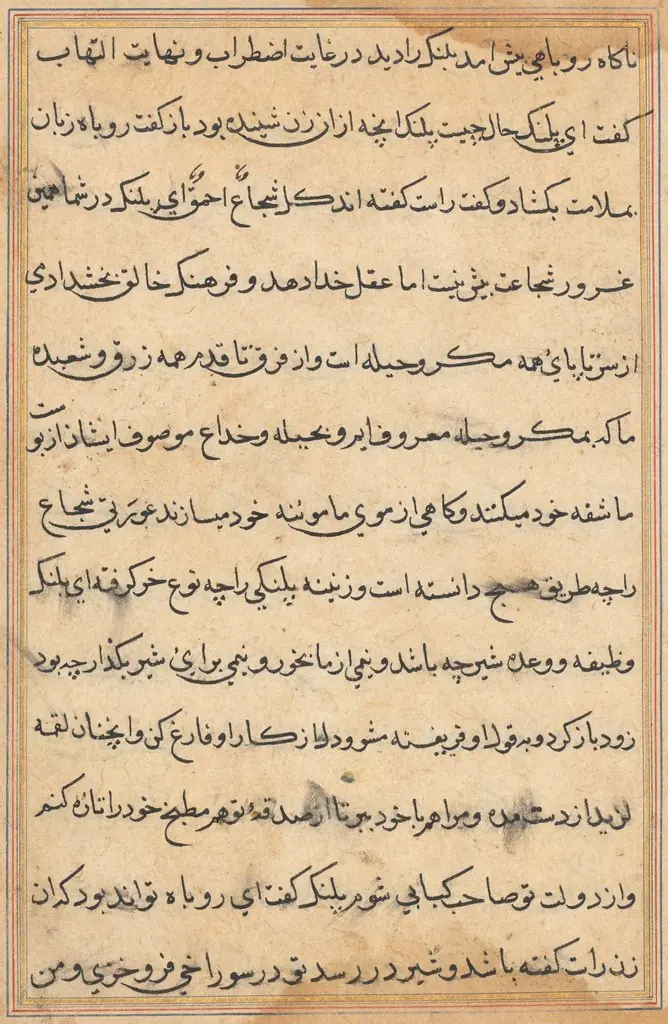 Page from Tales of a Parrot (Tuti-nama): text page
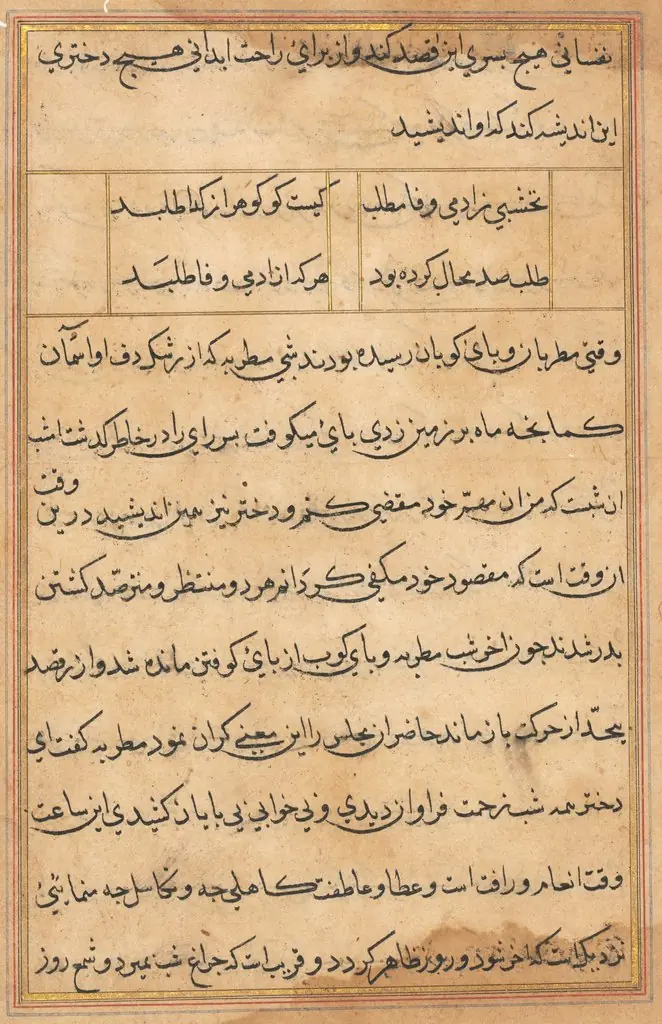 Page from Tales of a Parrot (Tuti-nama): text page
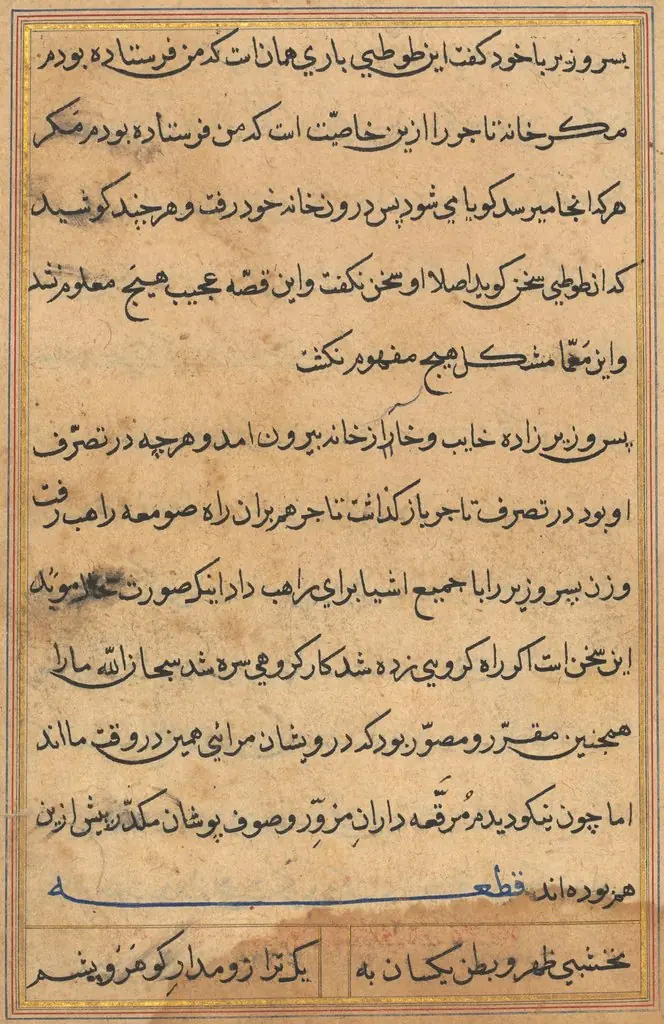 Page from Tales of a Parrot (Tuti-nama): text page
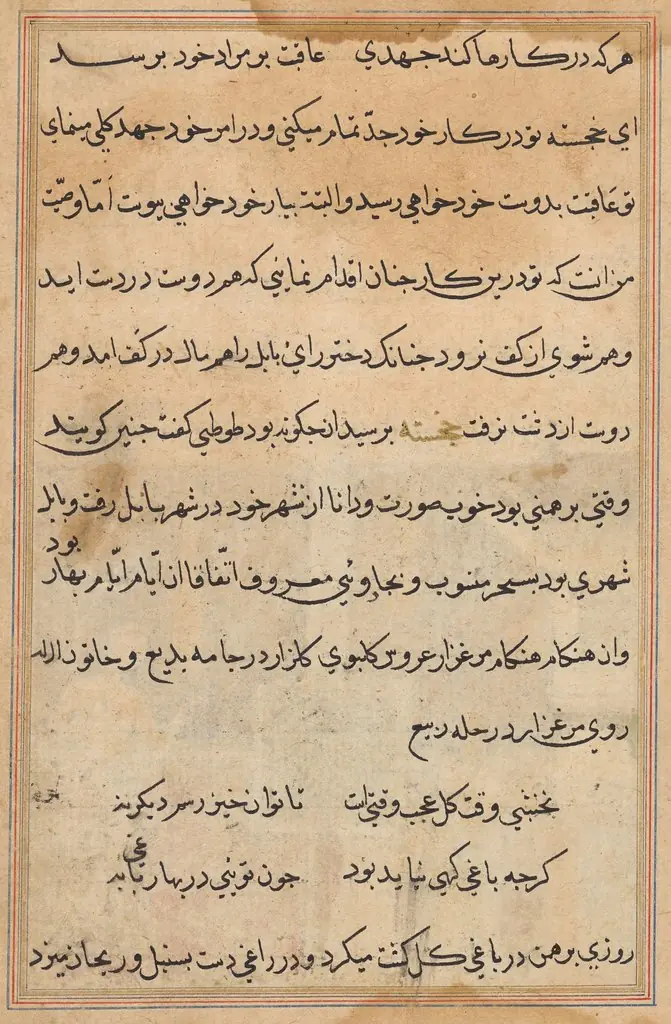 Page from Tales of a Parrot (Tuti-nama): text page
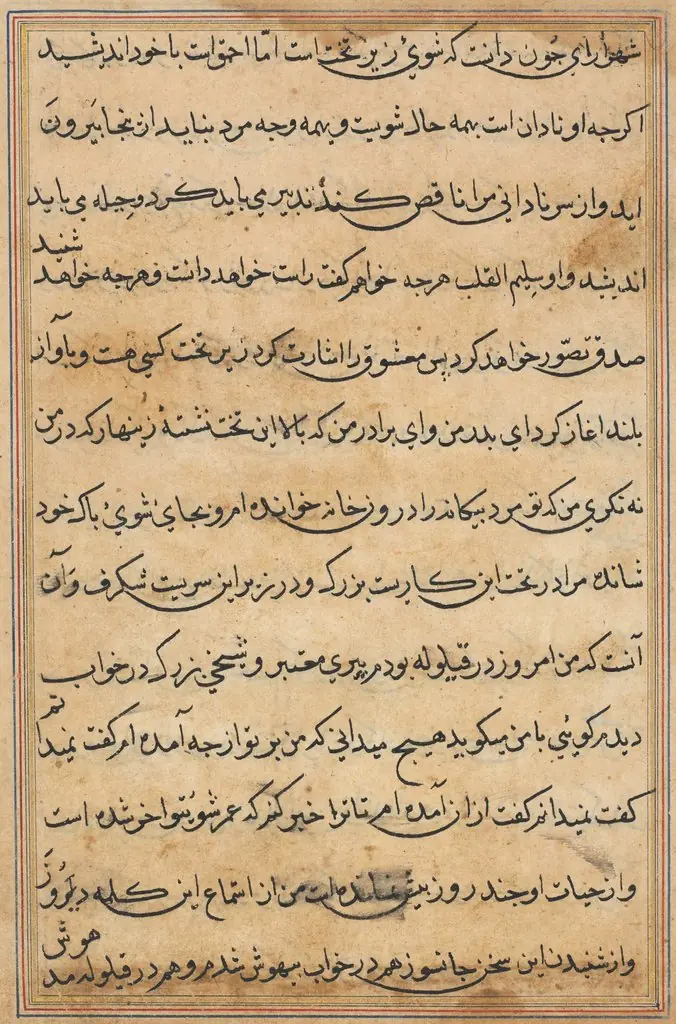 Page from Tales of a Parrot (Tuti-nama): text page
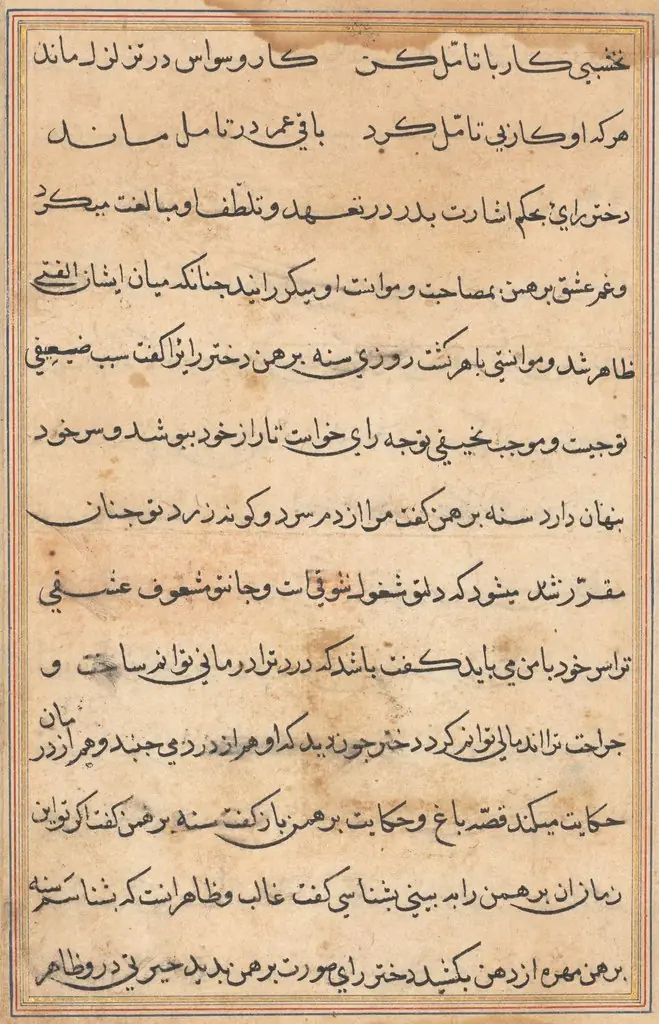 Page from Tales of a Parrot (Tuti-nama): text page
 Page from Tales of a Parrot (Tuti-nama): text page