Artwork
Maharana Sangram Singh of Udaipur Entertaining Members of the Dutch East India Company led by Johan Josua Ketelaar in 1711
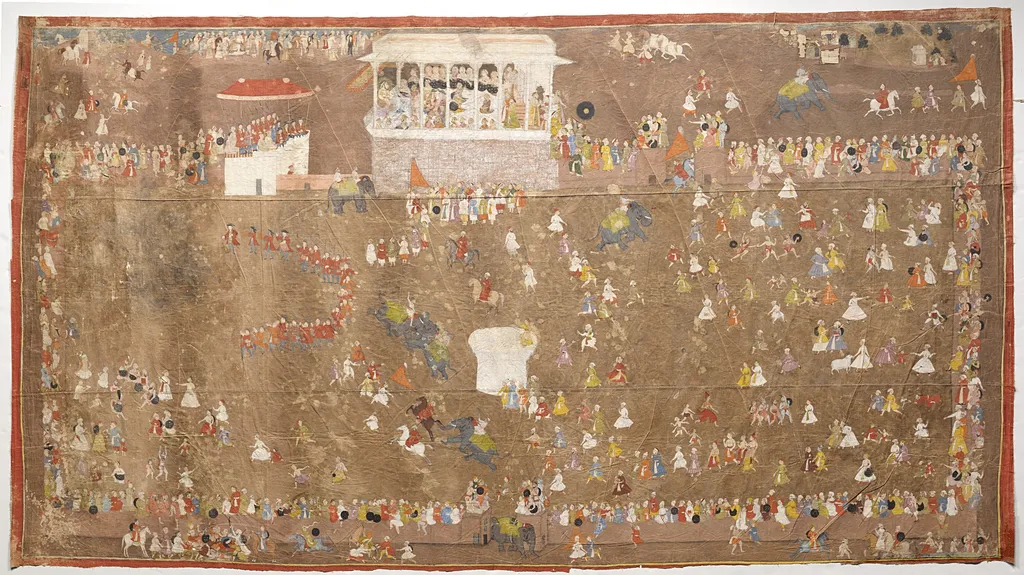
Maharana Sangram Singh of Udaipur Entertaining Members of the Dutch East India Company led by Johan Josua Ketelaar in 1711 is an unspecified painting by Unknown. It dates from 1711 and is held in the collection of the Rijksmuseum. A painted scene on cotton fabric depicts Maharana Sangram Singh of Udaipur hosting representatives of the Dutch East India Company in 1711.
About this work
Overview
The work belongs to the Rajput tradition of courtly portraiture, capturing a moment of diplomatic engagement between a regional ruler and foreign merchants.
A painted scene on cotton fabric depicts Maharana Sangram Singh of Udaipur hosting representatives of the Dutch East India Company in 1711. The work belongs to the Rajput tradition of courtly portraiture, capturing a moment of diplomatic engagement between a regional ruler and foreign merchants. Its medium and scale suggest it was intended for private or semi-public display within the royal court.
Subject & Meaning
The painting illustrates a formal audience where the Maharana, seated in regal attire, receives Johan Josua Ketelaar and other Dutch envoys. The setting emphasizes hierarchy and hospitality, reinforcing the ruler’s authority while acknowledging the commercial presence of European traders. The interaction reflects the complex diplomatic and economic relationships between Indian courts and foreign trading entities in the early 18th century.
Technique & Style
Executed in opaque watercolor on cotton, the painting employs fine brushwork and flat, decorative planes typical of Mewar court art. Figures are arranged in tiered composition, with the Maharana centrally positioned and larger in scale. Rich pigments and intricate textile patterns highlight status, while the background remains minimal, focusing attention on the figures and their ceremonial exchange.
History & Provenance
The painting likely originated in the Udaipur court, commissioned to commemorate a significant diplomatic visit. It remained within royal collections until the 20th century, when it entered institutional holdings. Its survival in relatively intact condition is rare, as cotton supports are fragile and often lost to time or environmental damage.
Context
In 1711, the Dutch East India Company sought access to Indian markets for textiles, spices, and dyes. Rajput rulers, though politically independent, engaged with European traders for economic benefit and prestige. This painting captures a moment when indigenous sovereignty coexisted with growing foreign commercial influence, reflecting a nuanced era of cross-cultural negotiation.
Legacy
The work stands as a rare visual record of early European-Indian diplomatic encounters outside Mughal centers. It contributes to the understanding of how regional courts navigated global trade networks while preserving local artistic traditions. Its preservation allows scholars to study both material culture and cross-cultural representation in pre-colonial India.
Artist & collection

 Domestic Scene
 Giacomo and Cardinal Marco, investing Andrea, Abbot of San Zeno, with his Benefice
 The Nymph of Fontainebleau
 Portrait of a Woman
 Madonna and Child with Saints in the Enclosed Garden
 Venus and Minerva
 Family Group of Four on Sofa
 Wall painting from Room H of the Villa of P. Fannius Synistor at Boscoreale
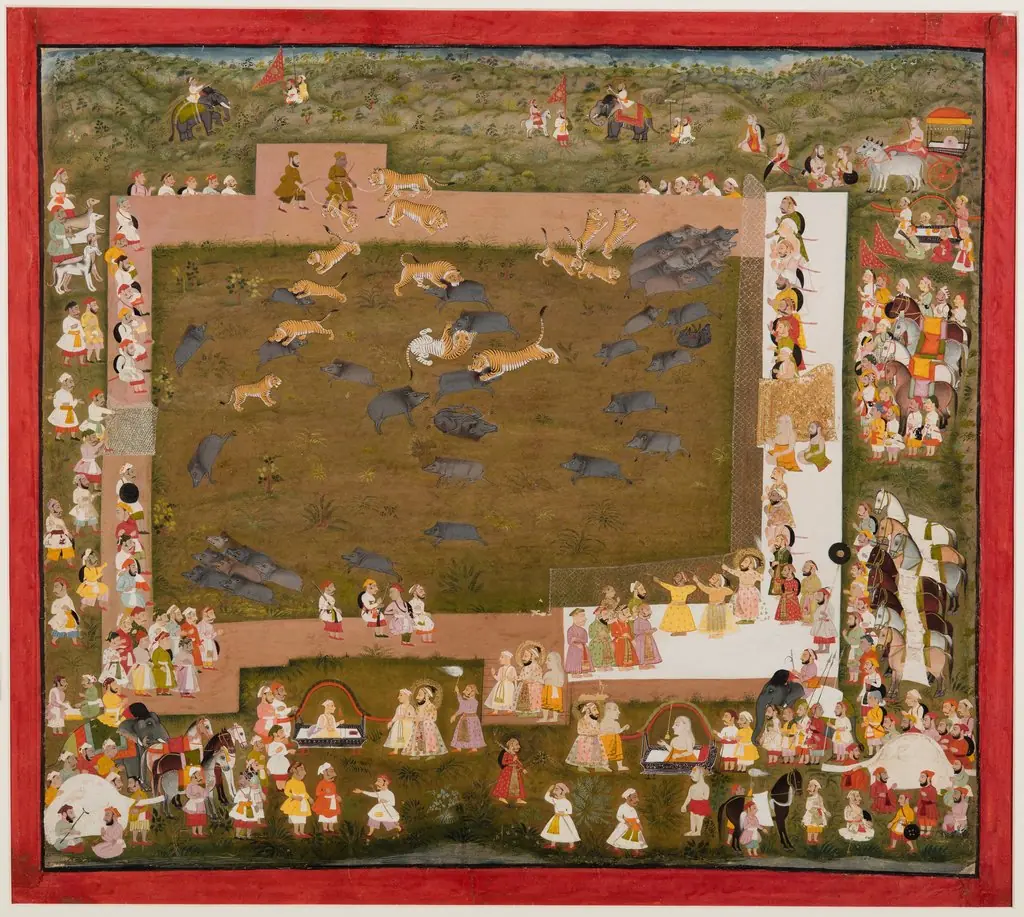 Maharana Sangram Singh II of Mewar (r. 1710–34) and Stages a Boar Hunt with Tigers at Sadri
 Maharana Sangram Singh II of Mewar (r. 1710–34) and Stages a Boar Hunt with Tigers at Sadri
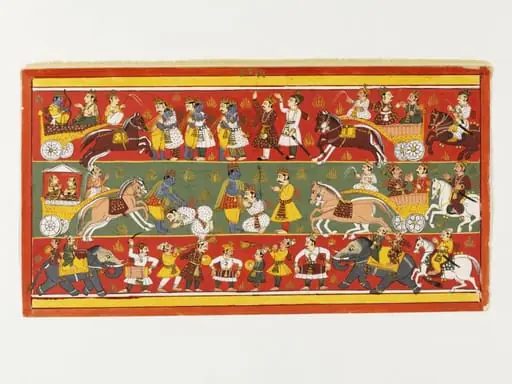 Krishna
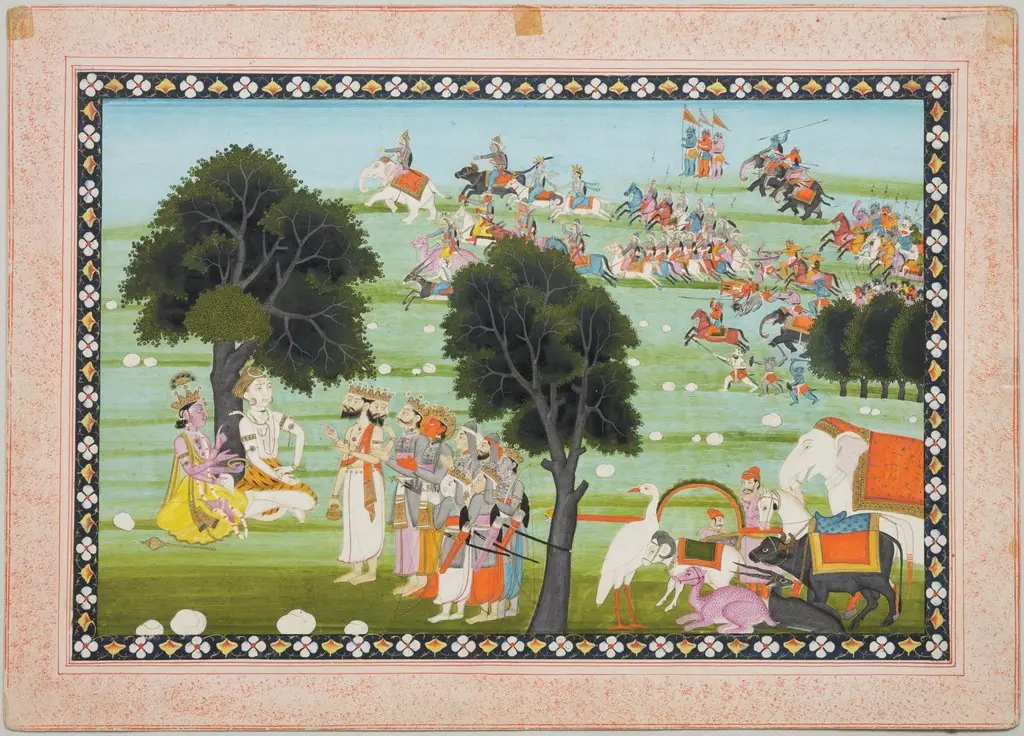 Gods Discussing Their Defeat by Demons, led by Mahishasura in Background
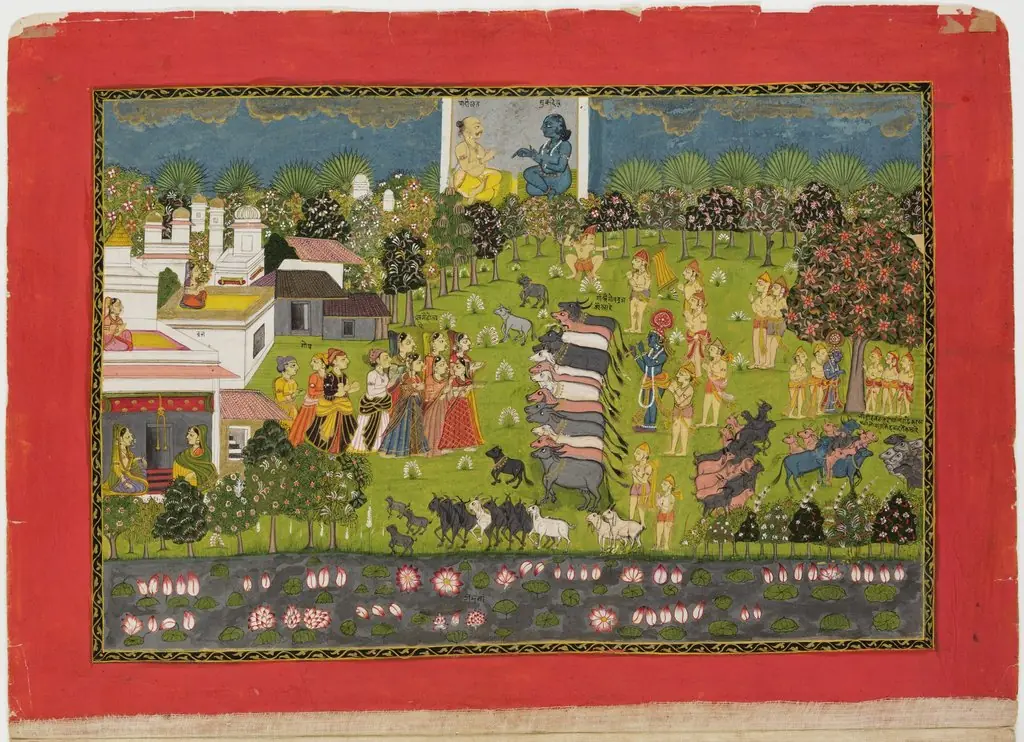 Cow Worship
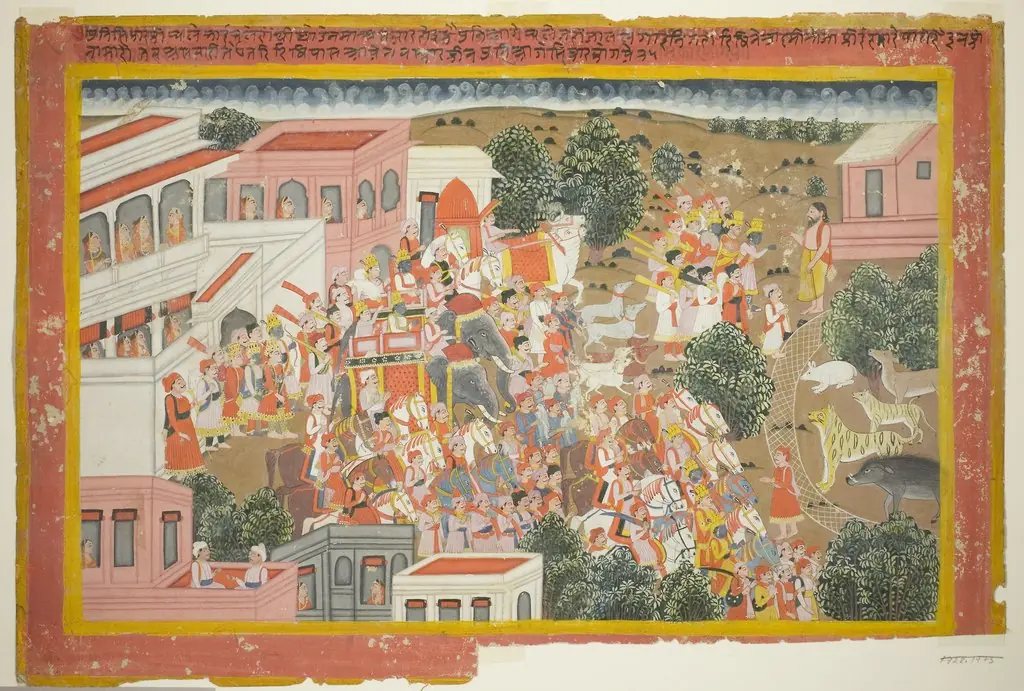 Four Princes in Procession Visit a Sage, page from a copy of the Ramayana
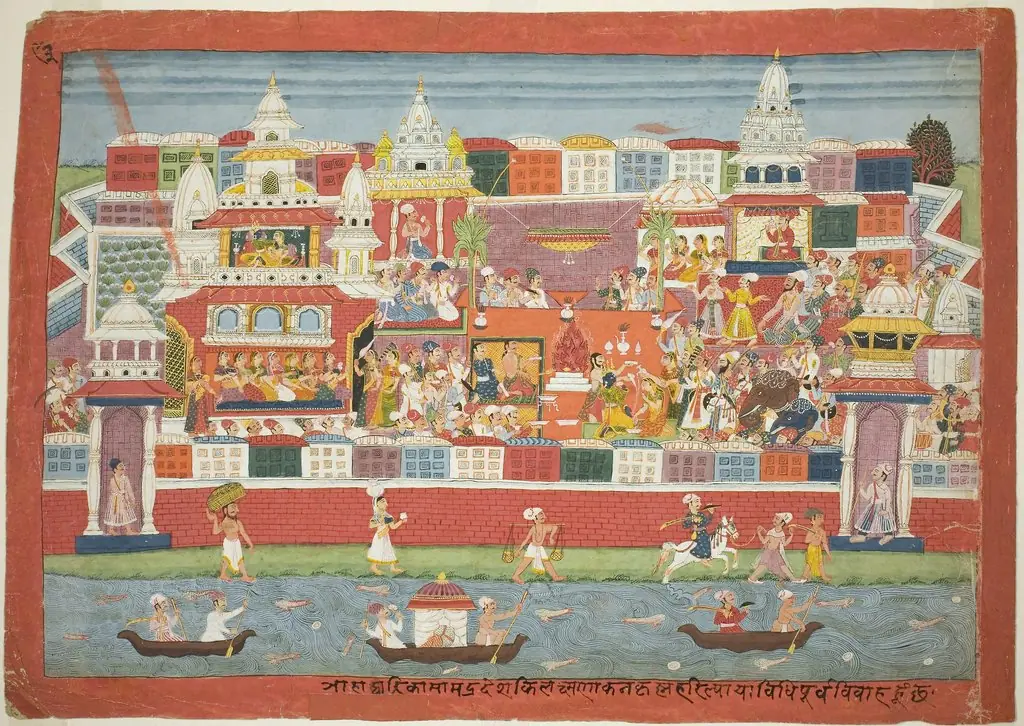 Krishna's Marriage to Kalinda, page from a manuscript of the Bhagavata Purana
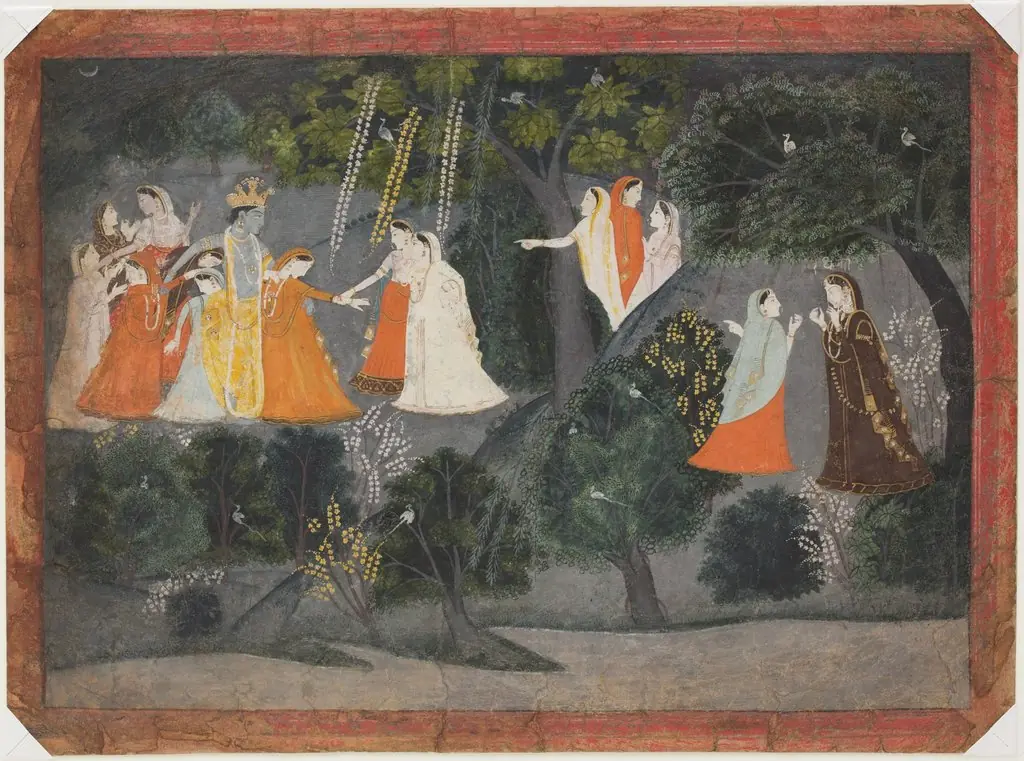 The Meeting of Radha and Krishna in the Forest of Brindaban
 Untitled
 Untitled