Artwork
The Eighteen Scholars (zither)
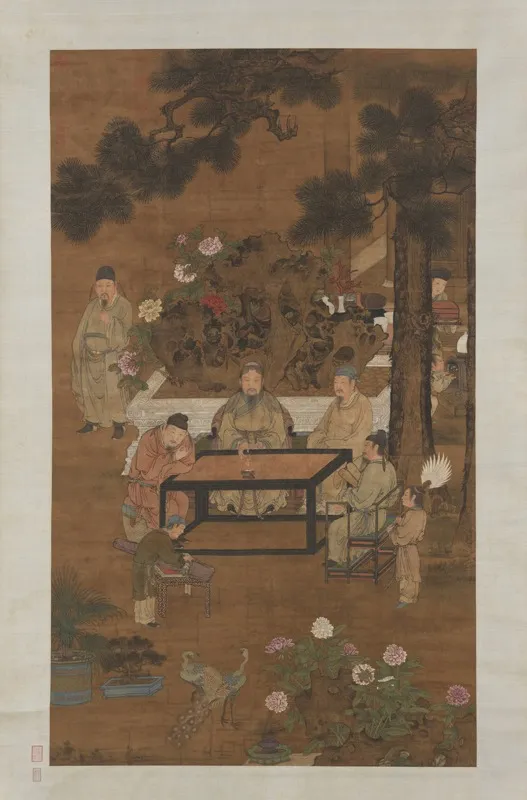
The Eighteen Scholars (zither) is an unspecified painting by Unknown. It is held in the collection of the National Palace Museum.
About this work
Overview
This painting depicts a gathering of eighteen scholars engaged in the quiet pursuit of music, specifically the guqin, a traditional Chinese zither. The scene is set in a serene natural environment, suggesting contemplation and intellectual harmony. The composition emphasizes stillness and restraint, aligning with Confucian ideals of cultivated refinement and scholarly virtue.
Subject & Meaning
The eighteen figures represent literati engaged in musical practice, a symbol of moral cultivation and inner balance in traditional Chinese thought. The guqin, associated with wisdom and self-discipline, serves as both instrument and metaphor. Their quiet interaction reflects a shared cultural ethos where art, philosophy, and personal integrity are inseparable.
Technique & Style
Executed in ink and subtle color on silk, the painting employs fine brushwork to distinguish individual postures and garments while maintaining an overall sense of unity. Spatial depth is suggested through layered landscapes and delicate atmospheric perspective. Figures are rendered with restrained elegance, avoiding dramatic expression in favor of dignified composure.
History & Provenance
The work likely dates to the Ming or early Qing dynasty, a period when literati painting flourished as an expression of elite cultural identity. It was probably commissioned by or for a scholar-official family, preserved within private collections before entering institutional hands. Its survival reflects sustained appreciation for scholarly aesthetics across centuries.
Context
During the late imperial period, music-making among scholars was not mere entertainment but a ritual of self-cultivation. Paintings like this reinforced the ideal of the scholar as a moral agent, distinct from courtly or commercial artists. Such imagery appeared in albums and scrolls intended for intimate viewing, fostering reflection among peers.
Legacy
The painting contributes to a broader visual tradition that linked music, nature, and moral character in Chinese art. While not widely reproduced, it remains a reference point for studies of literati culture. Its quiet composition continues to inform modern interpretations of how art can embody philosophical values without overt narrative.
Artist & collection

 Domestic Scene
 Giacomo and Cardinal Marco, investing Andrea, Abbot of San Zeno, with his Benefice
 The Nymph of Fontainebleau
 Portrait of a Woman
 Madonna and Child with Saints in the Enclosed Garden
 Venus and Minerva
 Family Group of Four on Sofa
 Wall painting from Room H of the Villa of P. Fannius Synistor at Boscoreale
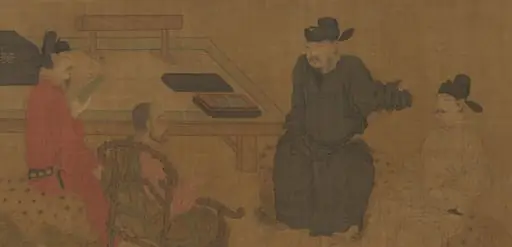 南宋 佚名 舊傳五代周文矩 琉璃堂人物圖 卷|Scholars of the Liuli Hall
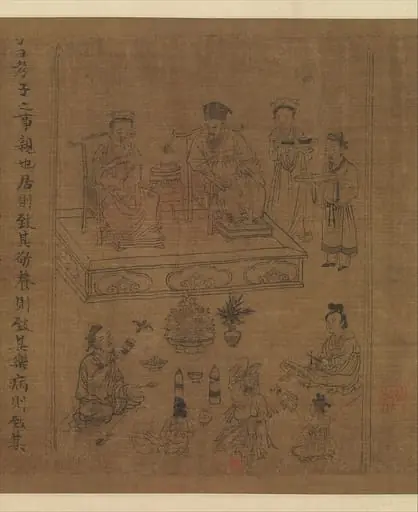 北宋 李公麟 孝經圖 卷|The Classic of Filial Piety
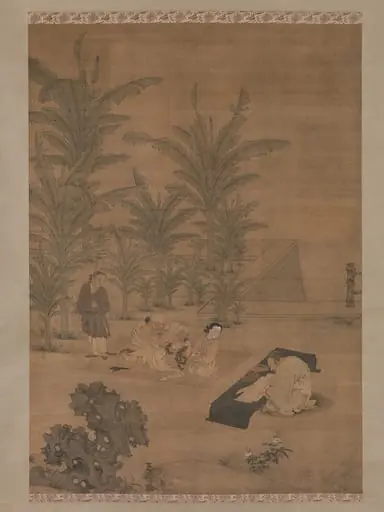 明 杜堇 伏生授經圖 軸|The Scholar Fu Sheng Transmitting the Book of Documents
 明 傳謝環 杏園雅集圖 卷|Elegant Gathering in the Apricot Garden
 明/清 佚名 舊傳趙孟頫 相馬圖 卷|Judging a Horse
 Depiction of the Day of Spring Offering to the Gods
 Untitled
 元 王振鵬 維摩不二圖 卷|Vimalakirti and the Doctrine of Nonduality