Artwork
Kustlandschap
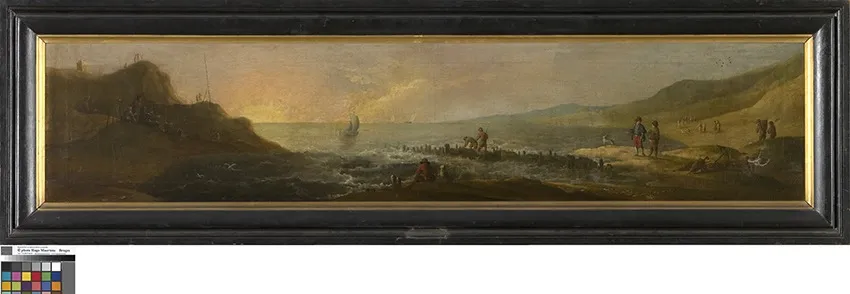
Kustlandschap is an oil painting by the Rococo painting artist Unknown. It dates from 1791 and is held in the collection of the Groeningemuseum.
About this work
Overview
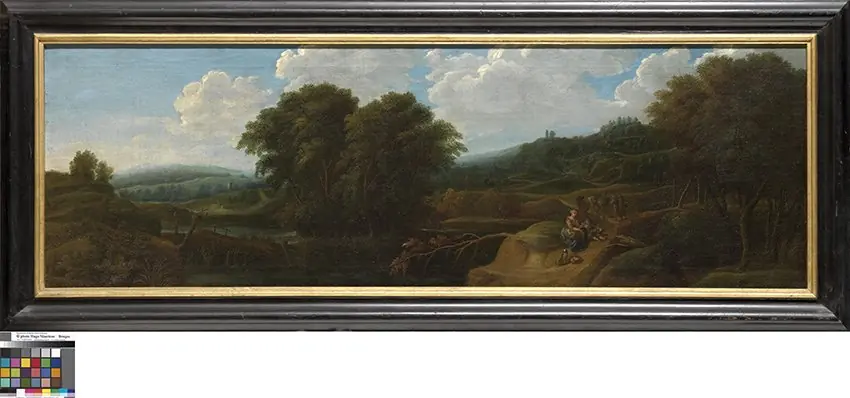
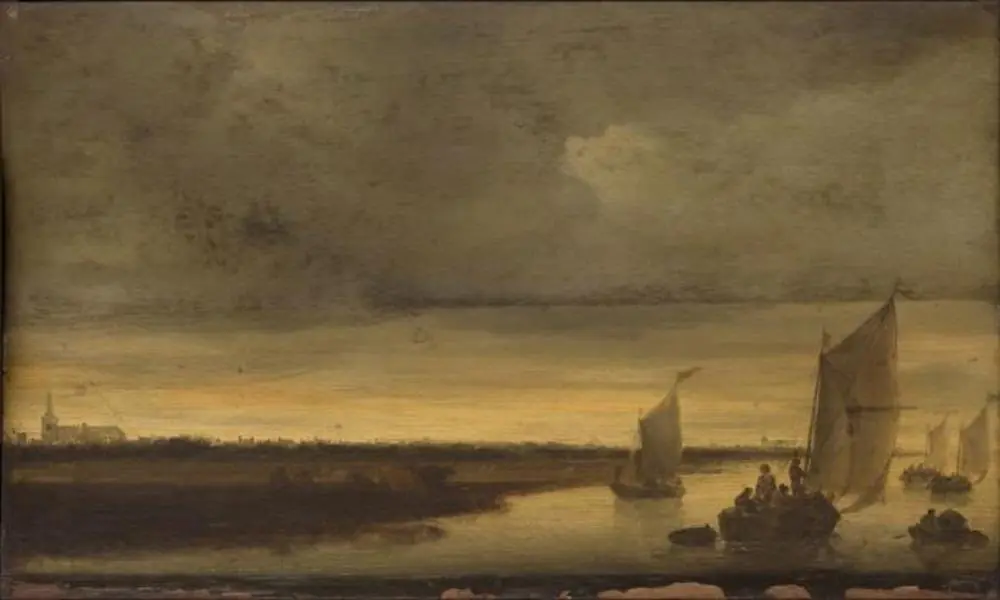
Small vessels drift near the water’s edge while figures are dispersed along the beach, some standing, some walking, and others gathered near the tide.
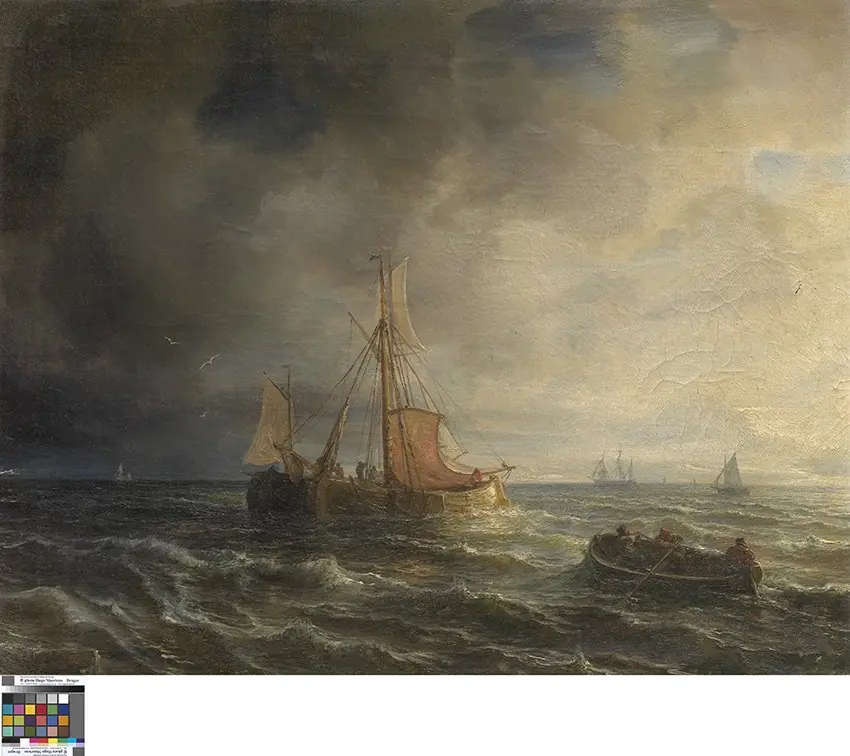
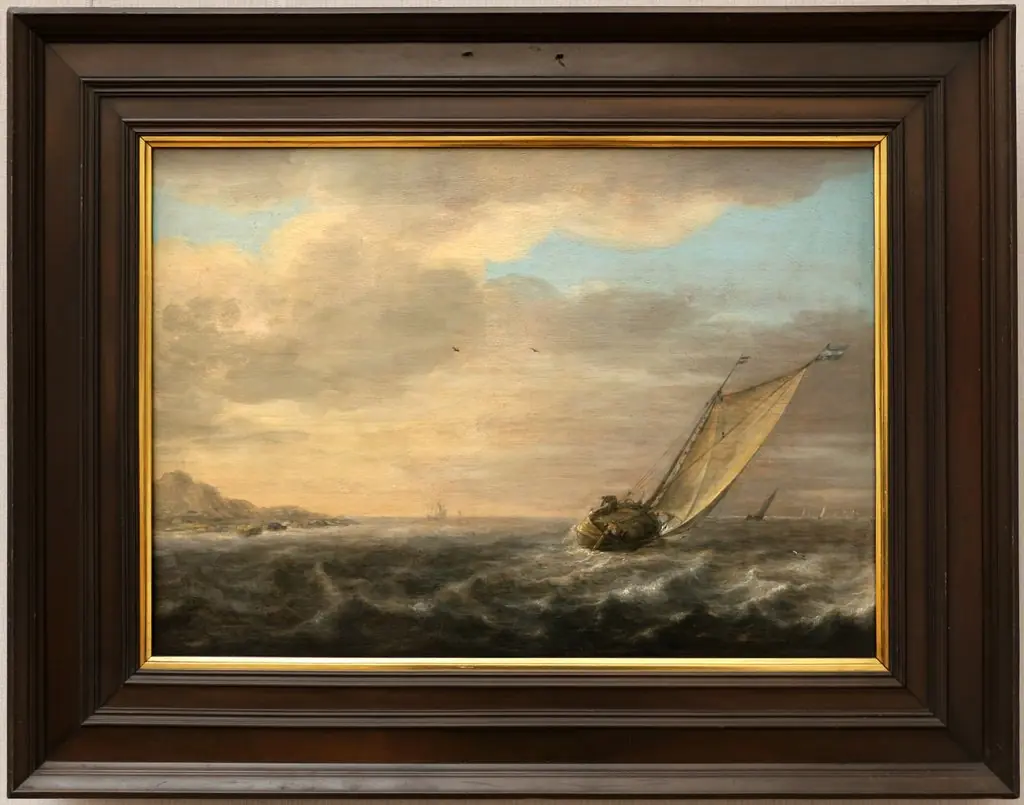
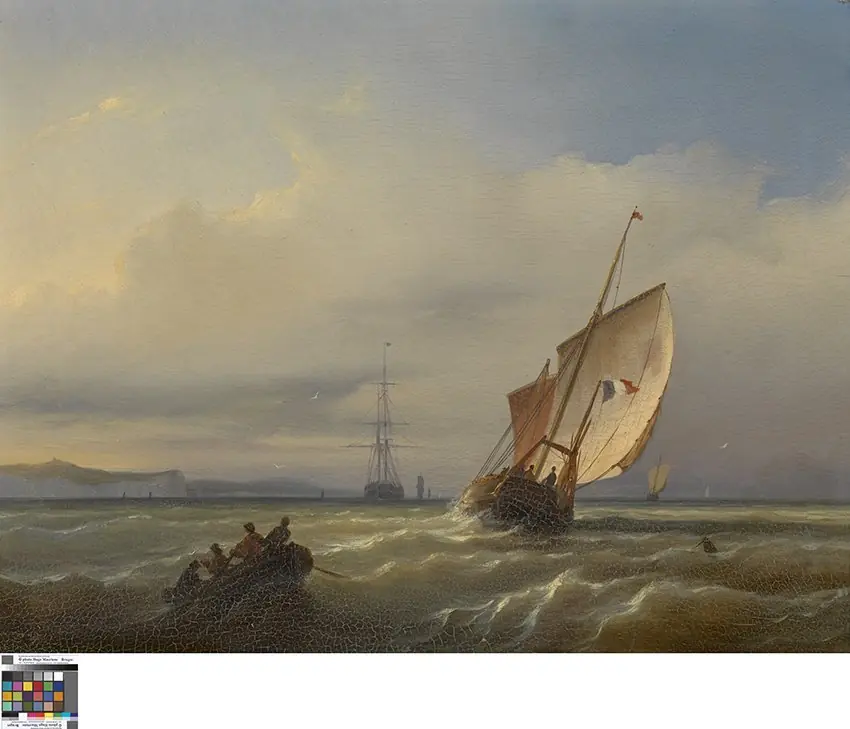
Kustlandschap is an oil painting that presents a narrow, elongated view of a coastal scene. The composition stretches horizontally, depicting a rocky shoreline meeting a calm sea. Small vessels drift near the water’s edge while figures are dispersed along the beach, some standing, some walking, and others gathered near the tide. The sky is rendered in a pale, muted tone, contrasting with the darker greens and browns of the land.
Subject & Meaning
The work captures a quiet moment of everyday life on a seafront, emphasizing the relationship between humanity and the natural environment. The scattered figures, rendered in modest scale, suggest a narrative of routine activity—fishermen, beachgoers, or laborers—without focusing on individual identity. By placing people within a broader landscape, the painting reflects on the modest presence of humans against the enduring solidity of the coast.
Technique & Style
The artist employs a clear division of light, using brighter illumination to define the solidity of the shore while allowing cooler, bluer tones to dominate the water. This contrast creates a sense of depth and separates the terrestrial from the marine. The palette shifts from pale sky to darker greens and browns on land, and the figures are simplified, almost illustrative, reinforcing the scene’s narrative quality.
Context
Although specific details of the painting’s creation are not provided, its focus on a coastal landscape aligns with a tradition of Dutch and Flemish seascapes that document everyday maritime life. The emphasis on light and atmospheric conditions suggests an interest in natural observation, a concern shared by artists who explored the interplay of illumination and form in the 17th and 18th centuries.
Artist & collection

 Domestic Scene
 Giacomo and Cardinal Marco, investing Andrea, Abbot of San Zeno, with his Benefice
 The Nymph of Fontainebleau
 Portrait of a Woman
 Madonna and Child with Saints in the Enclosed Garden
 Venus and Minerva
 Family Group of Four on Sofa
 Wall painting from Room H of the Villa of P. Fannius Synistor at Boscoreale