Artwork
Roundel with Saint John on Patmos
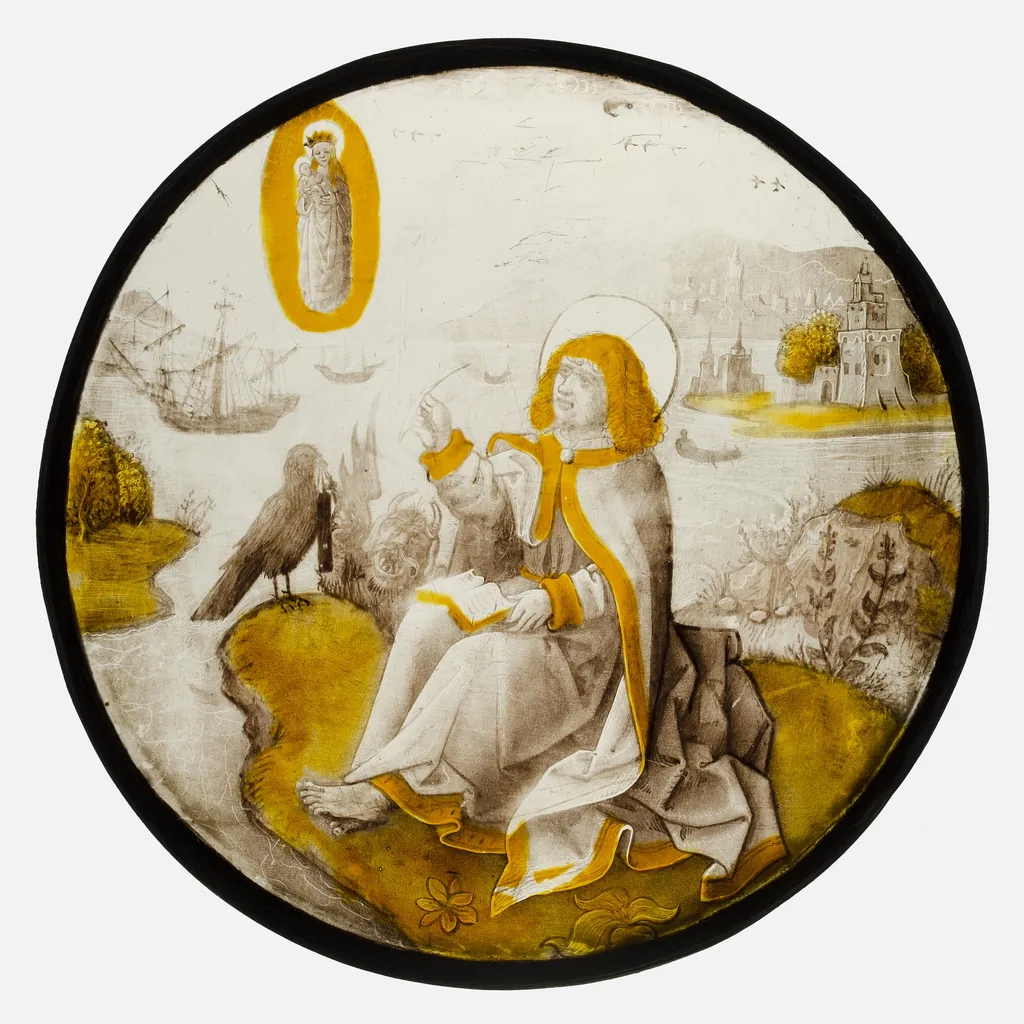
Roundel with Saint John on Patmos is an unspecified painting. It dates from 1510 and is held in the collection of the Metropolitan Museum of Art. The work is a roundel‑shaped painting depicting Saint John the Evangelist on the island of Patmos.
About this work
Overview
The scene opens onto a distant sea dotted with ships and silhouetted structures, under a sky where a luminous figure hovers within a yellow oval.
The work is a roundel‑shaped painting depicting Saint John the Evangelist on the island of Patmos. He is seated on a craggy ledge, clothed in a white robe trimmed with a yellow sash, and a halo crowns his head. In his lap lies an open book, while a large bird, perhaps a raven, perches nearby. The scene opens onto a distant sea dotted with ships and silhouetted structures, under a sky where a luminous figure hovers within a yellow oval.
Subject & Meaning
The composition presents John in a moment of revelation, his gaze directed upward toward the celestial presence that frames the prophetic vision of the Apocalypse. The bird, a traditional symbol of the Holy Spirit or divine messenger, reinforces the spiritual atmosphere. The surrounding landscape, with its tranquil waters and far‑off architecture, situates the saint’s contemplation within a broader, worldly context, emphasizing the interplay between earthly exile and heavenly insight.
Technique & Style
Executed in the roundel format, the painting employs a limited palette of muted earth tones contrasted by the bright yellow of the halo and the sky’s oval. The figure is rendered with careful modeling, giving the robe and flesh a subtle three‑dimensionality, while the background is suggested with looser brushwork that recedes into atmospheric perspective. The overall effect balances detailed figuration with a more impressionistic treatment of the distant environment.
History & Provenance
The work belongs to a tradition of devotional roundels produced for private chapels and liturgical objects during the late medieval to early Renaissance periods. Though the artist remains unidentified, the piece reflects the iconographic conventions of Western European manuscript illumination. It entered the museum’s collection through a 19th‑century acquisition from a private estate, where it had been displayed as part of a series of saintly roundels.
Artist & collection

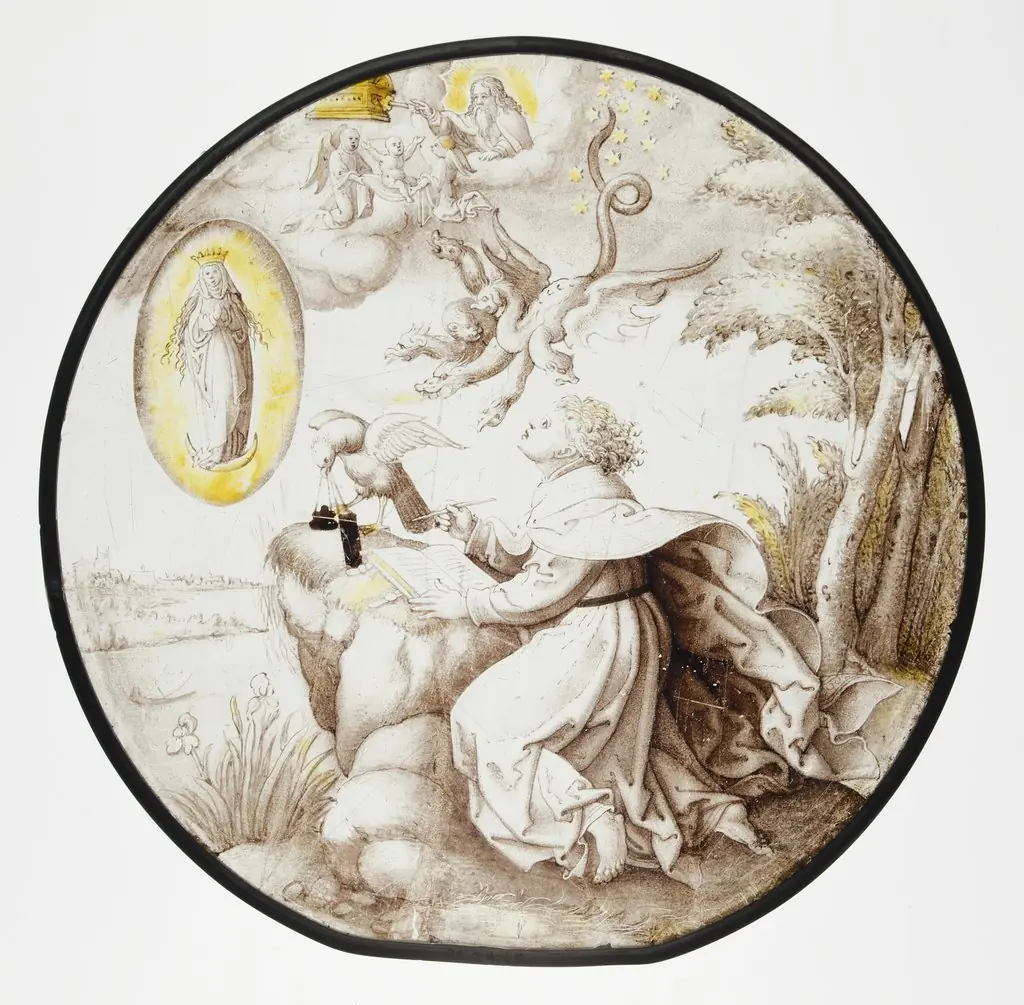 Roundel with Saint John on Patmos with Apocalyptic Vision
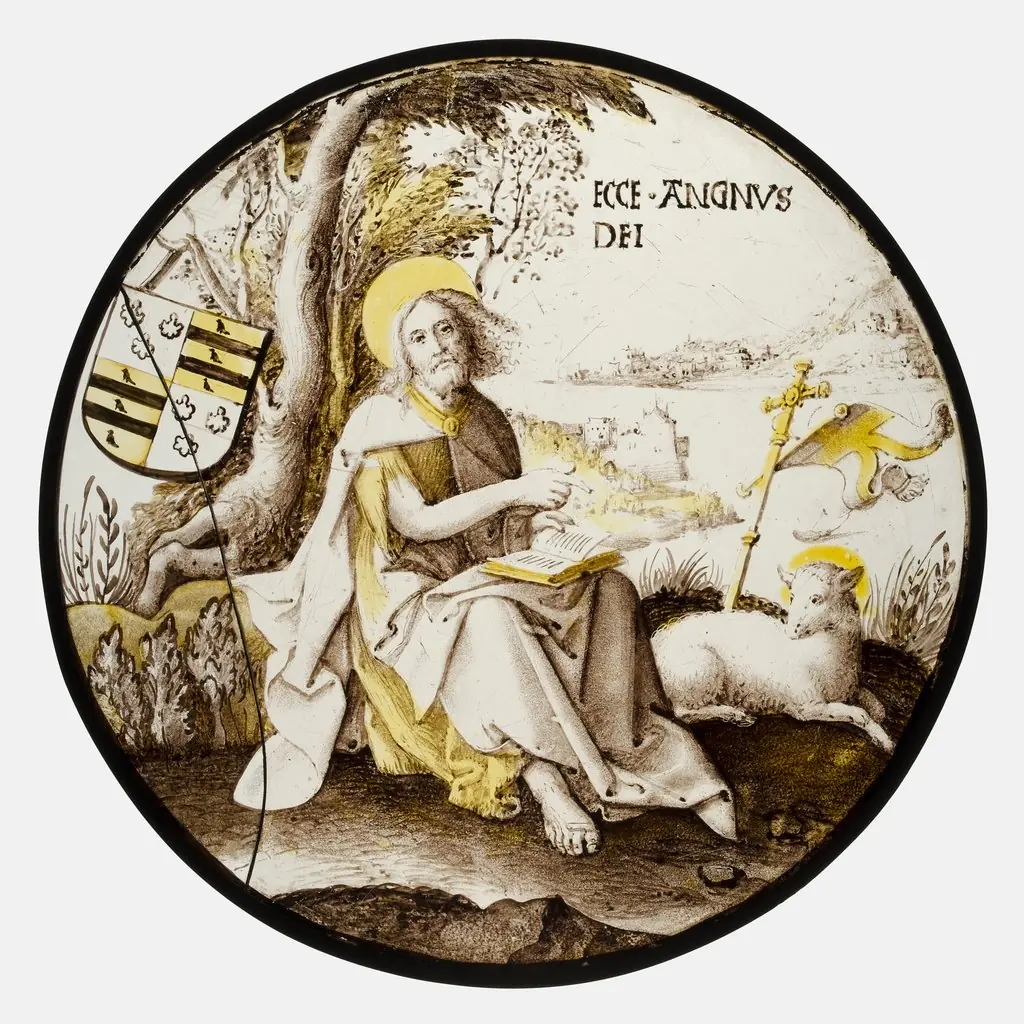 Roundel with Saint John the Baptist
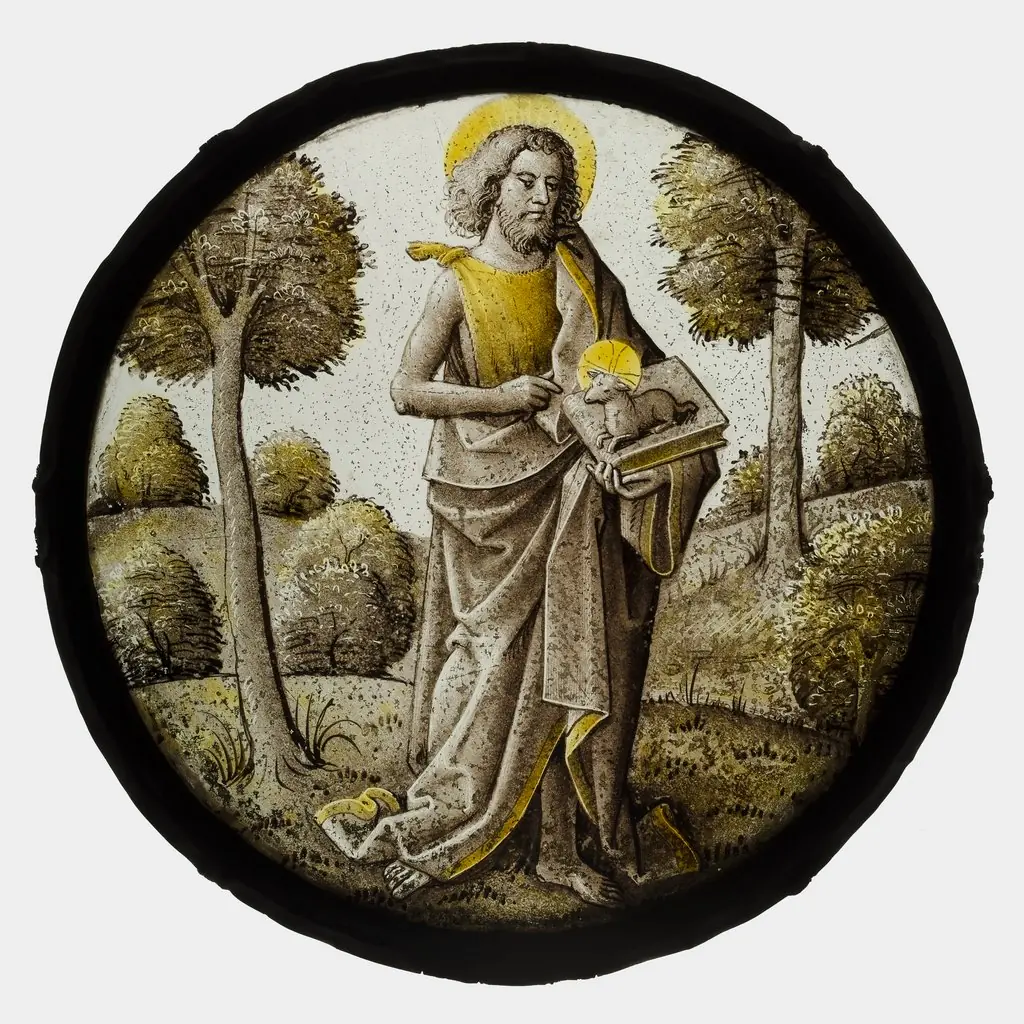 Roundel with Saint John the Baptist
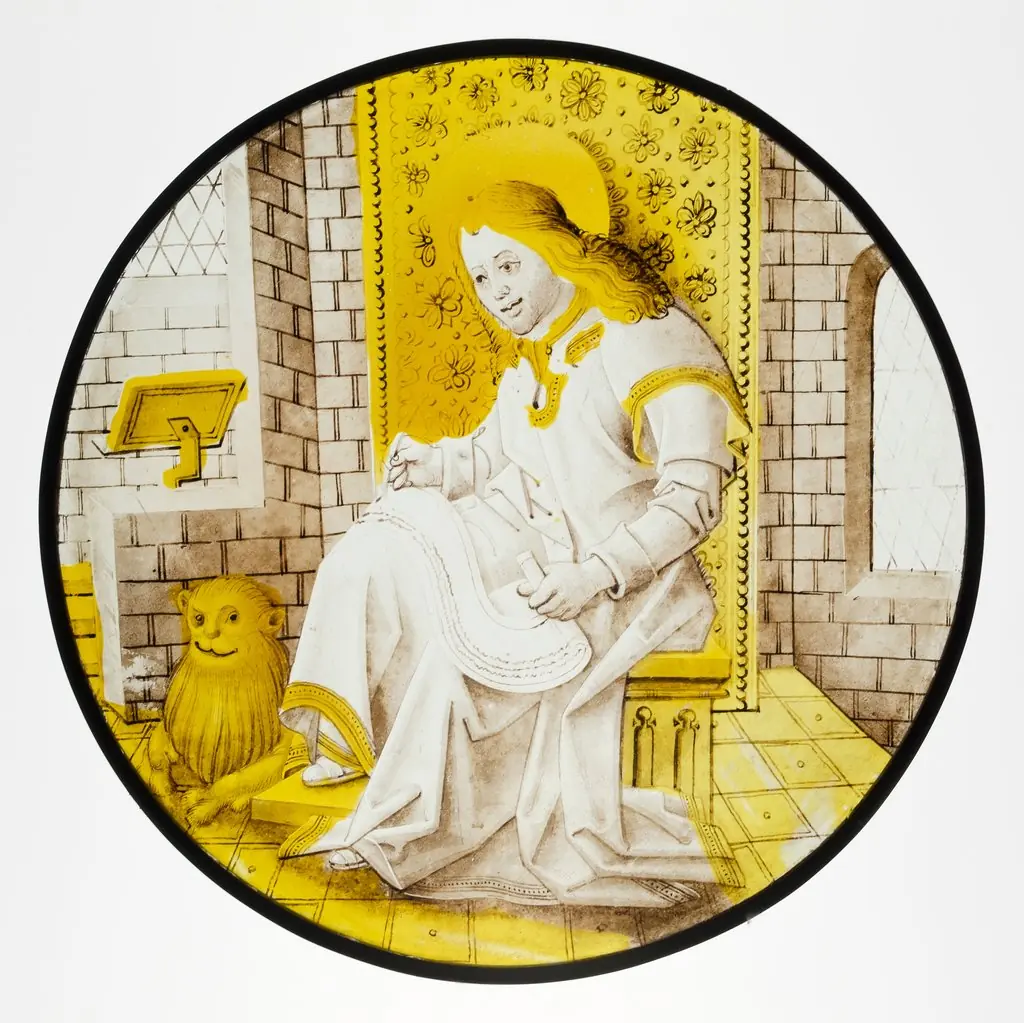 Roundel with Saint Mark
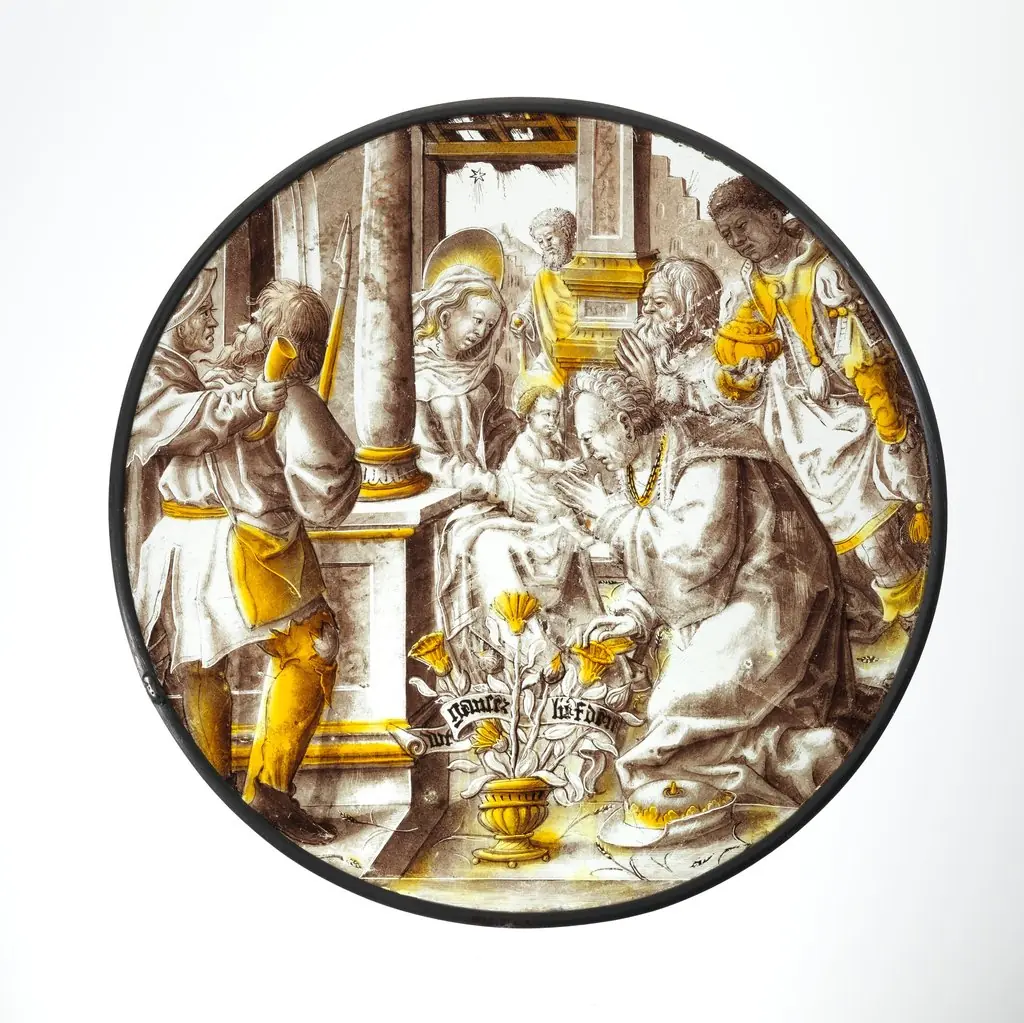 Roundel with Adoration of the Kings
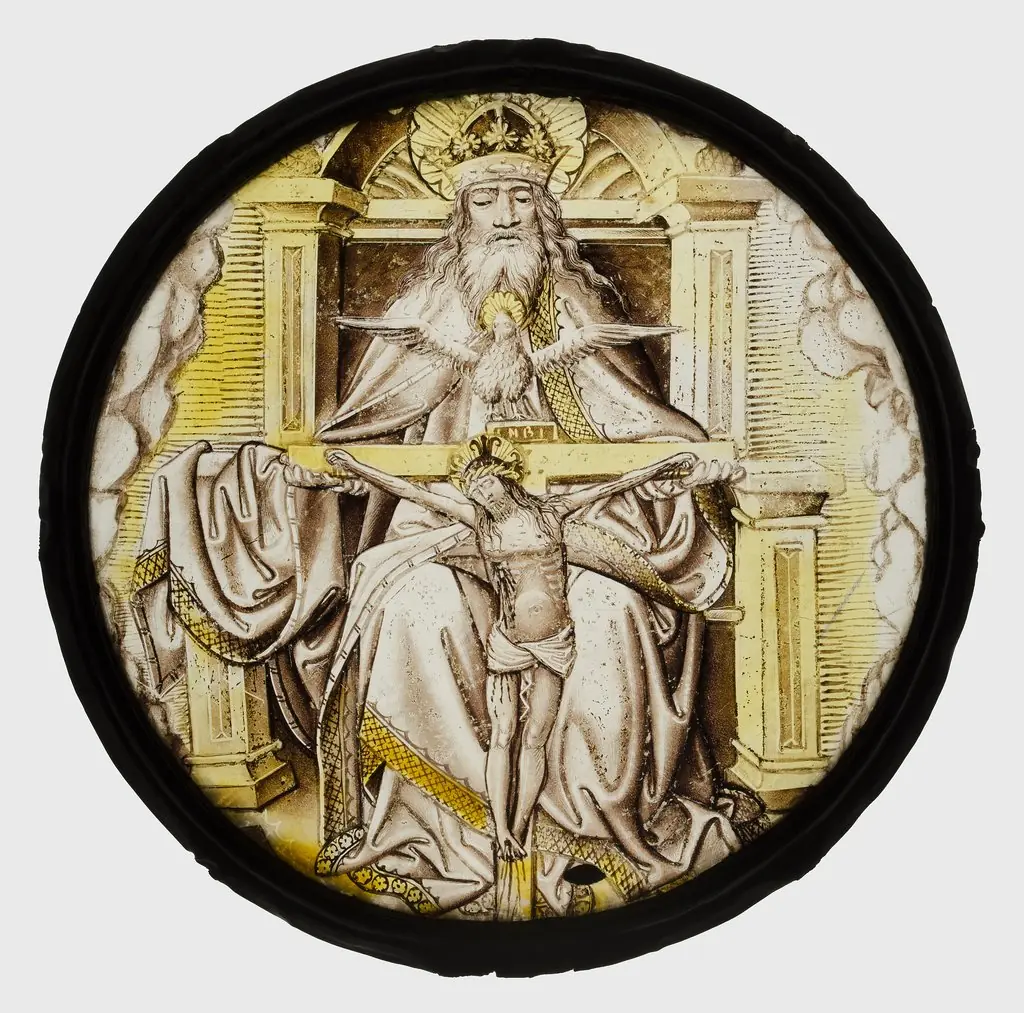 Roundel with the Holy Trinity
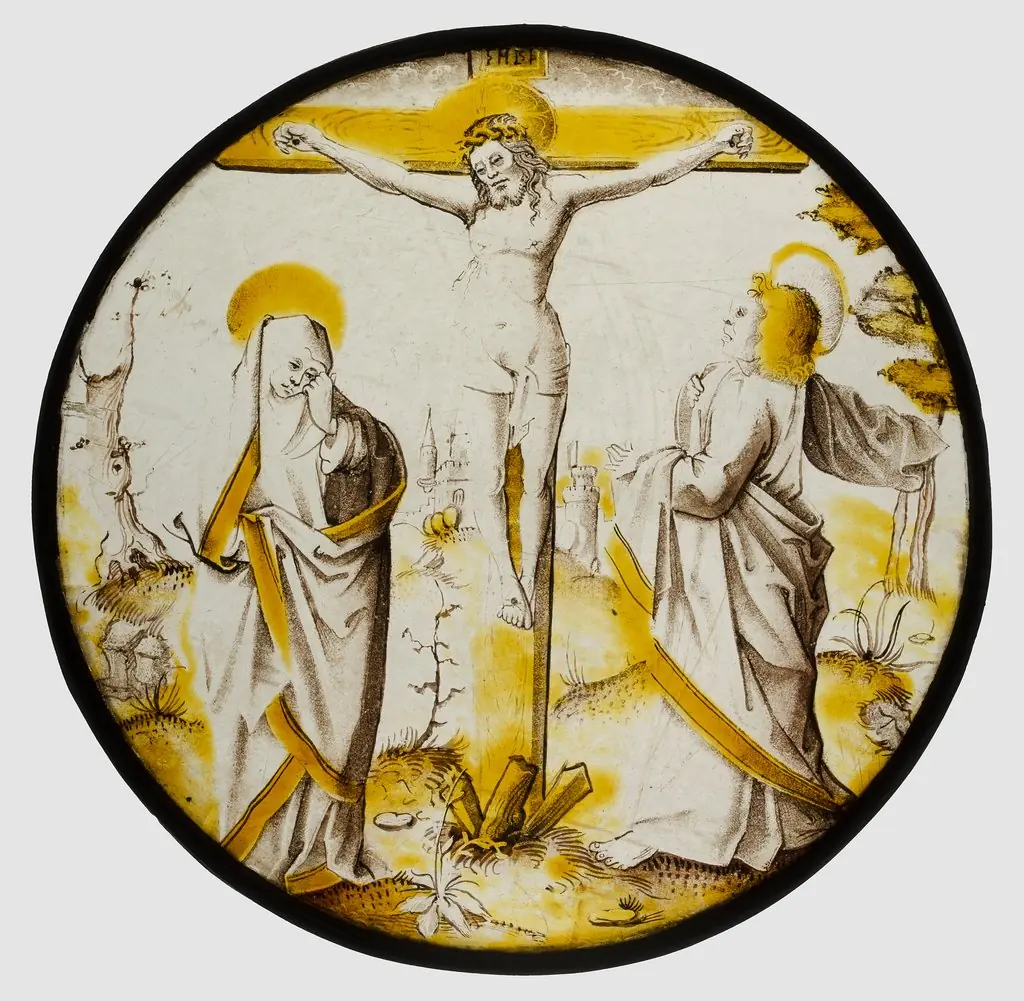 Roundel with the Crucifixion, the Virgin, and Saint John
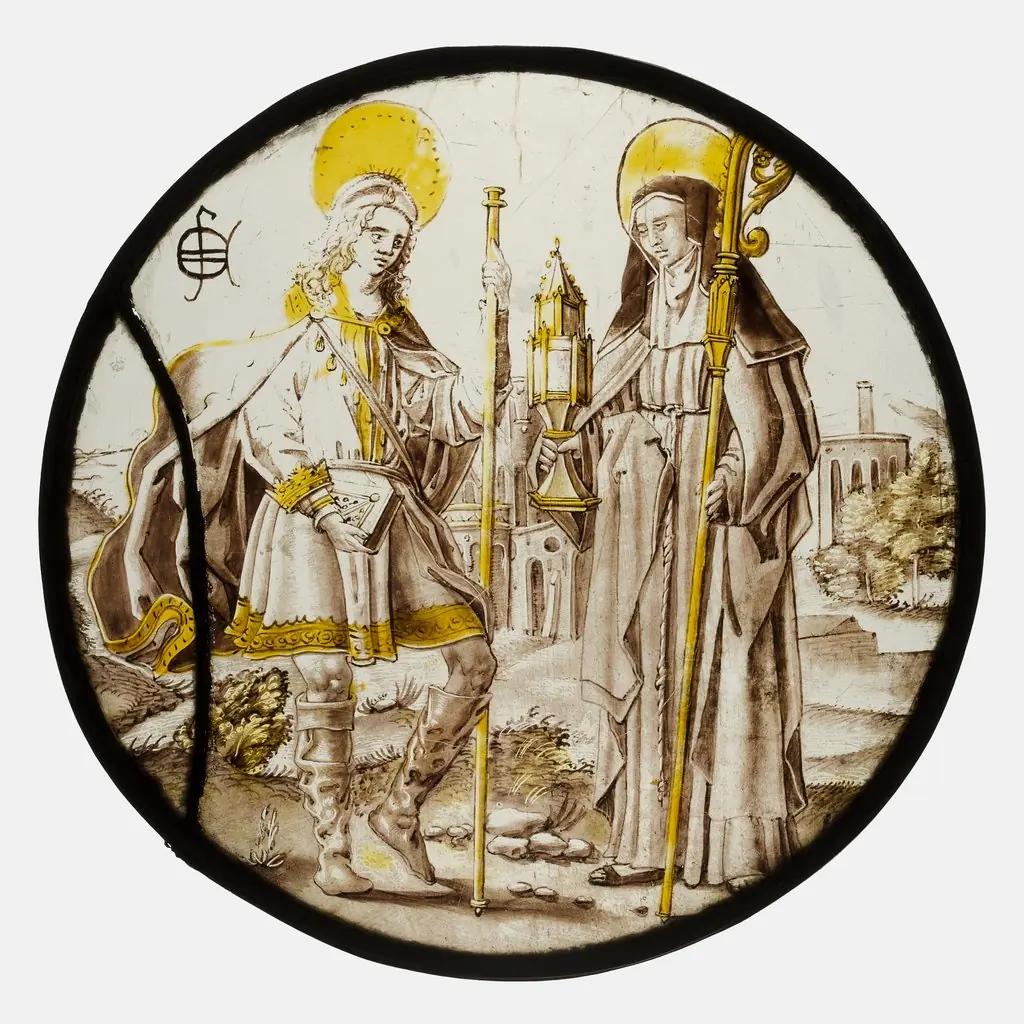 Roundel with Saint Jodocus and St. Clare of Assisi
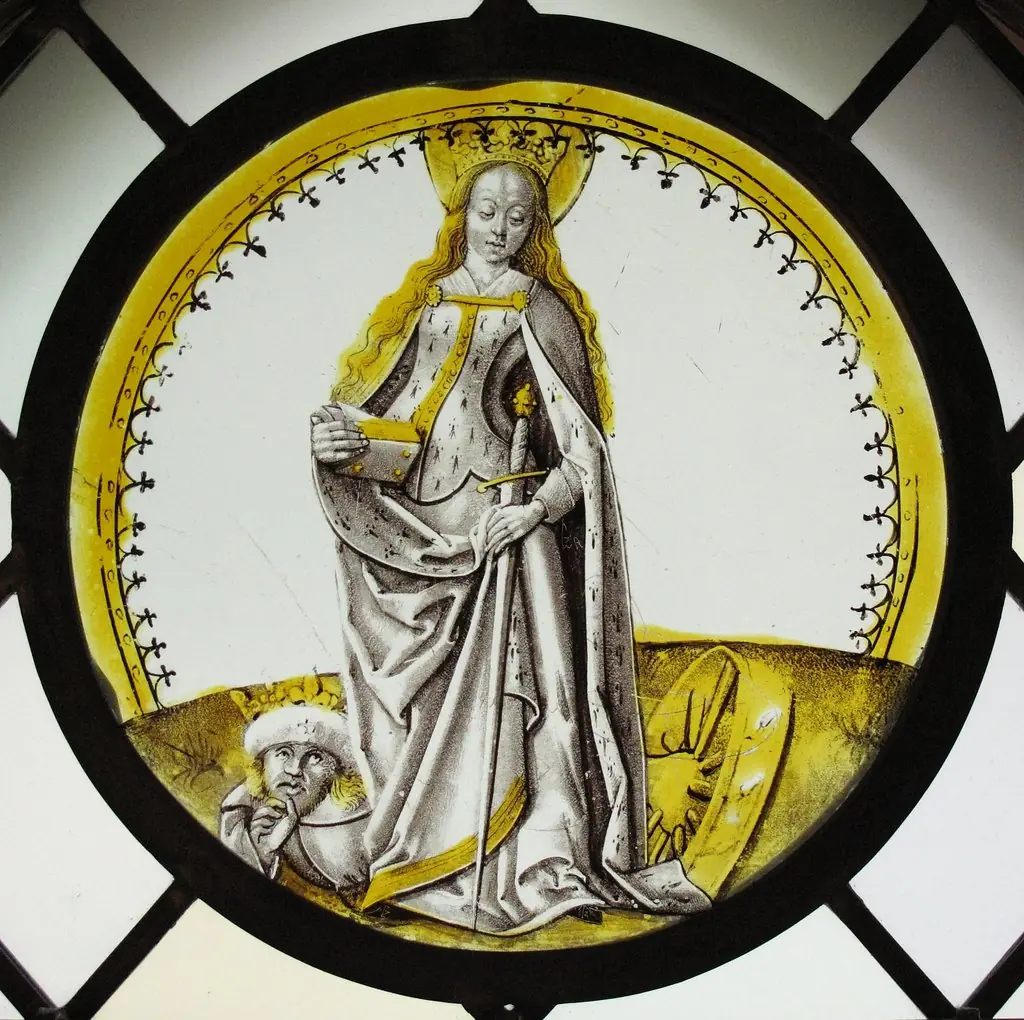 Roundel with Saint Catherine of Alexandria
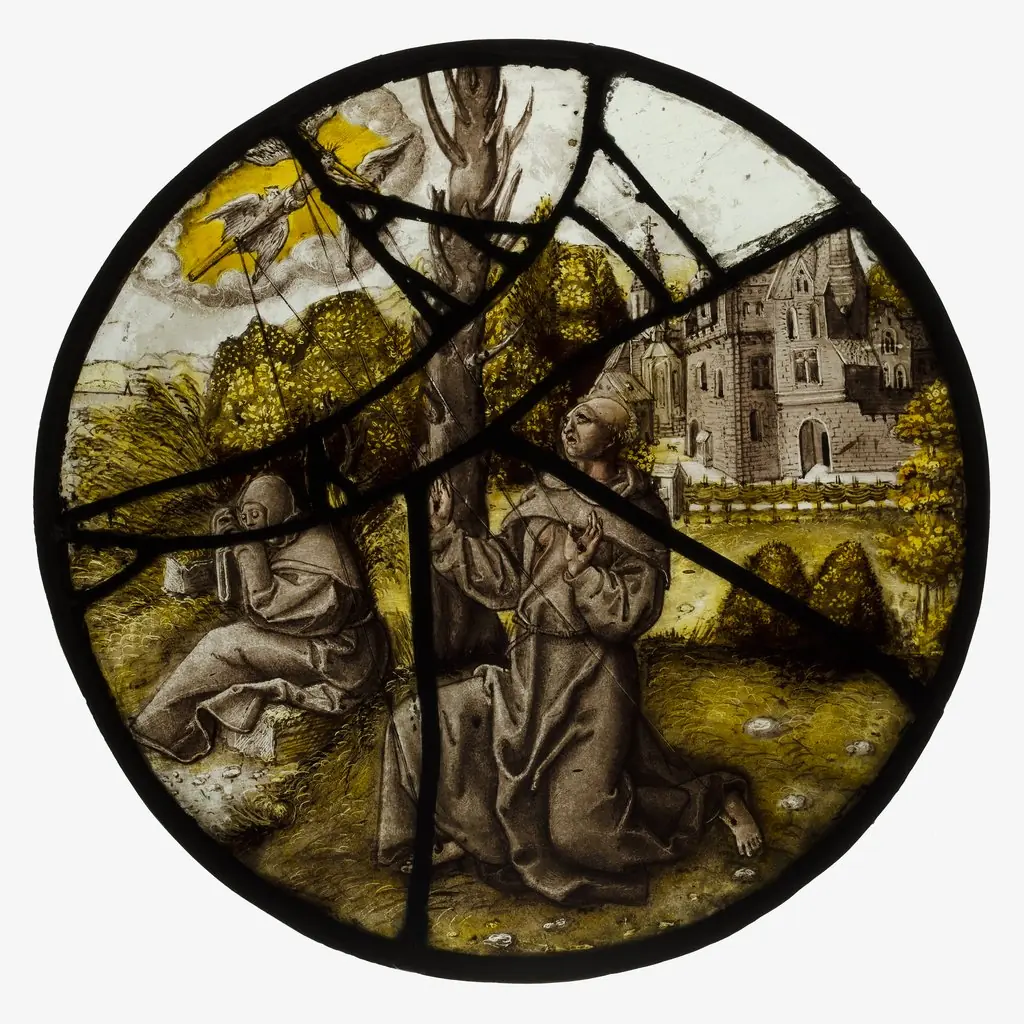 Roundel with Saint Francis Receiving the Stigmata