Artwork
Winter Landscape of Two Herons, Willow, and Tea Plants Blossoms
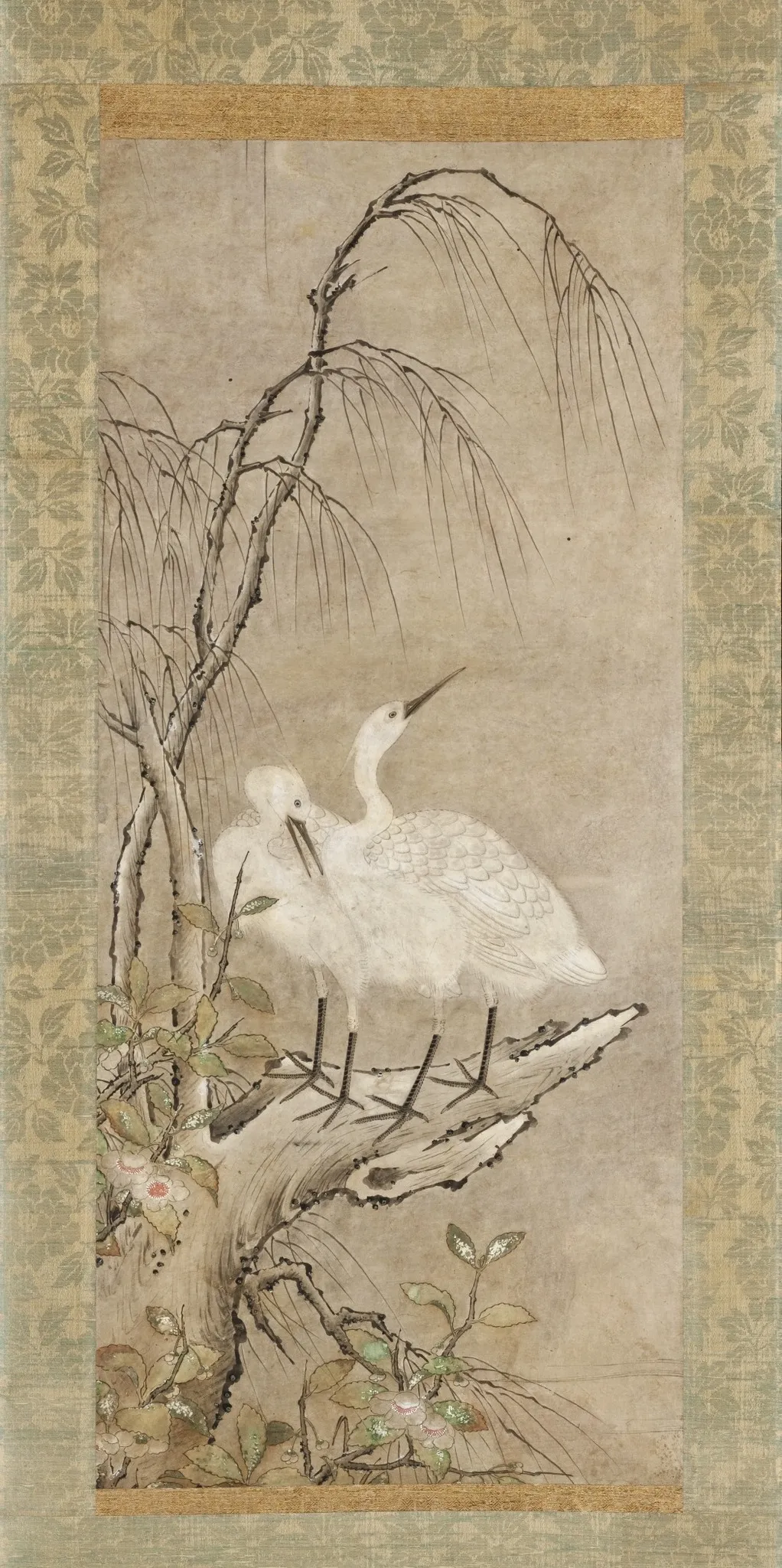
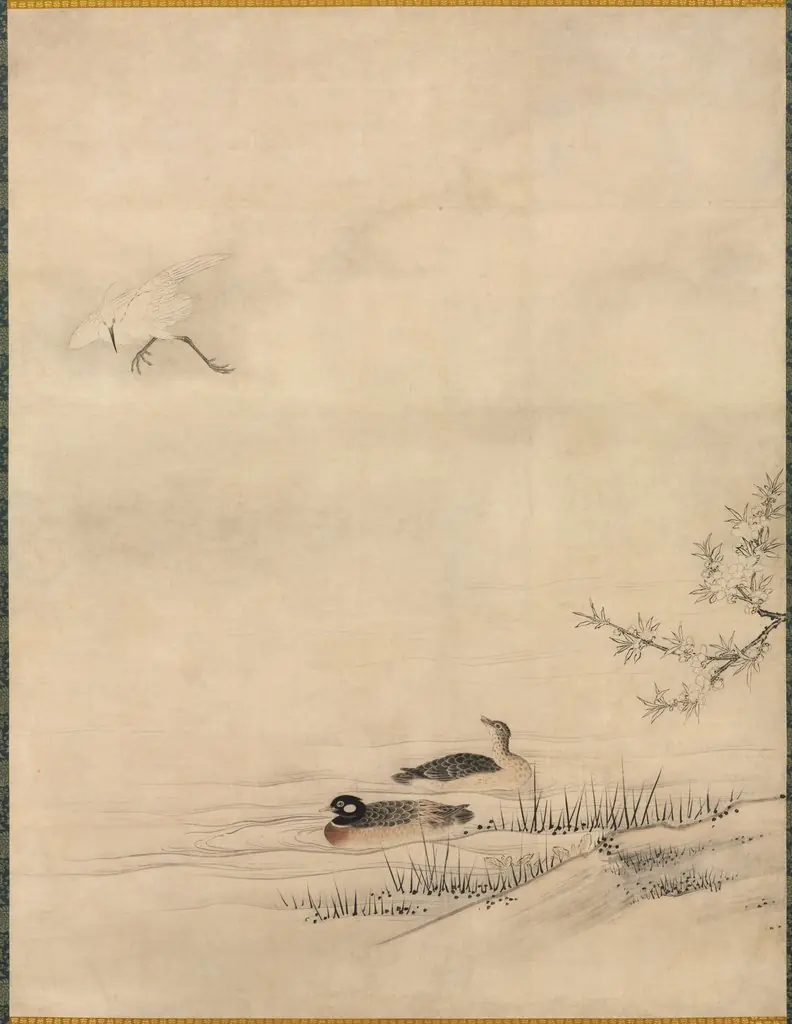
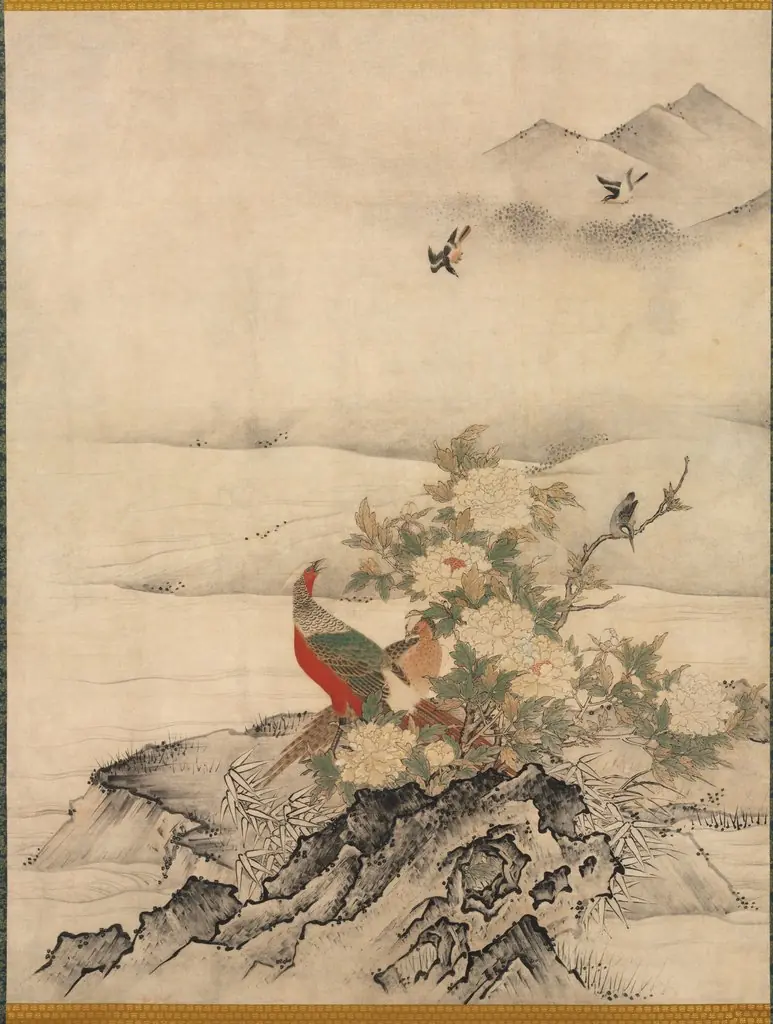
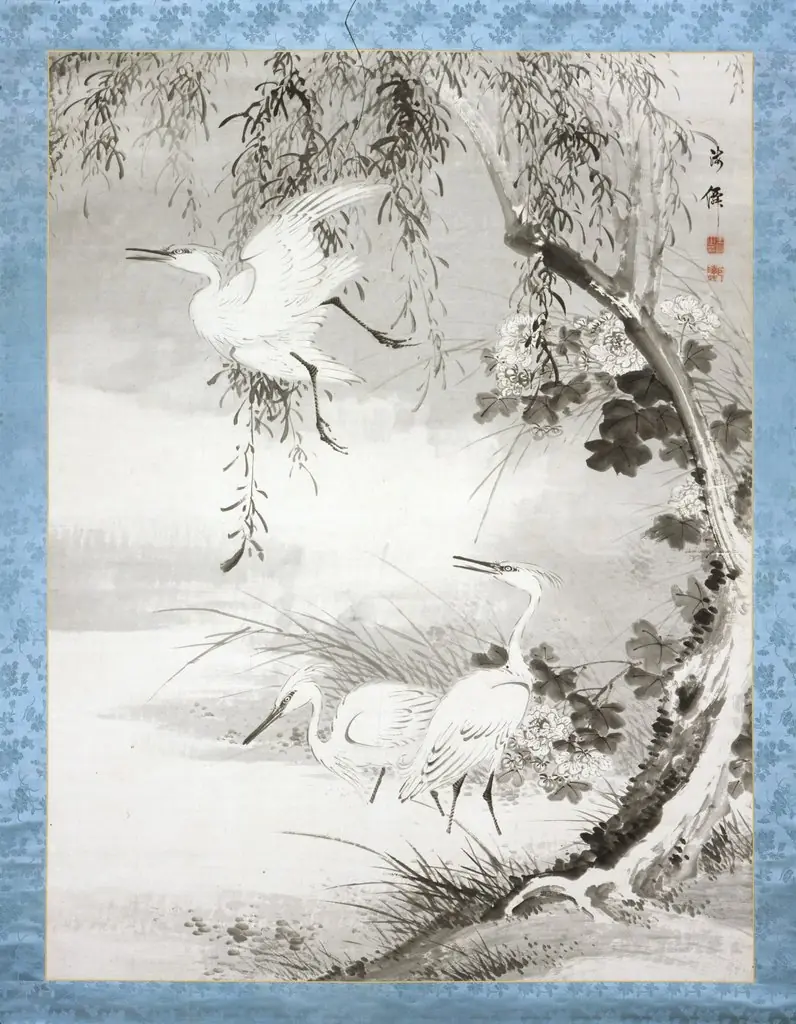
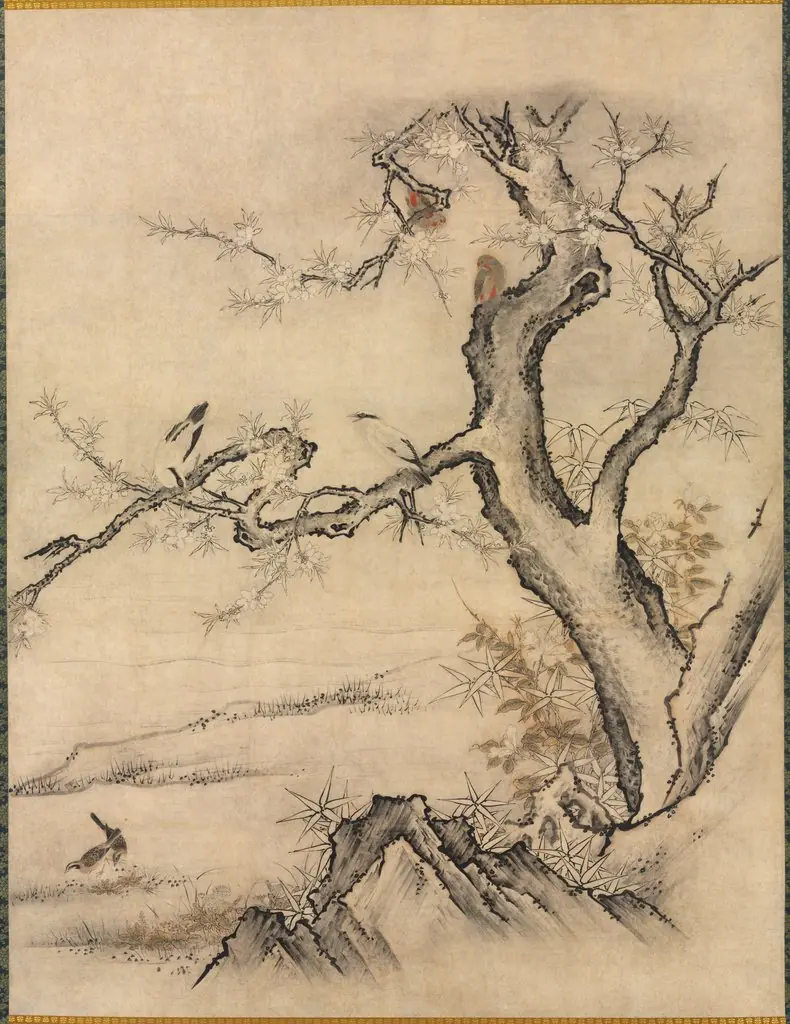
Winter Landscape of Two Herons, Willow, and Tea Plants Blossoms is an unspecified painting by the Northern Renaissance artist Unknown. It dates from 1550 and is held in the collection of the Los Angeles County Museum of Art. This ink-and-color painting depicts two herons perched on a bare branch amid willow and blooming tea plants.
About this work
Overview
This ink-and-color painting depicts two herons perched on a bare branch amid willow and blooming tea plants. The composition is restrained, with minimal detail and a muted palette dominated by soft whites, grays, and light browns. Negative space plays a central role, enhancing the quiet atmosphere. The brushwork is precise yet fluid, suggesting movement without overt drama.
Subject & Meaning
The two herons, facing one another, may imply a moment of stillness or quiet exchange. Their white plumage contrasts subtly with the muted greens and pale blossoms of the surrounding flora. The barren branch and sparse leaves suggest winter’s quietude, while the tea blossoms hint at fleeting renewal. Together, they evoke a contemplative harmony between nature’s cycles.
Technique & Style
The artist employs fine, controlled brushstrokes to define the herons’ feathers and the delicate curves of willow branches. Color is applied thinly, allowing the paper’s texture to show through. The background is left largely unworked, reinforcing the sense of space and calm. The style avoids ornamentation, favoring restraint and tonal nuance over detail.
History & Provenance
The painting’s origin is not documented in public records, and no known exhibition or collector history precedes its current attribution. It is stylistically consistent with late Ming or early Qing ink-wash traditions, though the specific artist remains unidentified. Its preservation suggests it was valued within private collections for its quiet aesthetic.
Context
Created during a period when literati painting emphasized solitude and natural harmony, this work aligns with ideals of understated beauty and spiritual stillness. Similar themes appear in contemporary poetry and garden design, where nature’s subtleties were revered. The inclusion of tea blossoms reflects their cultural resonance in scholarly circles as symbols of purity and seasonal transition.
Legacy
Though not widely reproduced or studied, the painting exemplifies a quiet strand of East Asian ink painting that prioritizes atmosphere over narrative. Its influence, if any, is likely indirect, resonating with later artists who sought to convey emotion through minimalism and the careful use of voids. It remains a quiet testament to the power of restraint in visual expression.
Artist & collection

 Domestic Scene
 Giacomo and Cardinal Marco, investing Andrea, Abbot of San Zeno, with his Benefice
 The Nymph of Fontainebleau
 Portrait of a Woman
 Madonna and Child with Saints in the Enclosed Garden
 Venus and Minerva
 Family Group of Four on Sofa
 Wall painting from Room H of the Villa of P. Fannius Synistor at Boscoreale