Artwork
Herons and Willow
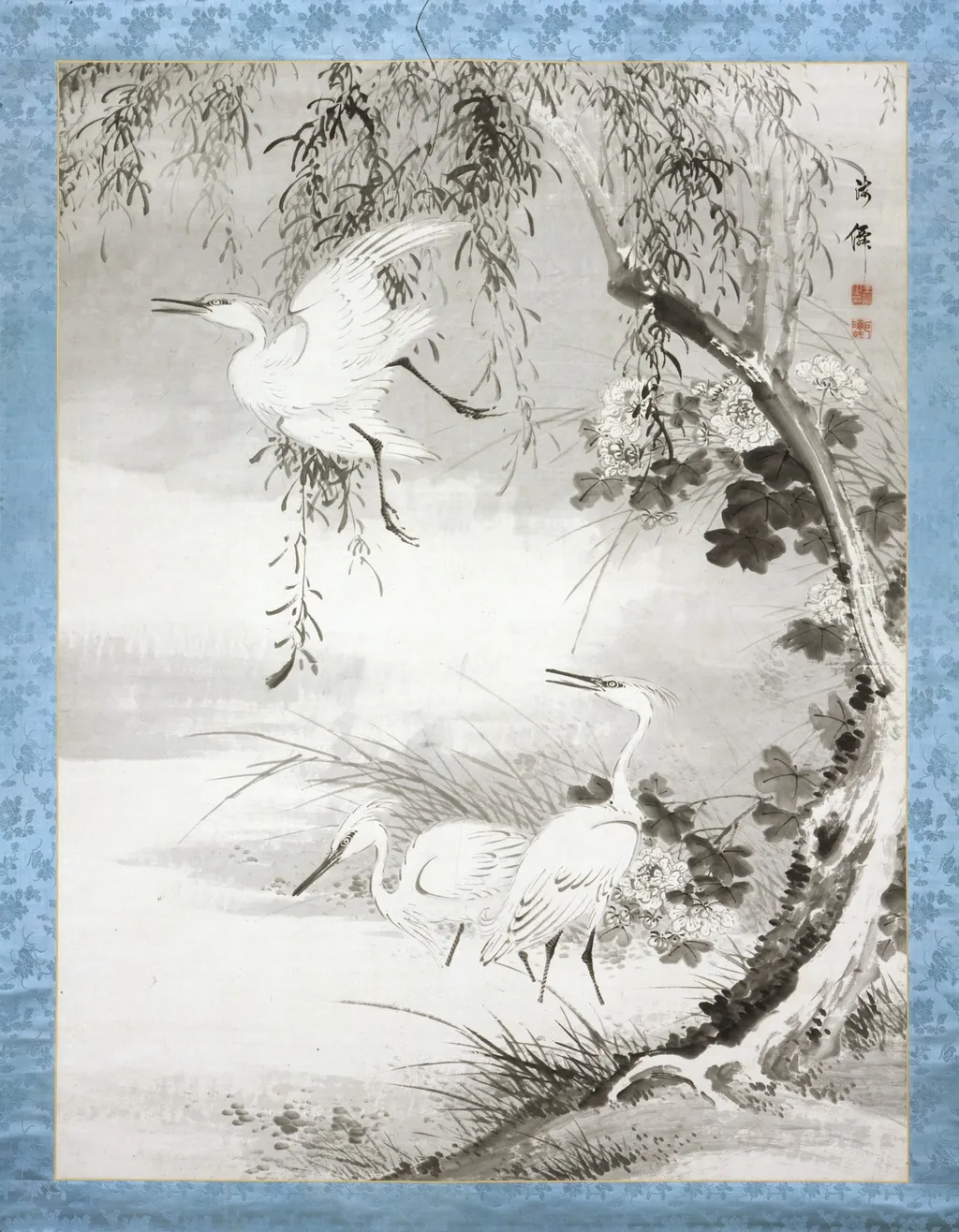
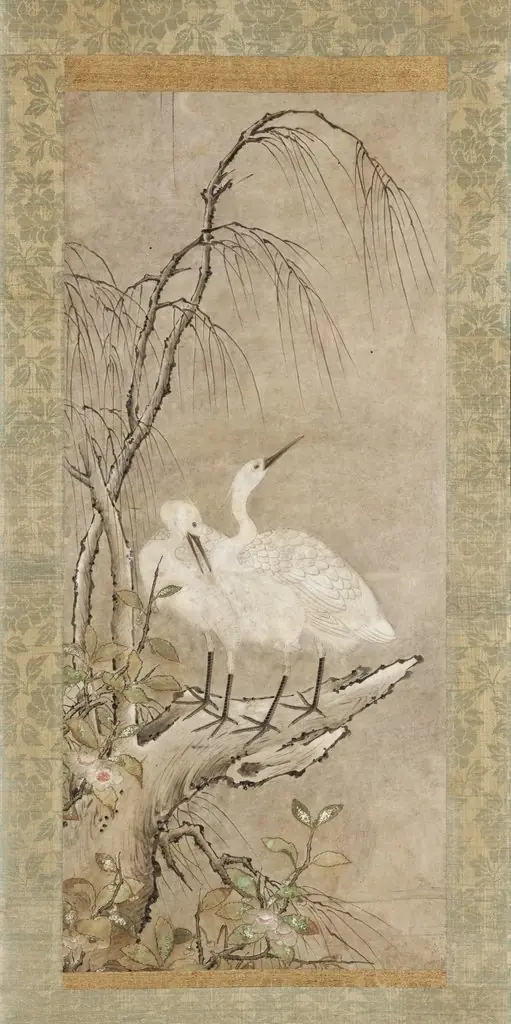
Herons and Willow is an unspecified painting by Oda Kaisen. It dates from 1850 and is held in the collection of the Los Angeles County Museum of Art.
About this work
Overview
Its composition balances stillness and motion, with birds at rest and one in flight, all framed by the tree’s cascading branches.
Created around 1850 by Oda Kaisen, this ink painting captures a quiet natural scene centered on a willow tree and three herons. The work is part of the collection at the Los Angeles County Museum of Art. Its composition balances stillness and motion, with birds at rest and one in flight, all framed by the tree’s cascading branches. The muted palette and delicate brushwork evoke a contemplative mood.
Subject & Meaning
The painting presents herons and a willow as symbols of quiet endurance and natural rhythm. The herons, poised or gliding, suggest movement within stillness, while the leaning willow, its leaves drifting downward, implies the passage of time. Together, they form a harmonious ensemble rooted in Japanese aesthetic traditions that value subtlety and the beauty of transient moments.
Technique & Style
Oda Kaisen employed ink wash techniques characteristic of literati painting, using varied brush pressures to suggest texture and depth. The willow’s drooping branches are rendered with fluid, tapering lines, while the herons are defined with minimal strokes that convey form without detail. Background elements are lightly suggested, leaving space for the viewer’s imagination and reinforcing the painting’s meditative tone.
History & Provenance
The painting was likely produced during the late Edo period, a time when amateur scholar-artists often turned to nature for inspiration. It entered the Los Angeles County Museum of Art’s collection in the 20th century, though its earlier ownership history remains undocumented. Its preservation reflects a growing Western interest in Japanese ink painting during the modern era.
Context
This work aligns with the literati tradition in Japan, where artists sought to express personal reflection through nature. Unlike decorative screens or commercial prints, such paintings were often made for intimate viewing, valued for their restraint and emotional resonance. The willow and heron were common motifs in East Asian art, associated with grace, solitude, and the seasons.
Legacy
Though not widely reproduced, the painting contributes to the understanding of 19th-century Japanese ink painting beyond major schools. It exemplifies how individual artists engaged with classical themes in quiet, personal ways. Its presence in a major Western museum underscores the global appreciation for understated naturalism in East Asian art.
Artist & collection


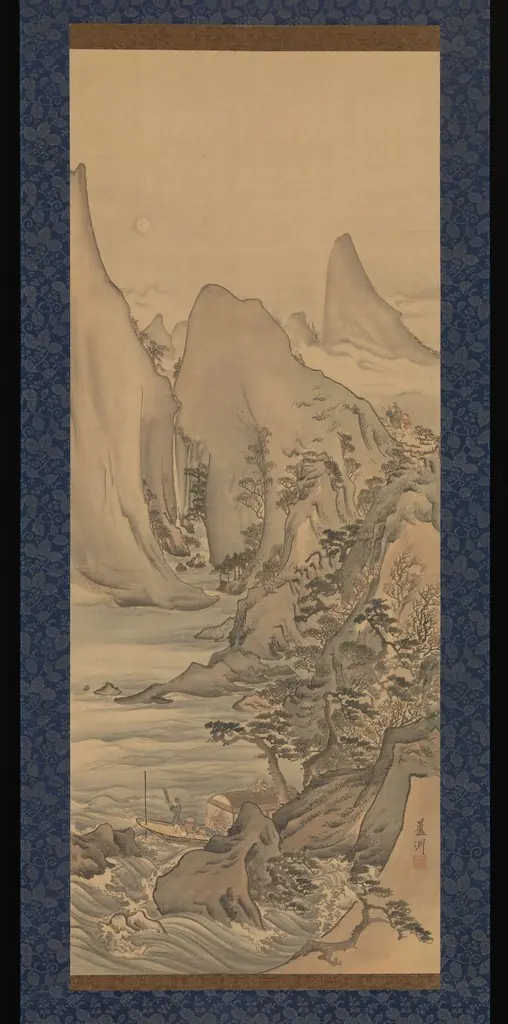 Boat under the Moon
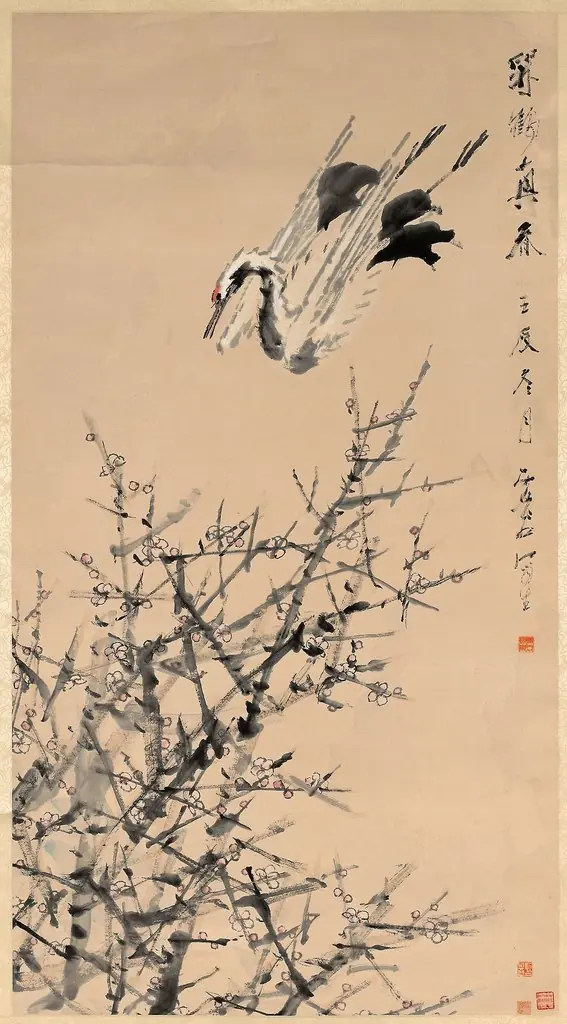 Plum Blossoms, Crane, and Spring
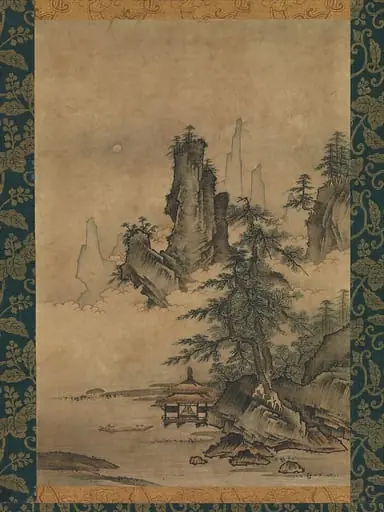 山水図|Landscape
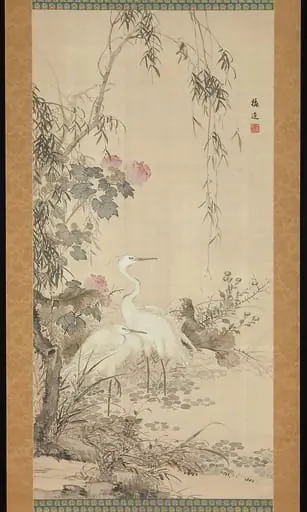 山本梅逸筆 柳鷺図|Egrets, Peonies, and Willows
 Untitled
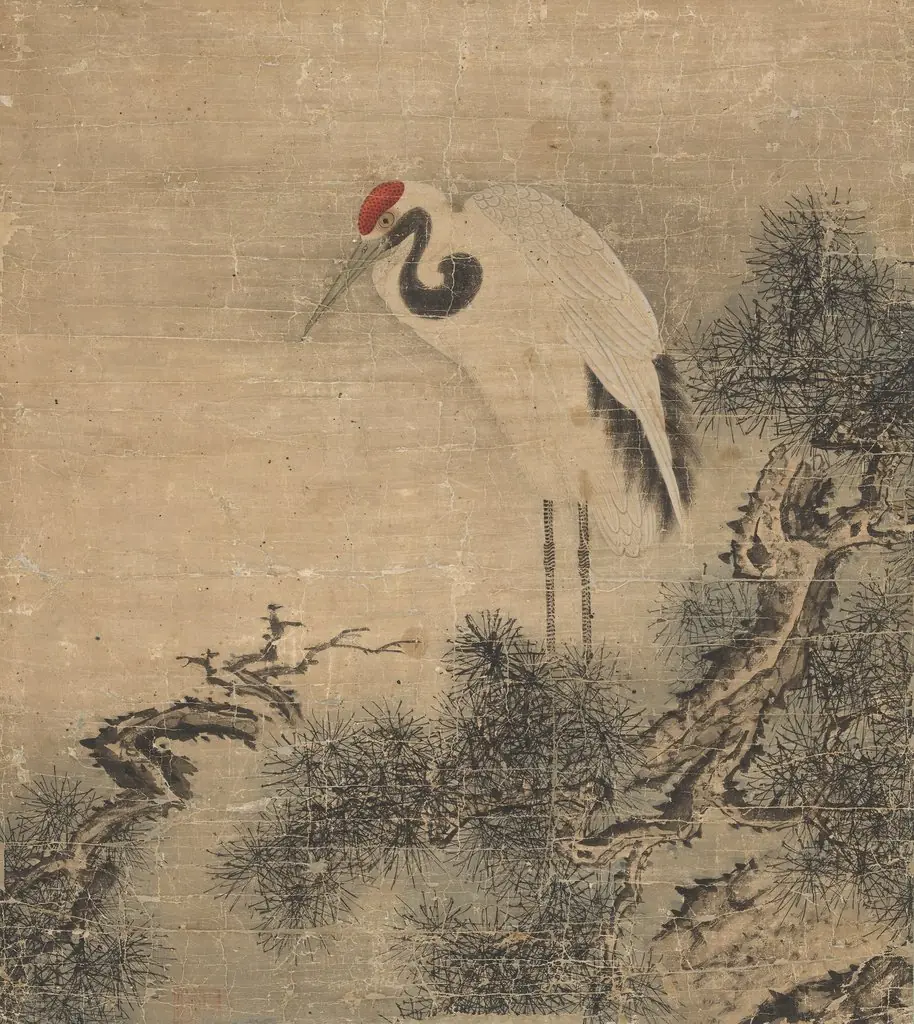 Pine Tree and Crane
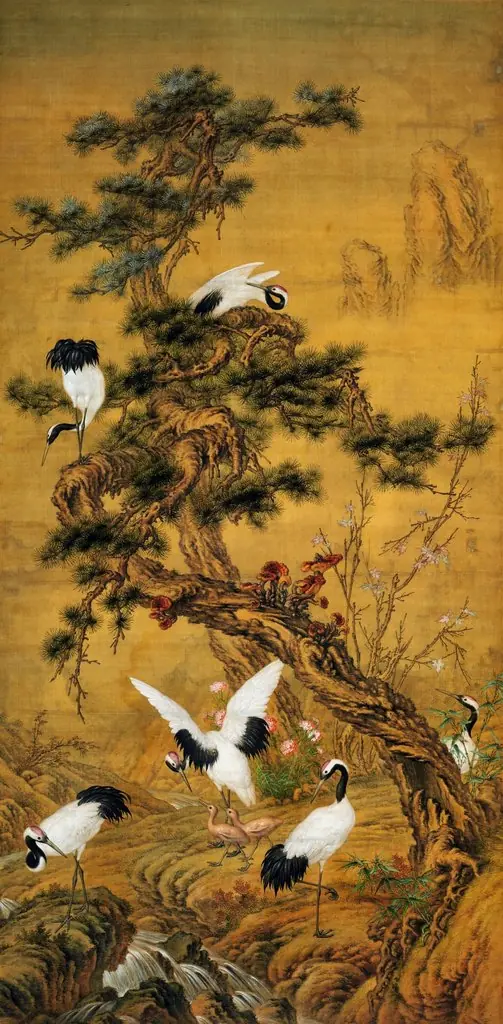 Pines and cranes in spring.
 Wild Geese Descending on a Sandbank
 明呂紀杏花孔雀 軸
 Egrets and Hibiscus in Autumn
 明 佚名 竹鶴雙清圖 軸|Crane in a bamboo grove
 Winter Landscape of Two Herons, Willow, and Tea Plants Blossoms