Artwork
Beheading of John the Baptist
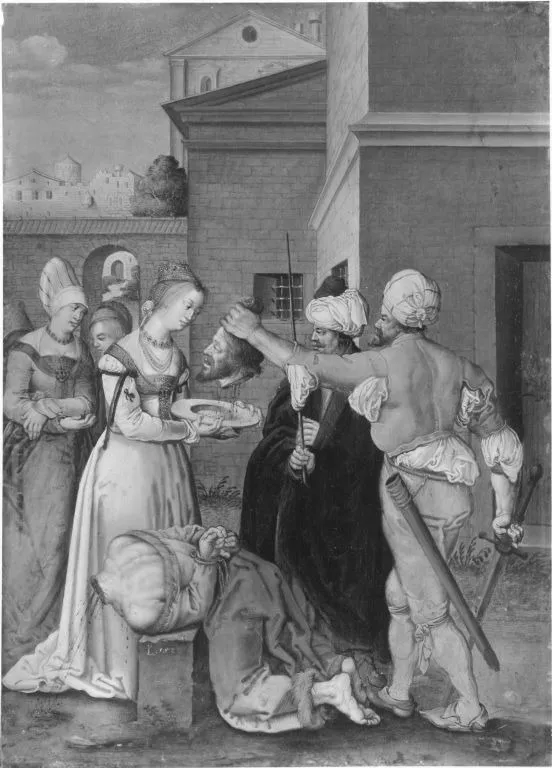
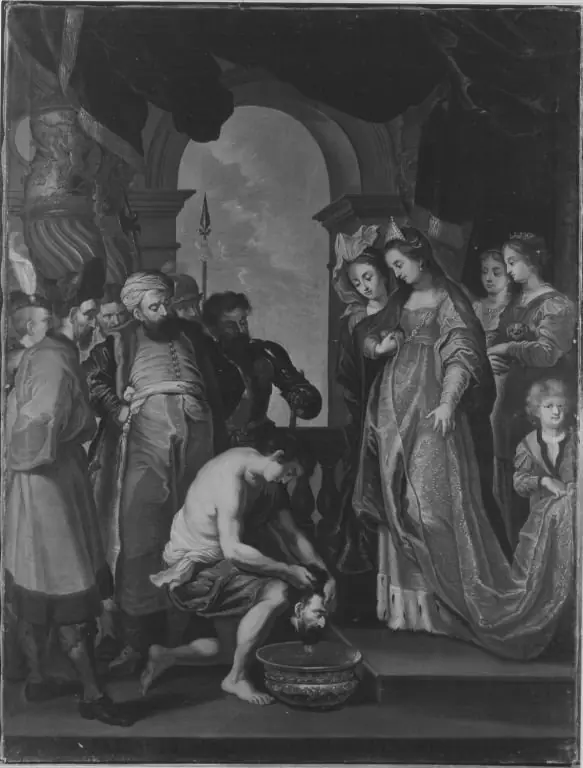
Beheading of John the Baptist is an oil painting by the Early Baroque Italian artist Unknown. It dates from 1600 and is held in the collection of the Bavarian State Painting Collections. The oil painting depicts a dramatic episode set in a shadowy courtyard, where six figures are gathered around a central act of violence.
About this work
Overview
A kneeling man holds a platter bearing the severed head of John the Baptist, while another figure lifts a sword, poised to deliver the fatal blow.
The oil painting depicts a dramatic episode set in a shadowy courtyard, where six figures are gathered around a central act of violence. A kneeling man holds a platter bearing the severed head of John the Baptist, while another figure lifts a sword, poised to deliver the fatal blow. Three women watch nearby, their expressions tense, and the background is marked by arched doorways and a distant tower.
Subject & Meaning
The work illustrates the biblical moment of John the Baptist’s beheading, a narrative often invoked to explore themes of martyrdom, betrayal, and the clash between prophetic truth and political power. The presence of onlookers—particularly the anxious women—underscores the human cost of the event, inviting contemplation of both the physical act and its moral ramifications.
Technique & Style
The artist employs a stark chiaroscuro scheme, contrasting deep shadows with sharply illuminated figures to draw the eye toward the central drama. Modelling of forms is achieved through gradual tonal shifts, while the limited palette heightens the tension. Architectural elements are rendered with simplified lines, allowing the composition to focus on the emotional intensity of the characters.
Context
Created in the tradition of religious history painting, the piece reflects a period when biblical scenes served both devotional and didactic purposes. While specific details of its commission or provenance are not recorded, its compositional choices align with the Baroque emphasis on movement, theatrical lighting, and the visceral portrayal of sacred narratives.
Artist & collection

 Domestic Scene
 Giacomo and Cardinal Marco, investing Andrea, Abbot of San Zeno, with his Benefice
 The Nymph of Fontainebleau
 Portrait of a Woman
 Madonna and Child with Saints in the Enclosed Garden
 Venus and Minerva
 Family Group of Four on Sofa
 Wall painting from Room H of the Villa of P. Fannius Synistor at Boscoreale