Artwork
A Young Woman
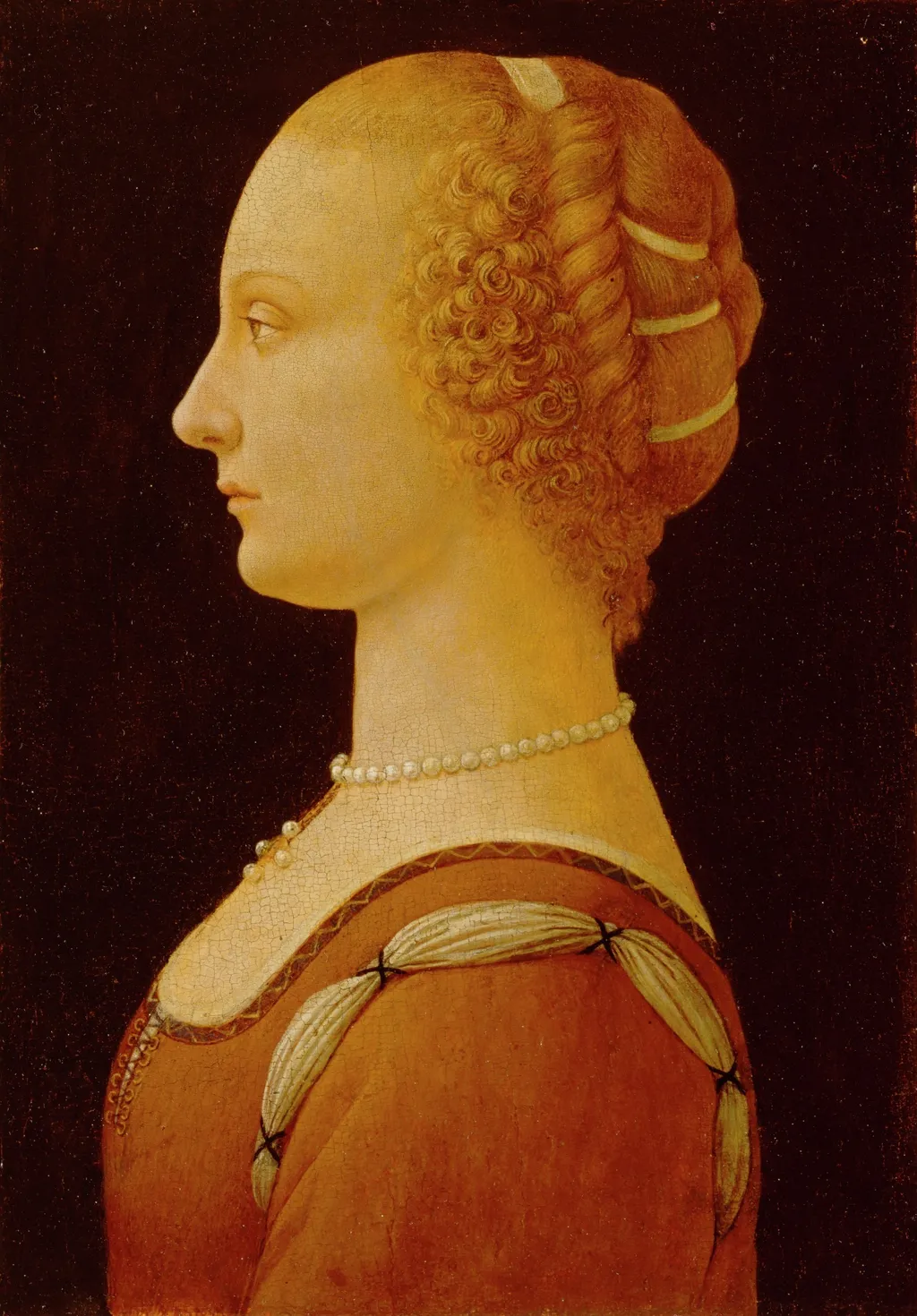
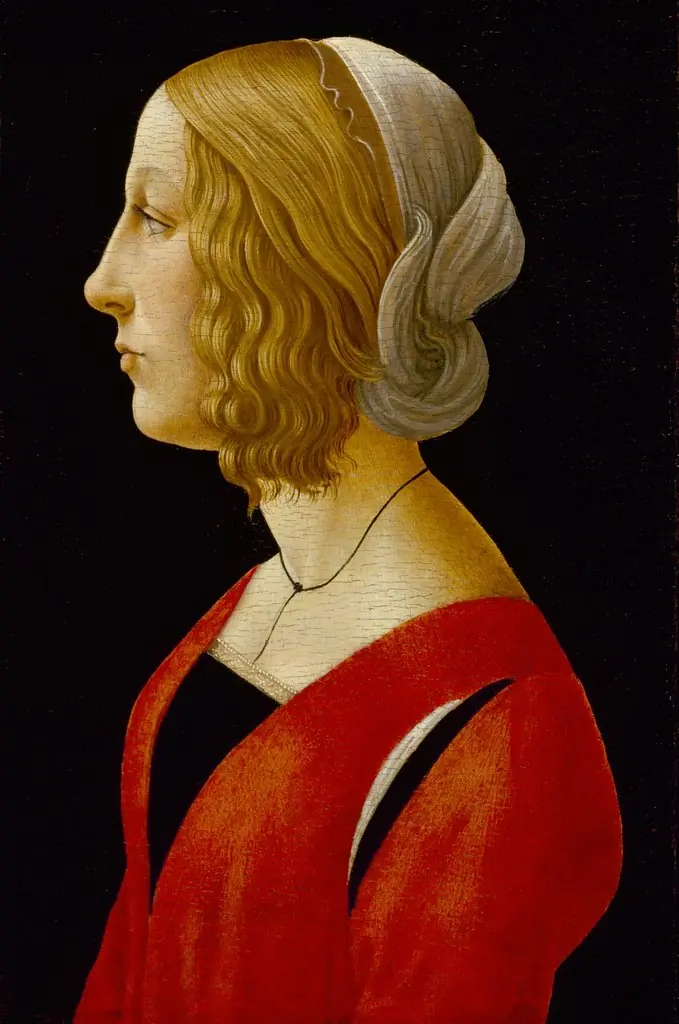
A Young Woman is an unspecified painting by the Northern Renaissance artist Unknown. It dates from 1470 and is held in the collection of the Detroit Institute of Arts.
About this work
Overview
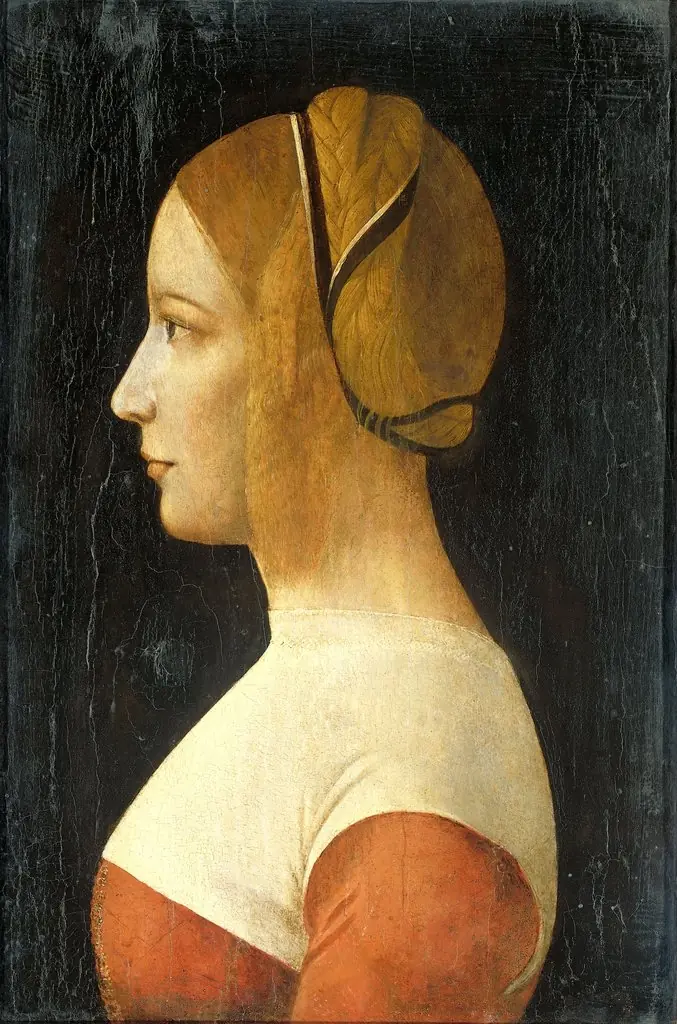
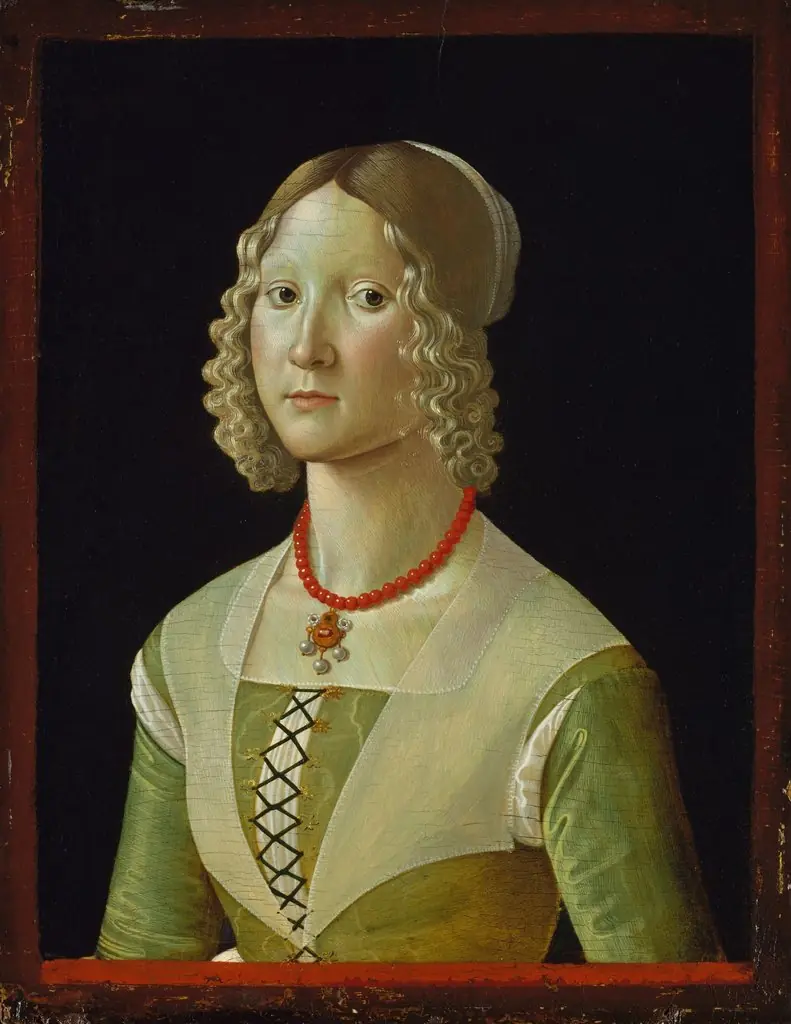
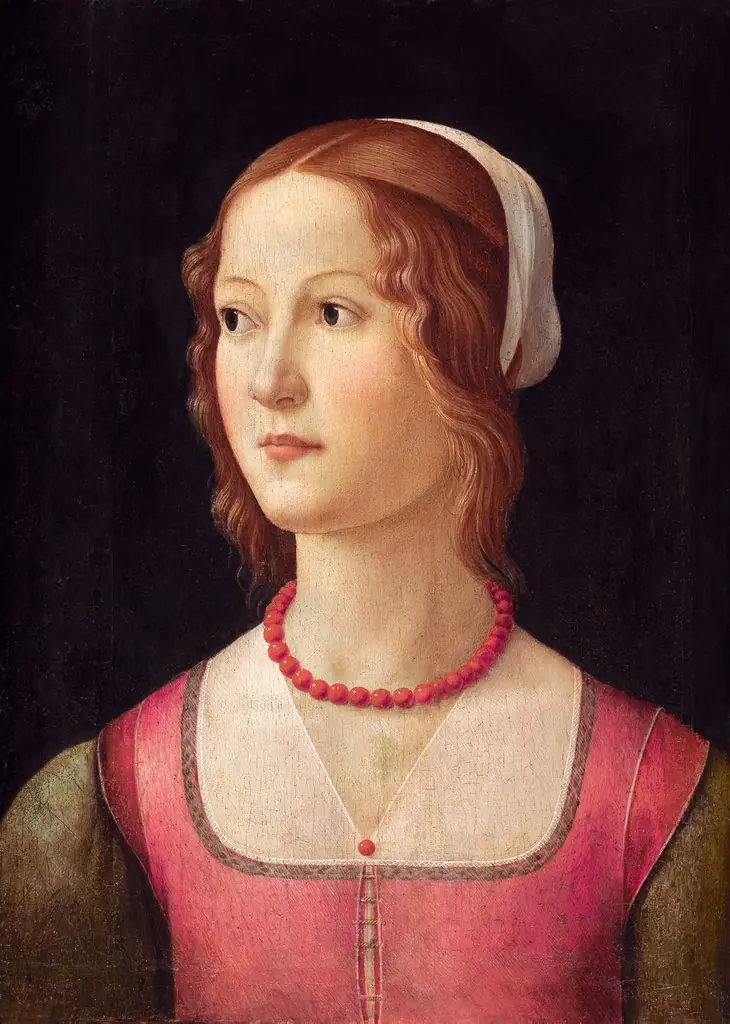
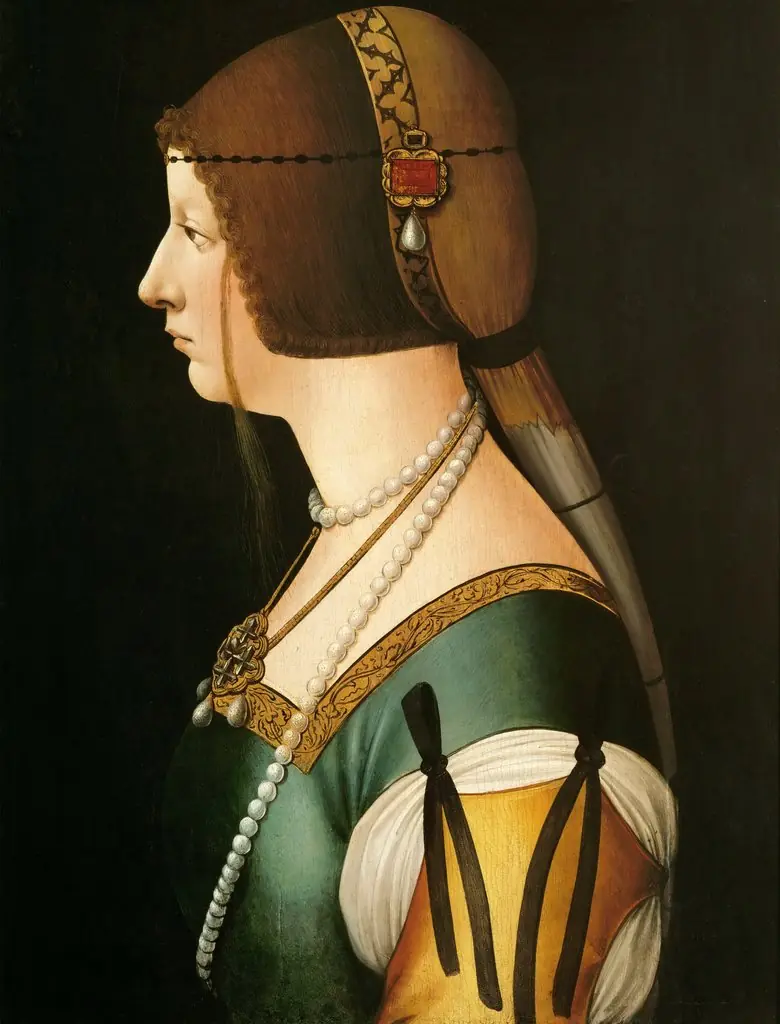
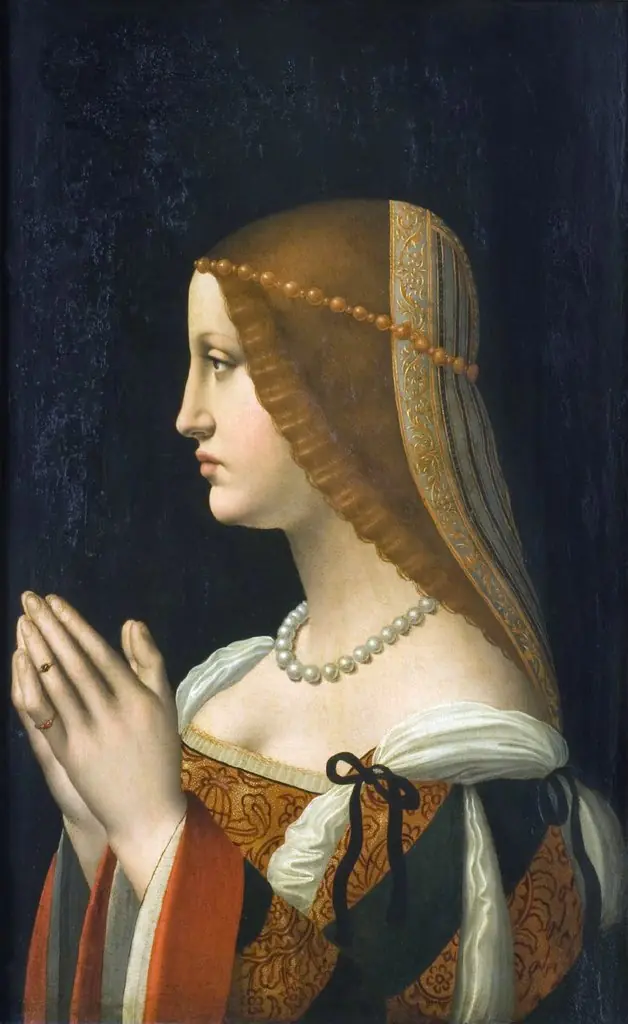
This portrait captures a young woman in profile, turned slightly to the left, against a deep brown background. Her fair skin and light-brown curls, neatly gathered into an updo, are accentuated by a white headband and a few loose strands. She wears a reddish-brown dress with a crisp white collar and a single strand of pearls at her throat, suggesting modest refinement rather than ostentation.
Subject & Meaning
The sitter’s quiet demeanor and restrained adornments point to an ideal of quiet elegance, common in 17th-century Dutch portraiture. Her gaze is averted, emphasizing introspection over engagement. The pearls and precise hairstyle signal social standing without overt luxury, reflecting values of propriety and understated grace in her cultural context.
Technique & Style
The artist employs soft modeling to define the contours of the face and neck, using subtle gradations of light to suggest volume. The dark background isolates the figure, drawing attention to texture—the sheen of pearls, the weave of fabric, the softness of hair. Brushwork is precise yet unobtrusive, favoring clarity over dramatic flourish.
History & Provenance
The painting resides in the collection of the Detroit Institute of Arts, acquired through documented channels in the 20th century. Its earlier provenance remains partially obscure, though stylistic analysis suggests it originated in the Dutch Republic during the mid-1600s, likely as a private commission.
Context
Created during a period when Dutch middle-class patrons increasingly commissioned portraits, this work reflects a shift toward intimate, non-idealized depictions of individuals. Unlike aristocratic portraits, it avoids symbols of power, instead highlighting personal dignity through simple attire and composed posture.
Legacy
Though unsigned and without a known artist, the painting contributes to the broader understanding of domestic portraiture in the Dutch Golden Age. Its preservation allows study of how everyday beauty and social norms were visually encoded in private collections of the era.
Artist & collection

 Domestic Scene
 Giacomo and Cardinal Marco, investing Andrea, Abbot of San Zeno, with his Benefice
 The Nymph of Fontainebleau
 Portrait of a Woman
 Madonna and Child with Saints in the Enclosed Garden
 Venus and Minerva
 Family Group of Four on Sofa
 Wall painting from Room H of the Villa of P. Fannius Synistor at Boscoreale