Artwork
Roundel with the Temptation of Saint Anthony
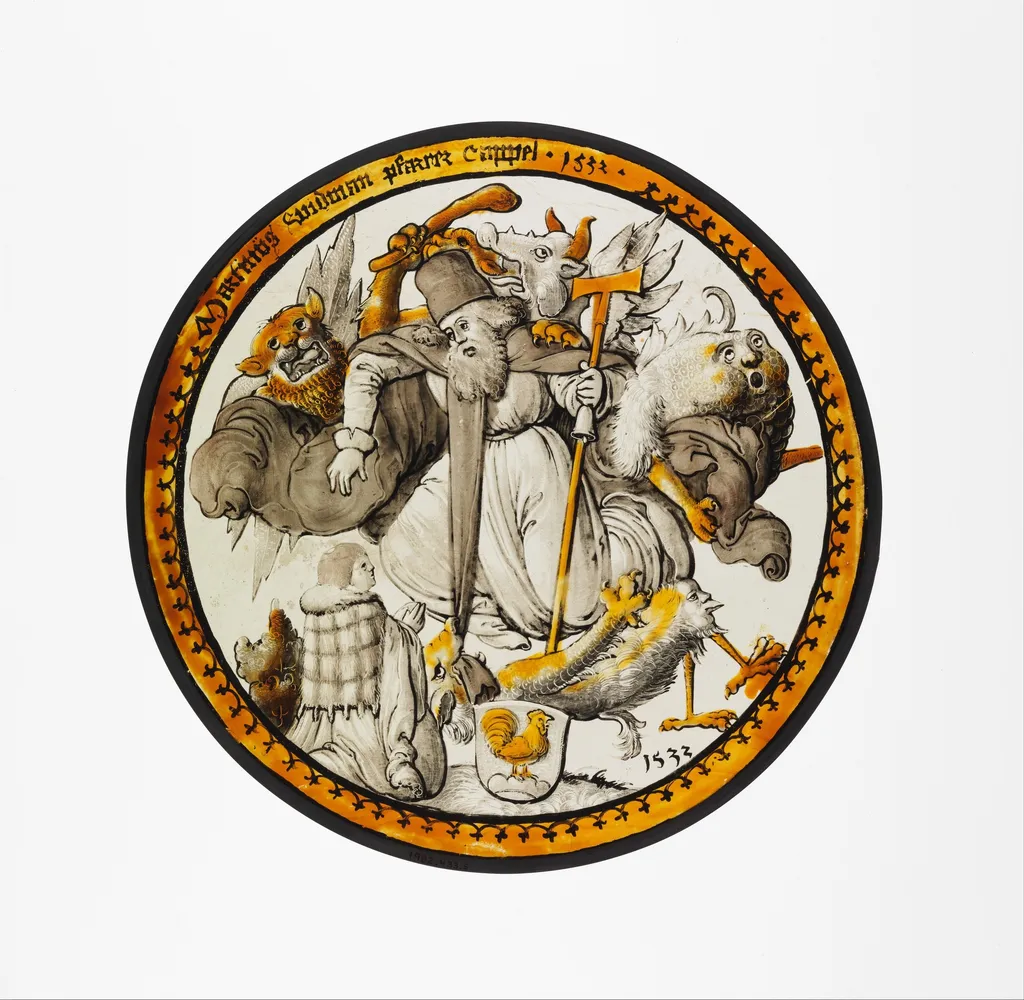
Roundel with the Temptation of Saint Anthony is an unspecified painting. It dates from 1532 and is held in the collection of the Metropolitan Museum of Art. This circular painting, known as a roundel, depicts a dramatic scene centered on a robed figure.
About this work
The man in the middle looks like he’s fighting off the creatures, which might mean this is about resisting temptation.
This round painting shows a wild scene with a robed man in the center holding a tall cross. Around him, strange creatures—some with horns, others with scaly skin—claw and snarl. A chicken pecks at the ground near his feet, and one beast even has a human face. The colors are bold: bright golds in the border, deep blacks, and pale whites for the figures.
The man in the middle looks like he’s fighting off the creatures, which might mean this is about resisting temptation. The year 1533 is written on the border, and the words say something about a chapel.
If you’re curious about this story, look up Anthony the Great.
Overview
This circular painting, known as a roundel, depicts a dramatic scene centered on a robed figure. He stands firm, holding a tall cross, while an array of grotesque creatures assails him from all sides. The composition is dynamic, filled with snarling beasts and unusual figures that suggest a struggle against malevolent forces. Dated to 1533, the artwork presents a vivid interpretation of spiritual conflict.
Subject & Meaning
The central figure is Saint Anthony the Great, an early Christian hermit renowned for his ascetic life and spiritual battles. The surrounding monstrous entities, some with horns, scales, or even human-like faces, symbolize the temptations and demonic torments he endured in the desert. His steadfast posture and the prominent cross signify his unwavering faith and successful resistance against these trials, offering a visual narrative of spiritual fortitude.
Technique & Style
The artist employs a striking visual vocabulary within the round format. Figures are rendered with pale whites, contrasting sharply with deep blacks that enhance the dramatic tension of the scene. Bright golds in the border frame the chaotic central action, drawing the viewer's eye to the intricate details of the fantastical creatures. The bold color palette and dynamic composition contribute to the intense and otherworldly atmosphere.
History & Provenance
Inscribed with the year 1533 along its border, this roundel provides a specific historical marker for its creation. Further text on the border makes reference to a chapel, suggesting the painting was originally commissioned for or installed within a religious architectural setting. This detail hints at its intended devotional or didactic function within a sacred space of the period.
Artist & collection

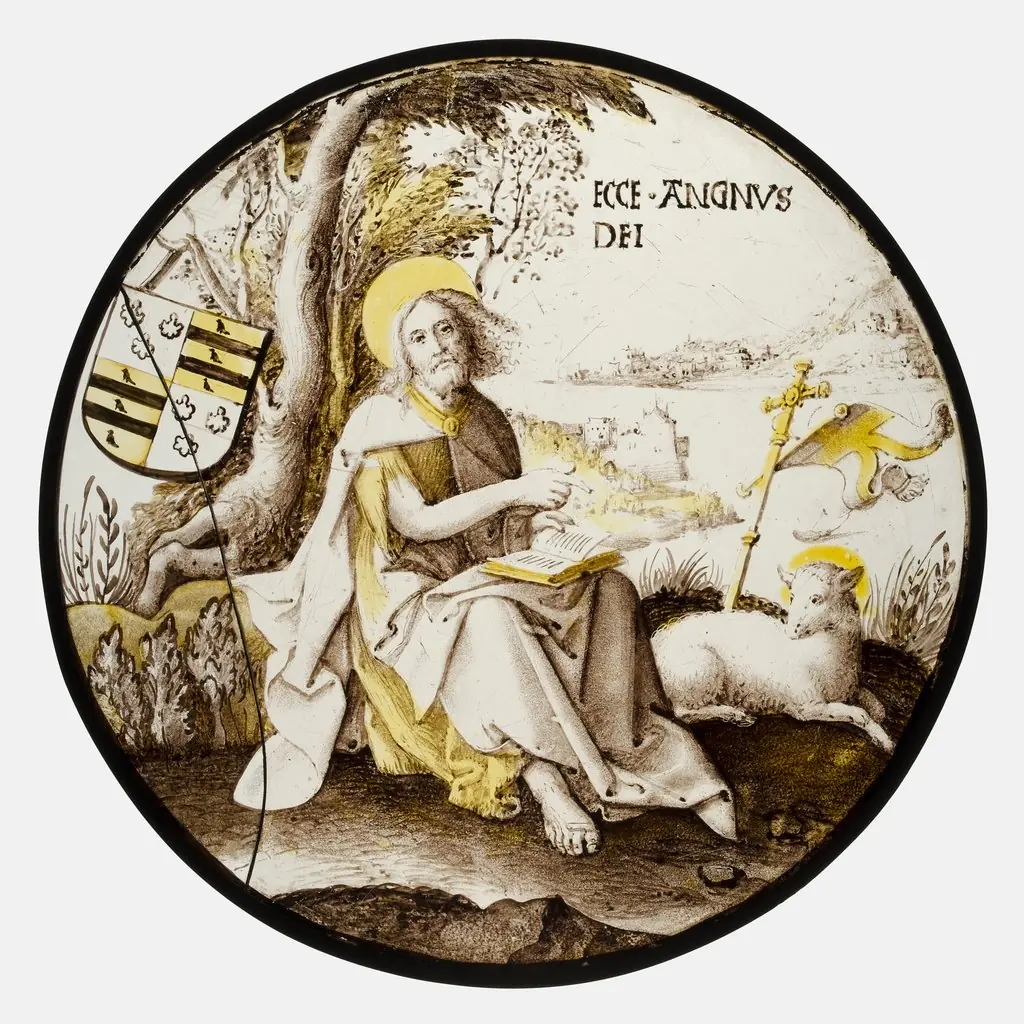 Roundel with Saint John the Baptist
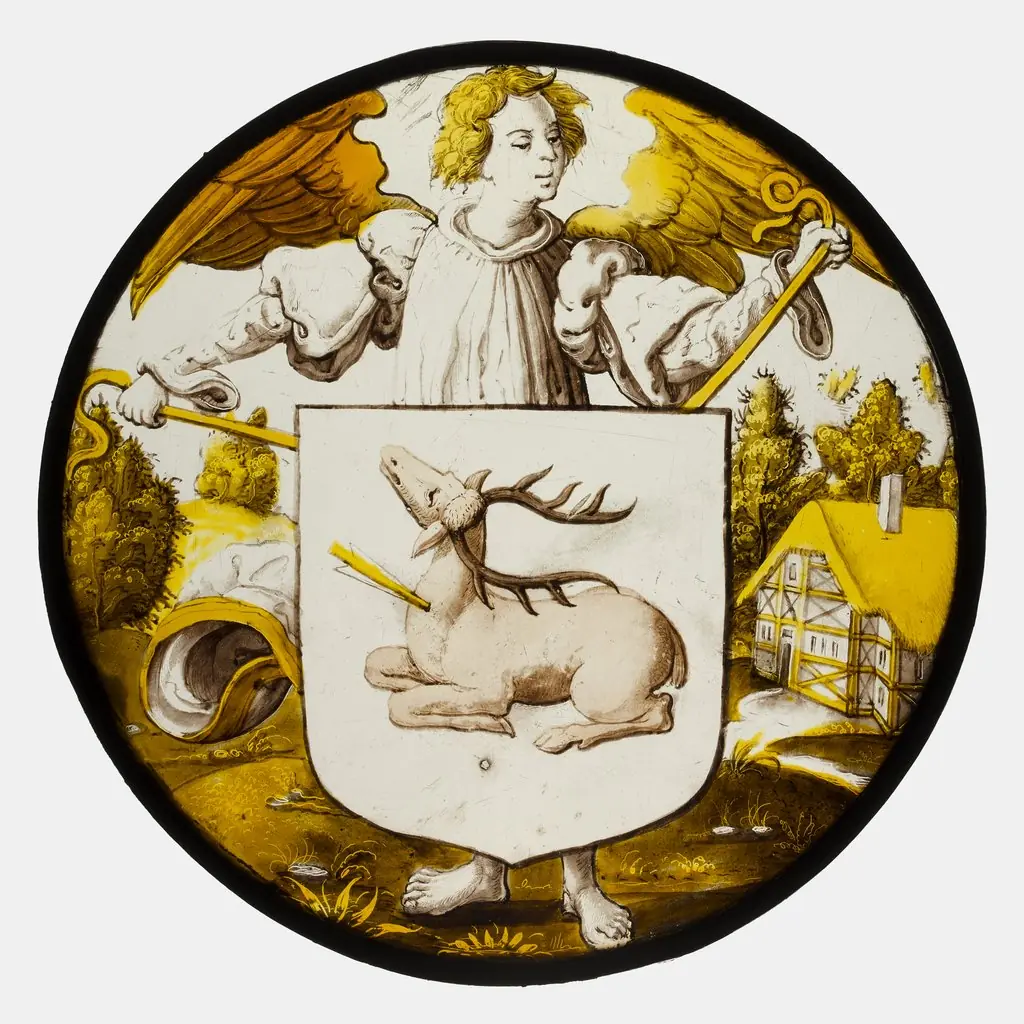 Roundel with Angel Supporting a Heraldic Shield
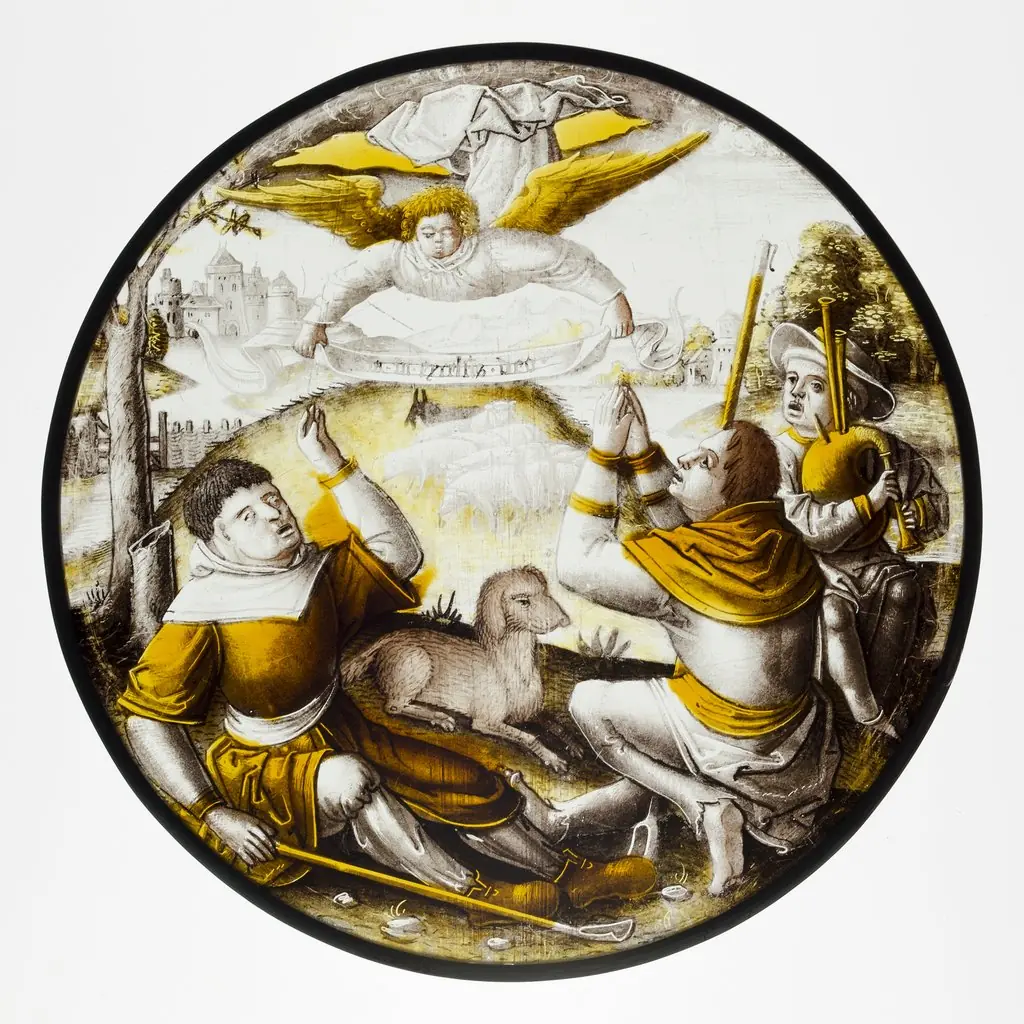 Roundel with Annunciation to the Shepherds
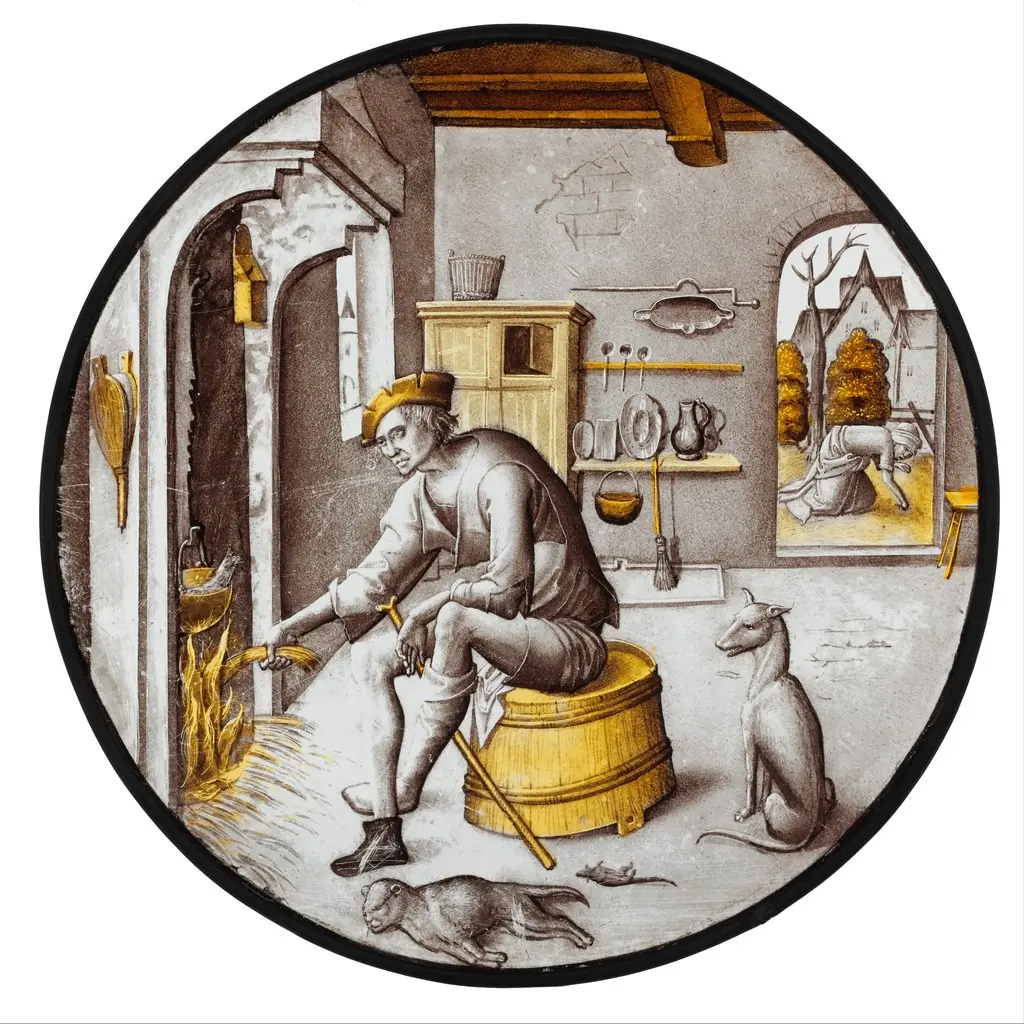 Sorgheloos ("Carefree") in Poverty
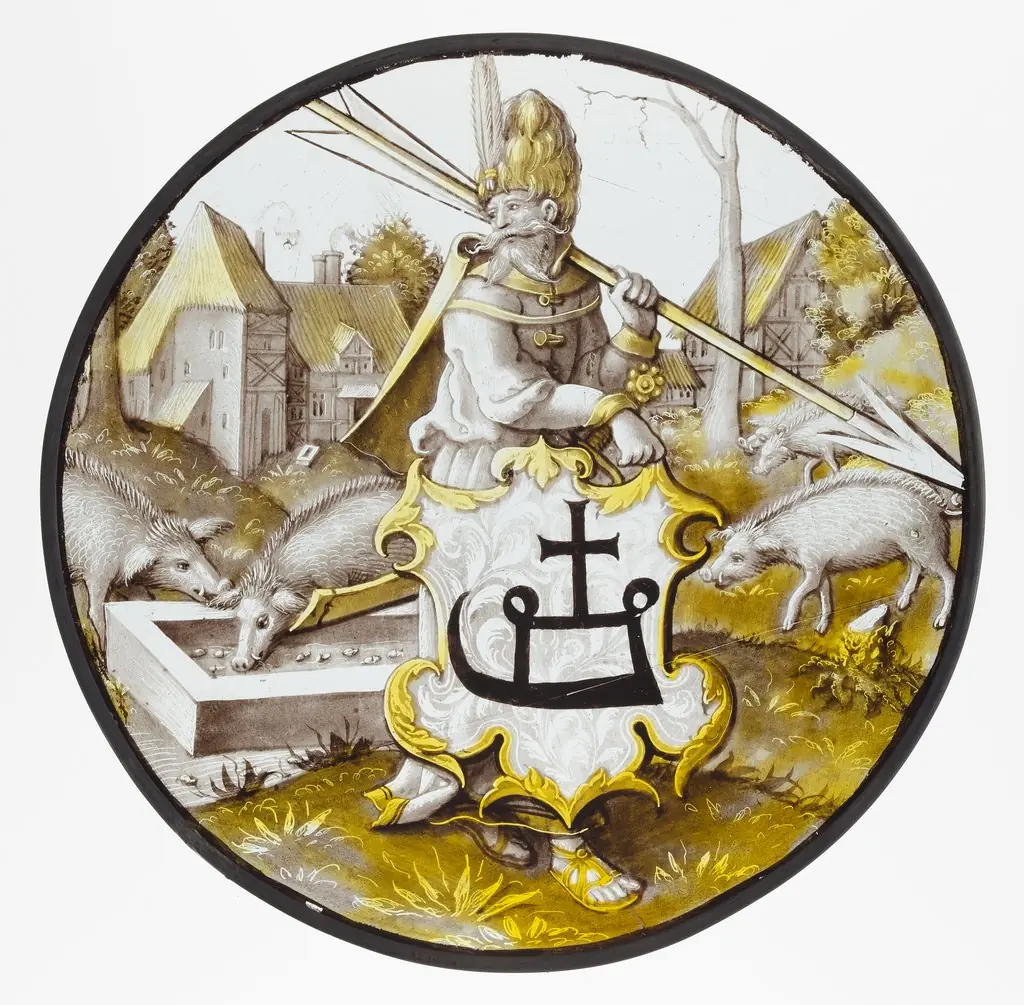 Roundel with Turkish Soldier holding an Arrow and Support
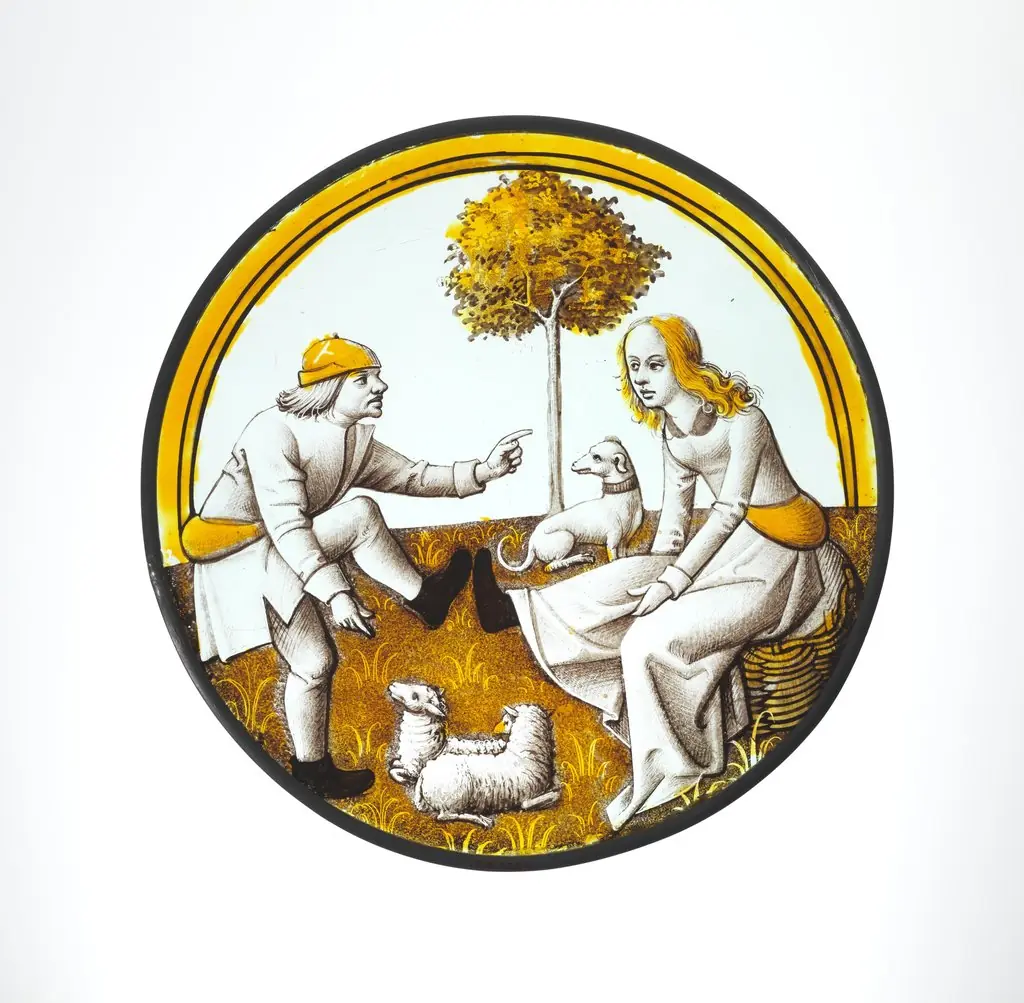 Roundel with Playing at Quintain
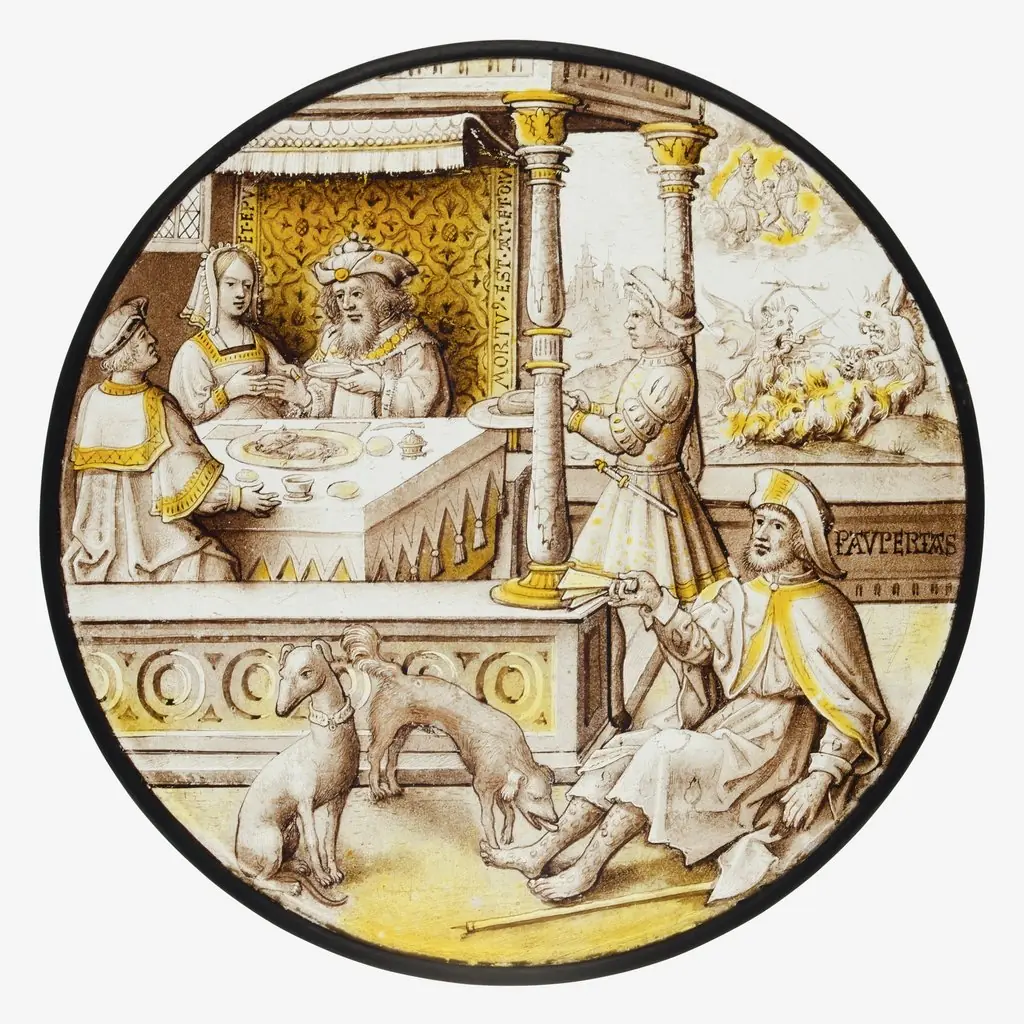 Roundel with Lazarus at the House of Dives
 Roundel with Saint John on Patmos with Apocalyptic Vision
 Roundel of The Planet Venus and Her Children