Artwork
Tantric Buddha Vairochana as Vajrasattva
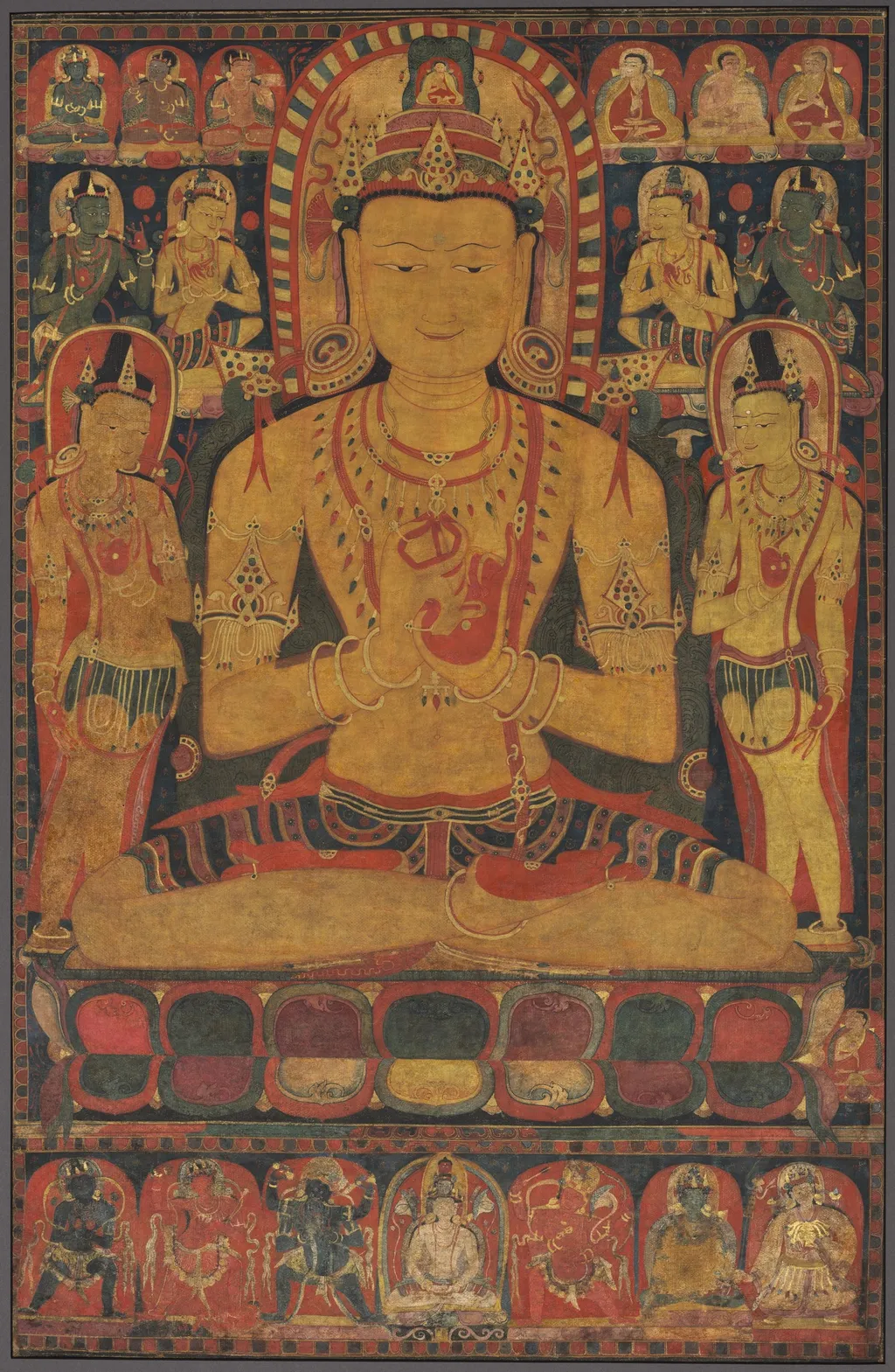
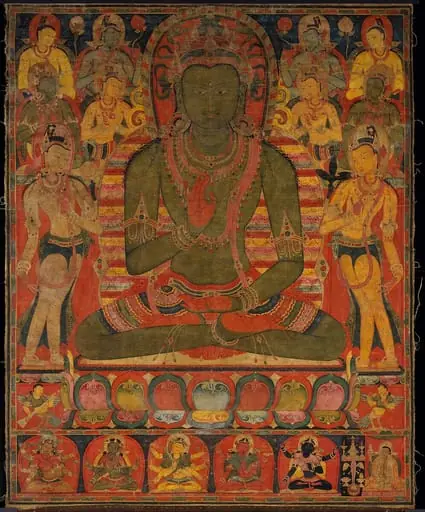
Tantric Buddha Vairochana as Vajrasattva is an unspecified painting. It dates from 1175 and is held in the collection of the Cleveland Museum of Art. The work is a painted depiction of a tantric form of the Buddha, identified as Vairochana presented as Vajrasattva.
About this work
Overview
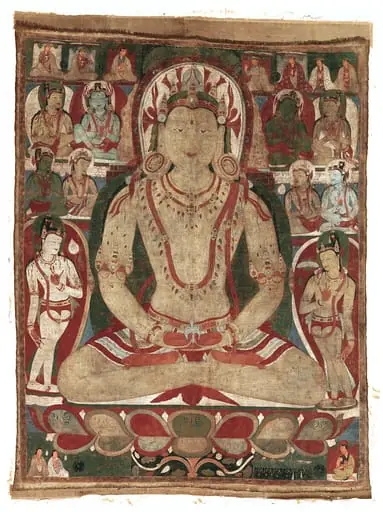
The work is a painted depiction of a tantric form of the Buddha, identified as Vairochana presented as Vajrasattva. The central figure sits in a meditative posture with palms pressed together, surrounded by a retinue of lesser, less detailed figures. Dominant hues of red and gold dominate the composition, highlighting the figure’s regal adornments.
Subject & Meaning
The seated Buddha is shown wearing elaborate jewelry and a distinctive headdress, attributes associated with Vajrasattva’s role as a purifier in tantric practice. The gesture of the hands, known as the dhyana mudra, emphasizes concentration and inner transformation, while the surrounding attendants suggest a celestial assembly that reinforces the deity’s spiritual authority.
Technique & Style
Executed in a traditional painting medium, the piece employs a rich palette of vermilion and gold pigments that create a luminous surface. The central figure is rendered with fine detail, whereas the peripheral figures are simplified, a visual hierarchy typical of tantric iconography that directs focus toward the principal deity.
History & Provenance
The painting is part of the collection of the Cleveland Museum of Art. Its accession into the museum’s holdings reflects the institution’s interest in Asian religious art, though specific details of its earlier ownership or date of creation are not provided in the available documentation.
Artist & collection