Artwork
Green Tara
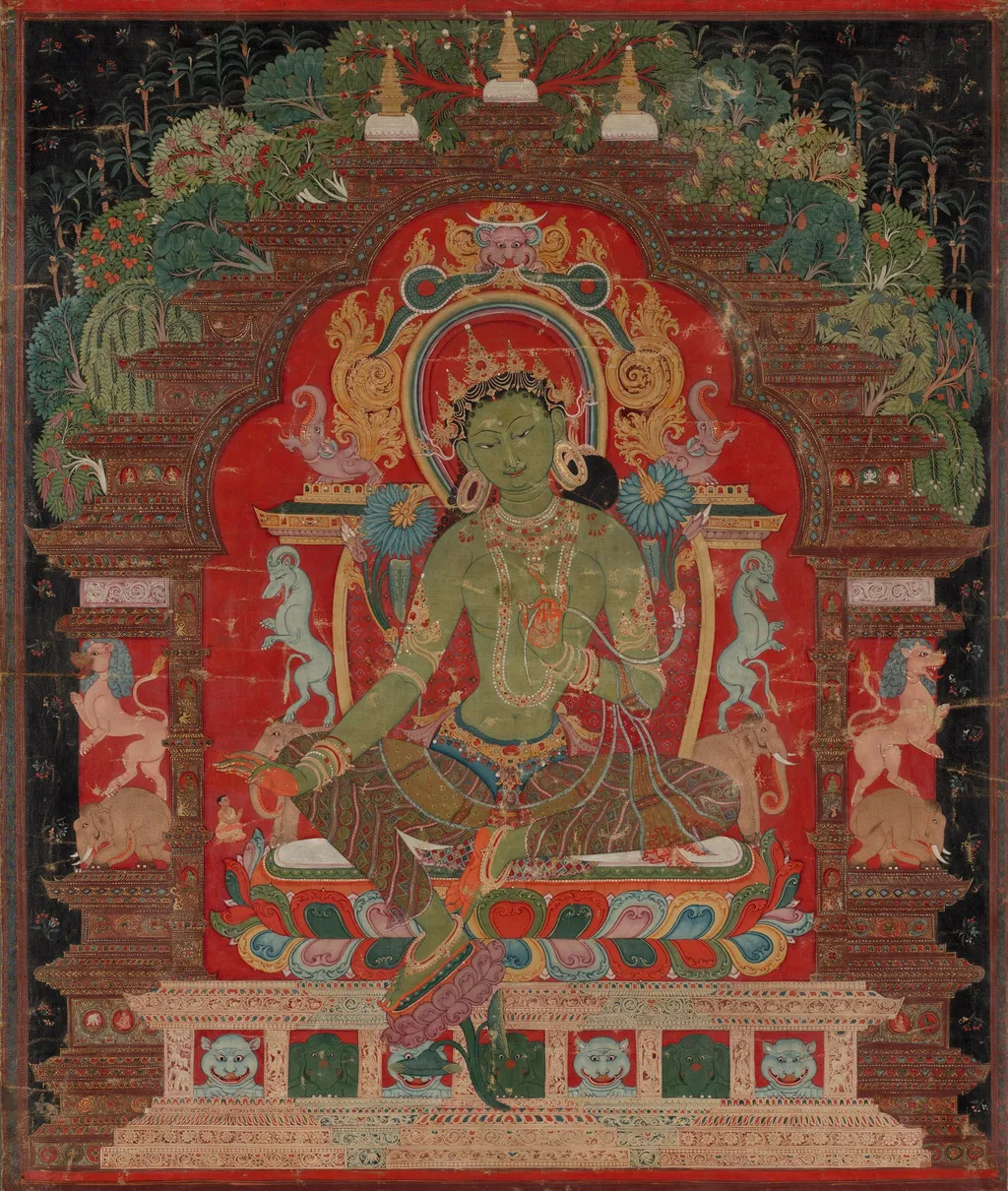
Green Tara is an unspecified painting. It dates from 1260 and is held in the collection of the Cleveland Museum of Art.
About this work
Overview
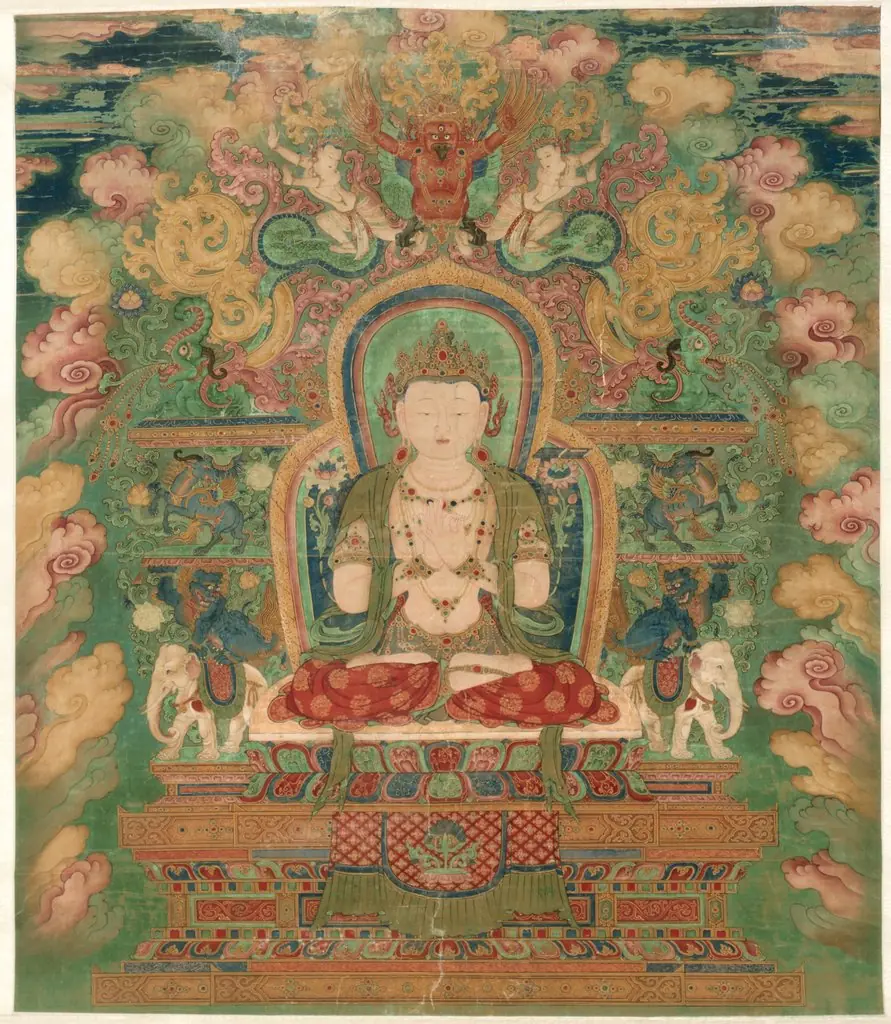
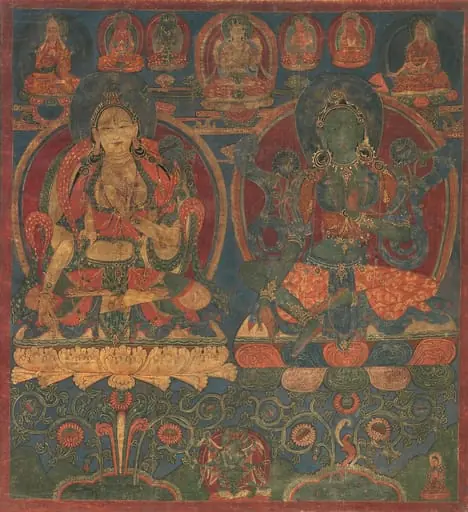
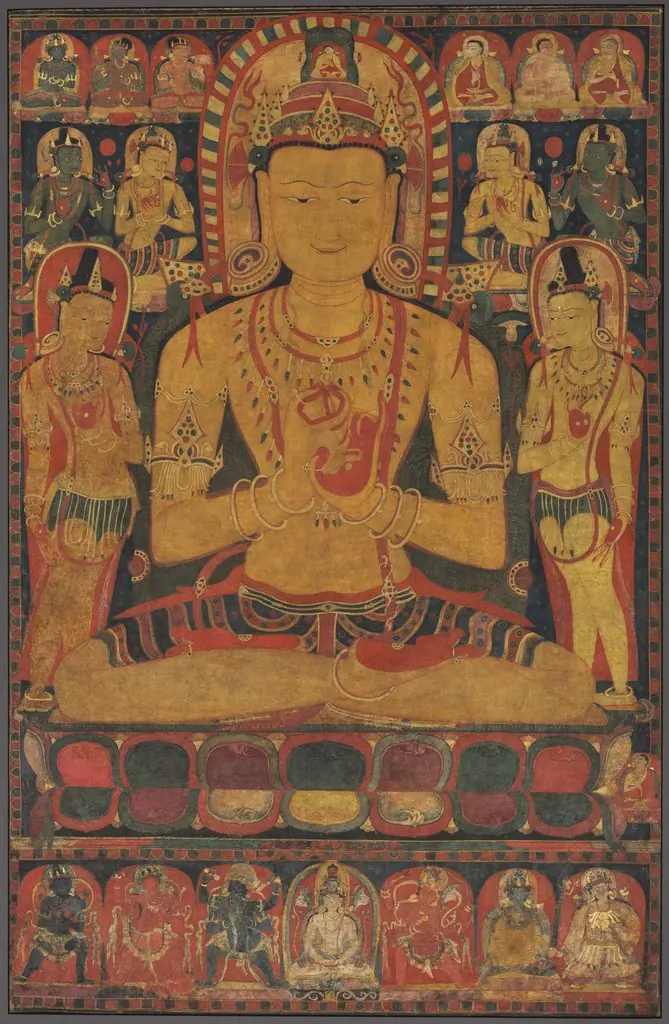
This painting presents Green Tara, a revered figure in Buddhist iconography, distinguished by her verdant skin and elaborate ornamentation.
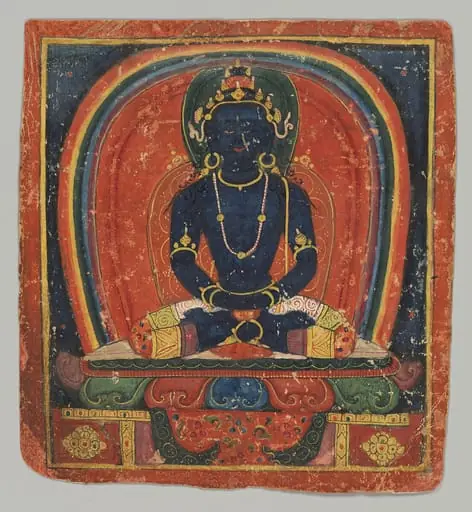
This painting presents Green Tara, a revered figure in Buddhist iconography, distinguished by her verdant skin and elaborate ornamentation. Poised upon a red lotus, she is enveloped by a richly detailed environment teeming with symbolic elements. The artwork utilizes a vibrant spectrum of red, green, and gold, crafting an intricate visual story that communicates her protective and compassionate essence within the tradition.
Subject & Meaning
The central figure is Green Tara, a bodhisattva celebrated for her prompt intervention and capacity to surmount challenges. Her green complexion signifies enlightened action, while her three eyes denote all-knowing perception. Adorned with extensive jewelry and elongated earlobes, she grasps a blue utpala flower and a golden vase, symbols of purity and prosperity. She is understood as an embodiment of Avalokiteshvara's boundless compassion.
Technique & Style
The painting showcases a meticulous and elaborate aesthetic. The backdrop is densely filled with miniature trees, architectural shrines, and dynamic swirling motifs, all depicted in a brilliant color scheme predominated by reds, greens, and golds. A rainbow arcs above the central figure, while various small animals, including lions and rabbits, inhabit the foreground, contributing to the rich, symbolic landscape of the composition.
Artist & collection