Artwork
Virgin of the Apocalypse
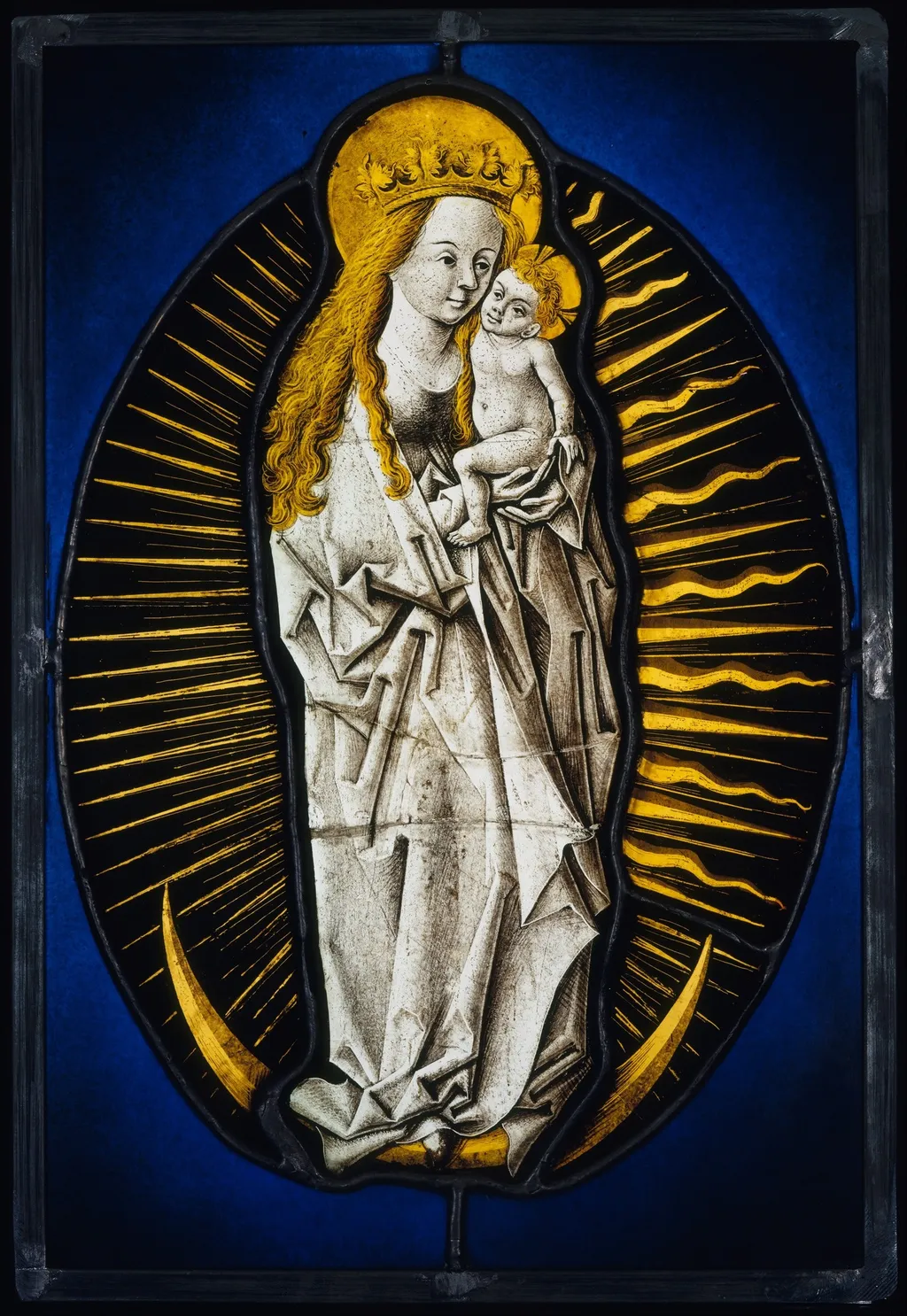
Virgin of the Apocalypse is an unspecified painting. It dates from 1490 and is held in the collection of the Metropolitan Museum of Art.
About this work
Overview
The work titled "Virgin of the Apocalypse" is a painted panel depicting a mother and child. The woman is rendered with long golden hair, a serene expression, and a golden halo, while she cradles a small child who gazes back at her. Both figures are set against a deep blue field illuminated by radiating gold rays, creating a striking contrast.
Subject & Meaning
The composition follows the longstanding iconography of the Madonna and Child, presenting the Virgin Mary as a protective and nurturing figure. The calm demeanor of the mother and the gentle glance of the infant convey themes of divine love and maternal care, aligning the image with devotional traditions that emphasize the sacred bond between mother and son.
Technique & Style
Executed in painted glass, the panel employs a limited palette of gold, white, and deep blue. Gold leaf or pigment outlines the figures and halo, while the luminous gold rays radiate from behind, enhancing the sense of spiritual illumination. The smooth, flowing lines of the hair and drapery reflect a stylized, reverential aesthetic typical of religious glass art.
History & Provenance
The piece is identified as a stained‑glass panel, a medium commonly used in ecclesiastical settings during the medieval and early modern periods. While specific dates and ownership records are not provided, its adherence to the Madonna and Child motif suggests it was likely commissioned for a church or chapel to serve a devotional function.
Context
The image belongs to a broader visual tradition that spans centuries, wherein the Virgin and Child are portrayed in various media to inspire contemplation. The use of gold against a dark background echoes the iconographic language of Byzantine and Gothic art, where light symbolized divine presence.
Legacy
By continuing the established visual vocabulary of the Madonna and Child, the panel reinforces the enduring relevance of this subject in religious art. Its striking contrast and serene figures maintain the devotional impact that such images have historically provided to worshippers.
Artist & collection