Artwork
Maru Ragini, from a Ragamala (Garland of Melodies)
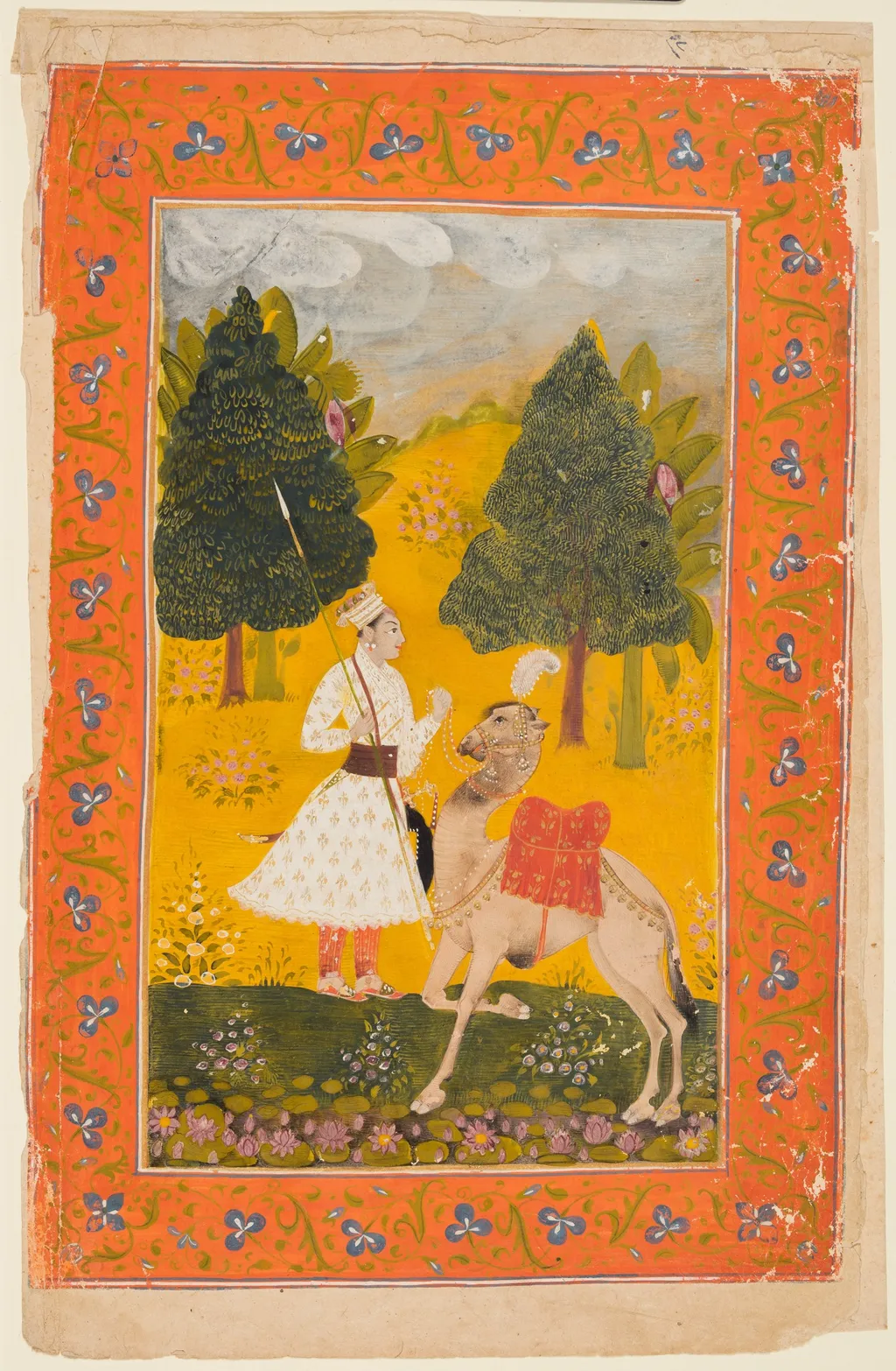
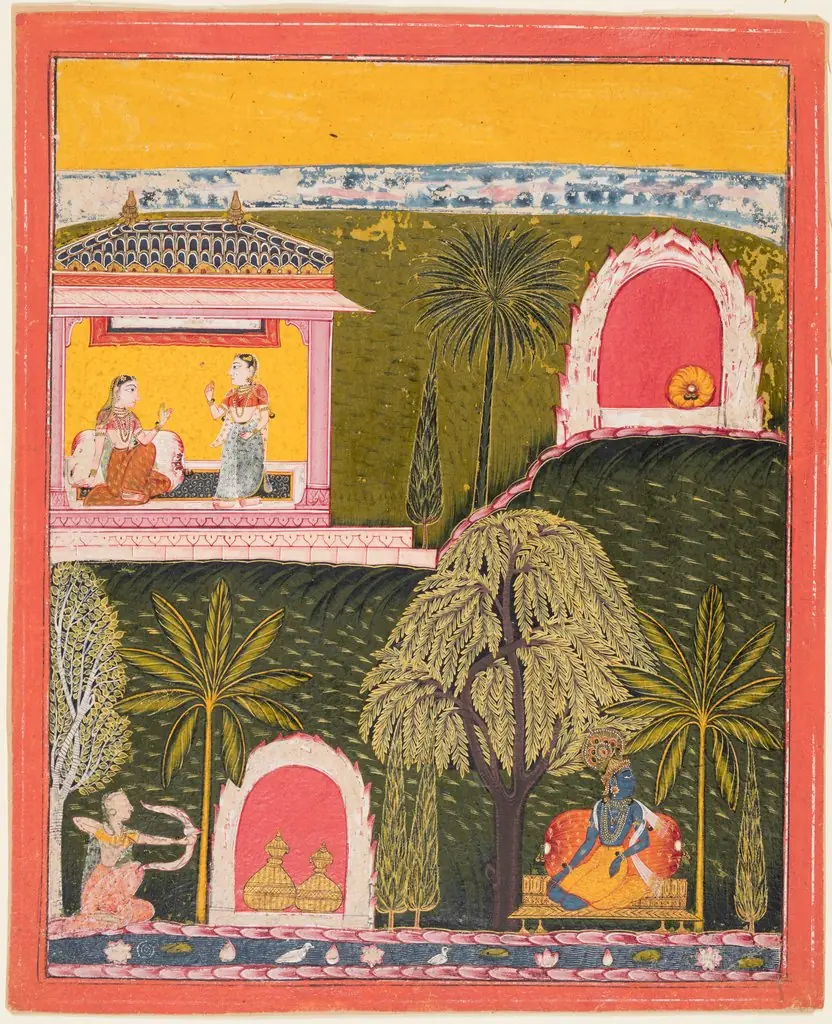
Maru Ragini, from a Ragamala (Garland of Melodies) is an unspecified painting. It dates from 1665 and is held in the collection of the Cleveland Museum of Art.
About this work
Overview
Maru Ragini, a painting from the Ragamala series, depicts a solitary rider astride a camel traversing a stylised, brightly coloured landscape. The composition is flat and decorative, framed by a vivid red border patterned with blue and white motifs. The work exemplifies the Indian tradition of visualising musical modes through colour and narrative.
Subject & Meaning
The central figure, dressed in a white garment trimmed in gold and crowned with a turban, holds a long staff, suggesting authority or guidance. The camel, equipped with a red saddle and an ornamental cloth draped over its neck, serves as a vehicle for the rider’s journey, a metaphor often linked to the progression of a raga’s emotional arc.
Technique & Style
Executed in bold, saturated pigments, the painting employs a flat, two‑dimensional treatment of space typical of miniature court art. Decorative elements such as tasselled saddle ornaments and the intricate border pattern are rendered with fine brushwork, emphasizing surface ornamentation over realistic depth.
Context
Ragamala, or “garland of melodies,” is a genre that pairs specific ragas with visual scenes, assigning colours and motifs to evoke the mood of each musical mode. Maru Ragini corresponds to a particular raga, using the bright palette and pastoral setting to convey its intended affect.
Legacy
Works from the Ragamala tradition continue to inform scholarly understanding of the interplay between Indian classical music and visual culture. Paintings like Maru Ragini are preserved in museum collections, offering insight into historical aesthetic theories that linked sound, colour, and narrative.
Artist & collection