Artwork
The Cliff at Étretat
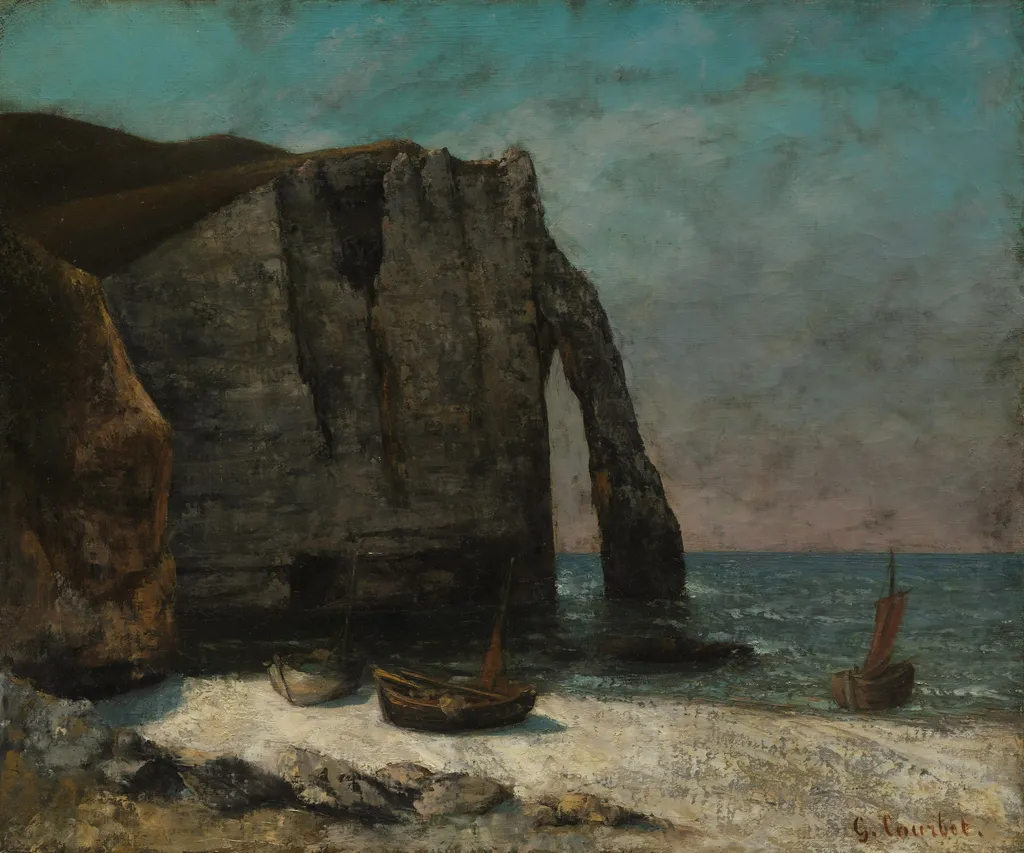
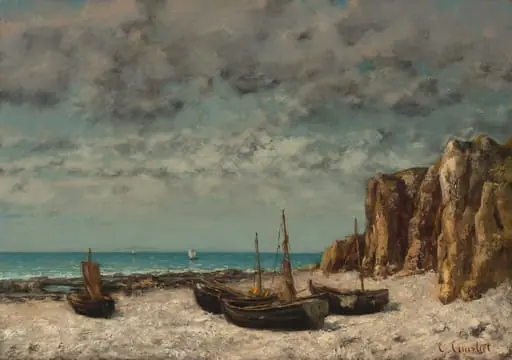
The Cliff at Étretat is an unspecified painting. It dates from 1874 and is held in the collection of the Cleveland Museum of Art. The canvas portrays a rugged shoreline where a sheer limestone bluff descends into the sea.
About this work
Overview
The canvas portrays a rugged shoreline where a sheer limestone bluff descends into the sea. Below the cliff, two modest vessels rest near the water’s edge, while a third craft sails farther out on the horizon. A muted sky of soft blue stretches above, contrasting with the dark, uneven rock face that dominates the composition.
Subject & Meaning
The work captures a moment of coastal solitude, emphasizing the relationship between human activity and the imposing natural landscape. The tiny boats suggest the fragility of maritime life against the enduring, almost monumental cliffs, inviting contemplation of nature’s permanence versus fleeting human endeavors.
Technique & Style
The painter employs vigorous, thick brushwork to render the cliff’s texture, allowing the paint itself to stand out from the surface. Light is rendered unevenly across the stone, creating luminous highlights beside deeper shadows, while the sea and sky are treated with smoother, more translucent strokes, highlighting the contrast between solidity and fluidity.
Context
Created during a period when artists were increasingly interested in direct observation of the environment, the piece reflects the 19th‑century fascination with dramatic coastal scenery. The depiction of Étretat’s famous cliffs aligns with contemporary trends that sought to convey atmospheric effects and the tactile quality of natural forms through painterly means.
Artist & collection