Artwork
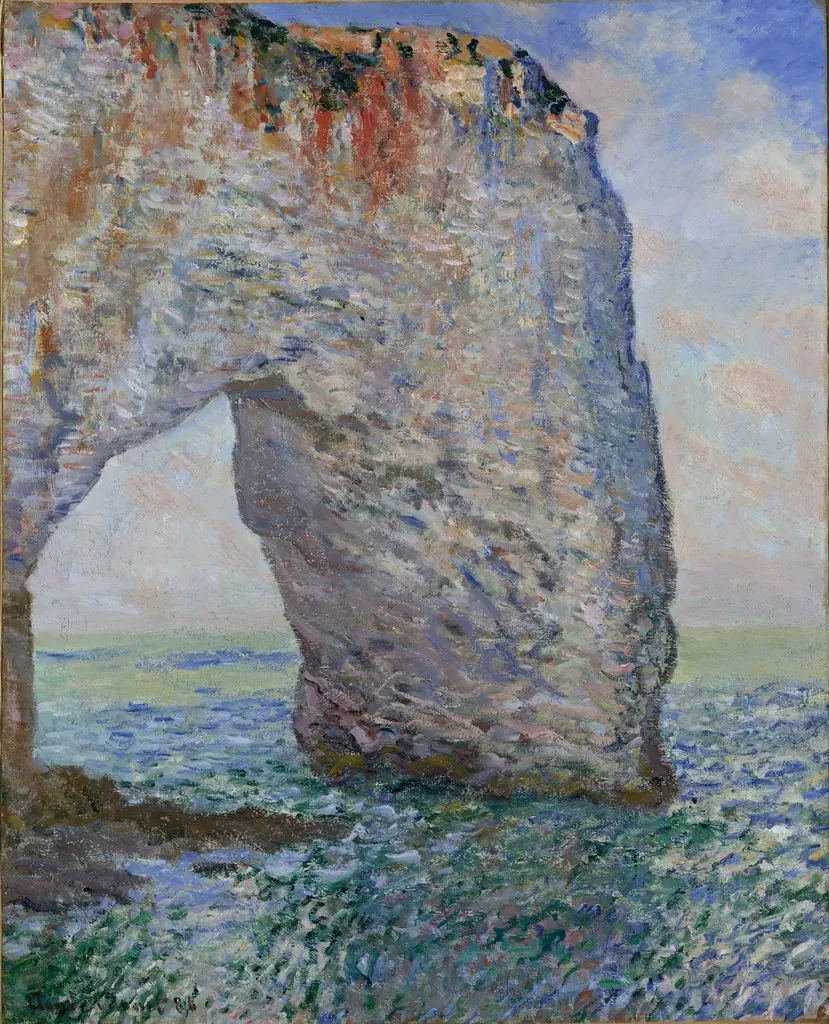
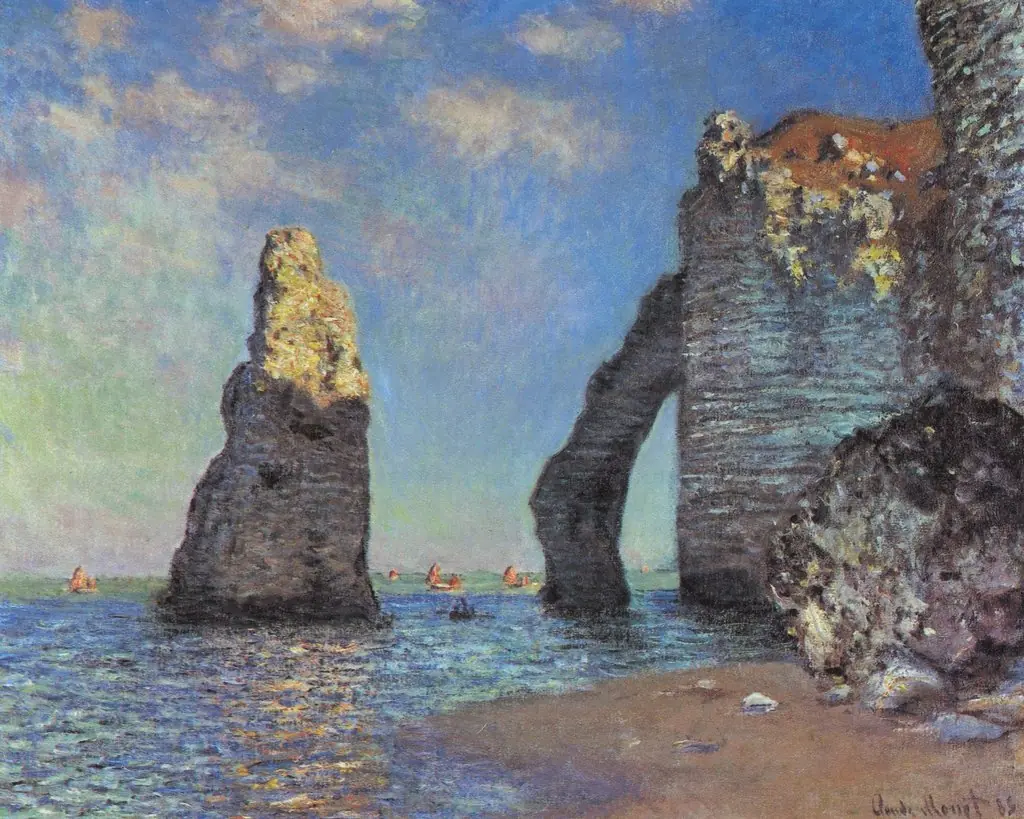
Etretat, Rough Seas
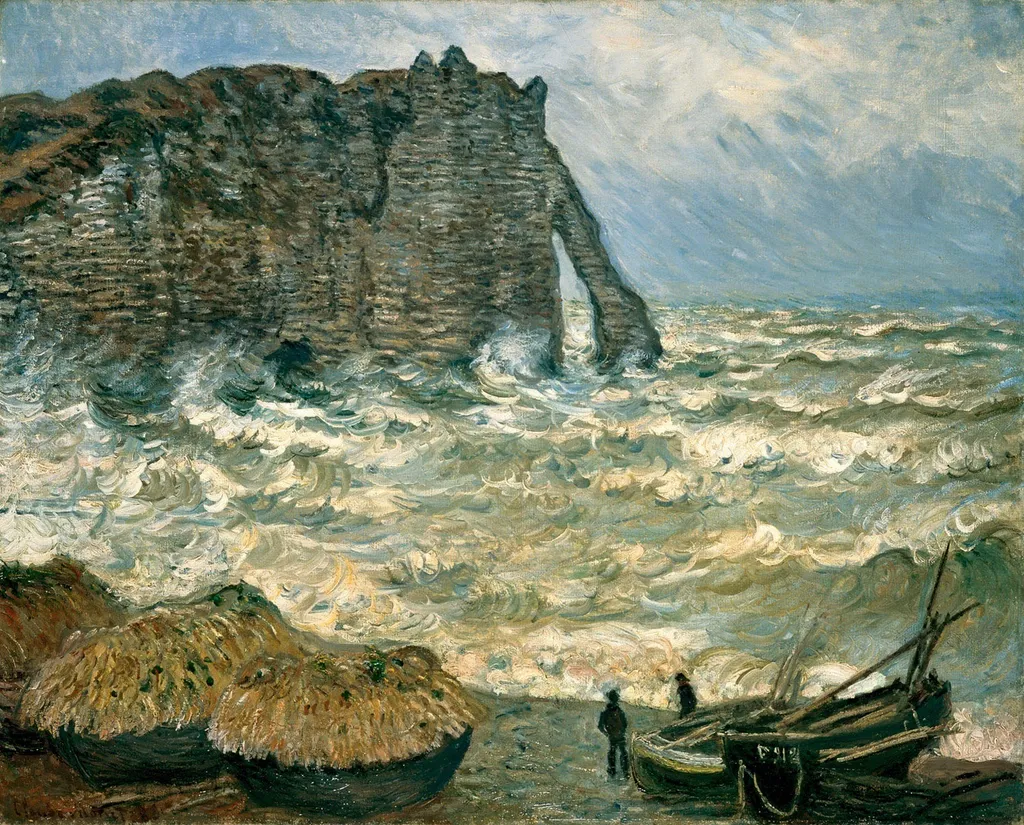
Etretat, Rough Seas is an oil painting by the Impressionist artist Claude Monet. It dates from 1892 and is held in the collection of the Museum of Fine Arts of Lyon.
About this work
Historians see this series as a turning point, moving from his early Impressionist style toward a deeper focus on light and atmosphere.
Etretat, Rough Seas is an oil painting by Claude Monet, made in 1883. It shows the chalk cliffs of Étretat on the French coast.
The work is part of a series of about fifty paintings Monet did of the same cliffs. He was interested in how light and weather change a place. Historians see this series as a turning point, moving from his early Impressionist style toward a deeper focus on light and atmosphere.
Museum of Fine Arts of Lyon.
Overview
Claude Monet’s 1883 oil painting titled Etretat, Rough Seas portrays the chalk cliffs of the Normandy town of Étretat. Executed in oil on canvas, the work belongs to a larger group of roughly fifty paintings in which Monet returned repeatedly to the same coastal scene, exploring its changing light and weather.
Subject & Meaning
The composition focuses on the stark white limestone cliffs that rise above the sea, emphasizing the interaction between the rock formations and the turbulent water below. By capturing the cliffs under a stormy sky, Monet highlights the fleeting atmospheric conditions that transform the landscape’s appearance.
Technique & Style
Monet employs loose brushwork and a palette that balances cool blues with the pale tones of the chalk, allowing the surface to convey the movement of sea and cloud. The handling of light and color reflects his shift from early Impressionist experiments toward a more sustained study of atmospheric effects.
History & Provenance
Created during Monet’s 1883 visit to Étretat, the painting entered the collection of the Musée des Beaux-Arts de Lyon, where it remains on display. Its acquisition contributed to the museum’s representation of French Impressionism.
Context
The Étretat series marks a pivotal moment in Monet’s career, illustrating his growing fascination with serial observation of a single motif. This approach prefigured his later, more extensive series such as those of Haystacks and Rouen Cathedral, where light and weather become the primary subjects.
Legacy
Art historians view the Étretat works as a bridge between Monet’s early Impressionist phase and his mature focus on the nuanced rendering of light and atmosphere, influencing subsequent developments in modern landscape painting.
Own this work as a print
Artist & collection
Artist
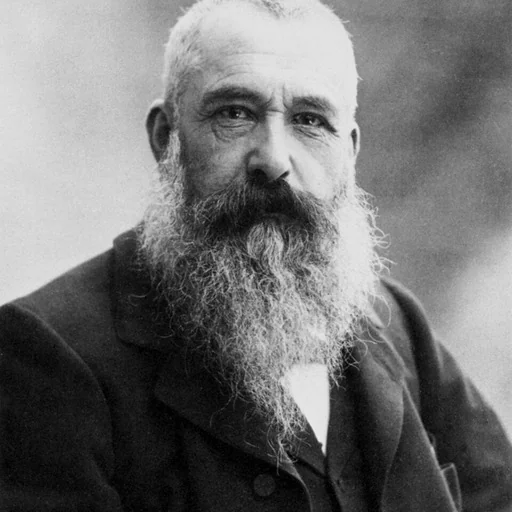
Oscar-Claude Monet was born in Paris on November 14, 1840, and raised from the age of five in Le Havre, where he began selling charcoal caricatures as a teenager.