Artwork
Worship of the Gods (2 of 17)
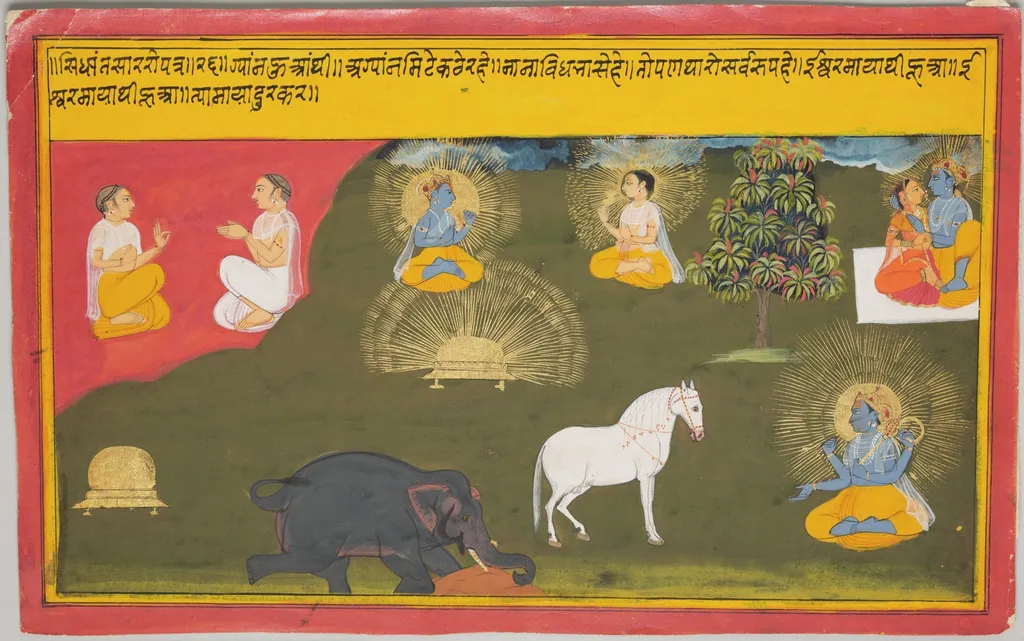
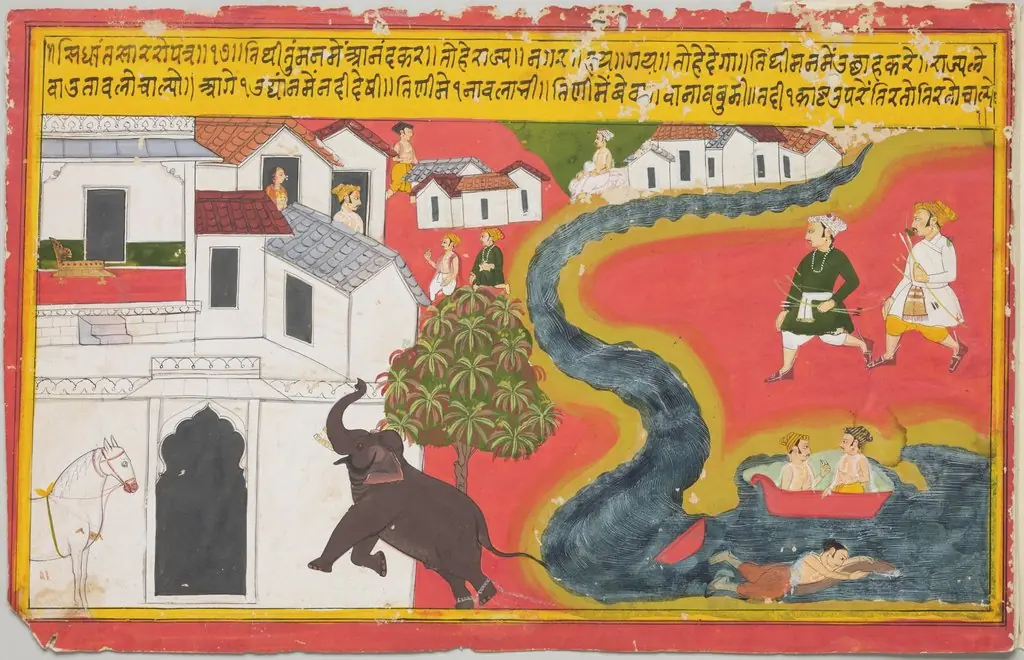
Worship of the Gods (2 of 17) is an unspecified painting by Unknown. It is held in the collection of the Detroit Institute of Arts. This painting is one of seventeen panels in a larger series, depicting ritual scenes centered on divine worship.
About this work
Overview
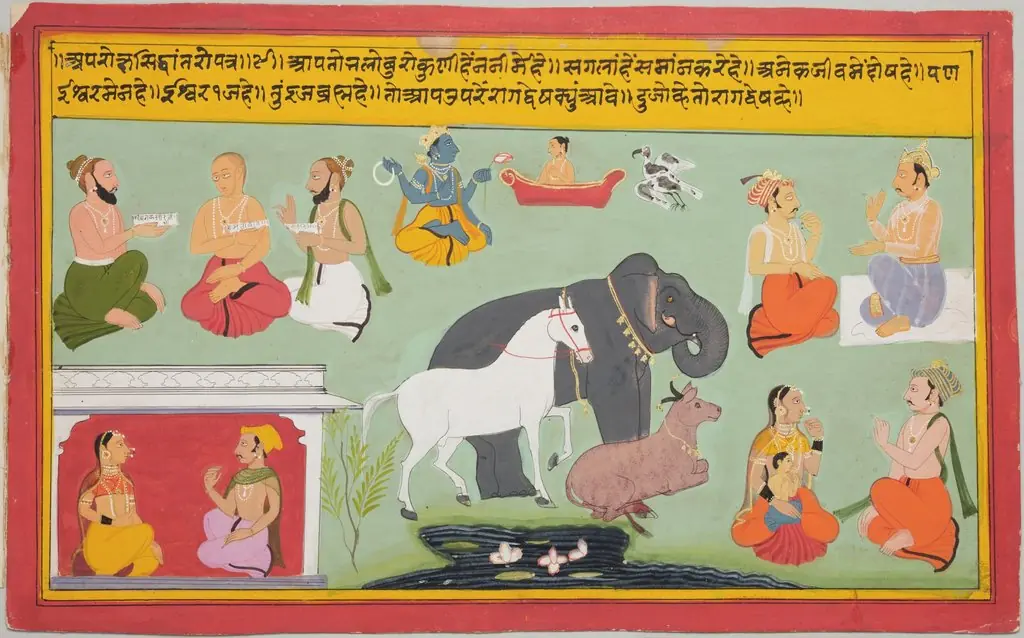
The composition balances stillness and movement, with animals and humans positioned to guide the viewer’s eye across the surface.
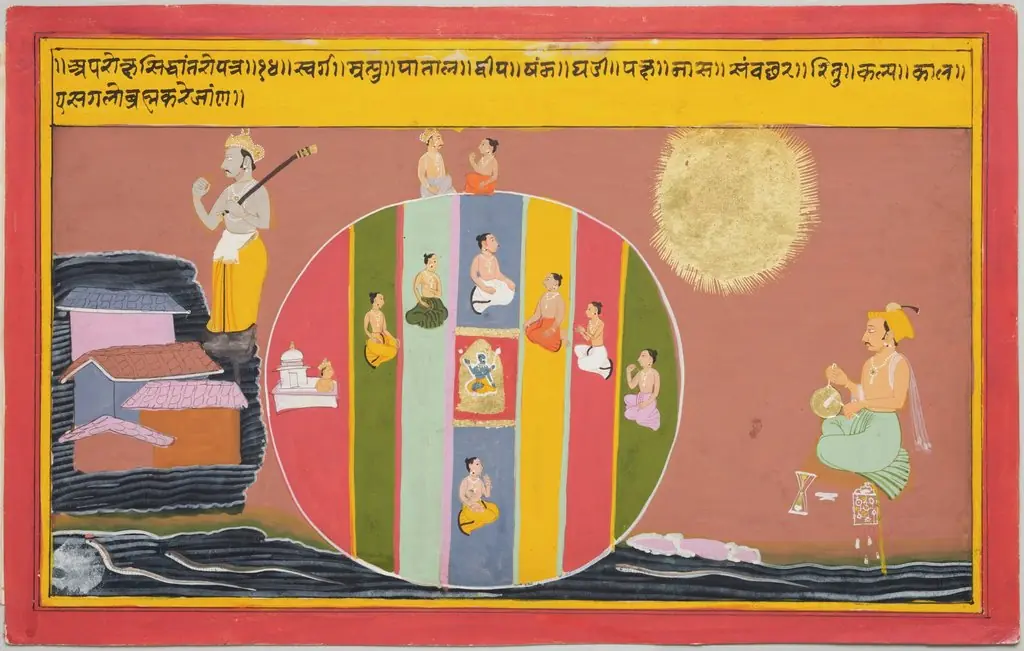
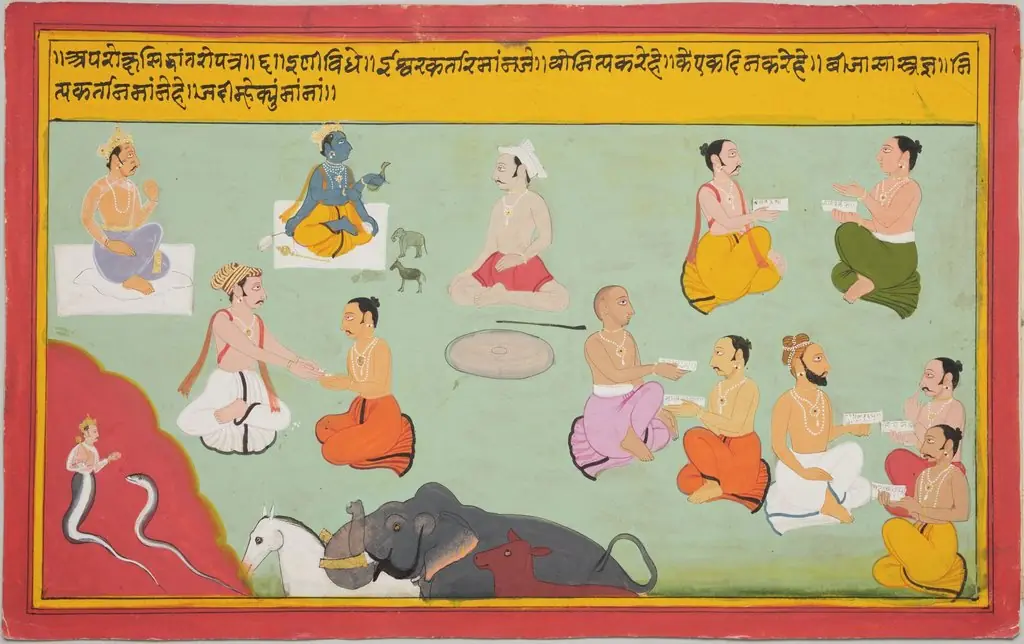
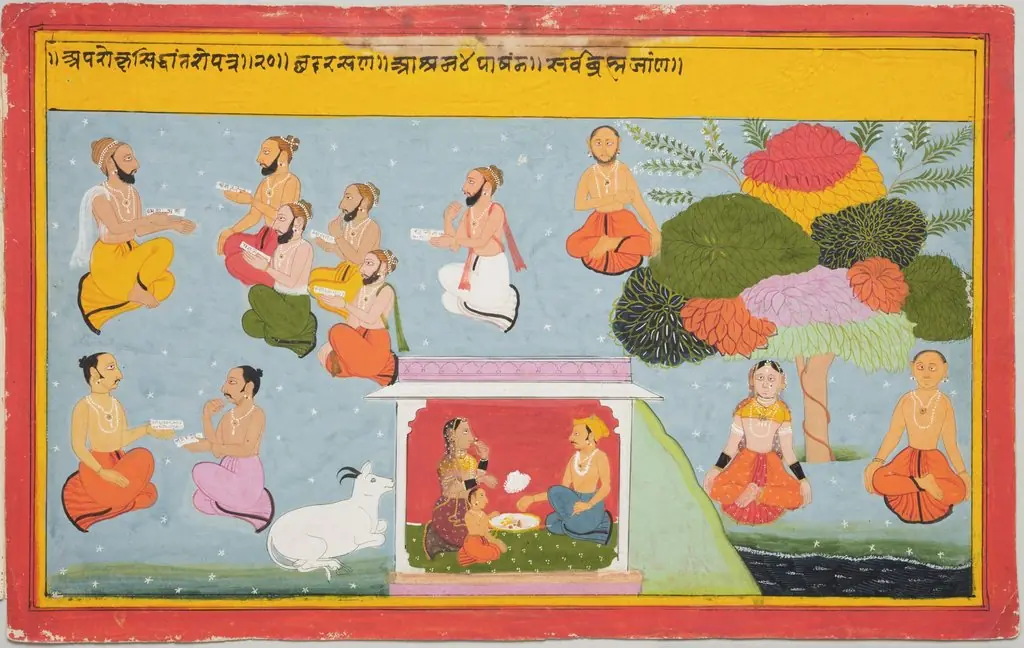
This painting is one of seventeen panels in a larger series, depicting ritual scenes centered on divine worship. It presents a dynamic assembly of figures, animals, and natural elements arranged in a tightly composed space. The composition balances stillness and movement, with animals and humans positioned to guide the viewer’s eye across the surface. A vivid red and yellow border encloses the scene, distinguishing it as part of a structured visual program.
Subject & Meaning
The scene likely illustrates a ceremonial offering to deities, with figures in varied postures suggesting prayer, procession, or ritual action. The presence of a white horse and black elephant—animals associated with power and sacred status in many traditions—implies a connection between earthly authority and divine favor. The arrangement of participants conveys hierarchy and reverence, though specific deities or mythological context remain unconfirmed.
Technique & Style
The artist employs chiaroscuro to model forms with subtle shifts in light and shadow, lending volume to figures and animals. Colors are applied with precision, particularly in the rich blues of the sky and the lush greens of the hillside. The bold, decorative border frames the scene without disrupting its internal logic, suggesting a fusion of narrative realism and symbolic framing common in ceremonial art.
History & Provenance
The panel belongs to a series of seventeen works, likely created for a religious or royal setting, though its original location and commissioning context are undocumented. It has been preserved as part of a collected ensemble, possibly removed from a temple, palace, or ceremonial structure. Its survival suggests it was valued beyond its immediate ritual function, perhaps as a cultural artifact.
Context
Produced within a tradition that linked visual art to spiritual practice, the panel reflects a culture where ritual, animal symbolism, and cosmic order were visually codified. Similar imagery appears in contemporaneous manuscripts and wall paintings from regions where divine worship involved processions and offerings. The work aligns with broader regional aesthetics that emphasized detail, color, and symbolic composition over naturalistic perspective.
Legacy
As part of a larger series, this panel contributes to an understanding of how ritual narratives were visualized in pre-modern art. Its survival allows scholars to trace stylistic conventions and symbolic language across related works. Though not widely known outside specialized circles, it remains a key example of how sacred spaces were rendered through layered imagery and controlled composition.
Artist & collection

 Domestic Scene
 Giacomo and Cardinal Marco, investing Andrea, Abbot of San Zeno, with his Benefice
 The Nymph of Fontainebleau
 Portrait of a Woman
 Madonna and Child with Saints in the Enclosed Garden
 Venus and Minerva
 Family Group of Four on Sofa
 Wall painting from Room H of the Villa of P. Fannius Synistor at Boscoreale
 Worship of the Gods (12 of 17)
 Worship of the Gods (13 of 17)
 Worship of the Gods (8 of 17)
 Worship of the Gods (11 of 17)
 Worship of the Gods (7 of 17)
 Worship of Hindu Deities (1 of 18)
 Worship of Hindu Deities (1 of 18)
 Worship of Hindu Deities (1 of 18)
 Worship of Hindu Deities (1 of 18)
 Worship of Hindu Deities (1 of 18)
 Worship of Hindu Deities (1 of 18)
 Worship of the Gods (16 of 17)