Artwork
Worship of the Gods (13 of 17)
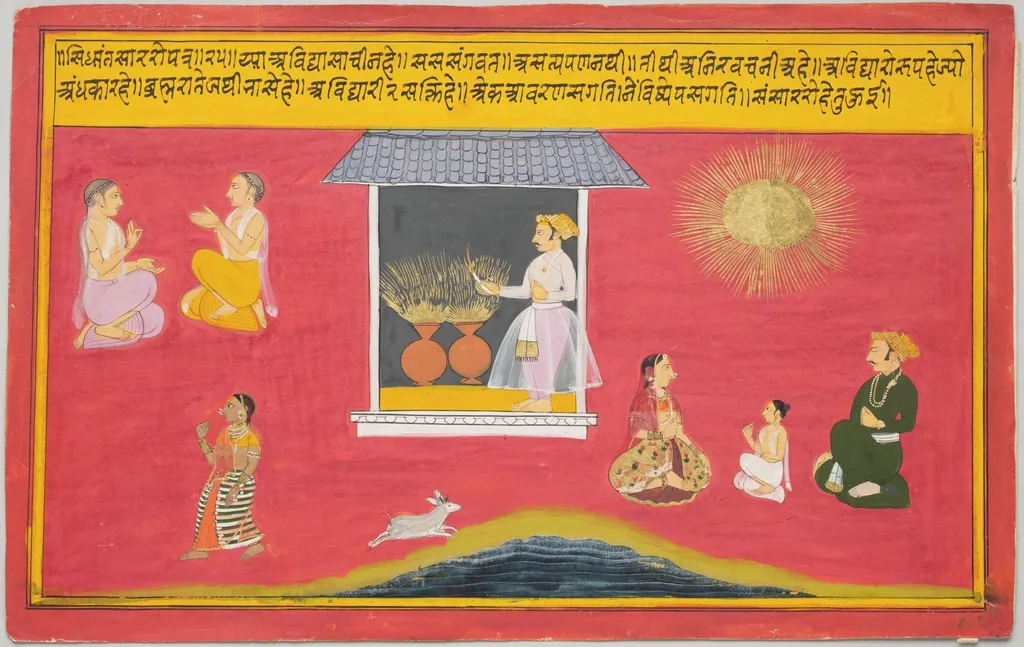
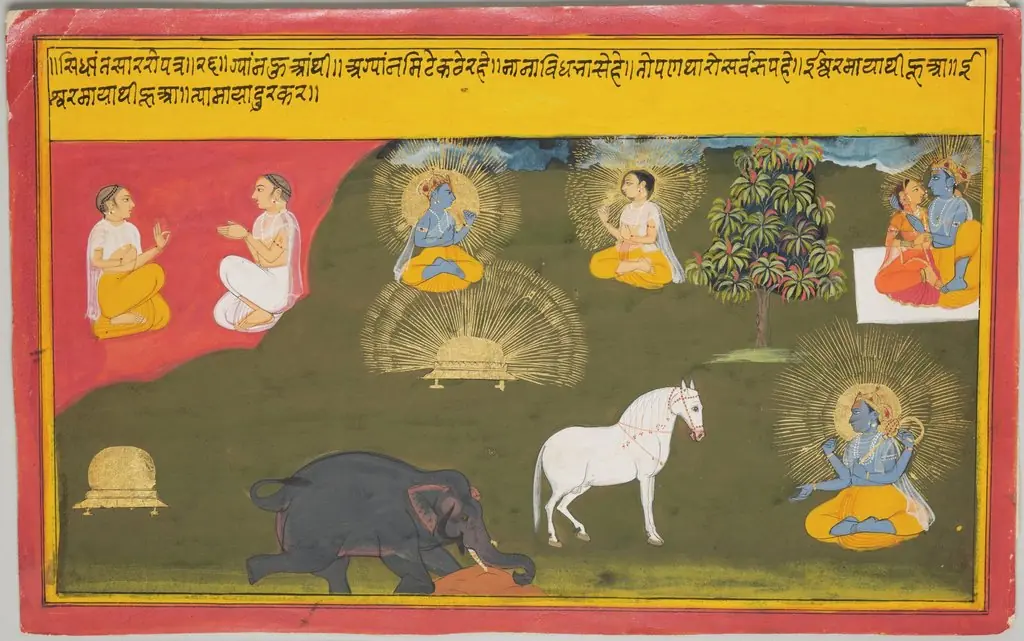
Worship of the Gods (13 of 17) is an unspecified painting by Unknown. It is held in the collection of the Detroit Institute of Arts. This painting is one of seventeen in a series depicting ritual or ceremonial scenes.
About this work
Overview
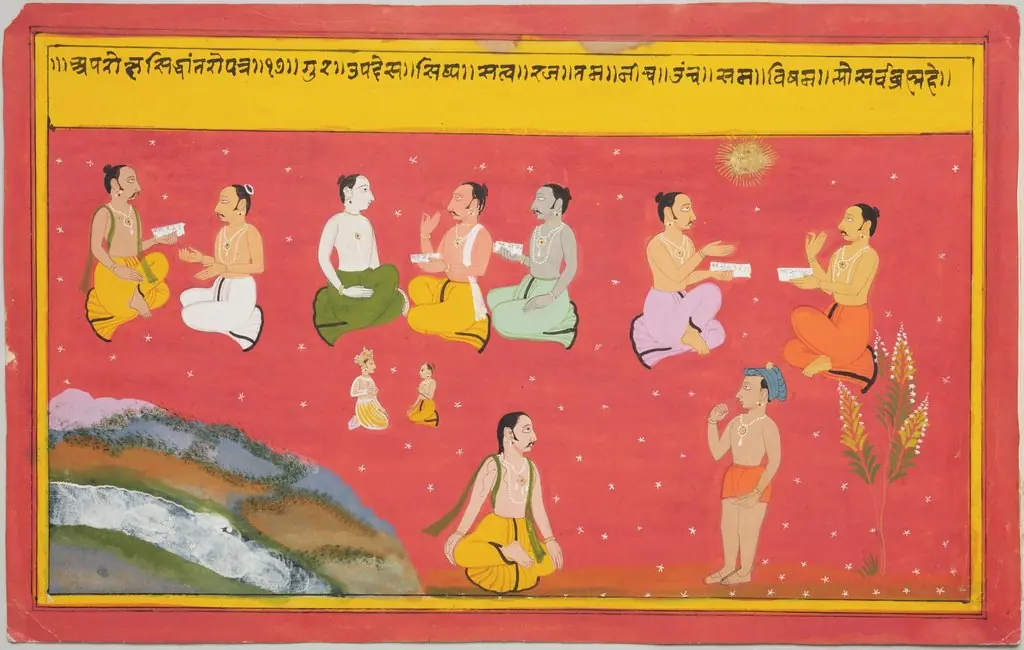
A vibrant red background and a yellow sun contribute to a calm, luminous atmosphere, reinforcing a sense of peaceful continuity.
This painting is one of seventeen in a series depicting ritual or ceremonial scenes. It centers on a solitary figure near a window, surrounded by quiet domestic activity. The composition balances stillness and subtle interaction, with figures arranged to suggest unspoken connections. A vibrant red background and a yellow sun contribute to a calm, luminous atmosphere, reinforcing a sense of peaceful continuity.
Subject & Meaning
The central figure holds a bundle of sticks, possibly ritual objects or fuel, suggesting preparation for a ceremony. The seated figures engage in quiet conversation, while a child sits apart, hinting at generational presence. The white rabbit at the bottom may symbolize purity or renewal. Together, these elements imply a moment of communal stillness before or after a sacred act, grounded in everyday life.
Technique & Style
The painting employs flat, unmodulated color fields, particularly the intense red background, which frames the figures without depth. Forms are simplified, with clear outlines and minimal shading. The window and pots are rendered with slight detail, contrasting the abstracted figures. This stylized approach prioritizes symbolic presence over realism, emphasizing mood over narrative detail.
History & Provenance
The work belongs to a series of seventeen paintings created in the mid-20th century, though the artist’s identity remains unconfirmed. It was acquired by a regional museum in the 1970s from a private collection in southern India. Documentation is sparse, but the series is believed to have been commissioned for a religious or cultural institution, possibly as part of a larger decorative cycle.
Context
The painting reflects regional traditions of ritual life in rural South India, where domestic spaces often serve as sites for spiritual practice. The use of vivid color and symbolic animals aligns with folk and temple art conventions. Unlike formal religious iconography, this work captures informal, intimate moments, suggesting a blending of sacred and domestic rhythms in daily observance.
Legacy
Though not widely exhibited, the series has been referenced in studies of vernacular Indian painting traditions. Its quiet composition and symbolic elements have influenced later artists exploring the intersection of ritual and everyday life. The work remains a quiet example of how spiritual practice is embedded in ordinary settings, preserved through understated visual language.
Artist & collection

 Domestic Scene
 Giacomo and Cardinal Marco, investing Andrea, Abbot of San Zeno, with his Benefice
 The Nymph of Fontainebleau
 Portrait of a Woman
 Madonna and Child with Saints in the Enclosed Garden
 Venus and Minerva
 Family Group of Four on Sofa
 Wall painting from Room H of the Villa of P. Fannius Synistor at Boscoreale
 Worship of Hindu Deities (1 of 18)
 Worship of the Gods (7 of 17)
 Worship of the Gods (6 of 17)
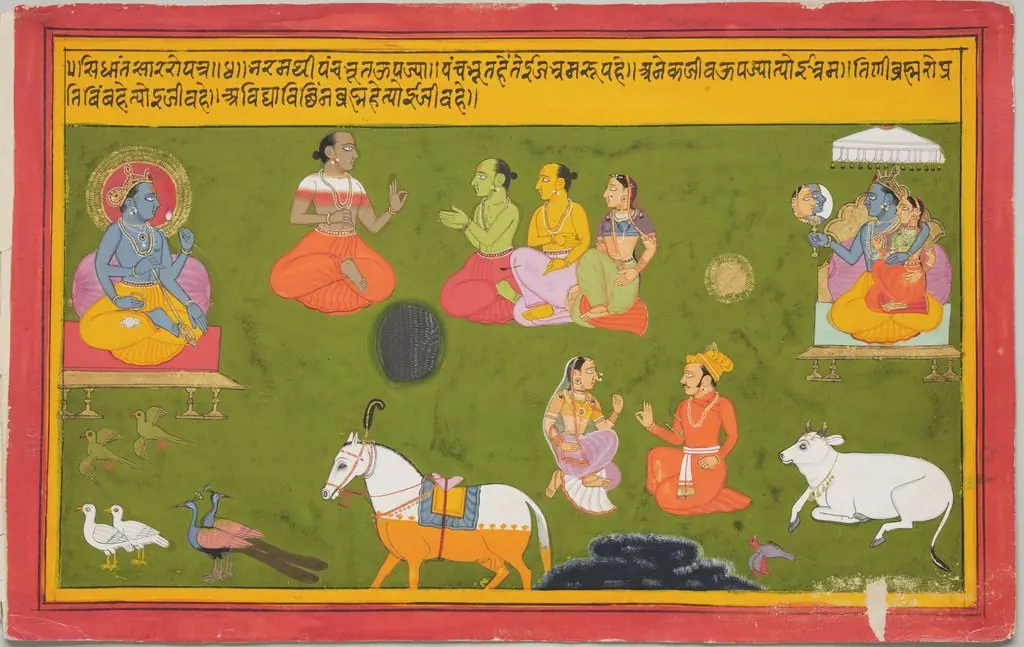 Worship of the Gods (11 of 17)
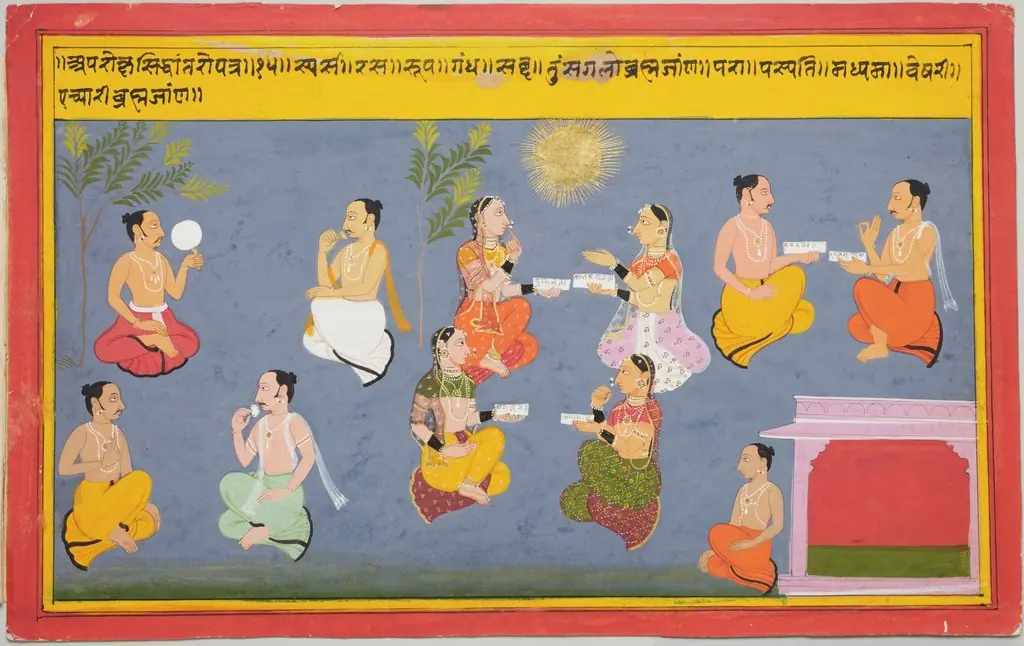 Worship of Hindu Deities (1 of 18)
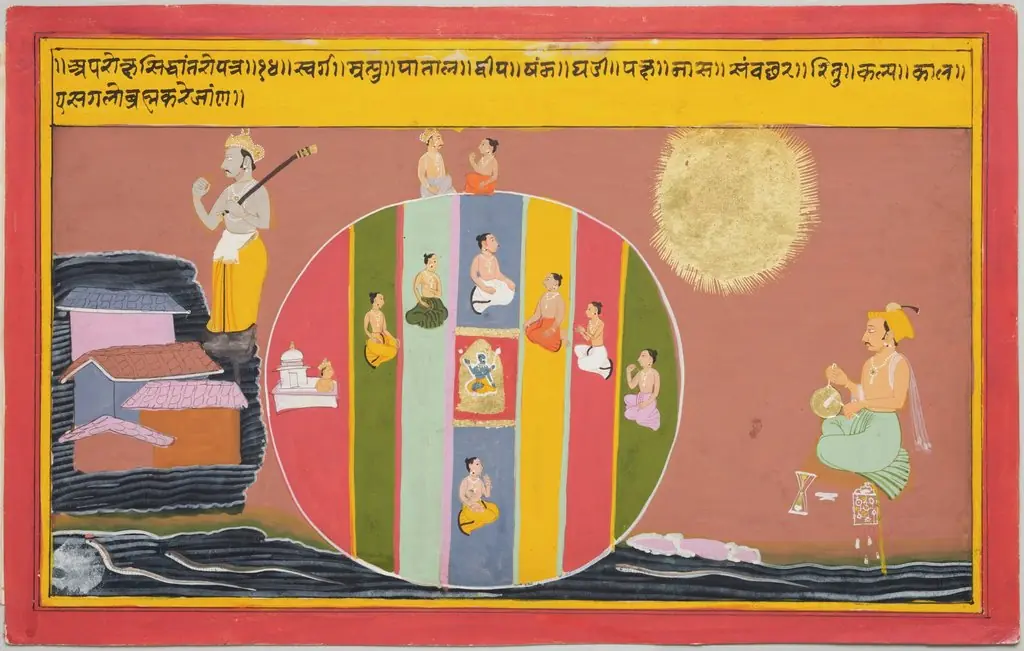 Worship of Hindu Deities (1 of 18)
 Worship of Hindu Deities (1 of 18)
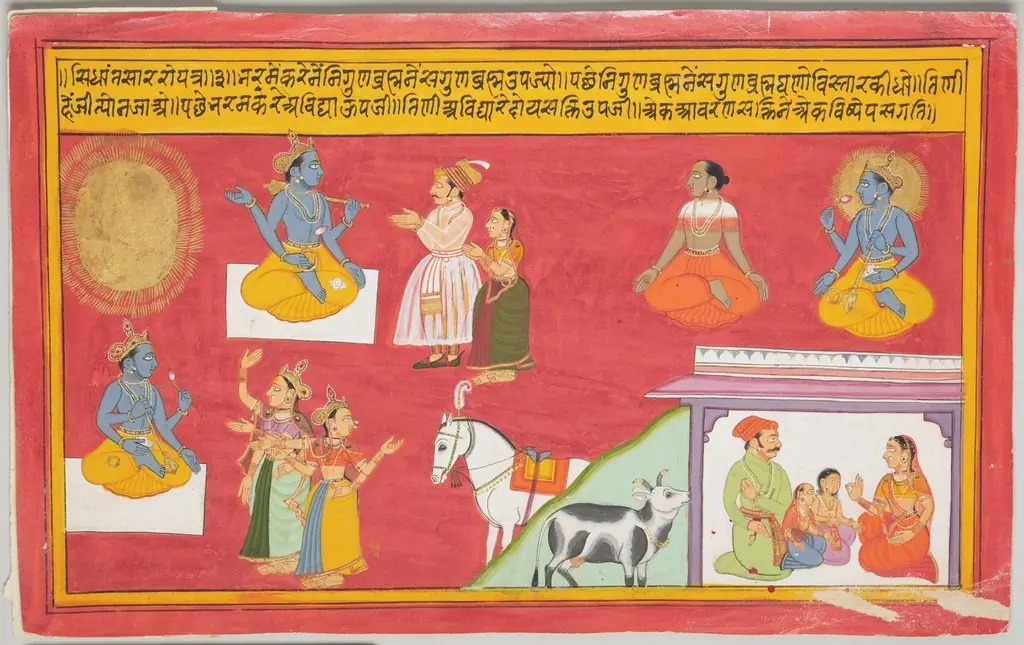 Worship of the Gods (4 of 17)
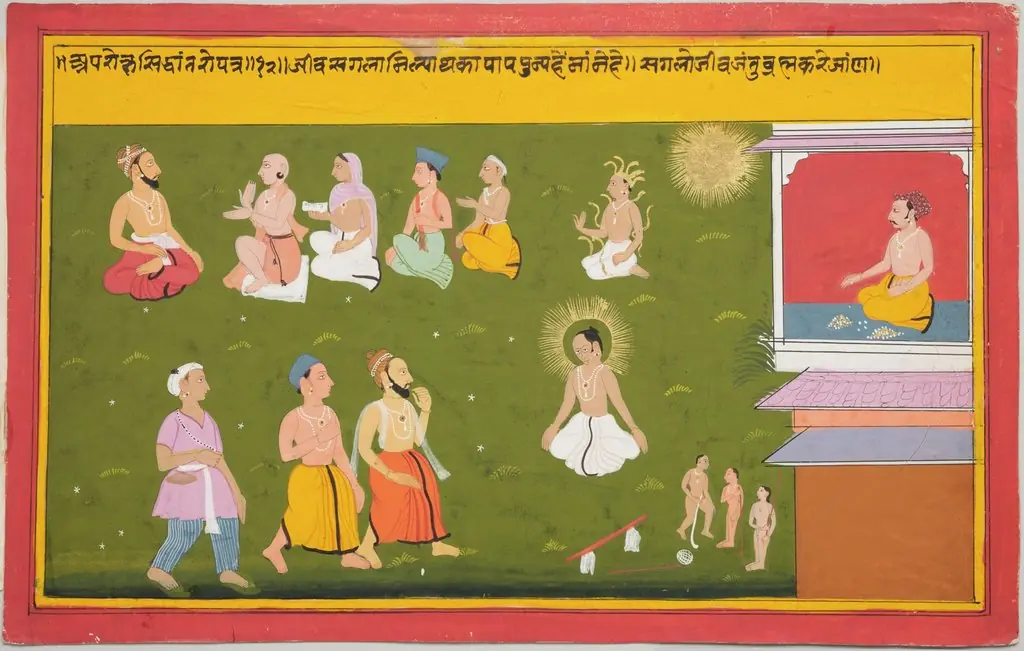 Worship of Hindu Deities (1 of 18)
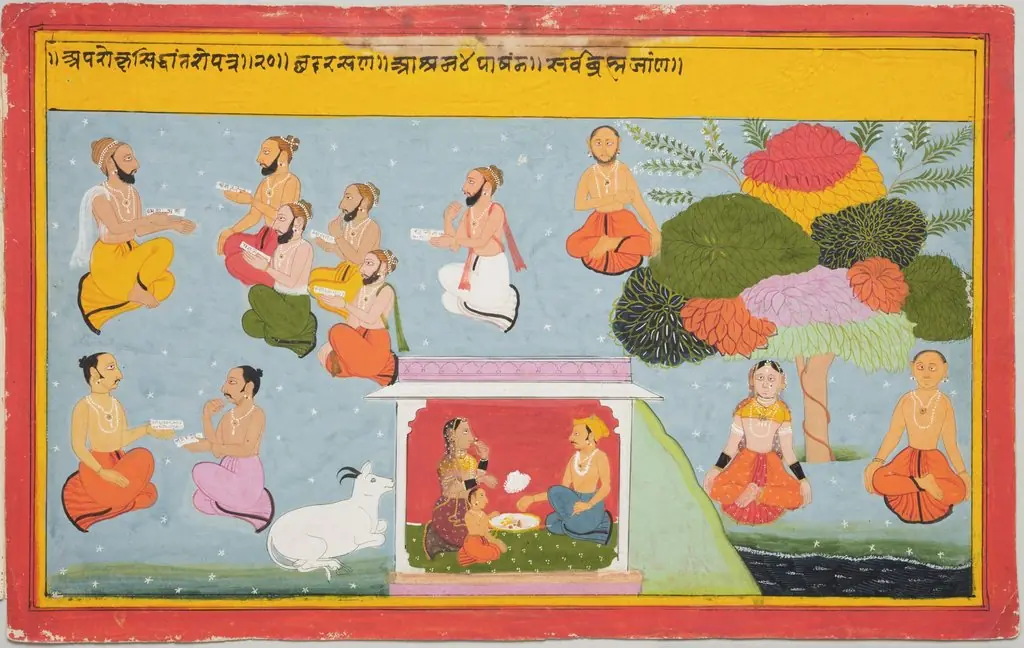 Worship of Hindu Deities (1 of 18)
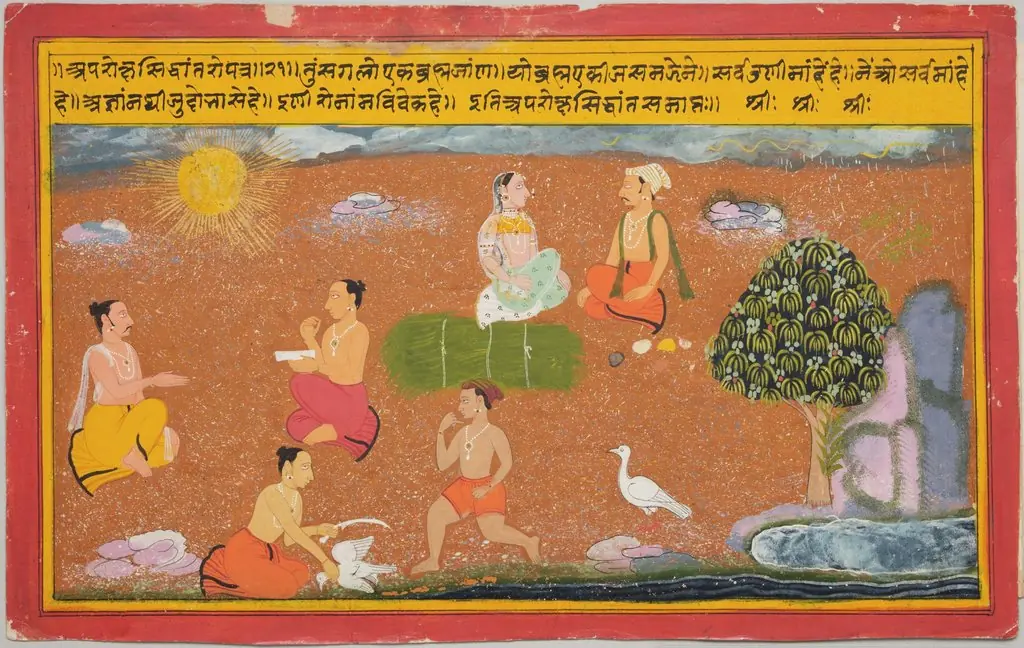 Worship of Hindu Deities (1 of 18)
 Worship of the Gods (2 of 17)