Artwork
Penitent Magdalene
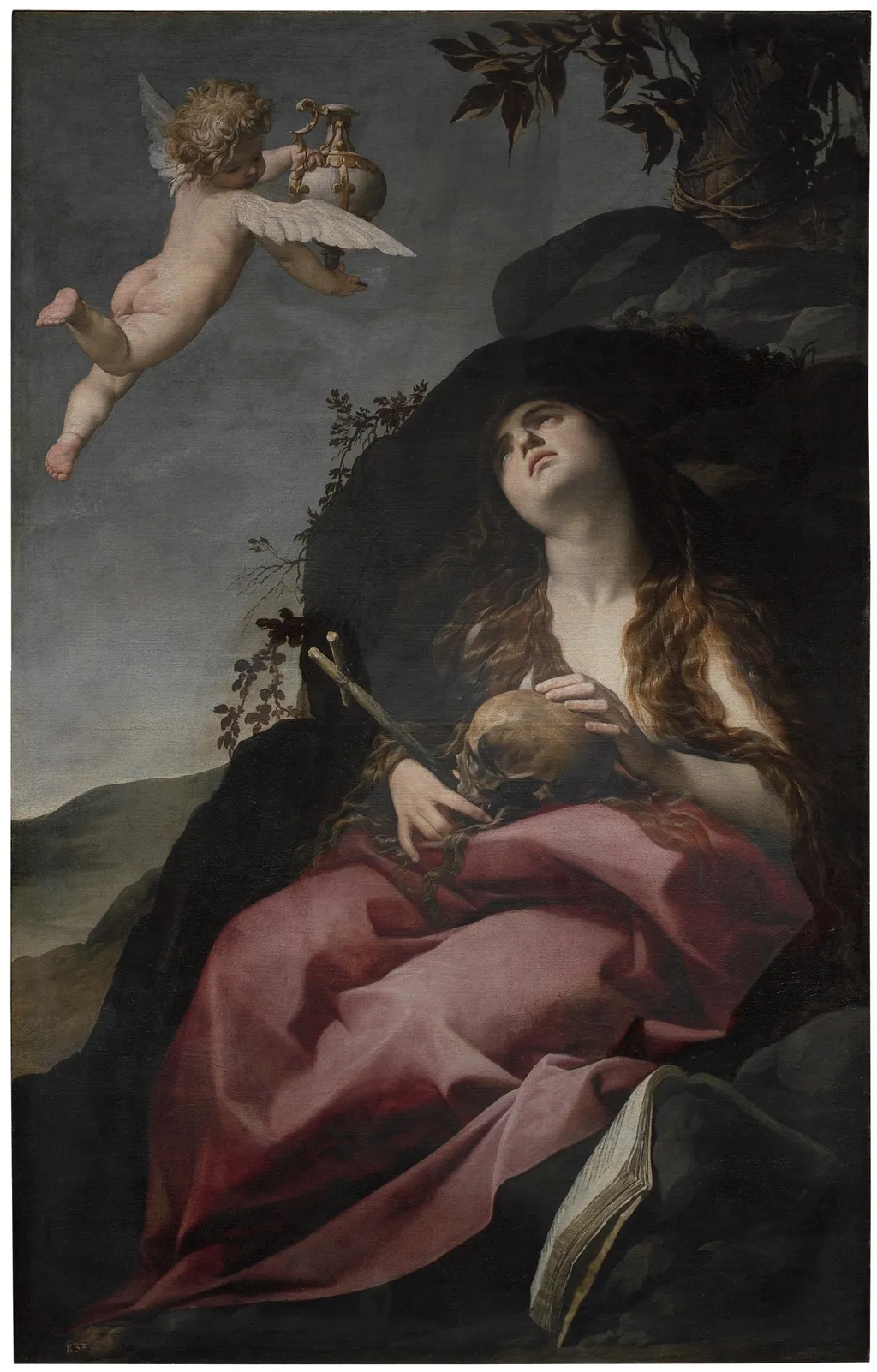
Penitent Magdalene is an oil painting. It dates from 1601 and is held in the collection of the Museo del Prado. The work depicts a solitary woman with flowing red hair, seated and enveloped in a pinkish drapery.
About this work
Overview
The work depicts a solitary woman with flowing red hair, seated and enveloped in a pinkish drapery. She gazes upward with her eyes closed, her hand resting on a small skull placed against her chest. A diminutive winged child appears behind her, clutching a golden cup, while the surrounding space is dominated by deep shadows punctuated by faint green foliage and rocky forms.
Subject & Meaning
The composition juxtaposes symbols of mortality and redemption: the skull serves as a memento mori, reminding viewers of life's transience, while the woman's contemplative pose suggests penitence and spiritual reflection. The winged child, often interpreted as an angelic figure, holds a golden cup that may allude to the Eucharist or the promise of salvation.
Technique & Style
Executed in oil on canvas, the painting employs chiaroscuro to heighten the contrast between illuminated forms and the enveloping darkness, creating a dramatic, intimate atmosphere. The subtle pink tones of the cloth and the warm hue of the woman's hair stand out against the muted background, emphasizing the central figure’s emotional intensity.
Context
The work aligns with a tradition of Baroque religious imagery that emphasizes personal piety and the contemplation of death. Its use of dramatic lighting and symbolic objects reflects the period’s interest in evoking spiritual experience through visual means.
Legacy
While specific details of the painting’s provenance remain undocumented, its thematic focus on penitence and the interplay of light and shadow continue to inform scholarly discussions of devotional art and its role in conveying moral instruction.
Artist & collection