Artwork
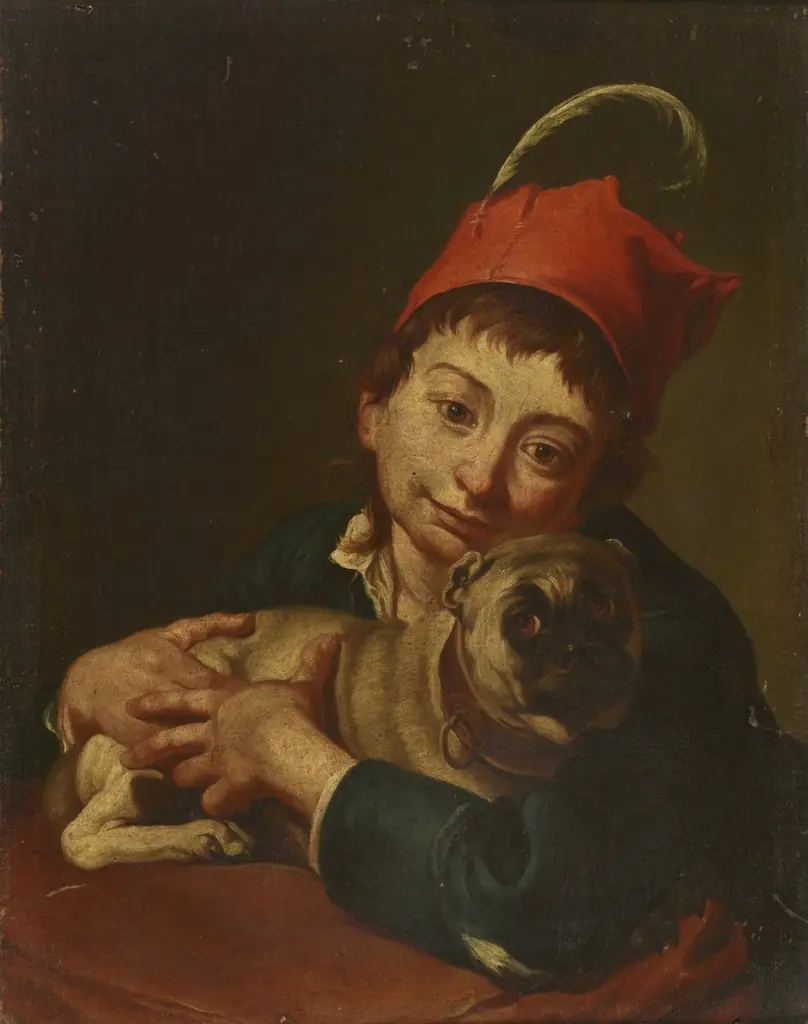
Head of a Boy with a Dog
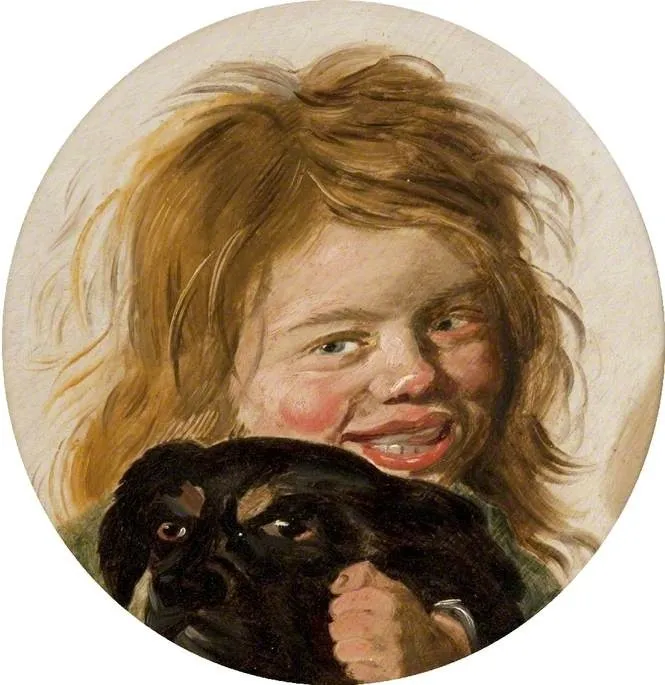
Head of a Boy with a Dog is an oil painting by the Dutch Golden Age artist Frans Hals. It dates from 1650 and is held in the collection of the Kelvingrove Art Gallery and Museum.
About this work
Overview
Painted circa 1650 by Frans Hals the Elder, this oil-on-panel work captures a boy and his dog in intimate close-up. Executed during Hals’s later years in Haarlem, the piece reflects his enduring interest in spontaneous human expression. Unlike formal portraiture, it focuses on an unposed, fleeting moment, emphasizing warmth and connection over status or setting.
Subject & Meaning
The painting portrays a young boy smiling broadly, cradling a dark-coated dog that gazes upward. The bond between child and animal is rendered with quiet sincerity, suggesting companionship rather than symbolism. No narrative or allegory is evident; the subject lies in the immediacy of their interaction, a quiet celebration of everyday affection in domestic life.
Technique & Style
Hals employs loose, energetic brushwork to suggest texture and movement—hair, fur, and skin are rendered with swift strokes rather than fine detail. Chiaroscuro defines the boy’s face and the dog’s form against an indistinct background, focusing attention on their expressions. The palette is restrained, dominated by earth tones, with highlights catching the boy’s teeth and the dog’s eyes.
History & Provenance
The painting has been in the collection of the Kelvingrove Art Gallery and Museum since at least the early 20th century. Its earlier history is undocumented, though it likely passed through private Dutch collections before entering public ownership. It was never widely exhibited or reproduced, remaining a lesser-known work within Hals’s oeuvre.
Context
In mid-17th century Haarlem, portraiture was increasingly personal and informal, reflecting the values of a prosperous merchant class. Hals, known for capturing vitality in his subjects, turned frequently to children and animals as subjects of unguarded emotion. This work aligns with a broader trend toward intimate, non-idealized depictions in Dutch genre painting.
Legacy
Though not among Hals’s most famous works, the painting exemplifies his late style—spontaneous, emotionally resonant, and technically assured. It contributes to the understanding of how Dutch artists elevated ordinary moments into enduring visual records. Its quiet charm continues to inform interpretations of domestic life in 17th-century Netherlands.
Artist & collection
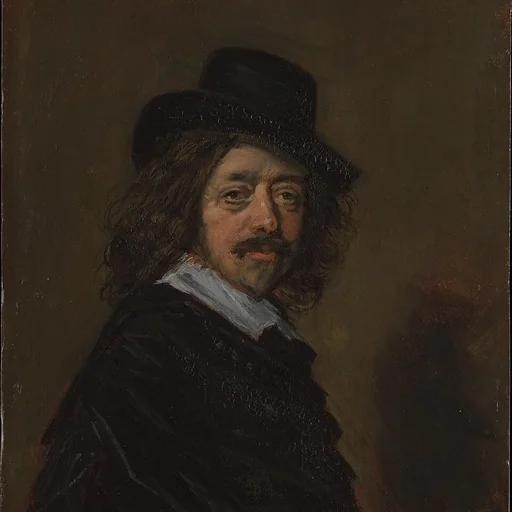
Artist
Frans Hals the Elder (UK: , US: ; Dutch: ; c. 1582 – 26 August 1666) was a Dutch Golden Age painter. He lived and worked in Haarlem, a city in which the local authority of the day frowned on religious painting in places…