Artwork
The Villa d'Este in Tivoli
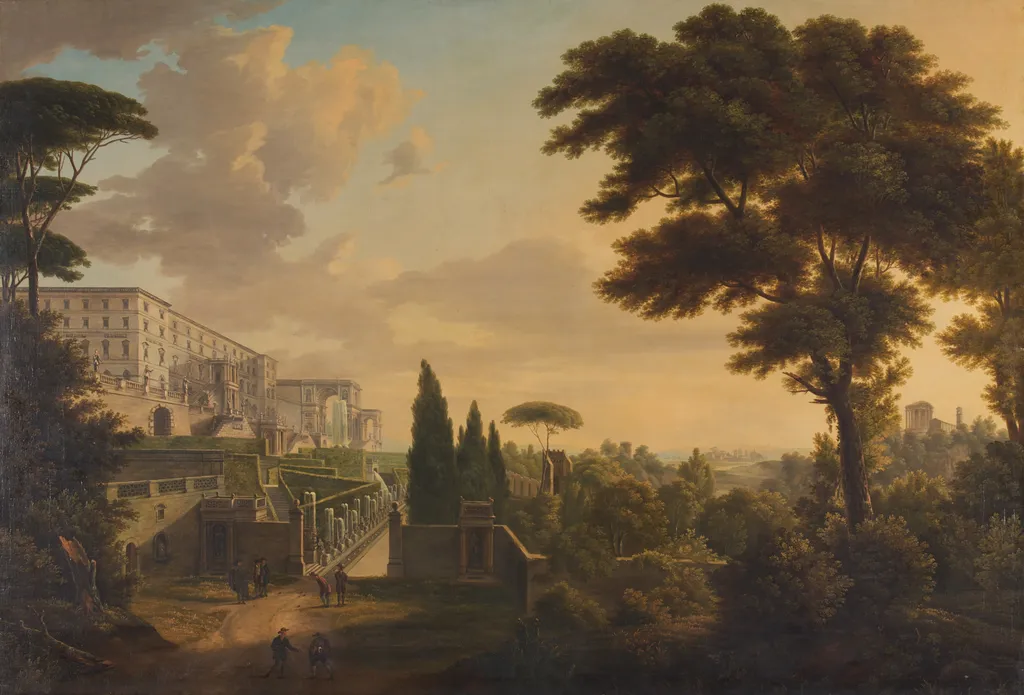
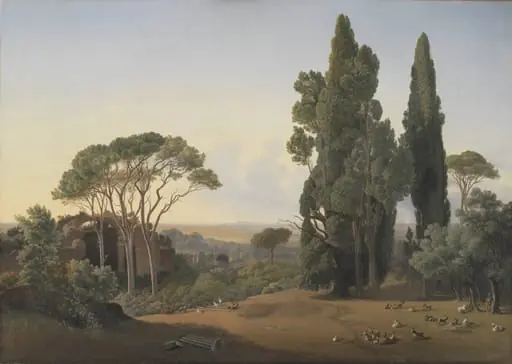
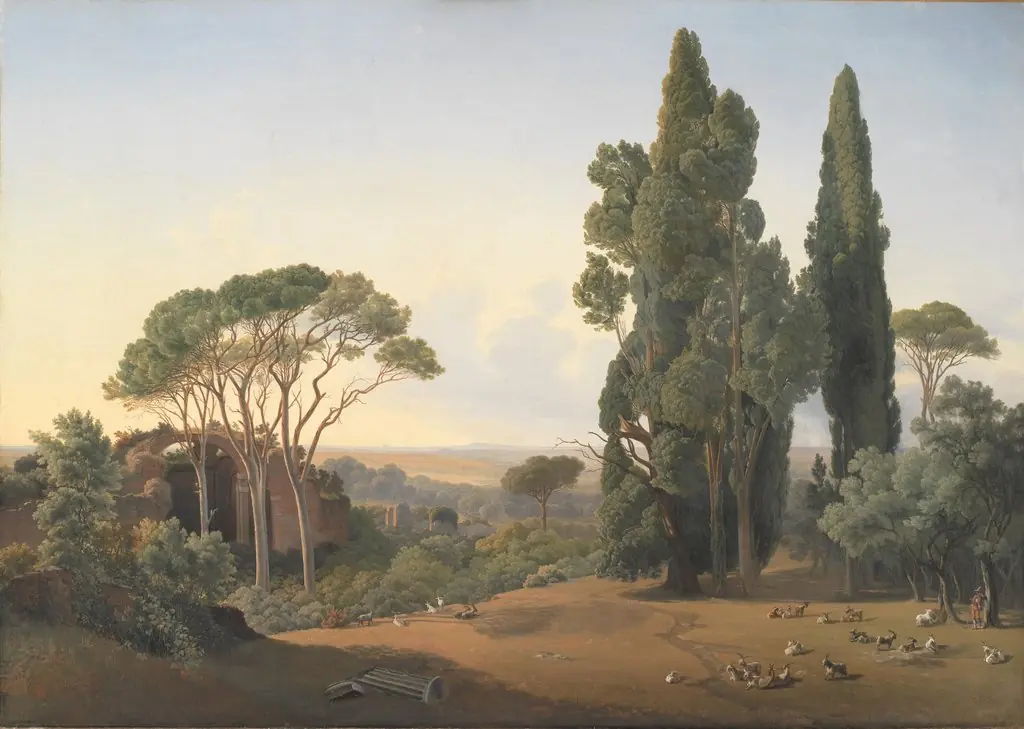
The Villa d'Este in Tivoli is an oil painting by Unknown. It dates from 1810 and is held in the collection of the Kunsthistorisches Museum.
About this work
Overview
Warm golden light bathes the scene, suggesting late afternoon, while a gentle sky of pale blue and yellow completes the calm atmosphere.
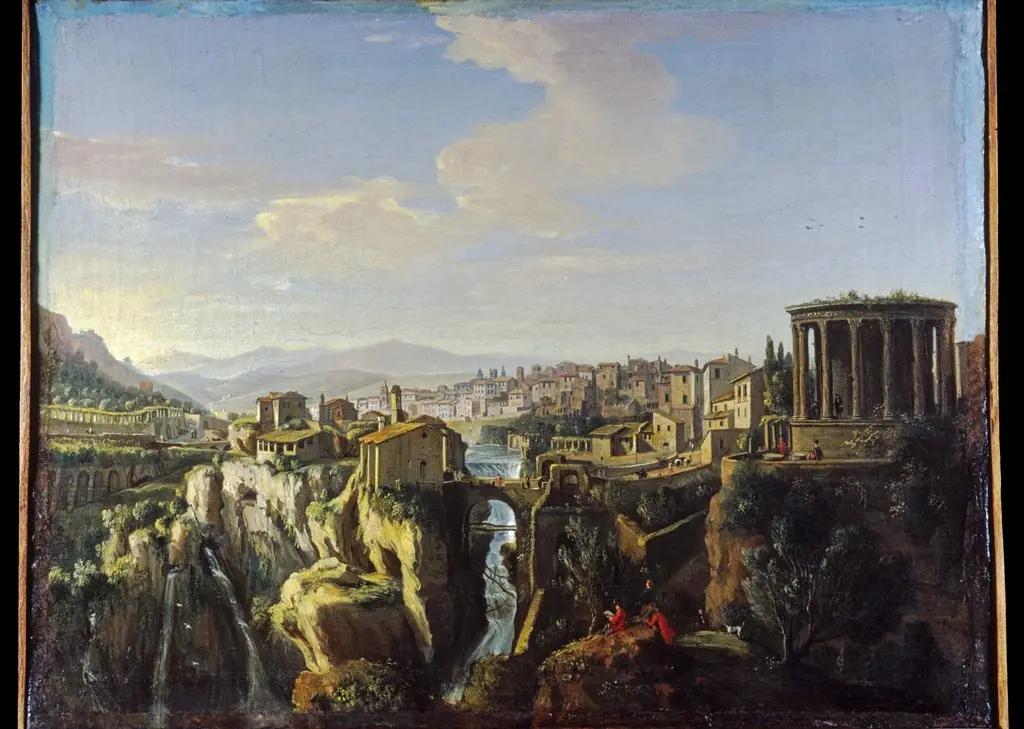
This oil painting captures the Villa d'Este in Tivoli as a tranquil, sunlit landscape. The composition centers on the villa’s architecture, softened by distance and enveloped in dense foliage. Warm golden light bathes the scene, suggesting late afternoon, while a gentle sky of pale blue and yellow completes the calm atmosphere. Figures on a winding path in the foreground introduce human presence without disrupting the quietude of the setting.
Subject & Meaning
The painting presents the Villa d'Este not as a monument but as an integrated element of nature. Its grandeur is muted by the surrounding trees and the soft focus of distance, emphasizing harmony between human design and the natural world. The strolling figures suggest leisurely contemplation, reinforcing a mood of retreat and serenity rather than grandeur or power.
Technique & Style
The artist employs layered oil paint to build subtle atmospheric depth, with warm tones in the foreground gradually shifting to cooler hues in the distance. Brushwork is delicate, avoiding sharp definition to enhance the sense of soft light and air. The winding path leads the eye into the composition, while the sky’s blended hues unify the scene, creating a cohesive, immersive environment.
History & Provenance
The painting’s origins are not documented in public records, and its early ownership remains unclear. It likely emerged from a 19th-century tradition of landscape painting inspired by Italian villas, popular among travelers and collectors. No known exhibition history or documented sale precedes its current placement, suggesting it may have remained in private hands for much of its existence.
Context
Created during a period when European artists increasingly sought inspiration in Italy’s classical landscapes, this work reflects a broader cultural fascination with the region’s gardens and architecture. Unlike grand historical scenes, it favors quiet observation, aligning with Romantic-era ideals of nature as a refuge from industrialization and urban life.
Legacy
The painting contributes to a quiet lineage of landscape art that values mood over narrative. While not widely reproduced or studied, it exemplifies how 19th-century painters interpreted historic sites through personal, contemplative lenses. Its enduring appeal lies in its restraint — a gentle invitation to pause within a timeless, sunlit garden.
Artist & collection

 Domestic Scene
 Giacomo and Cardinal Marco, investing Andrea, Abbot of San Zeno, with his Benefice
 The Nymph of Fontainebleau
 Portrait of a Woman
 Madonna and Child with Saints in the Enclosed Garden
 Venus and Minerva
 Family Group of Four on Sofa
 Wall painting from Room H of the Villa of P. Fannius Synistor at Boscoreale