Artwork
Village Fair
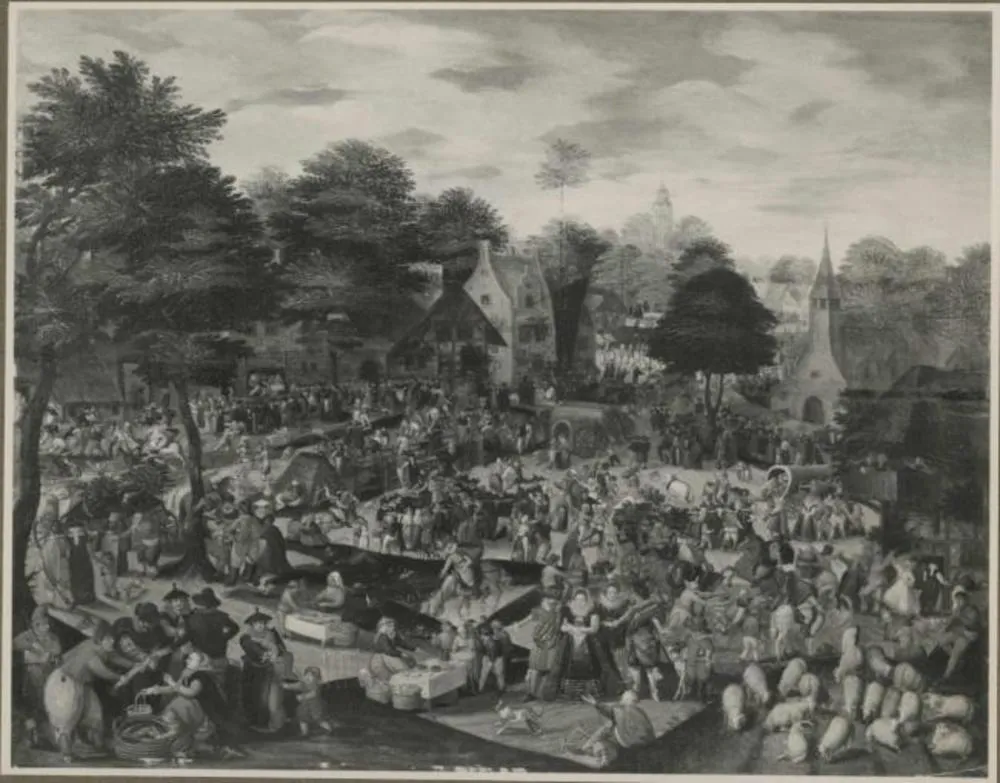
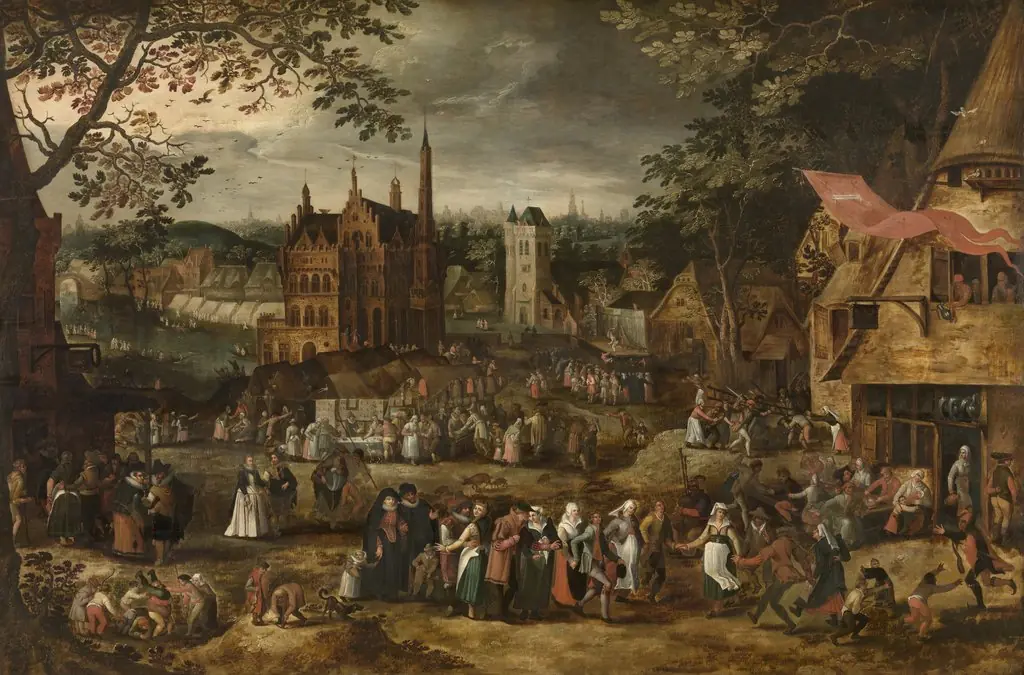
Village Fair is an oil painting by the Dutch Golden Age artist Unknown. It dates from 1600 and is held in the collection of the Royal Museum of Fine Arts Antwerp.
About this work
Overview
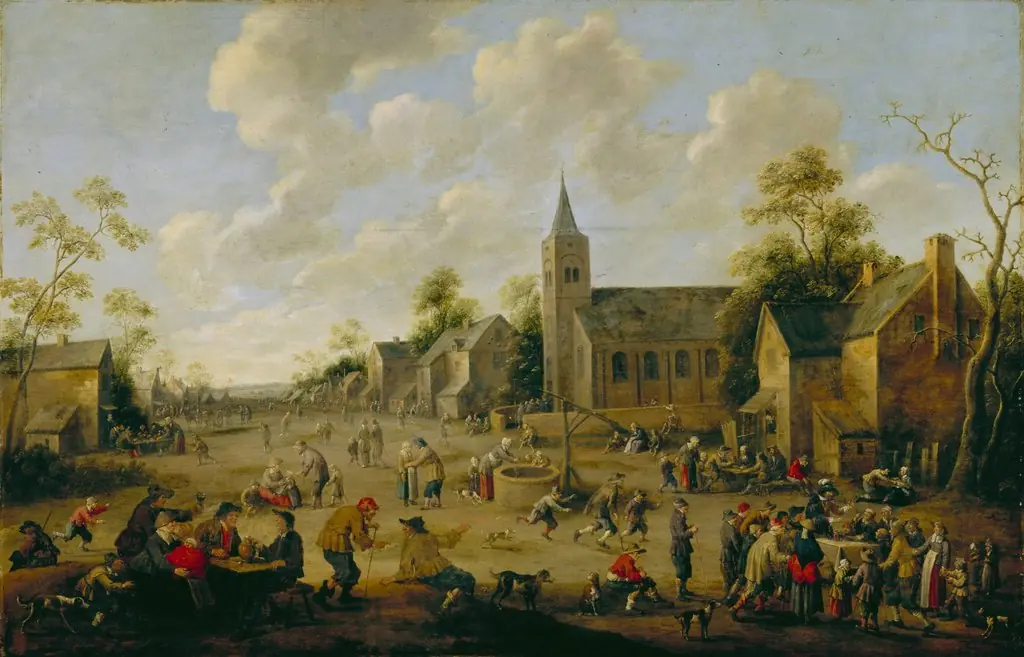
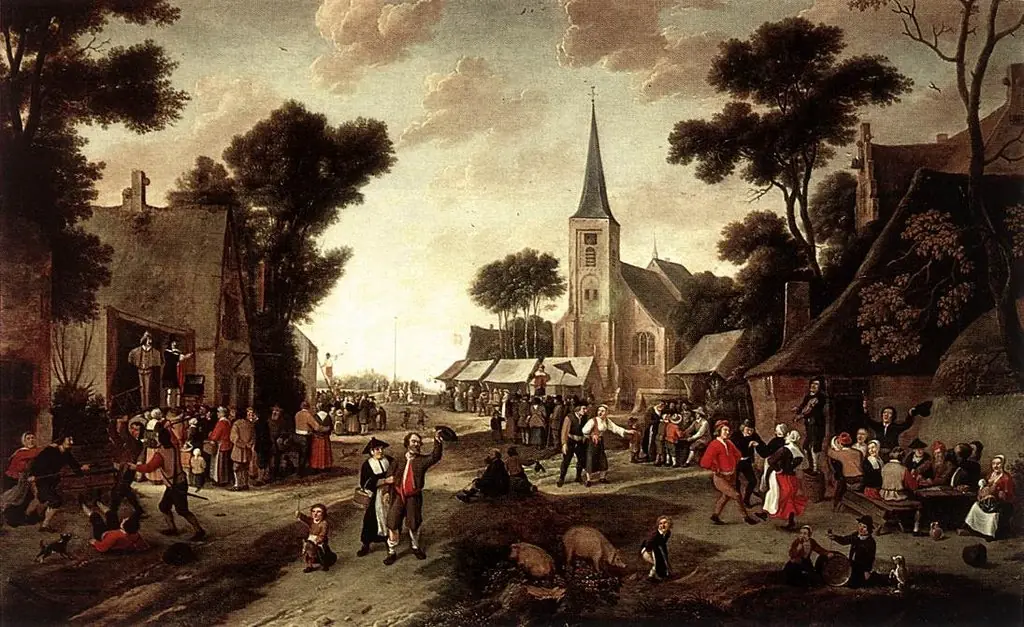
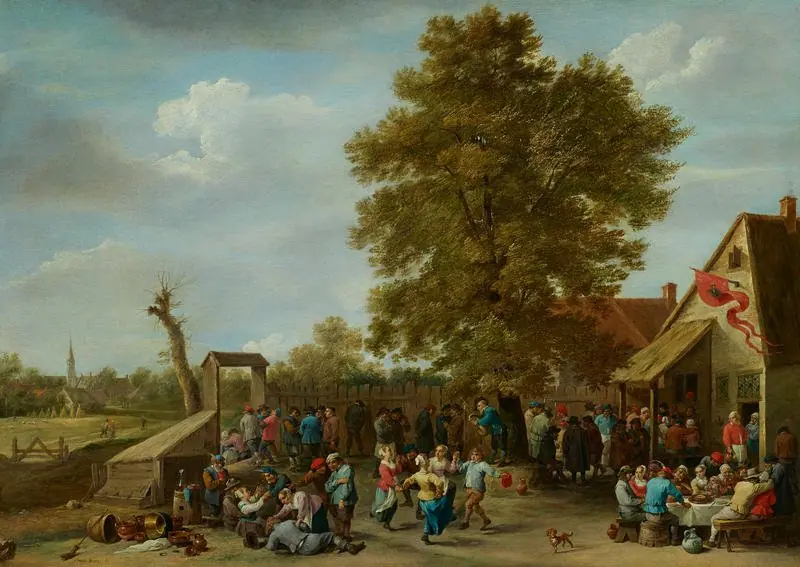
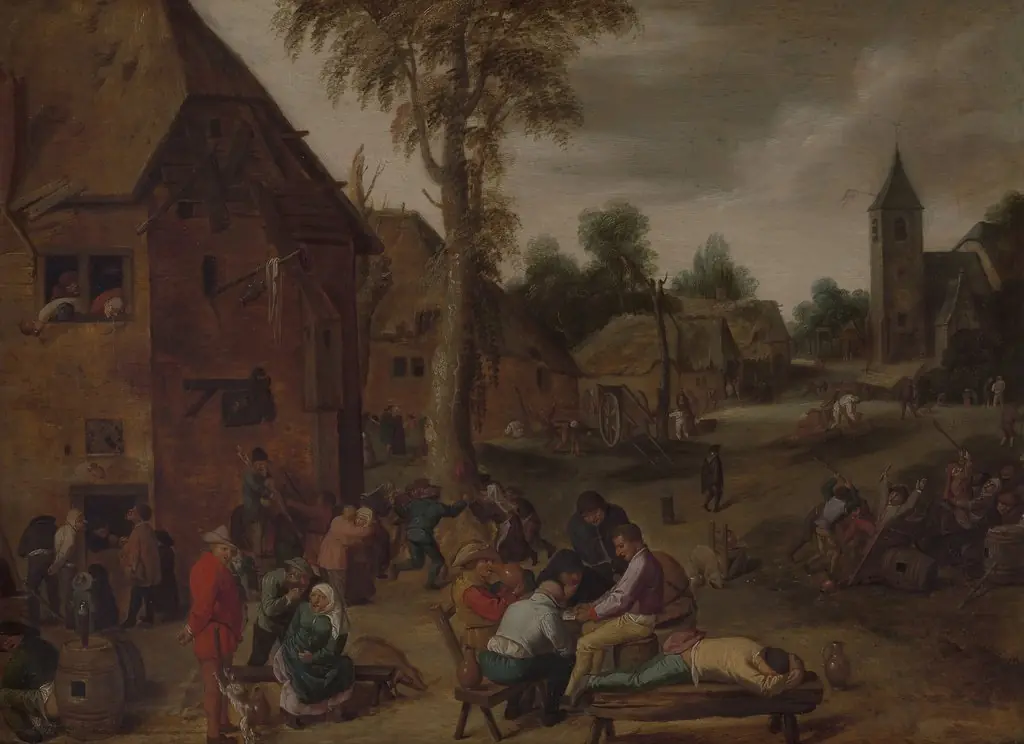
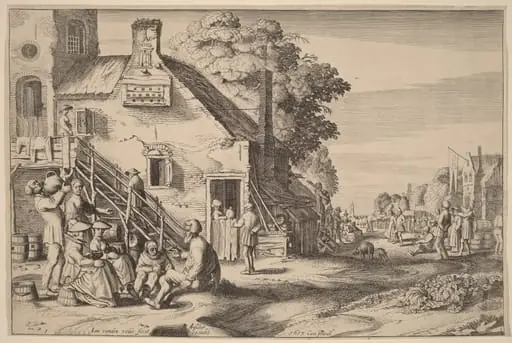
The composition centers on a communal square teeming with activity, where individuals interact through dance, music, and conversation.
Village Fair is an oil painting capturing a bustling outdoor gathering in a rural setting. The composition centers on a communal square teeming with activity, where individuals interact through dance, music, and conversation. The scene conveys a quiet sense of shared celebration, grounded in everyday life rather than grand spectacle. Light and shadow are carefully arranged to unify the figures and suggest the time of day.
Subject & Meaning
The painting portrays a local festival, likely tied to seasonal or religious tradition, where villagers come together in informal celebration. Activities such as eating, drinking, and dancing emphasize social bonds over individual achievement. No single figure dominates; instead, the collective rhythm of movement and gesture suggests a culture rooted in communal ritual and mutual presence.
Technique & Style
Oil paint is applied with a loose, observational hand, favoring atmospheric cohesion over fine detail. Figures are rendered with gentle modeling, their forms softened by ambient light. Chiaroscuro is used subtly to define volume and spatial depth, particularly in the grouping around the central table, where shadows anchor the figures against the brighter background.
History & Provenance
The painting’s origin is undocumented in public records, and the artist remains unidentified. It likely dates to the late 18th or early 19th century, given its subject matter and handling. No known exhibition history or collector lineage has been established, suggesting it was created for local or private consumption rather than public display.
Context
Such scenes were common in regional European art during a period when rural life was increasingly idealized amid urbanization. Village fairs served as rare occasions for social cohesion outside of labor or religious obligation. The painting reflects a visual record of these gatherings, preserving customs that were beginning to fade with industrial change.
Legacy
Though not widely reproduced or studied, the work contributes to a quieter tradition of genre painting that valued everyday community over heroic narrative. Its quiet realism offers insight into pre-modern social rhythms, preserving a visual archive of transient, ordinary joy that rarely found formal recognition in art history.
Artist & collection

 Domestic Scene
 Giacomo and Cardinal Marco, investing Andrea, Abbot of San Zeno, with his Benefice
 The Nymph of Fontainebleau
 Portrait of a Woman
 Madonna and Child with Saints in the Enclosed Garden
 Venus and Minerva
 Family Group of Four on Sofa
 Wall painting from Room H of the Villa of P. Fannius Synistor at Boscoreale