Artwork
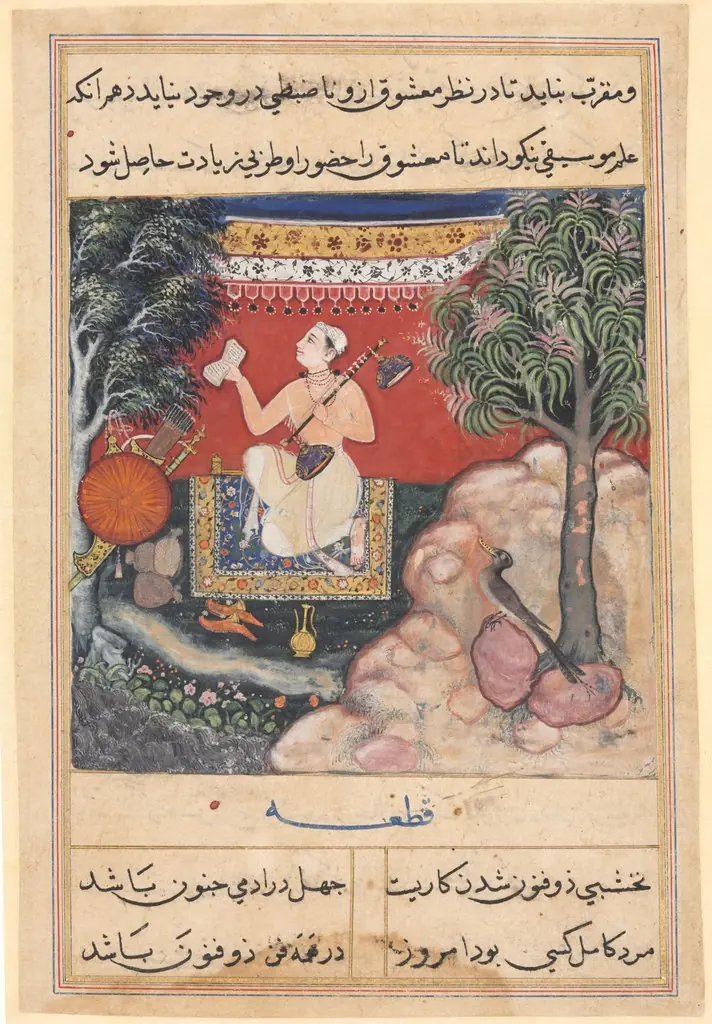
An African Lyre Player (recto); Calligraphy (verso)
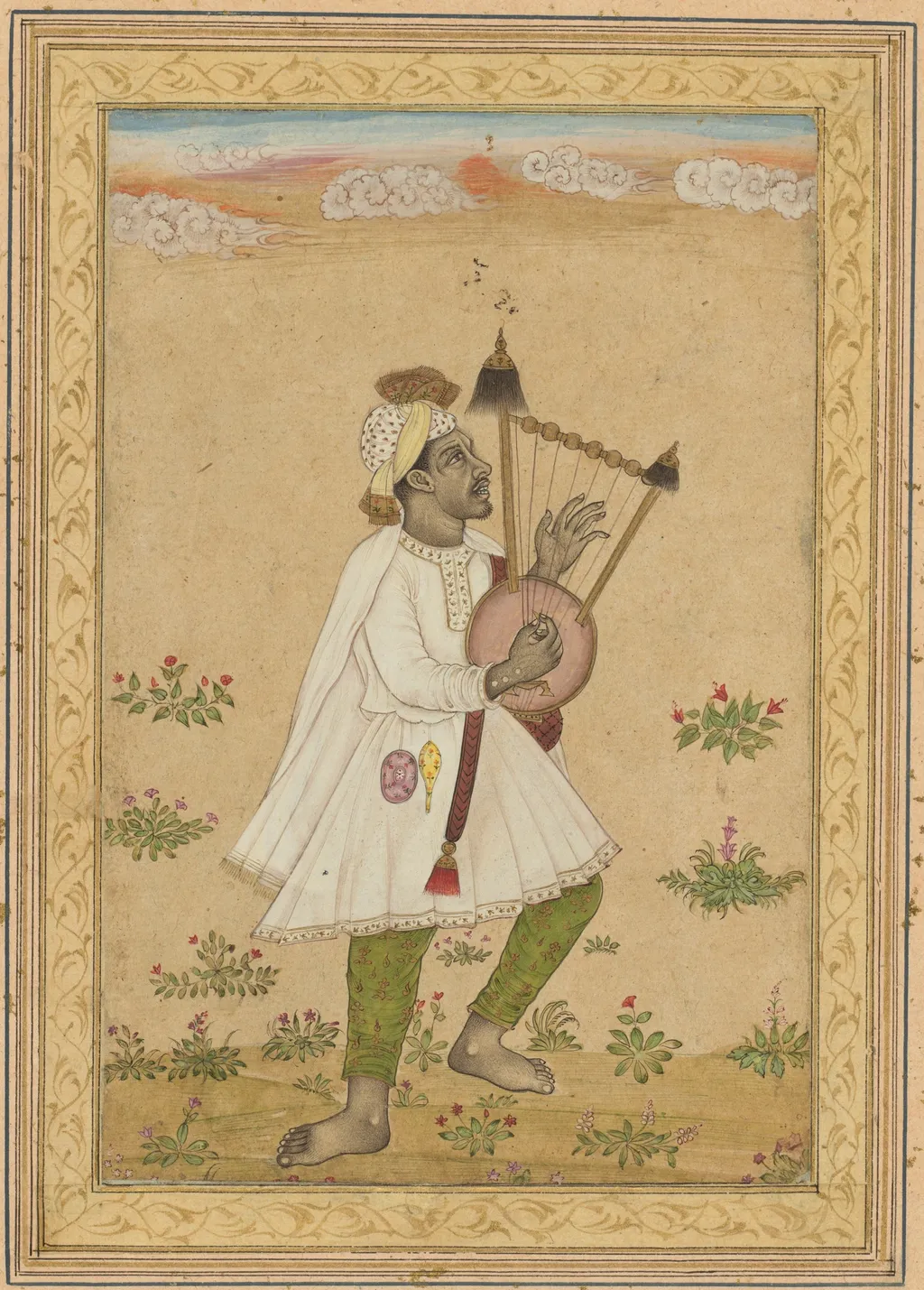
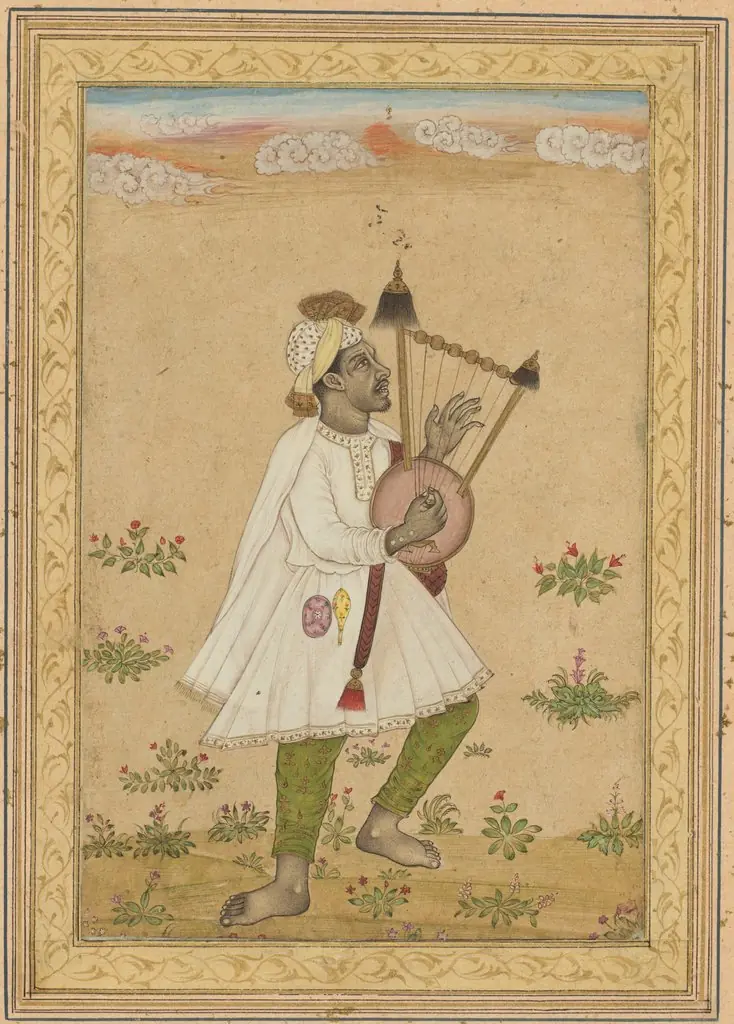
An African Lyre Player (recto); Calligraphy (verso) is an unspecified painting. It dates from 1650 and is held in the collection of the Cleveland Museum of Art. The work presents a solitary figure engaged in music-making.
About this work
Overview
The work presents a solitary figure engaged in music-making. He is depicted playing a rounded, pink‑tinged stringed instrument with an extended neck, using a bow to draw the strings while his other hand steadies the body of the instrument. The scene is set against a muted sky dotted with clouds, and a few sprigs of green foliage appear at the performer’s feet.
Subject & Meaning
The central figure, dressed in a loose white tunic and green trousers, appears barefoot and wears a tall hat crowned with a feather, suggesting a cultural or ceremonial role. His concentrated expression and the act of bowing the instrument convey a moment of personal immersion in music, hinting at the spiritual or communal significance of performance in the depicted tradition.
Technique & Style
Rendered in a clear, linear style, the painting emphasizes the contours of the musician and his instrument. The palette is restrained, with soft pinks for the lyre, muted whites and greens for clothing, and a pale sky background. Fine brushwork delineates the feathered hat and the delicate clouds, while the minimal vegetation grounds the figure without distracting from the central action.
Context
The composition reflects an interest in African musical practices, likely produced during a period when European artists were documenting non‑Western cultures. The inclusion of both a visual depiction (recto) and calligraphic elements (verso) suggests the work may have served an educational or ethnographic purpose, pairing image with textual description.
Artist & collection