Artwork
The origin of music from a fabulous bird of India which had seven holes in its beak, from a Tuti-nama (Tales of a Parrot): Fourteenth Night
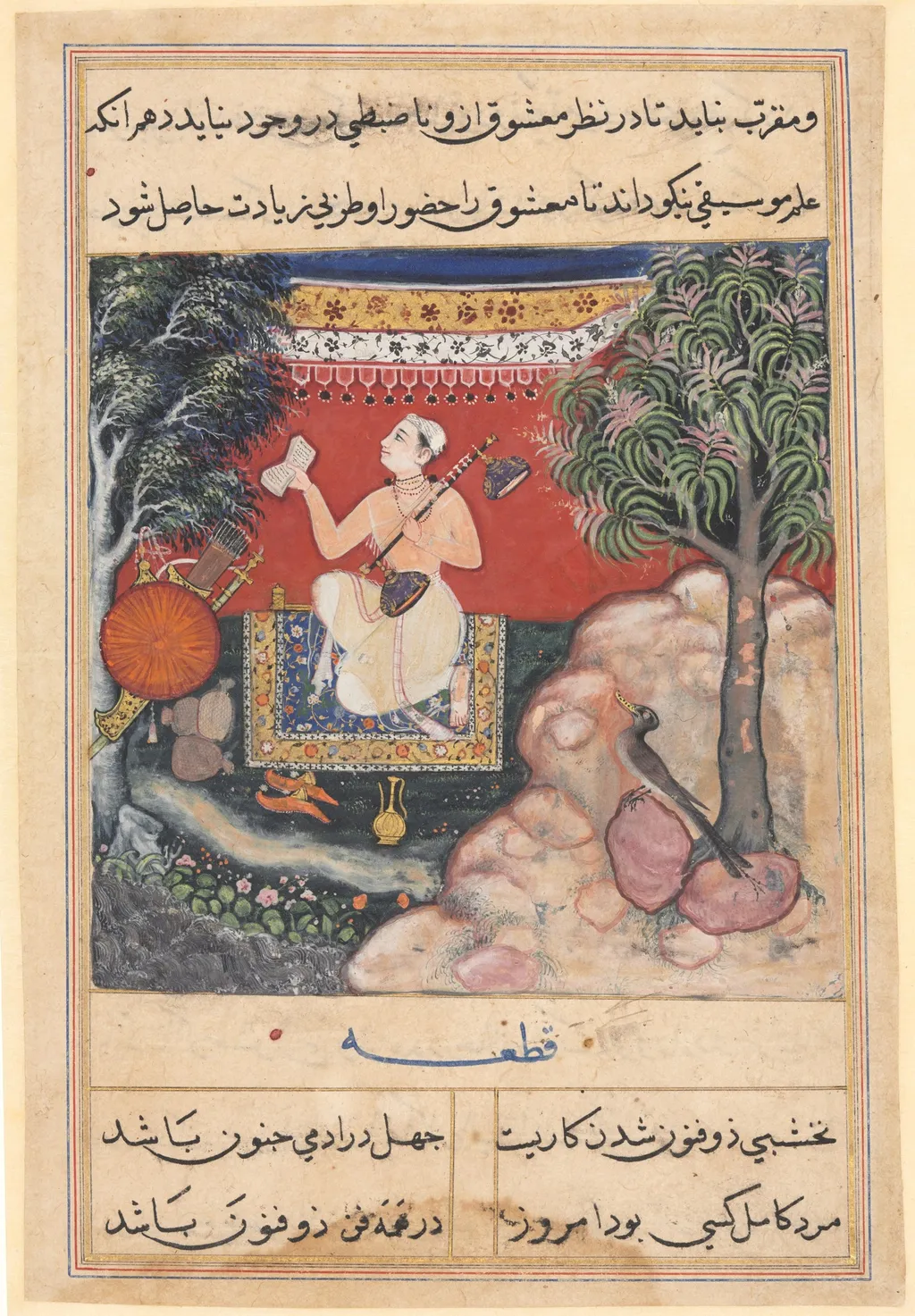
The origin of music from a fabulous bird of India which had seven holes in its beak, from a Tuti-nama (Tales of a Parrot): Fourteenth Night is an unspecified painting. It dates from 1560 and is held in the collection of the Cleveland Museum of Art. The work depicts a seated figure in a tranquil outdoor setting, surrounded by foliage, rocks and assorted objects.
About this work
Overview
The work depicts a seated figure in a tranquil outdoor setting, surrounded by foliage, rocks and assorted objects. The man, dressed in a white dhoti, necklace and turban, rests on an elaborately patterned rug while playing a stringed instrument. Nearby items include a drum, a book and a bird, all rendered in muted greens, browns and blues that emphasize the natural atmosphere.
Subject & Meaning
The scene illustrates a narrative from the Indian tale collection known as the Tuti‑nama, specifically the episode titled “Fourteenth Night,” which recounts the origin of music from a mythical seven‑hole bird. The figure’s musical activity and the presence of the bird suggest a visual interpretation of that legend, linking artistic creation to the bird’s mythical song.
Technique & Style
Executed in a detailed, representational manner, the painting employs fine brushwork to render the intricate designs of the rug and the textures of the clothing. The palette is restrained, favoring earth tones and subdued blues that convey a calm, contemplative mood. Attention to natural elements such as trees and rocks grounds the composition in a realistic environment.
History & Provenance
The piece is part of a series illustrating stories from the Tuti‑nama, a medieval Indian collection of parrot tales. It is currently held in the collection of the Cleveland Museum of Art, where it is displayed alongside other works by the same artist that explore similar narrative themes.
Artist & collection

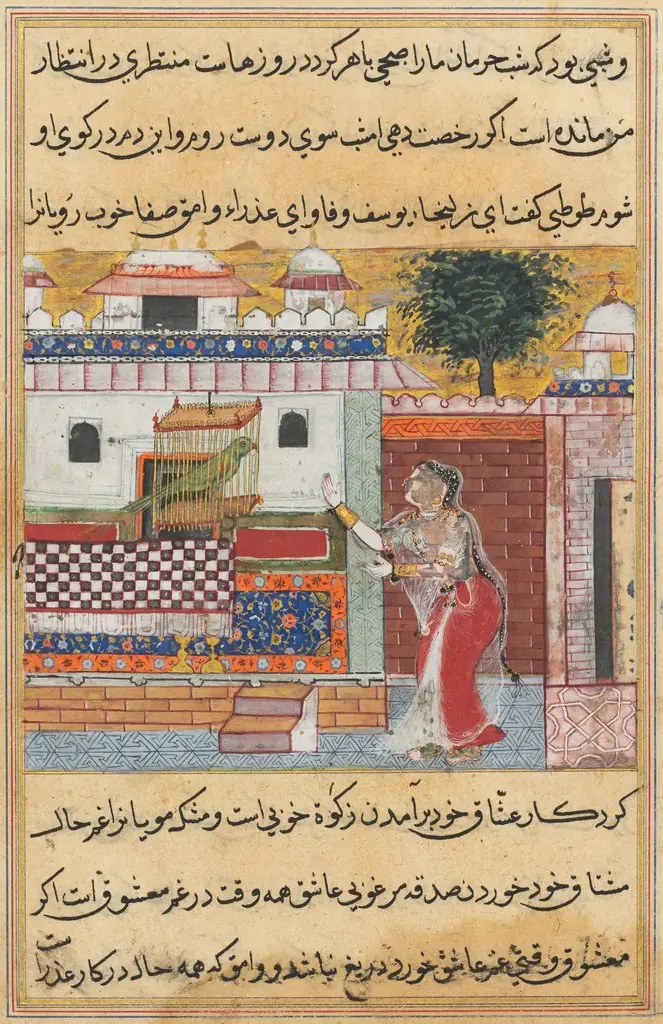 The Parrot Addresses Khujasta at the Beginning of the Twelfth Night, from a Tuti-nama (Tales of a Parrot)
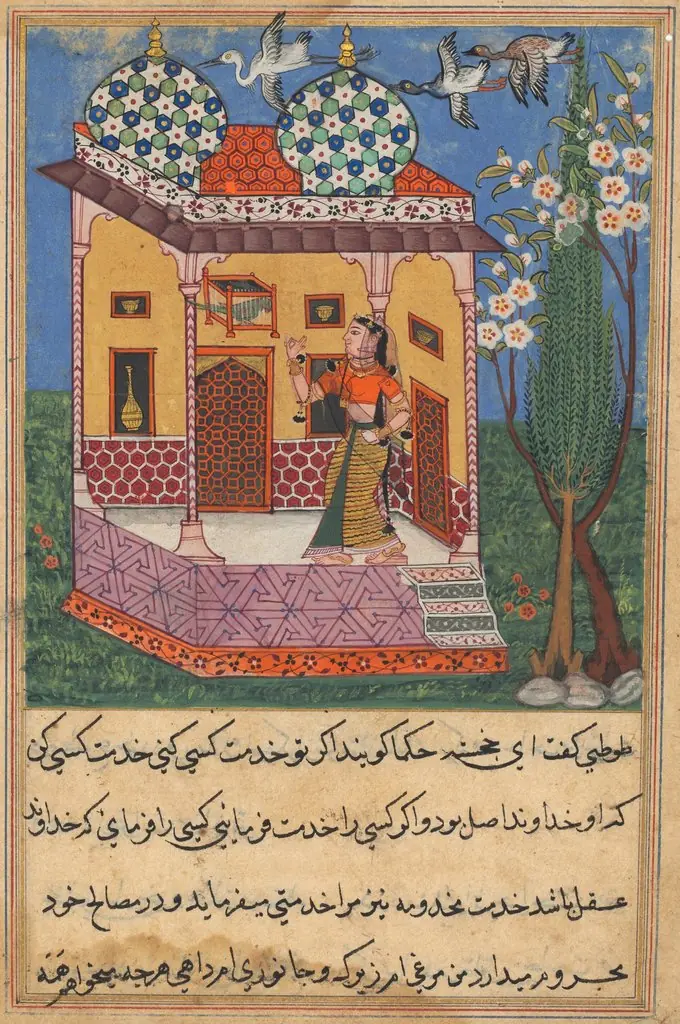 The Parrot Addresses Khujasta at the Beginning of the Twenty-sixth Night, from a Tuti-nama (Tales of a Parrot)
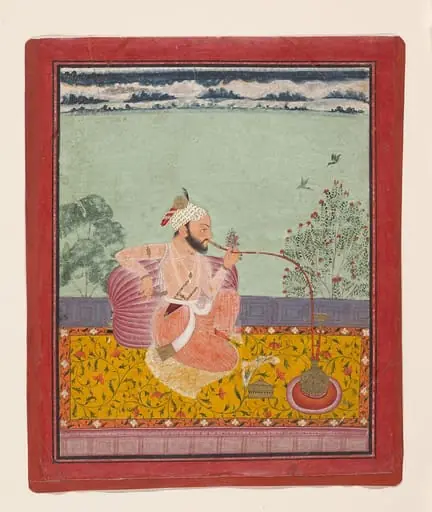 Untitled
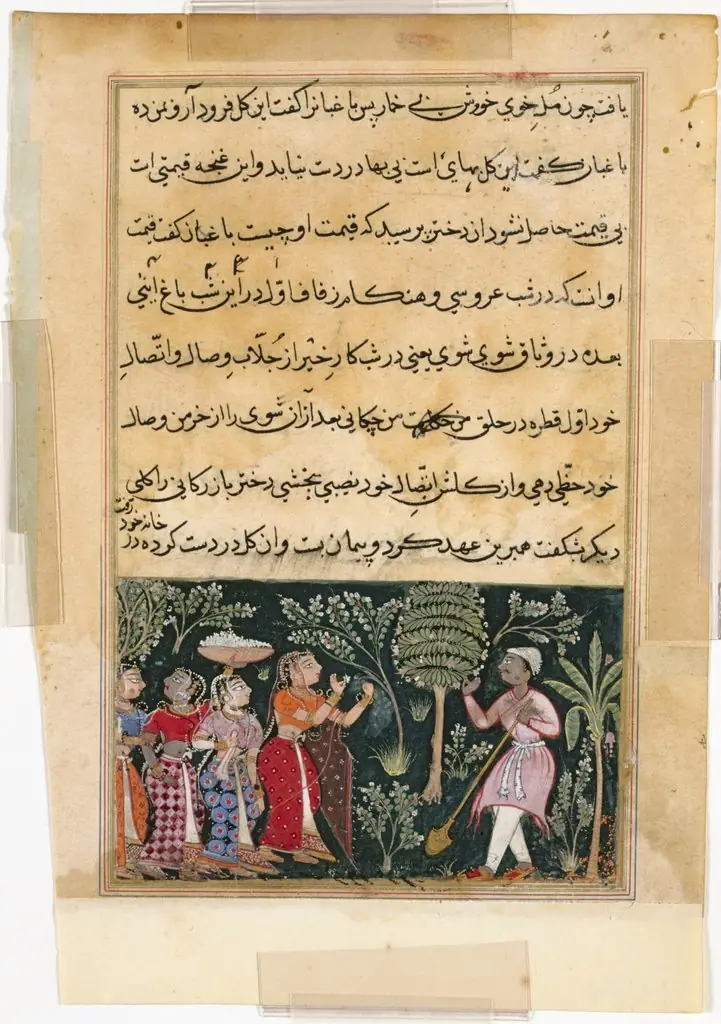 The daughter of the merchant of Mazanderan asks the gardener for the rose, from a Tuti-nama (Tales of a Parrot): Twelfth Night
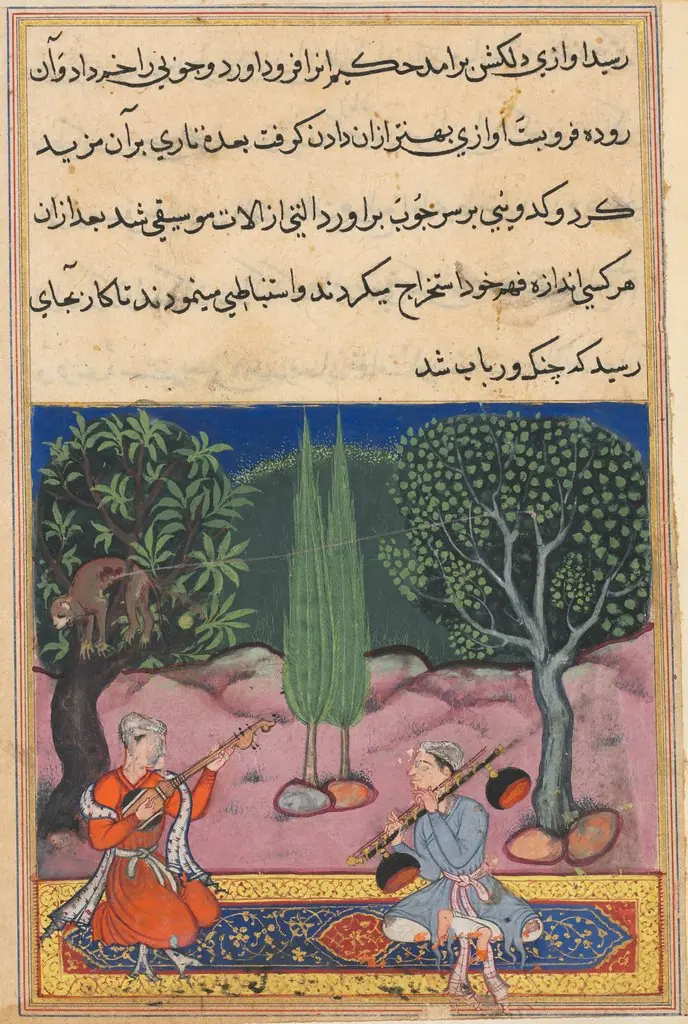 The invention of musical instruments from the intestines of a monkey, from a Tuti-nama (Tales of a Parrot): Fourteenth Night