Artwork
Die Sieger der Seeschlacht von Lepanto 1571
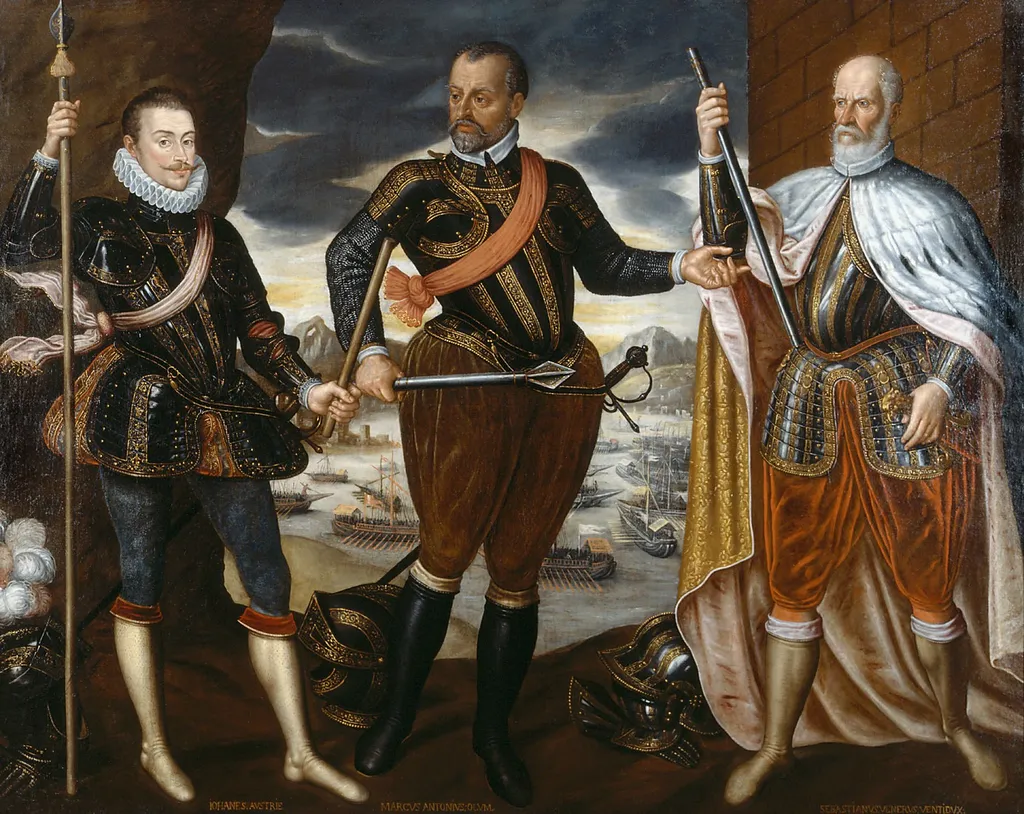
Die Sieger der Seeschlacht von Lepanto 1571 is an unspecified painting by the Mannerist artist Unknown. It dates from 1575 and is held in the collection of the Kunsthistorisches Museum.
About this work
Overview
The work titled *Die Sieger der Seeschlacht von Lepanto 1571* presents three figures positioned before a bustling harbor. Each man is dressed in richly detailed clothing, holding weapons—a spear, a sword, and another sword—while a cloudy sky looms above the fleet of vessels. The composition conveys a formal, ceremonial atmosphere that emphasizes the significance of the depicted event.
Subject & Meaning
The painting commemorates the victory at the Battle of Lepanto in 1571, a naval clash between the Holy League and the Ottoman fleet. The three standing men likely represent victorious commanders or symbolic personifications of triumph, their elaborate attire and armaments underscoring martial prowess and the political importance of the Christian victory over Ottoman expansion.
Technique & Style
Executed in a realistic manner, the artist renders the fabrics with careful attention to texture, using contrasting black, gold, and white tones to highlight the figures’ garments. The harbor background is rendered with atmospheric perspective, the clouds and distant ships softened to create depth, while the foreground figures are sharply defined, drawing the viewer’s focus to the celebratory tableau.
History & Provenance
The painting’s provenance is not extensively documented, but its subject places it within a tradition of 16th‑century commemorative works that celebrated major military successes. It likely originated in a court or civic setting where the triumph at Lepanto was publicly honored, and may have been displayed in a governmental or religious institution linked to the Holy League.
Context
The Battle of Lepanto marked a turning point in Mediterranean power dynamics, halting Ottoman naval dominance. Artistic representations of the victory served both propagandistic and devotional functions, reinforcing Christian unity and the legitimacy of the ruling powers. This work aligns with contemporary visual narratives that glorified collective heroism and divine favor in warfare.
Legacy
While not among the most widely reproduced depictions of Lepanto, the painting contributes to the visual record of the event, offering insight into how 16th‑century societies visualized triumph. Its detailed costuming and maritime setting provide valuable reference material for scholars studying period dress, naval iconography, and the interplay of art and political memory.
Artist & collection

 Domestic Scene
 Giacomo and Cardinal Marco, investing Andrea, Abbot of San Zeno, with his Benefice
 The Nymph of Fontainebleau
 Portrait of a Woman
 Madonna and Child with Saints in the Enclosed Garden
 Venus and Minerva
 Family Group of Four on Sofa
 Wall painting from Room H of the Villa of P. Fannius Synistor at Boscoreale
 Der Riese Bartlmä Bona mit dem Zwerg Thomele
 Untitled
 Emperor Ferdinand II. (1578-1637) in black armor, full-length
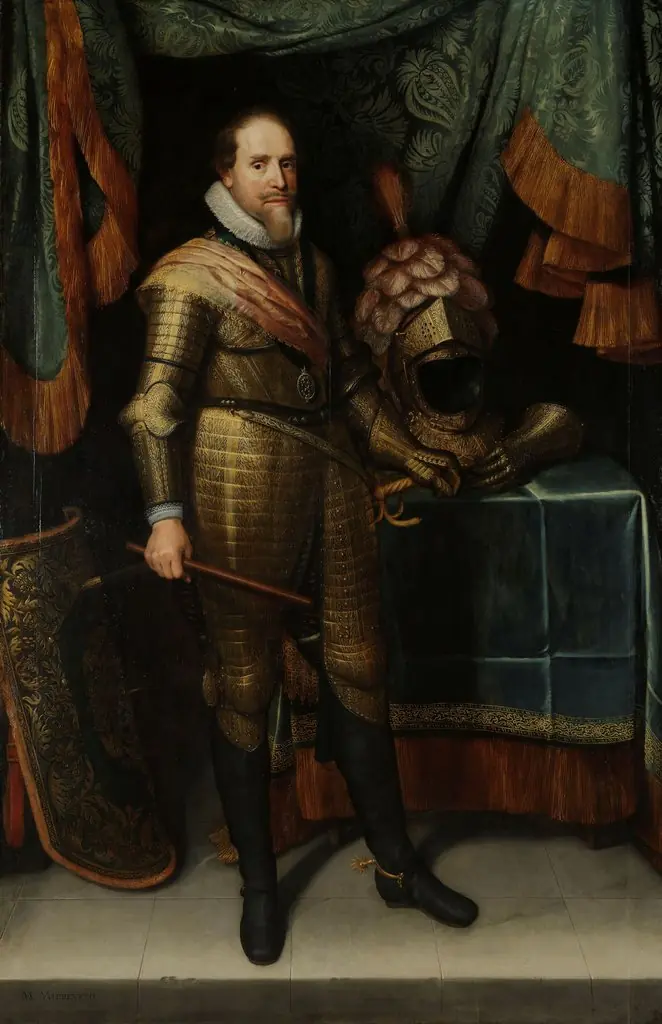 Maurice, Prince of Orange
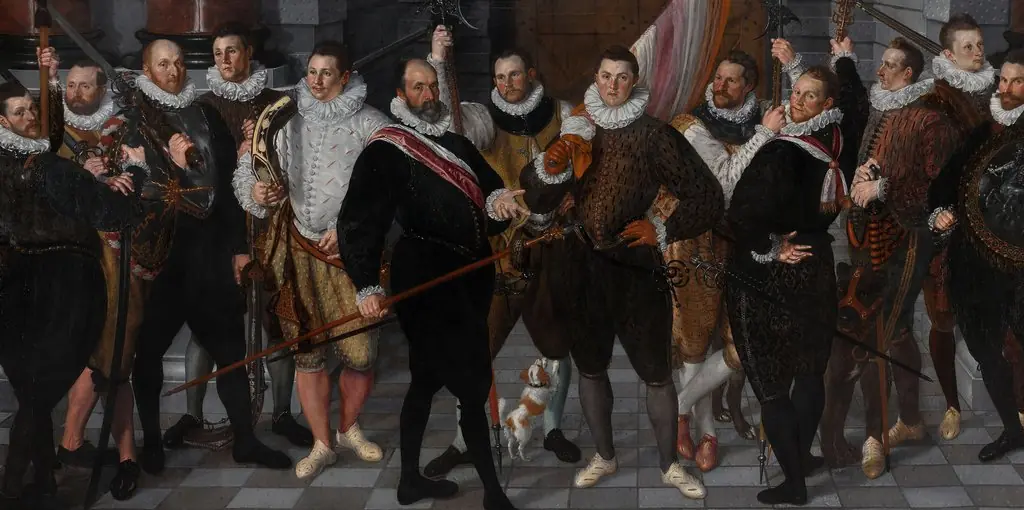 The Company of Captain Dirck Jacobsz Rosecrans and Lieutenant Pauw
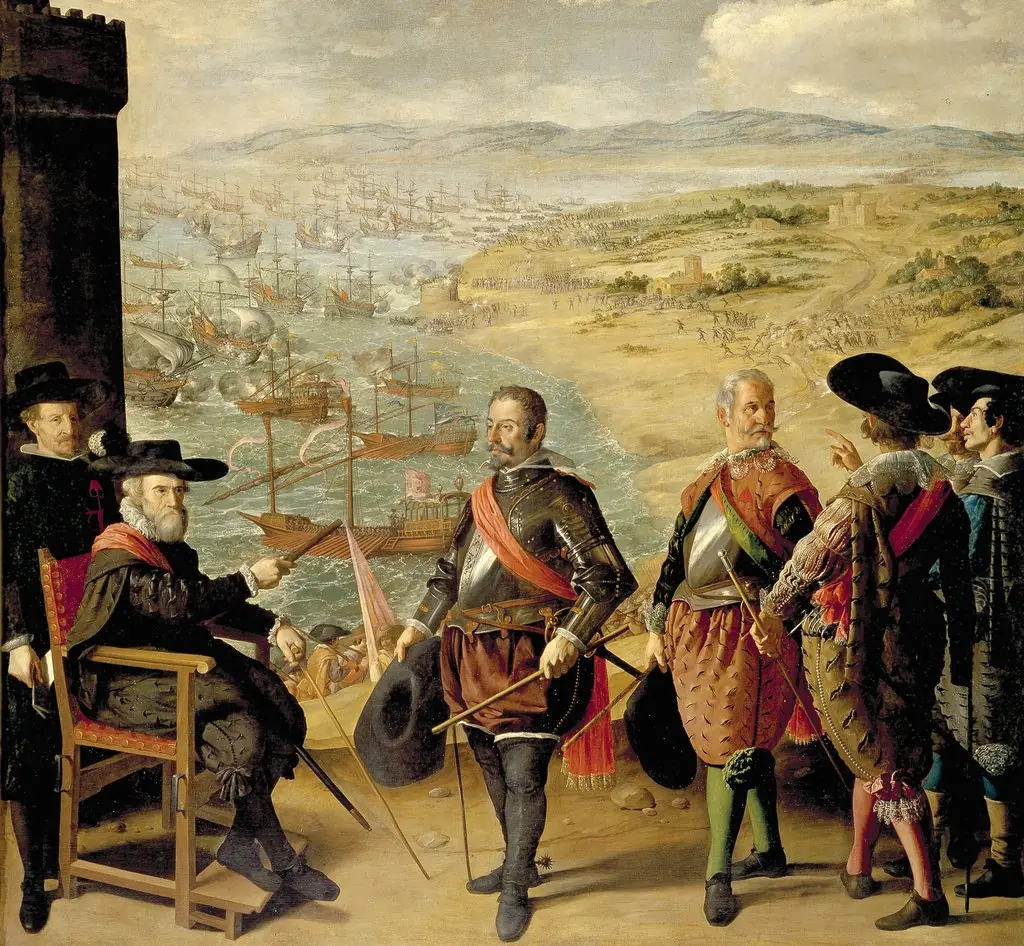 The Defense of Cadiz Against the English
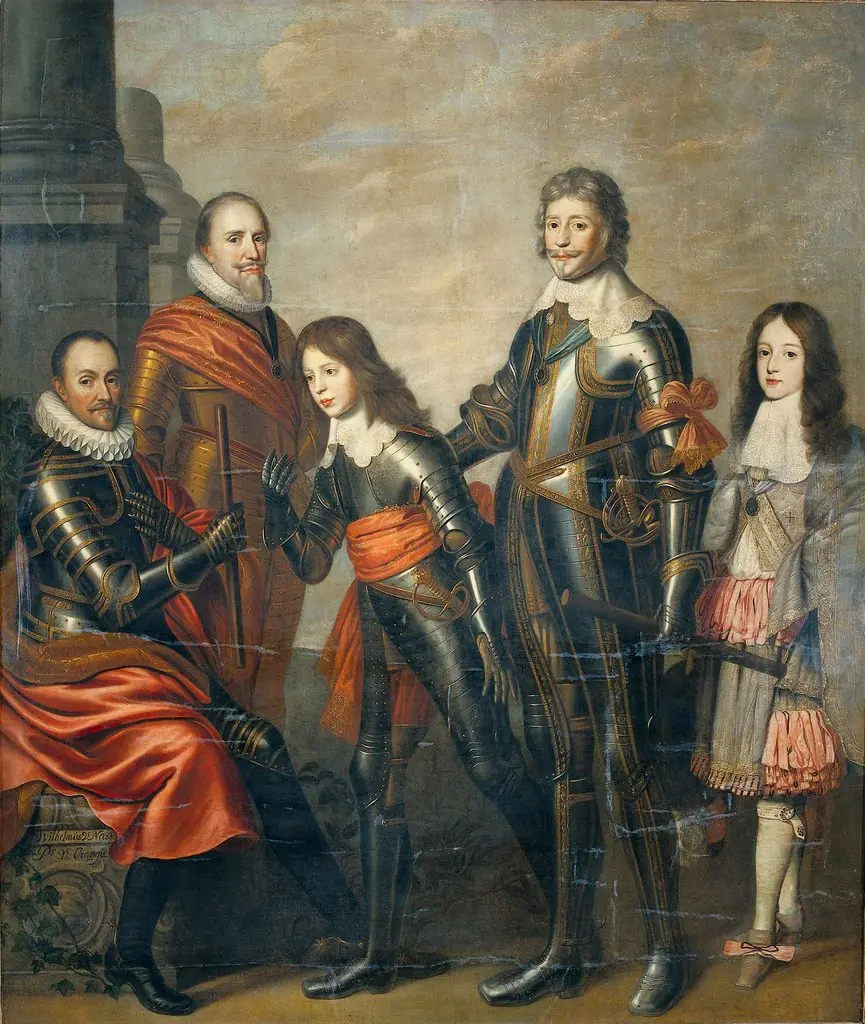 Four Generations of the Princes of Orange: William I, Maurice and Frederick Henry, William II and William III
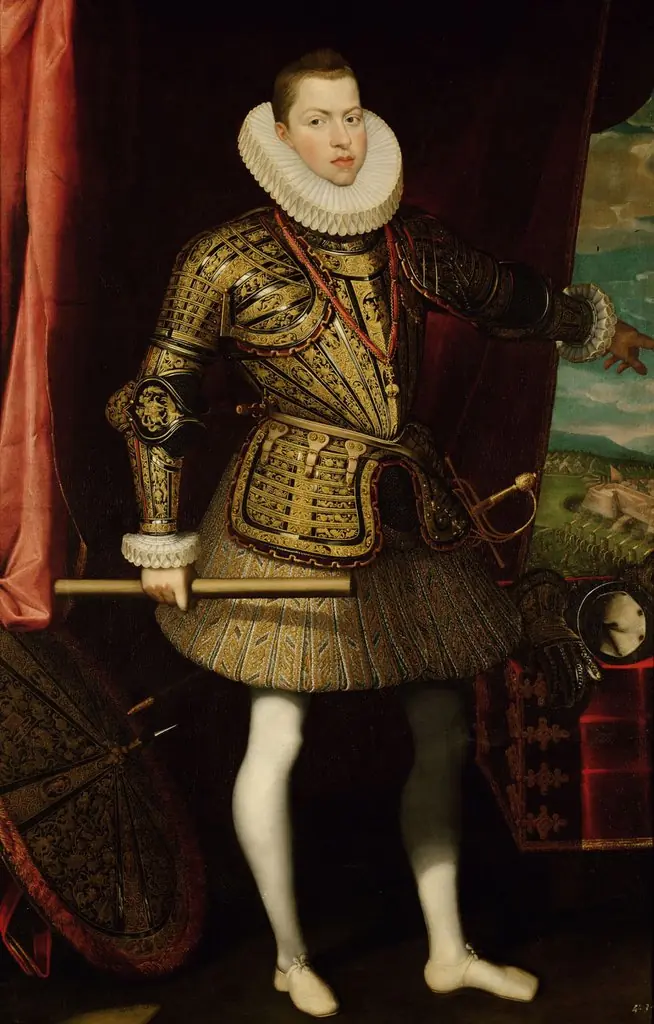 König Philipp III.(1578-1621) von Spanien, Bildnis in ganzer Figur als General der Infanterie (Im Hintergrund: Die Belagerung von Ostende 1601-1604)
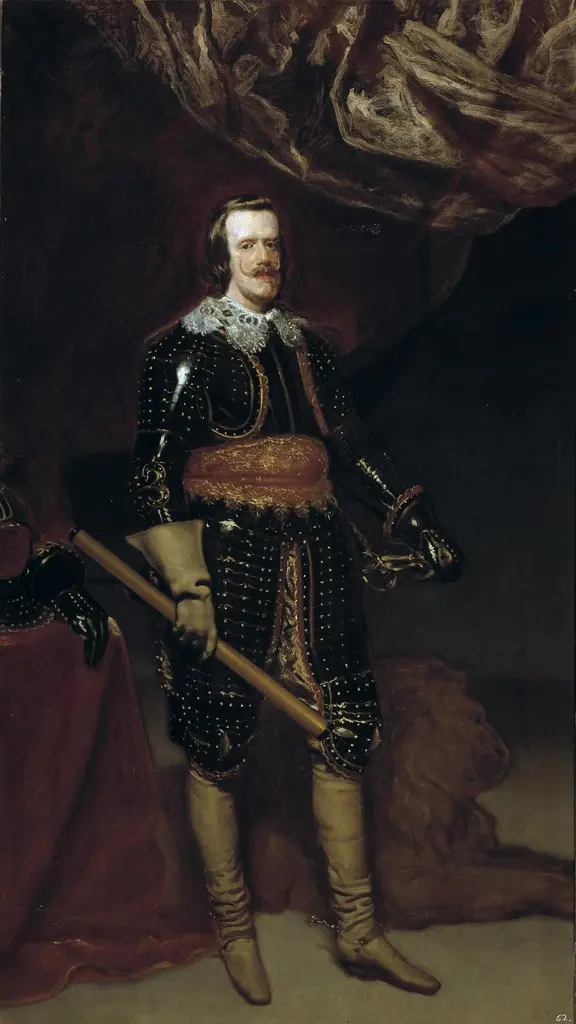 Philip IV in Armour, with a Lion at his Feet
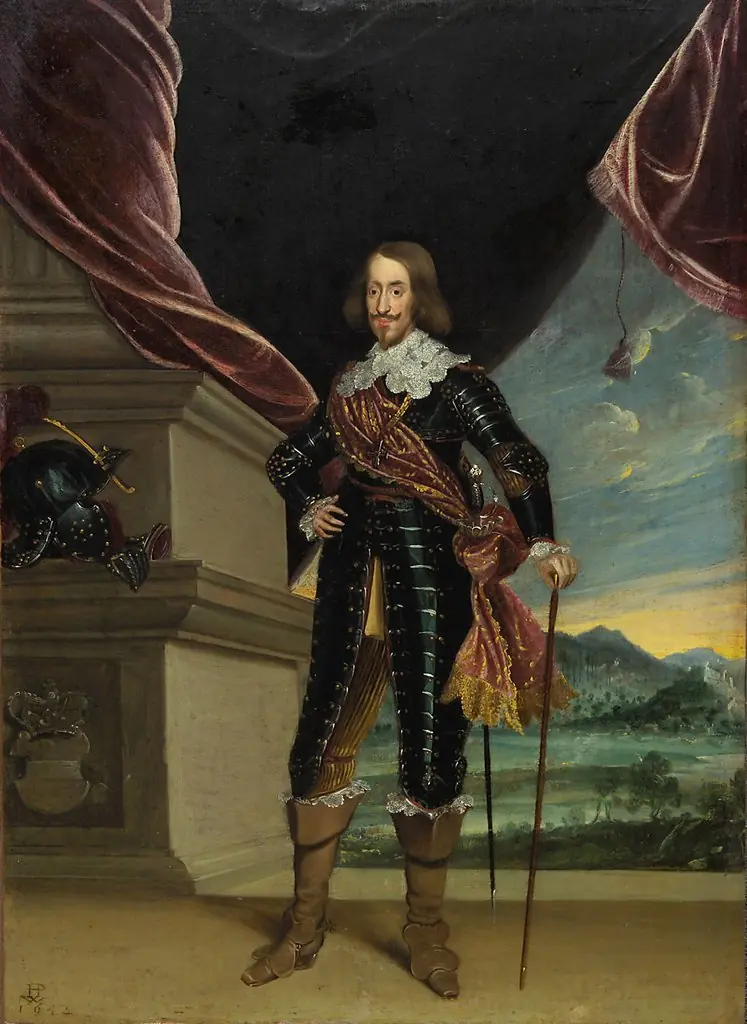 Archduke Leopold Wilhelm (1614-1662), governor of the Netherlands.
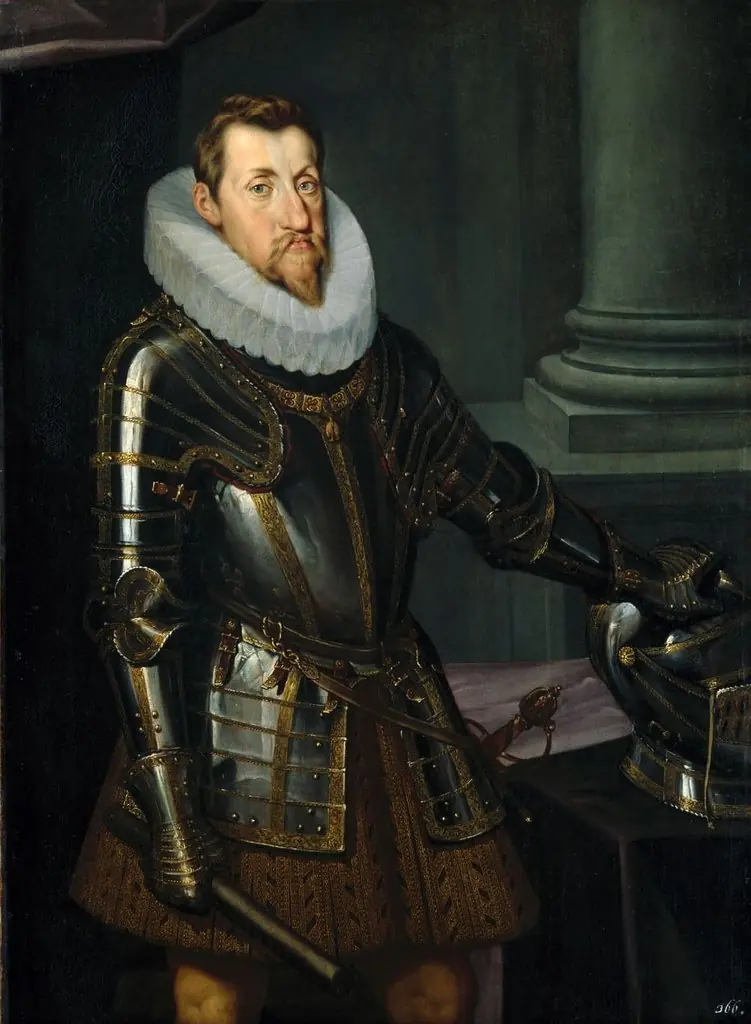 Portrait of Ferdinand II, Holy Roman Emperor (1578-1637)
 Erzherzog Maximilian III. (1558-1618) im Harnisch, Kniestück