Artwork
The avatar Narasimha
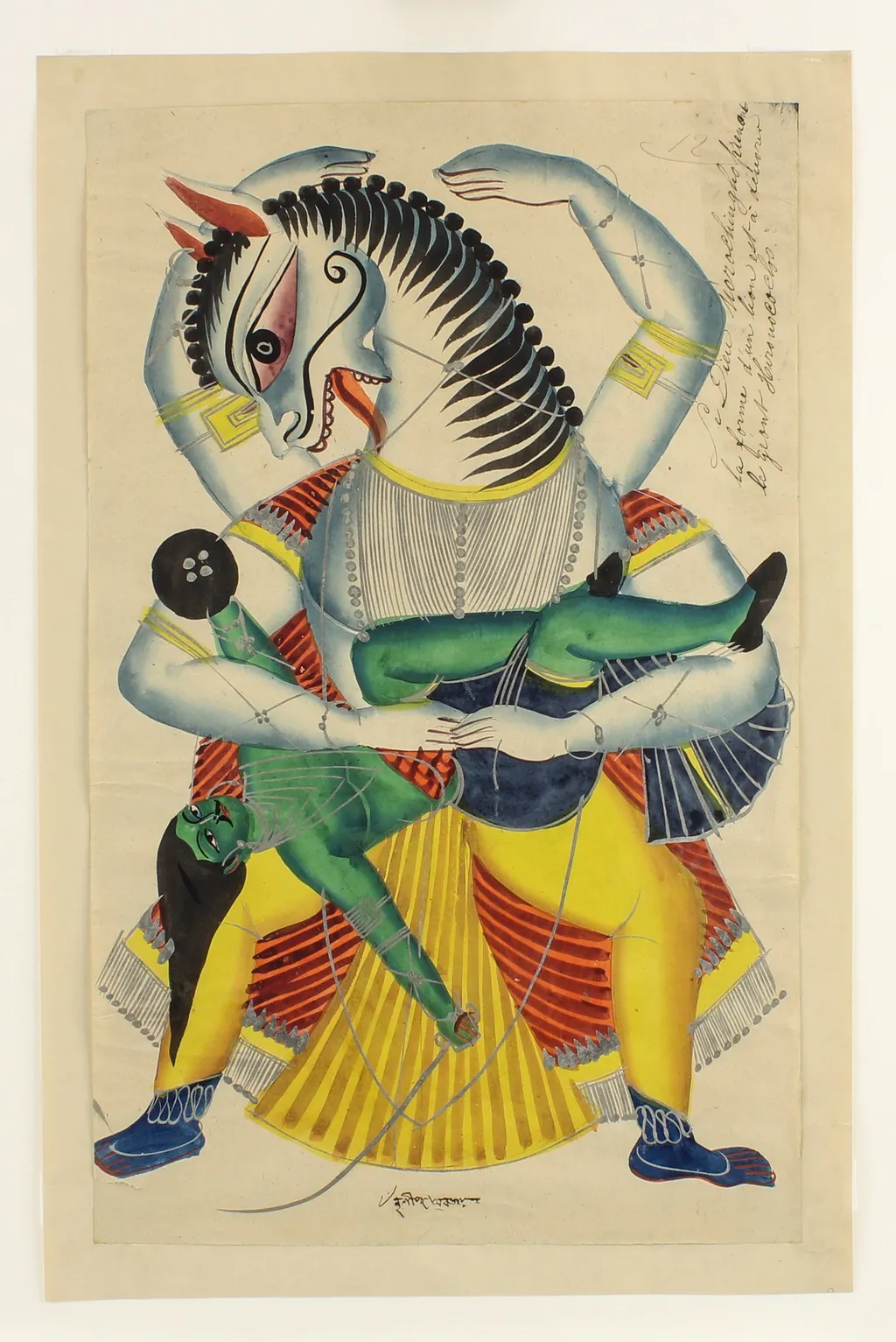
The avatar Narasimha is an unspecified painting. It dates from 1874 and is held in the collection of the Metropolitan Museum of Art. The work portrays a fantastical figure with a horse‑like head, a single red horn, and a long, curved tail.
About this work
This painting depicts a mythical scene with a large, white creature with a horse-like head and a red horn.
This painting depicts a mythical scene with a large, white creature with a horse-like head and a red horn. The creature has a long, curved tail and is wearing a yellow skirt with red stripes. It is holding a green figure in its arms, which appears to be a man. The background of the painting is a light beige color.
The creature's body is covered in black stripes, and it has a large, red eye. The green figure in its arms is wearing a red and yellow outfit and has a black beard. The painting is done in a bold, graphic style, with thick lines and bright colors.
The painting is an example of Kalighat art, a style of Indian folk art that emerged in the 19th century. To learn more about this style, check out the subject: kalighat.
Overview
The work portrays a fantastical figure with a horse‑like head, a single red horn, and a long, curved tail. Its body is striped in black, and a vivid red eye dominates the face. The creature cradles a green‑toned human figure dressed in red and yellow, whose beard is rendered in black. The backdrop is a muted beige, while the composition relies on bold outlines and saturated hues.
Subject & Meaning
The central being appears to be a mythic avatar, combining animal and human traits in a symbolic manner. The juxtaposition of the creature and the clasped figure suggests a narrative of protection or divine intervention, common in folk depictions of deities and legendary heroes.
Technique & Style
Executed in the Kalighat tradition, the painting employs thick, graphic lines and flat areas of bright colour. The use of stark contrasts—black stripes against a white body, red accents on the eye and horn—creates a striking visual impact typical of 19th‑century Indian folk panels.
History & Provenance
Kalighat art originated in the bustling environs of Kolkata’s Kalighat temple during the 1800s, where itinerant painters catered to pilgrims and locals. This piece reflects that period’s aesthetic, though its specific ownership trail remains undocumented.
Context
The genre emerged as a response to colonial influences and the rise of a market for affordable, narrative art. Artists blended traditional iconography with contemporary concerns, producing works that were both devotional and socially observant.
Artist & collection
