Artwork
Arthur Jones, Congregationalist minister, Bangor 1776-1860
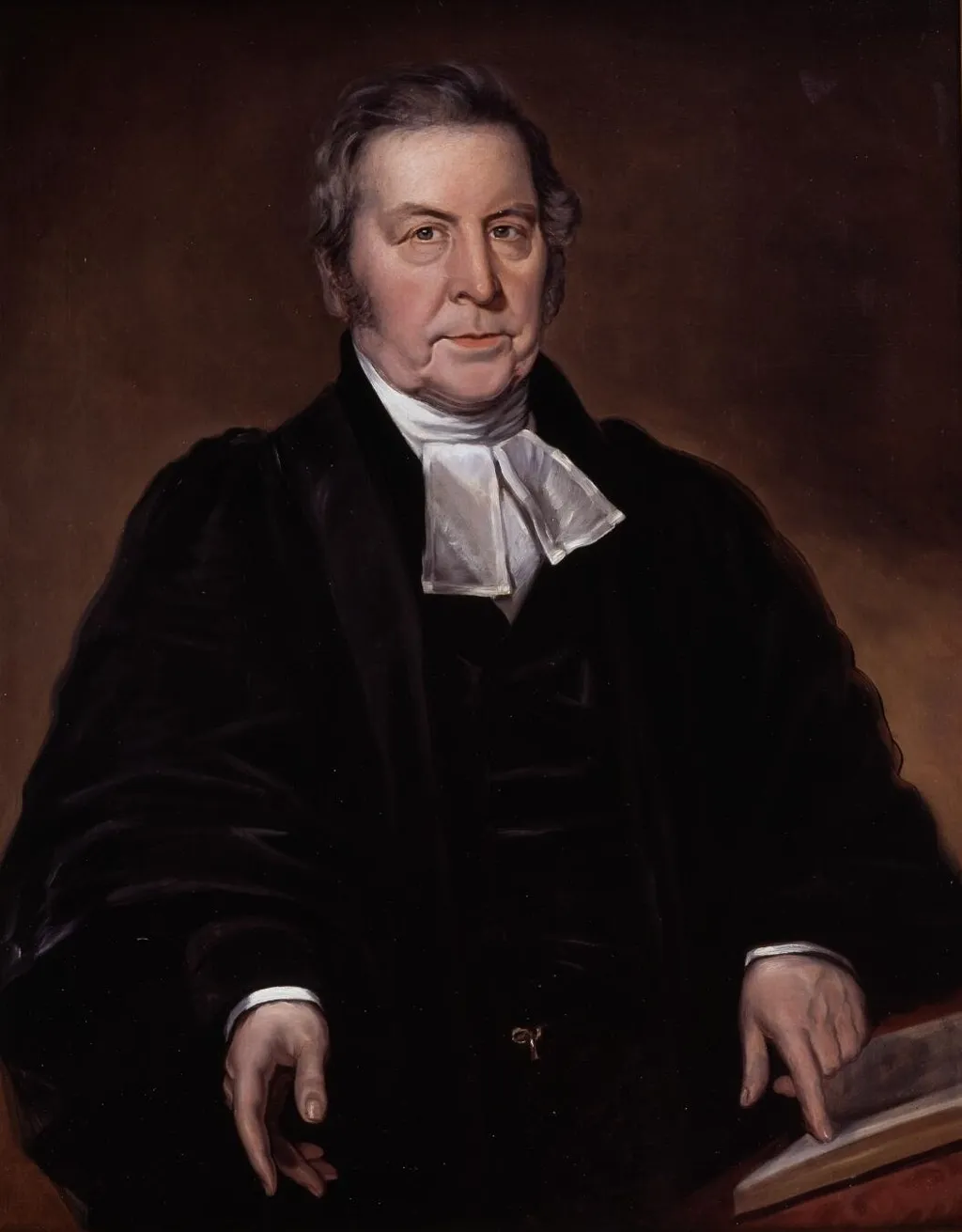
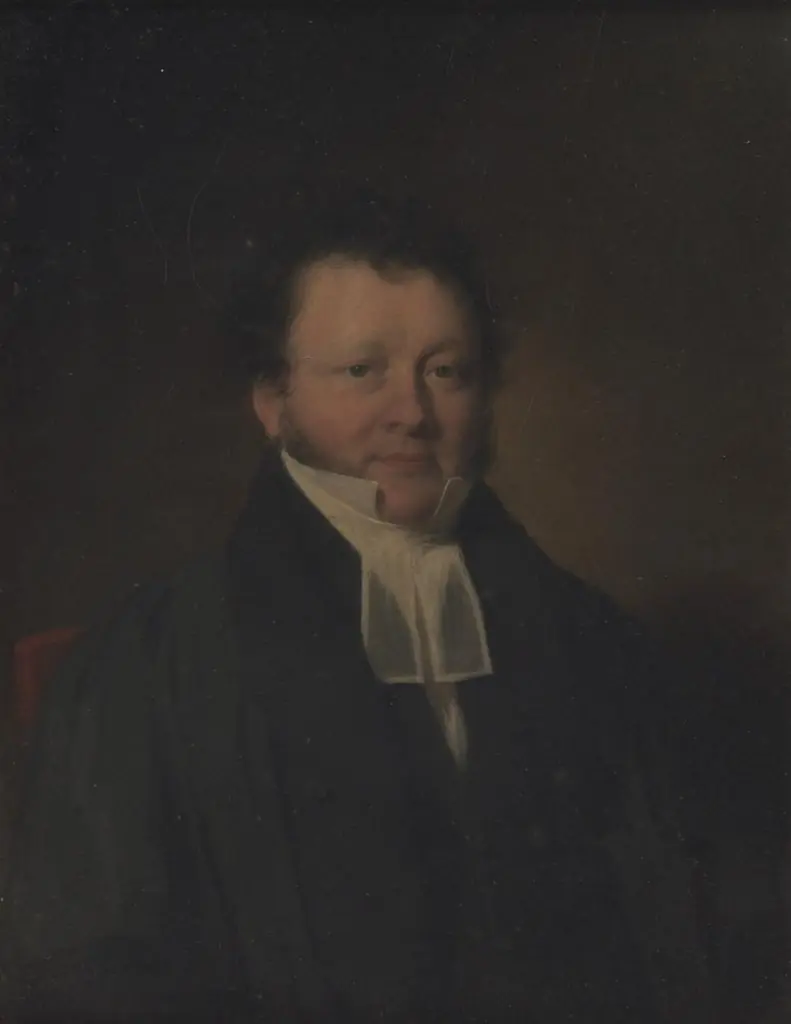
Arthur Jones, Congregationalist minister, Bangor 1776-1860 is an oil painting by Unknown. It dates from 1820 and is held in the collection of the National Library of Wales. This oil painting depicts Arthur Jones, a Congregationalist minister active in Bangor during the late 18th and early 19th centuries.
About this work
The artist has used chiaroscuro, a technique that uses strong contrasts between light and dark to create a sense of depth and volume.
This portrait painting shows a man dressed in a black robe with a white collar and cuffs. He has short, dark hair and is looking directly at the viewer. The background is a warm, dark brown color. The man's attire and the style of the painting suggest that it was created in the early 19th century. The artist has used chiaroscuro, a technique that uses strong contrasts between light and dark to create a sense of depth and volume.
Overview
This oil painting depicts Arthur Jones, a Congregationalist minister active in Bangor during the late 18th and early 19th centuries. Rendered in a traditional portrait format, the subject is shown in formal clerical attire against a dark, warm background. The composition emphasizes stillness and presence, characteristic of early 19th-century British ecclesiastical portraiture.
Subject & Meaning
Arthur Jones is portrayed with direct eye contact, conveying a sense of quiet authority and moral seriousness. His black robe, white collar, and cuffs signify his role as a minister, while the absence of symbolic objects focuses attention on his character rather than his duties. The gaze invites the viewer into a moment of personal reflection, typical of religious portraiture of the period.
Technique & Style
The artist employs chiaroscuro to model the figure with subtle gradations of light and shadow, enhancing the three-dimensionality of the face and hands. The brushwork is restrained, favoring smooth transitions over texture, aligning with academic conventions of the time. The dark, neutral background isolates the figure, reinforcing the portrait’s solemn tone.
History & Provenance
The painting was likely commissioned during Jones’s ministry in Bangor, between 1800 and 1840, when such portraits were common among local clergy. Its survival suggests it remained within family or congregational circles. No documented exhibition or sale history is known, indicating it was preserved privately rather than publicly displayed.
Context
In early 19th-century Wales, Congregationalist ministers held significant social influence, often serving as educators and community leaders. Portraits like this reinforced their moral standing and institutional role. The style reflects broader trends in British portraiture, where simplicity and dignity replaced ornate displays of status in non-aristocratic circles.
Legacy
The portrait remains a visual record of a regional religious figure whose public life is otherwise documented in limited archival sources. It contributes to the understanding of non-conformist clergy representation in Welsh visual culture, offering insight into how spiritual authority was visually constructed outside the Anglican establishment.
Artist & collection

 Domestic Scene
 Giacomo and Cardinal Marco, investing Andrea, Abbot of San Zeno, with his Benefice
 The Nymph of Fontainebleau
 Portrait of a Woman
 Madonna and Child with Saints in the Enclosed Garden
 Venus and Minerva
 Family Group of Four on Sofa
 Wall painting from Room H of the Villa of P. Fannius Synistor at Boscoreale