Artwork
Tantric Manuscript "Sangrahani Sutra"
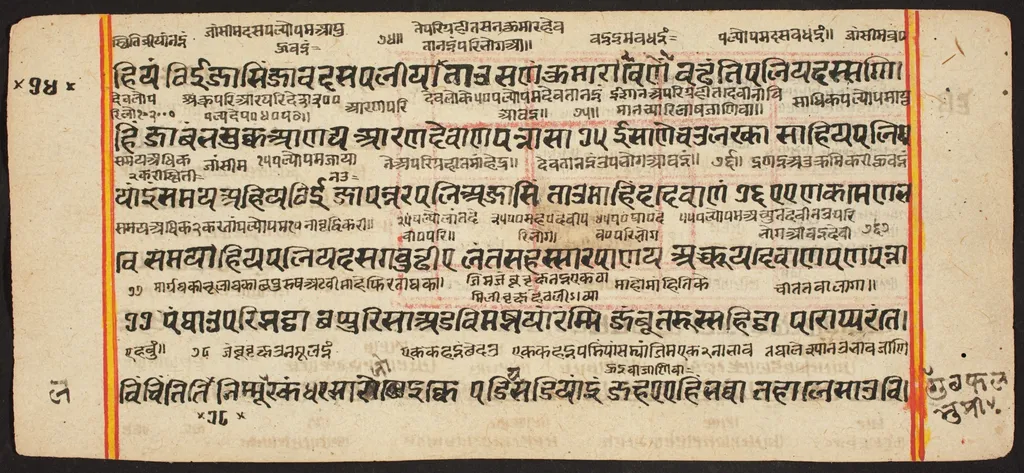
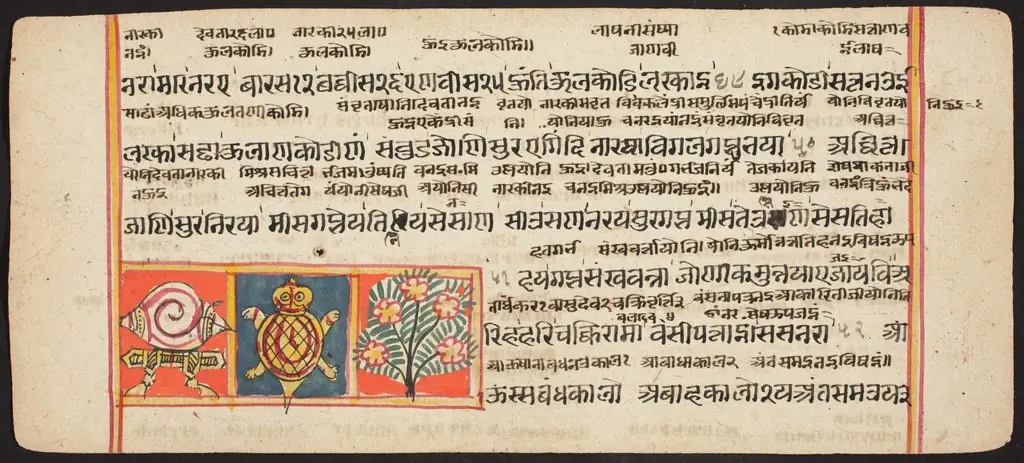
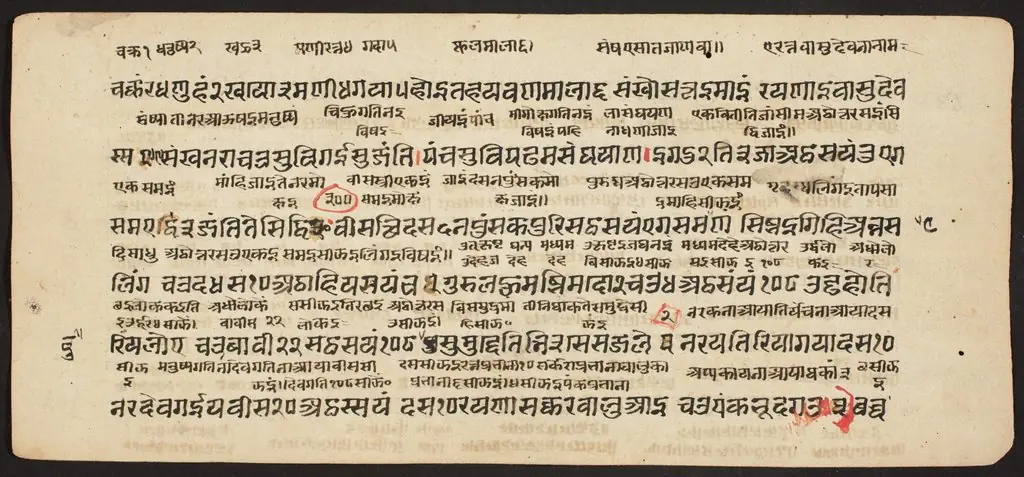
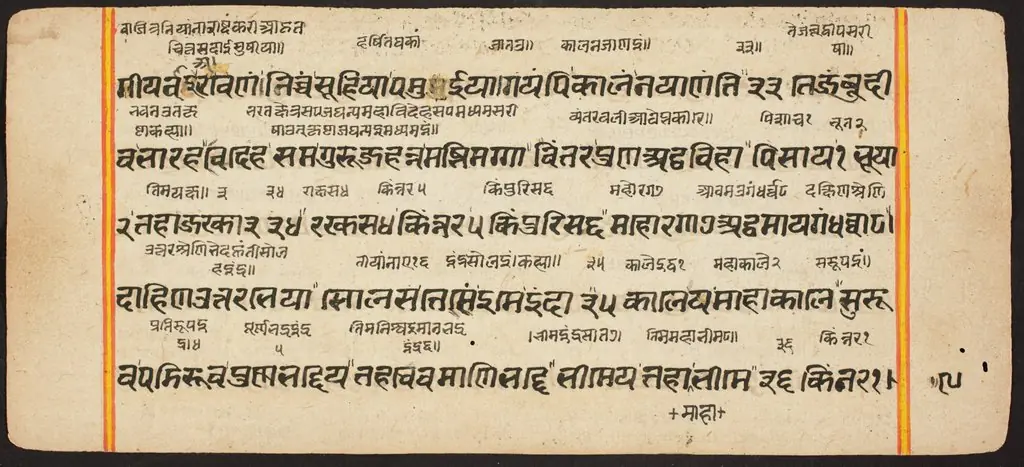
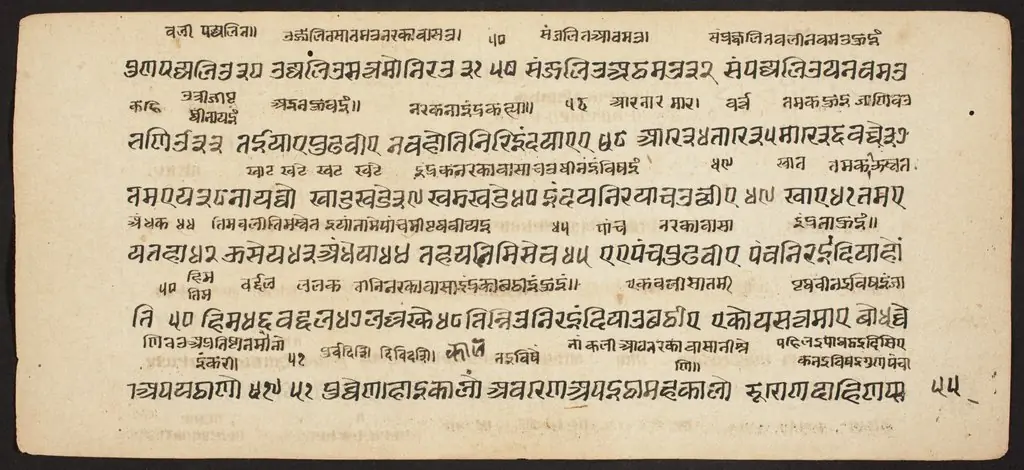
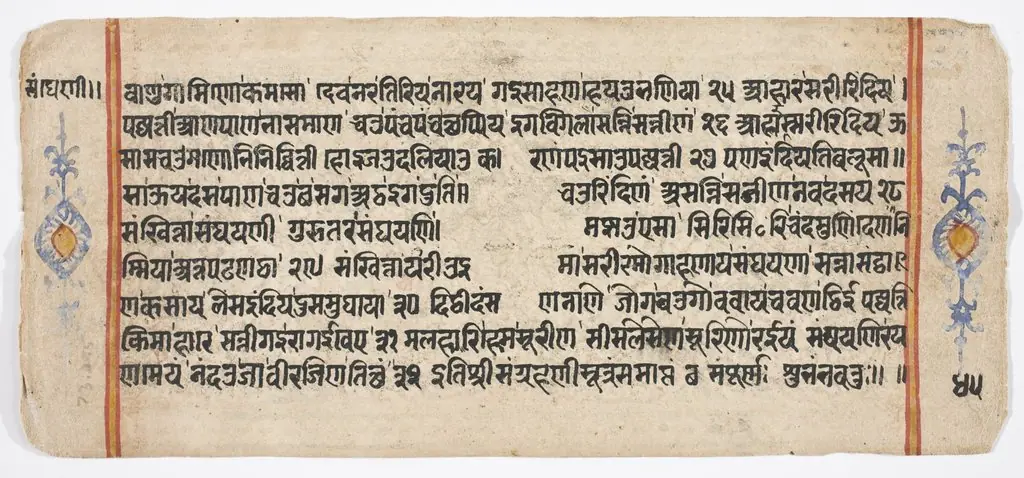
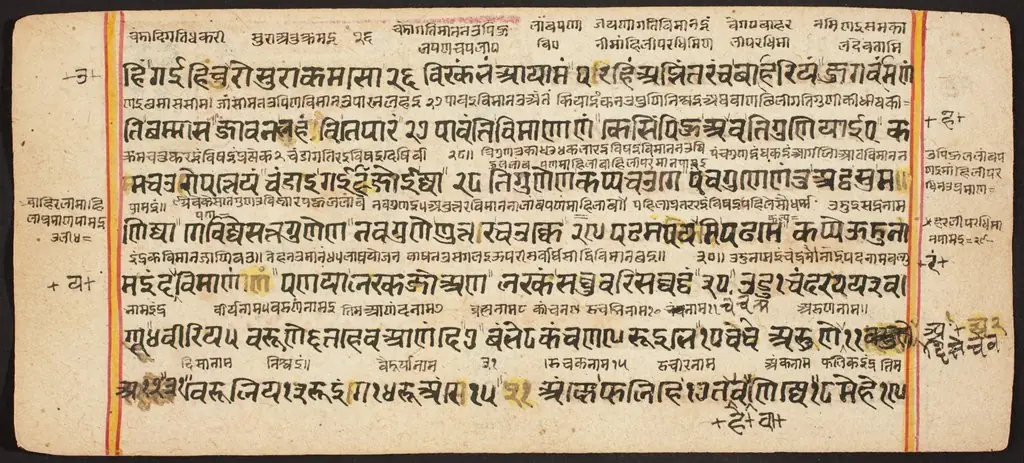
Tantric Manuscript "Sangrahani Sutra" is an unspecified painting by Unknown. It is held in the collection of the Detroit Institute of Arts. This folio originates from a medieval Tantric Buddhist manuscript, likely produced in the eastern Indian subcontinent.
About this work
Overview
The parchment shows signs of age—yellowing, frayed edges, and faint staining—consistent with centuries of handling and storage.
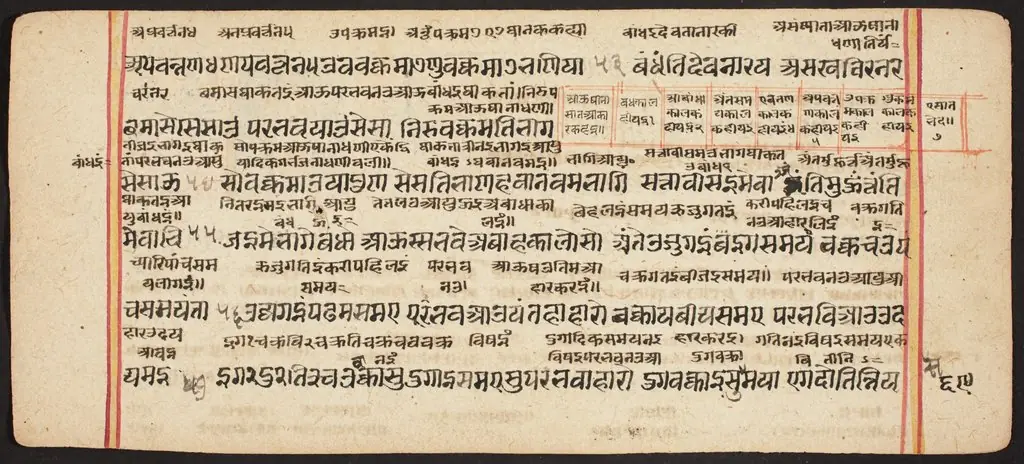
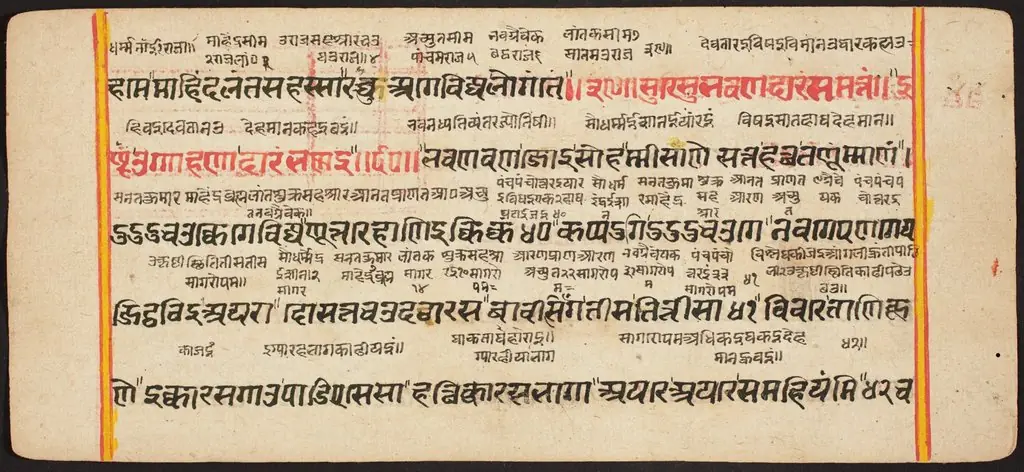
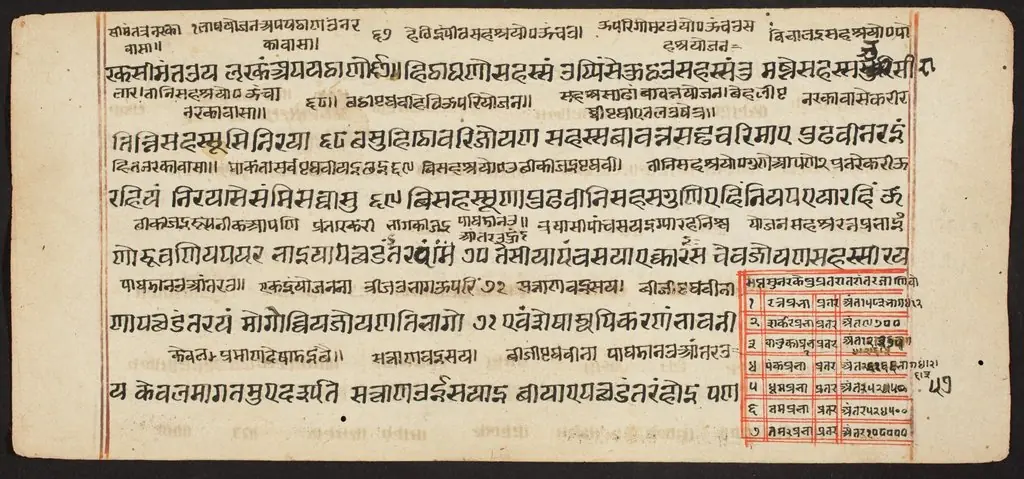
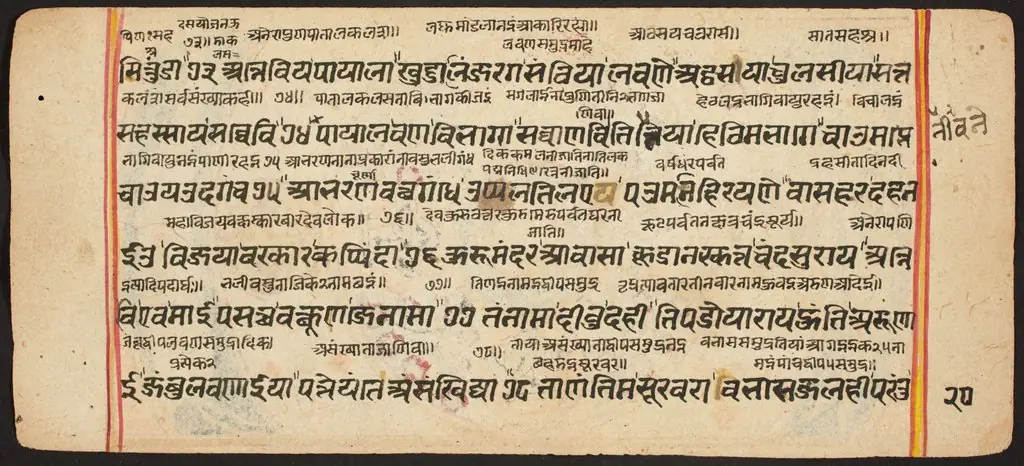
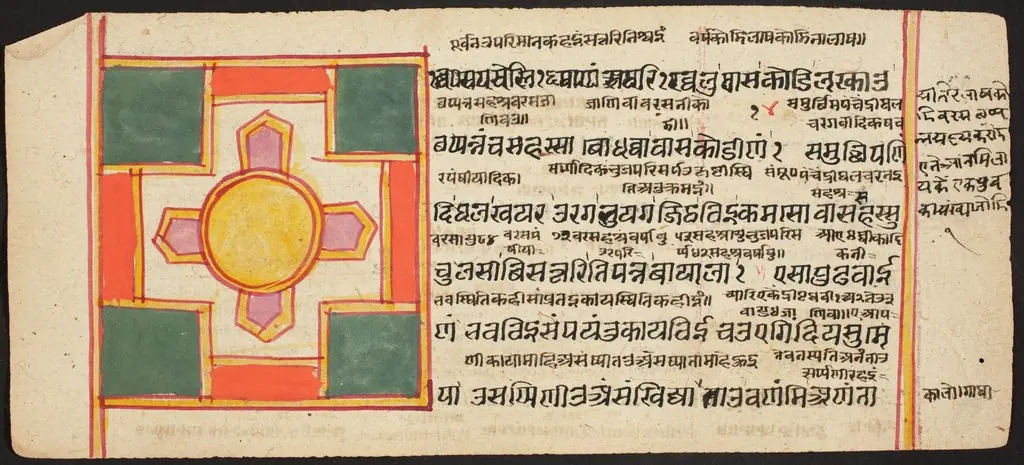
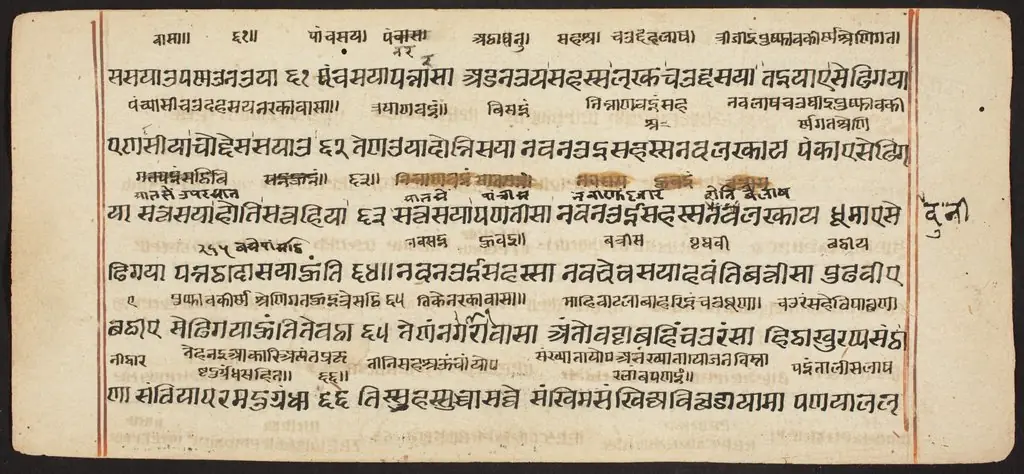
This folio originates from a medieval Tantric Buddhist manuscript, likely produced in the eastern Indian subcontinent. It contains the Sangrahani Sutra, a doctrinal text written in Sanskrit using a highly stylized cursive script. The parchment shows signs of age—yellowing, frayed edges, and faint staining—consistent with centuries of handling and storage. Red marginal lines frame the text, a common feature in liturgical manuscripts of the period.
Subject & Meaning
The Sangrahani Sutra is a compendium of ritual instructions and doctrinal summaries used in esoteric Buddhist practice. Its purpose was liturgical, intended for recitation and meditation rather than visual contemplation. The absence of imagery reflects the textual focus of Tantric transmission, where the precise form of the written word held sacred power, embodying the teachings as much as their oral recitation.
Technique & Style
The script is executed in ink with meticulous brushwork, featuring elongated strokes, looping terminals, and subtle flourishes that enhance legibility while emphasizing ritual precision. The dense, uniform layout leaves no space for decoration, reinforcing the text’s functional role. Red ink outlines the margins, possibly to guide the reader or mark boundaries between sections, a practice seen in other South Asian manuscript traditions.
History & Provenance
The folio is part of a larger manuscript collection held by the Detroit Institute of Arts, acquired through early 20th-century scholarly exchanges. Its origin is traced to the Pala or Sena dynasties of Bengal or Bihar, where Tantric Buddhist scholarship flourished between the 8th and 12th centuries. The physical condition suggests it was used in monastic settings before entering private or institutional collections.
Context
During the late first millennium CE, Tantric Buddhism in eastern India emphasized textual authority and ritual precision. Manuscripts like this were produced in monastic scriptoria, often by trained scribes under strict guidelines. The lack of illustration aligns with the tradition’s focus on the sacredness of the written syllable, distinguishing it from contemporaneous illustrated Jain or Hindu texts.
Legacy
Surviving folios of the Sangrahani Sutra are rare, offering insight into the material culture of Tantric Buddhist practice. This page contributes to scholarly understanding of how sacred texts were physically preserved and transmitted across centuries. Its preservation in a Western museum reflects broader 20th-century efforts to document and conserve South Asian religious heritage.
Artist & collection

 Domestic Scene
 Giacomo and Cardinal Marco, investing Andrea, Abbot of San Zeno, with his Benefice
 The Nymph of Fontainebleau
 Portrait of a Woman
 Madonna and Child with Saints in the Enclosed Garden
 Venus and Minerva
 Family Group of Four on Sofa
 Wall painting from Room H of the Villa of P. Fannius Synistor at Boscoreale
 Tantric Manuscript "Sangrahani Sutra"
 Tantric Manuscript "Sangrahani Sutra"
 Tantric Manuscript "Sangrahani Sutra"
 Tantric Manuscript "Sangrahani Sutra"
 Tantric Manuscript "Sangrahani Sutra"
 Tantric Manuscript "Sangrahani Sutra"
 Tantric Manuscript "Sangrahani Sutra"
 Tantric Manuscript "Sangrahani Sutra"
 Tantric Manuscript "Sangrahani Sutra"
 Tantric Manuscript "Sangrahani Sutra"
 Tantric Manuscript "Sangrahani Sutra"
 Tantric Manuscript "Sangrahani Sutra"