Artwork
Tantric Manuscript "Sangrahani Sutra"
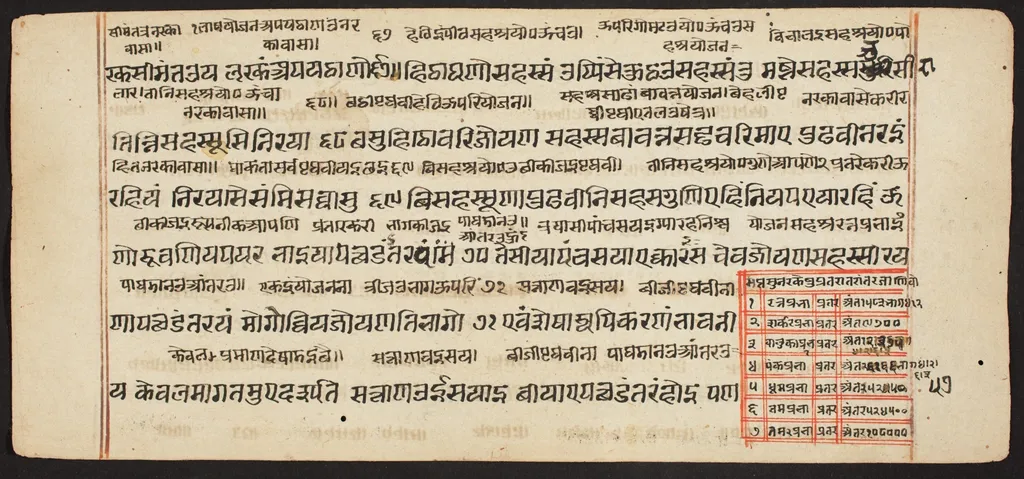
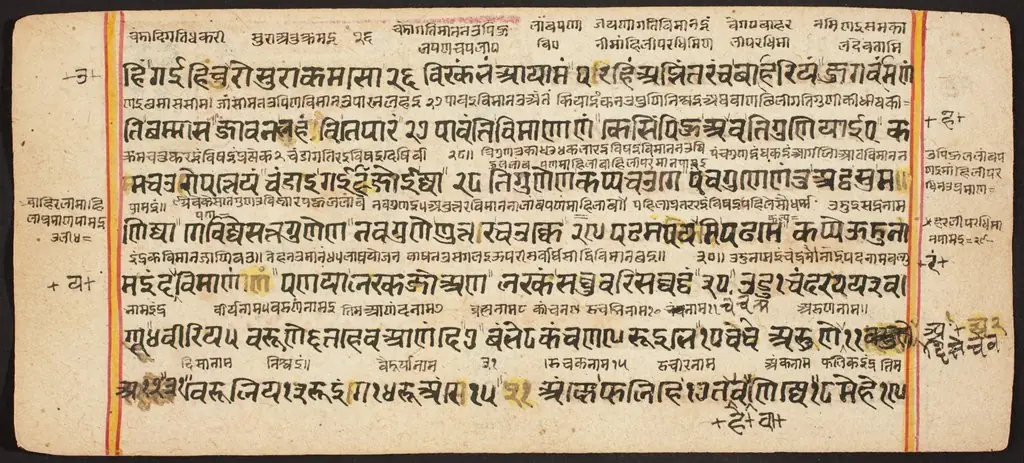
Tantric Manuscript "Sangrahani Sutra" is an unspecified painting by Unknown. It is held in the collection of the Detroit Institute of Arts. This page comes from a handwritten Tantric Buddhist manuscript known as the Sangrahani Sutra, produced in medieval India or Nepal.
About this work
Overview
The wear on the surface reflects centuries of handling in devotional contexts, underscoring its use as a living sacred object rather than a static artifact.
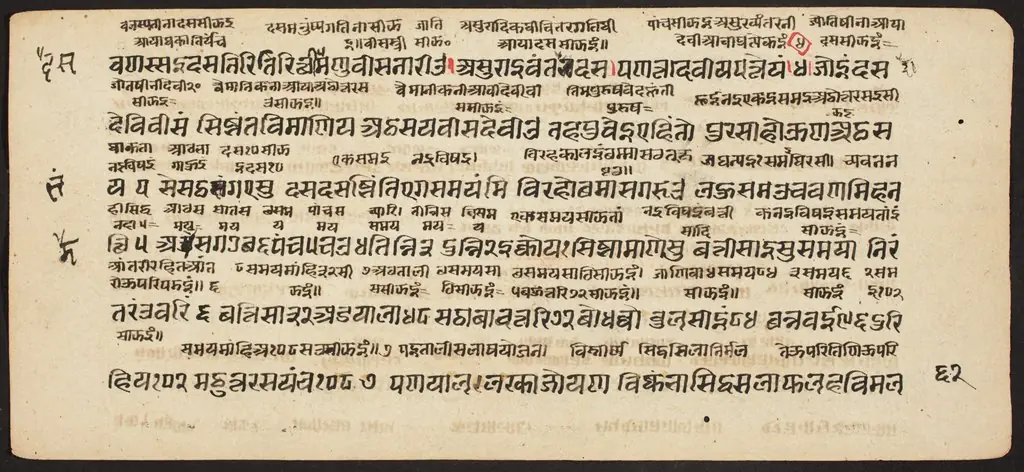
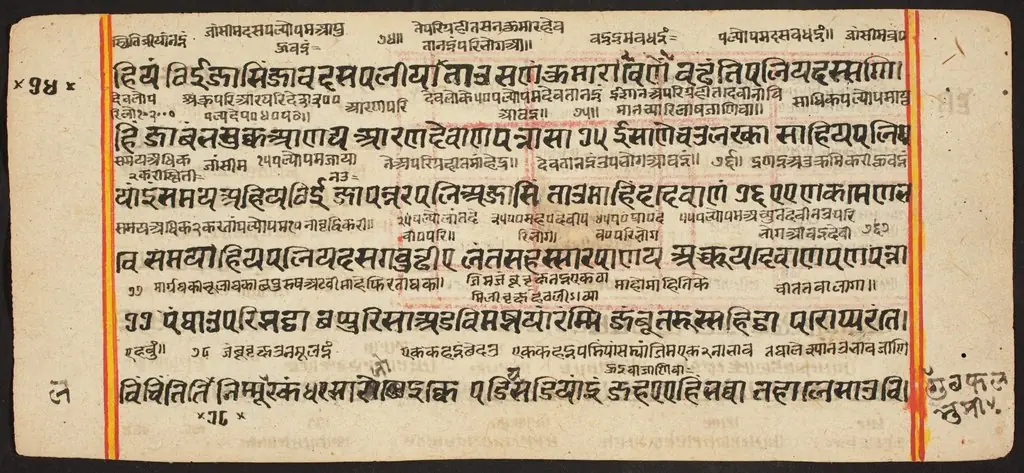
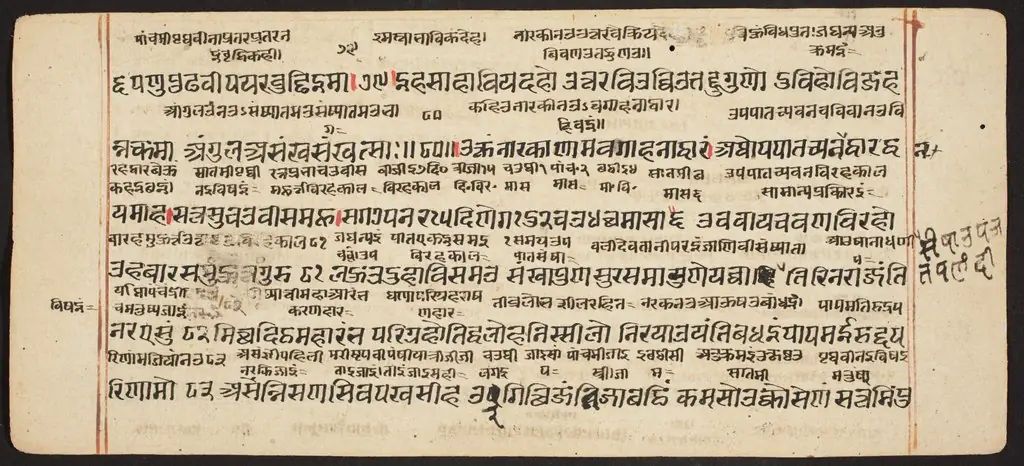
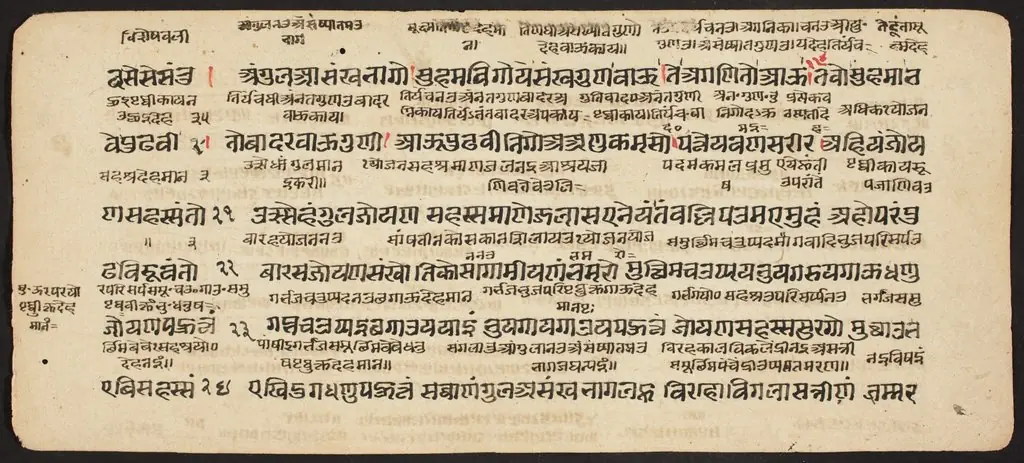
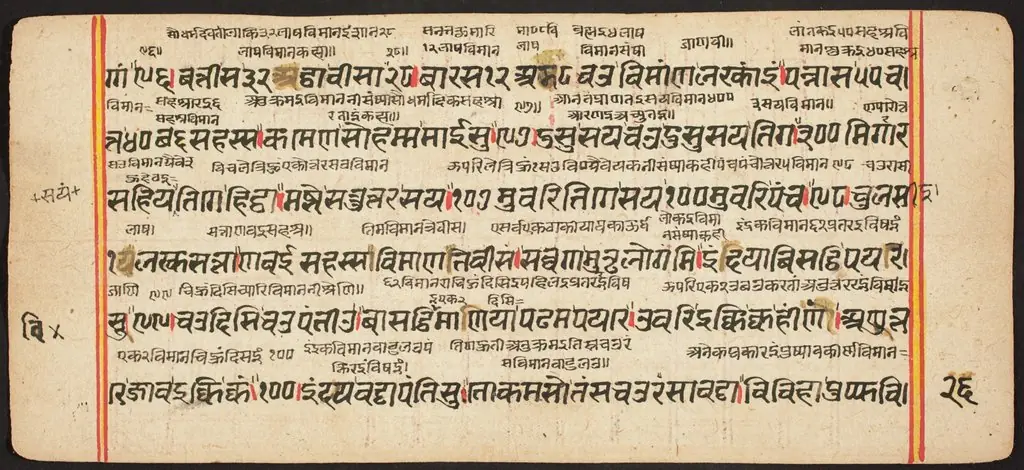
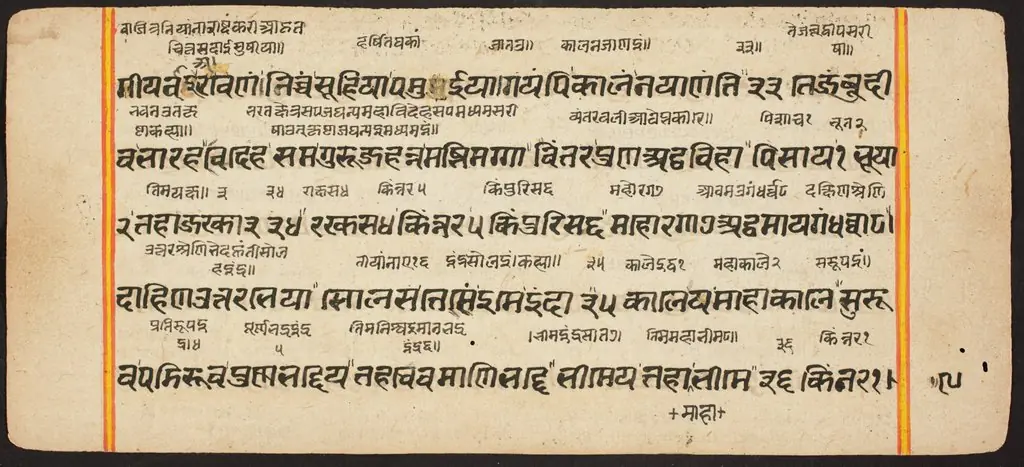
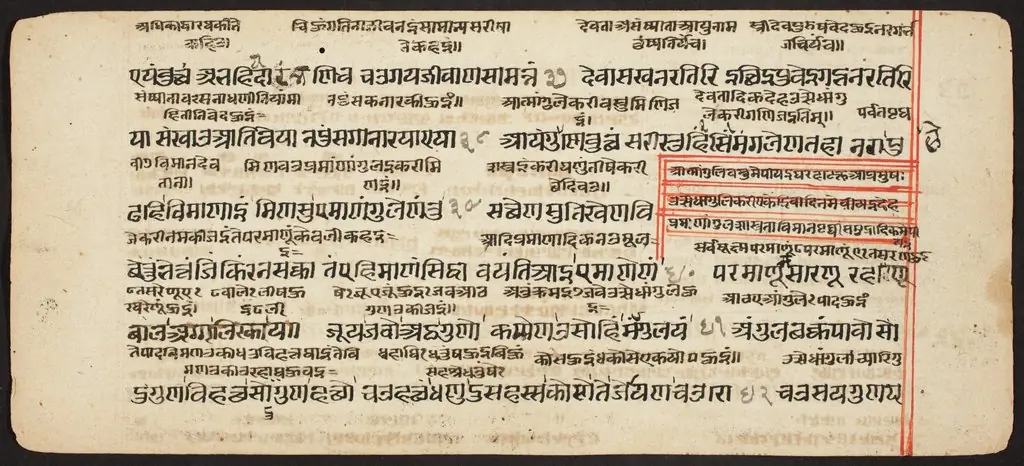
This page comes from a handwritten Tantric Buddhist manuscript known as the Sangrahani Sutra, produced in medieval India or Nepal. The text, composed in an early Indic script, is inscribed on palm leaf or paper that has yellowed with age. Red ink marks significant phrases, a common practice to guide ritual recitation. The wear on the surface reflects centuries of handling in devotional contexts, underscoring its use as a living sacred object rather than a static artifact.
Subject & Meaning
The Sangrahani Sutra is a doctrinal text within Vajrayana Buddhism, summarizing key teachings on meditation, mantra, and ritual structure. The red-highlighted passages likely denote mantras or essential doctrinal points meant for oral recitation. Its purpose was liturgical: to aid practitioners in internalizing complex spiritual principles through repeated reading and chanting, embedding the text into both memory and ritual practice.
Technique & Style
The script is written in a precise, angular calligraphy typical of South Asian religious manuscripts, with careful spacing and uniform letterforms. Red ink, derived from cinnabar or vermilion, was applied by hand to emphasize sacred syllables. The layout follows a strict vertical column format, common in palm-leaf manuscripts, with minimal decoration—focus remained on textual clarity rather than ornamental flourishes.
History & Provenance
Manuscripts like this were copied by monastic scribes over generations, often in Nepal or eastern India, centers of Tantric Buddhist learning. This particular page likely circulated within a monastery or private devotional collection before entering a modern institution. Its condition suggests prolonged use, possibly over several centuries, before being preserved as a historical object.
Context
In the medieval Tantric Buddhist tradition, sacred texts were treated as embodiments of spiritual power. The physical act of handling, reading, and reciting from such manuscripts was considered a devotional practice in itself. Unlike Western illuminated texts, these works avoided figural imagery, emphasizing the sanctity of the written word as a vehicle for enlightenment.
Legacy
Surviving manuscripts of the Sangrahani Sutra are rare and valued for their linguistic and liturgical content. They provide insight into the transmission of esoteric Buddhist teachings across South and Southeast Asia. Today, scholars study them for paleographic detail and ritual context, while institutions preserve them as tangible links to pre-modern spiritual practices.
Artist & collection

 Domestic Scene
 Giacomo and Cardinal Marco, investing Andrea, Abbot of San Zeno, with his Benefice
 The Nymph of Fontainebleau
 Portrait of a Woman
 Madonna and Child with Saints in the Enclosed Garden
 Venus and Minerva
 Family Group of Four on Sofa
 Wall painting from Room H of the Villa of P. Fannius Synistor at Boscoreale
 Tantric Manuscript "Sangrahani Sutra"
 Tantric Manuscript "Sangrahani Sutra"
 Tantric Manuscript "Sangrahani Sutra"
 Tantric Manuscript "Sangrahani Sutra"
 Tantric Manuscript "Sangrahani Sutra"
 Tantric Manuscript "Sangrahani Sutra"
 Tantric Manuscript "Sangrahani Sutra"
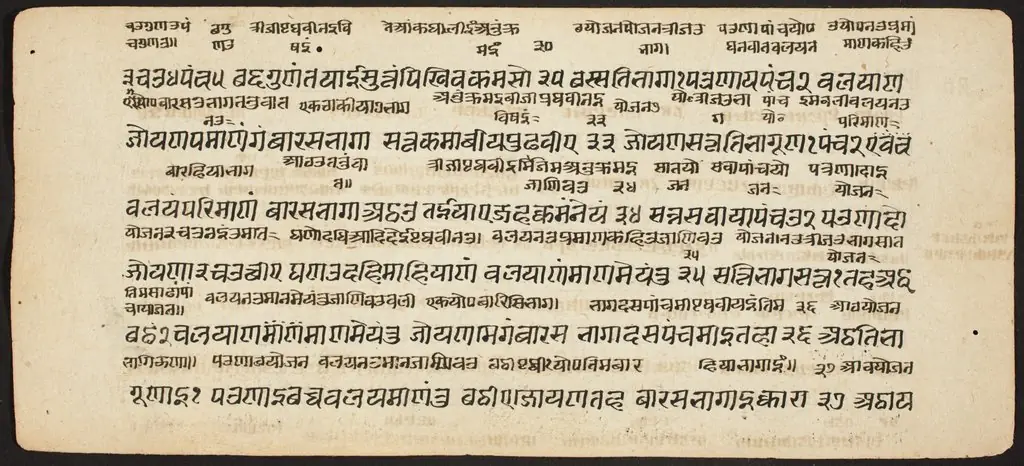 Tantric Manuscript "Sangrahani Sutra"
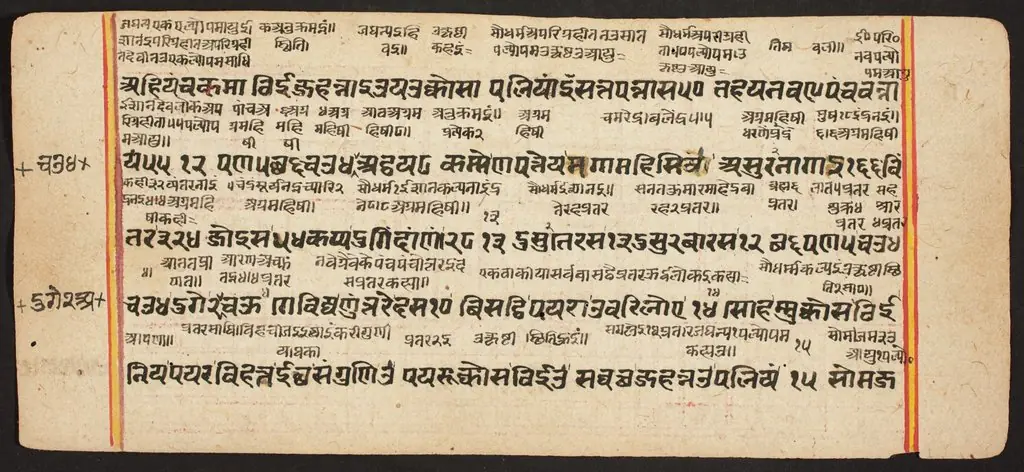 Tantric Manuscript "Sangrahani Sutra"
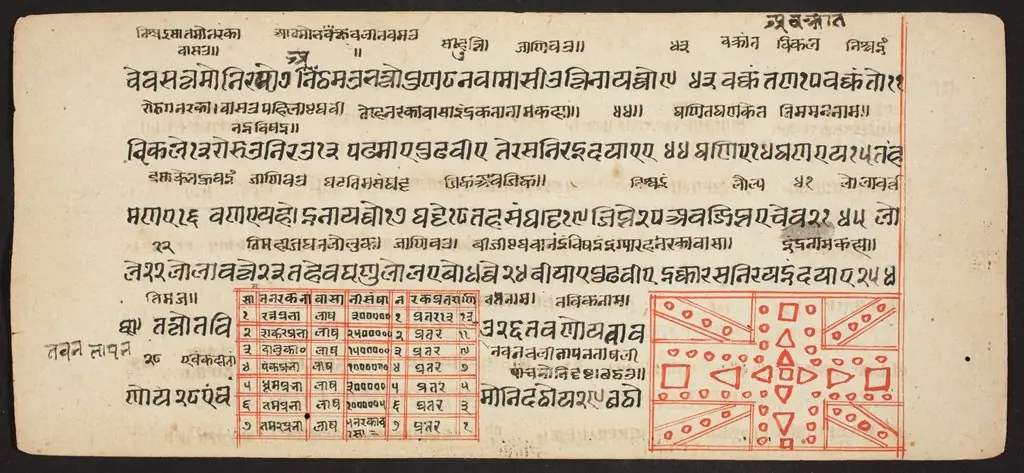 Tantric Manuscript "Sangrahani Sutra"
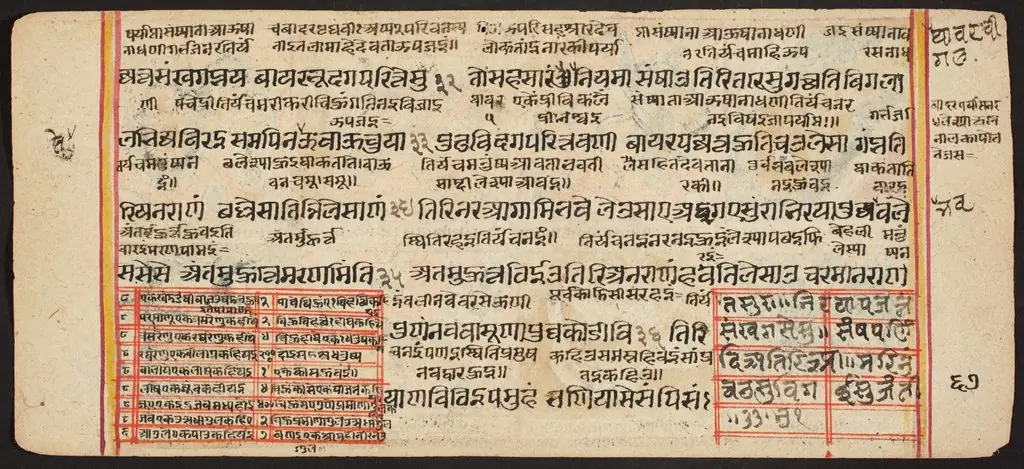 Tantric Manuscript "Sangrahani Sutra"
 Tantric Manuscript "Sangrahani Sutra"