Artwork
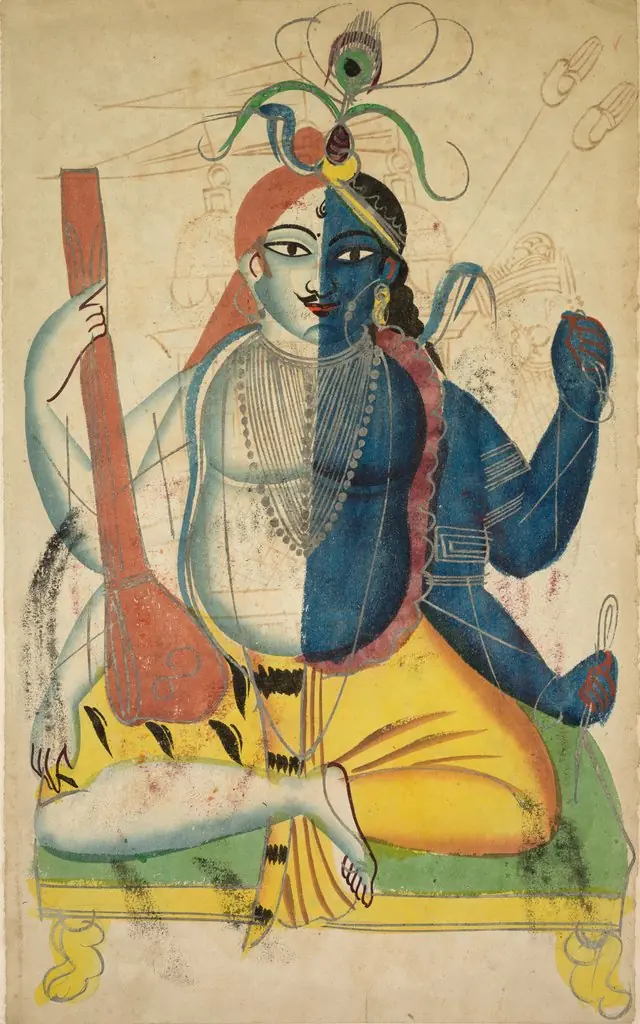
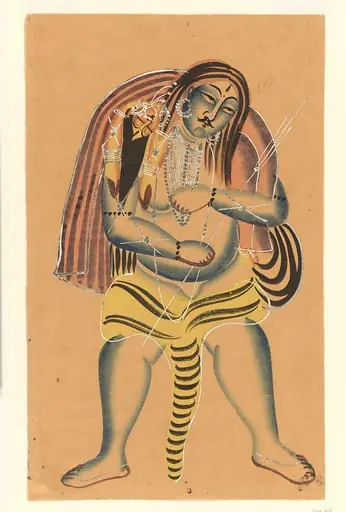
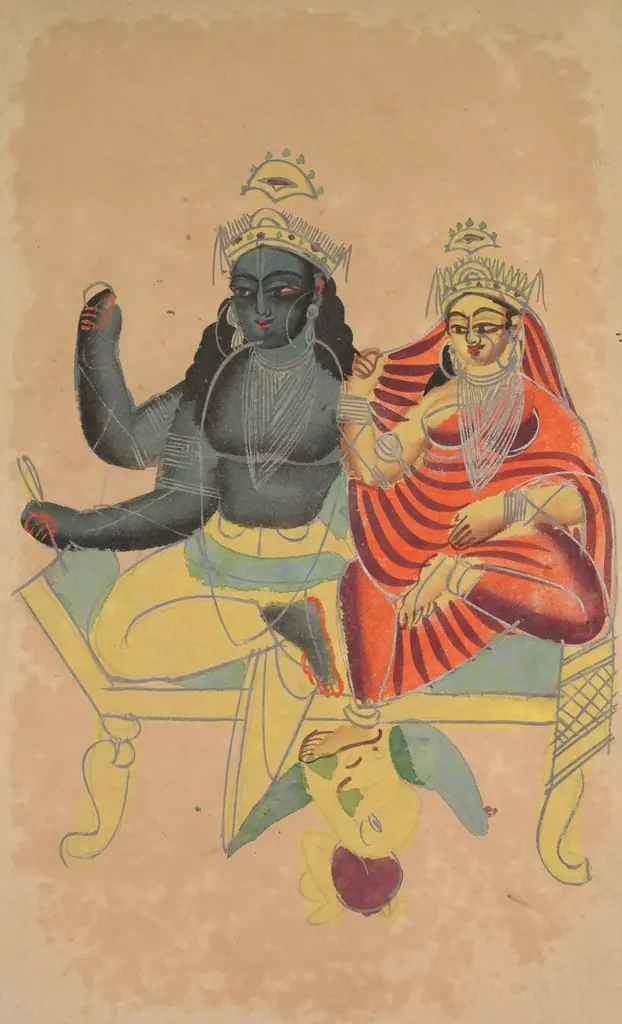
Leaf from a Kalighat album: Hari-Hara (recto); Vasudeva (Krishna's Father) Fleeing with Krishna Encounters a Cobra and a Jackal (verso)
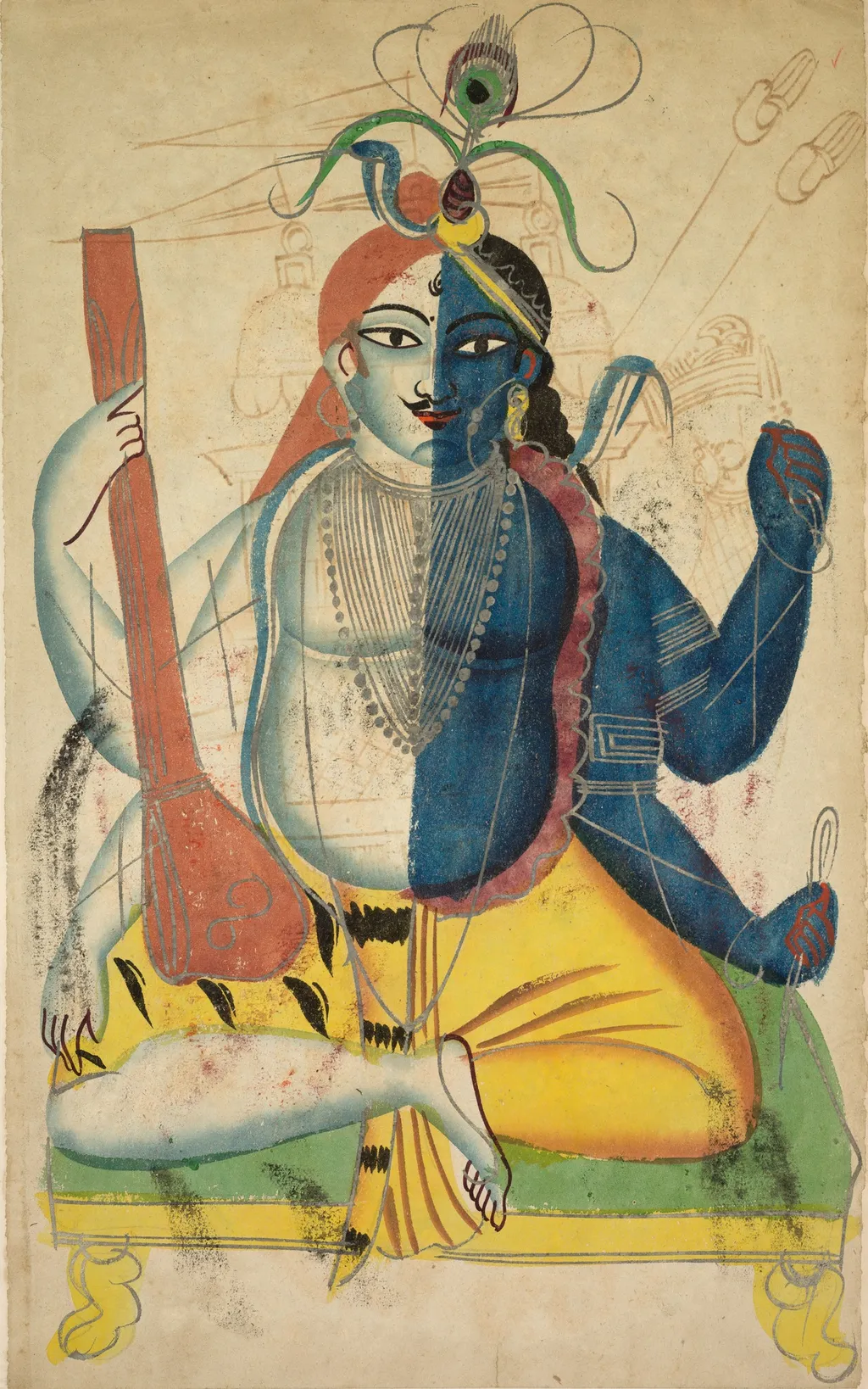
Leaf from a Kalighat album: Hari-Hara (recto); Vasudeva (Krishna's Father) Fleeing with Krishna Encounters a Cobra and a Jackal (verso) is an unspecified painting. It dates from 1896 and is held in the collection of the Cleveland Museum of Art. The work is a two-sided Kalighat watercolor, with a portrait of a blue‑skinned deity on the front and a narrative scene on the back.
About this work
Overview
The work is a two-sided Kalighat watercolor, with a portrait of a blue‑skinned deity on the front and a narrative scene on the back.
The work is a two-sided Kalighat watercolor, with a portrait of a blue‑skinned deity on the front and a narrative scene on the back. The front shows a figure seated on a yellow cushion, holding a red lute and wearing a peacock‑feather headdress, while a snake coils around the arm and a jackal peers from the lower corner. The reverse depicts Vasudeva fleeing with the infant Krishna, encountering a cobra and a jackal.
Subject & Meaning
The blue figure is identified as Hari‑Hara, a composite representation of Shiva (Hari) and Vishnu (Hara), common in 19th‑century devotional art. The lute (bansuri) and peacock feather are attributes of Krishna, linking the portrait to the narrative on the verso, where Vasudeva, Krishna’s father, escapes with the child and confronts a snake and a jackal, motifs drawn from the myth of Krishna’s birth and protection.
Technique & Style
Executed in the Kalighat school’s characteristic water‑color on paper, the painting employs bold black outlines, flat areas of vivid color, and a plain background. The figure’s facial features—sharp contours, bright red lips—reflect the stylized realism of popular prints, while the striped vest and round buttons suggest contemporary clothing influences.
History & Provenance
Kalighat paintings emerged in the early 1800s around the Kali temple in Calcutta, serving both devotional and commercial purposes. This particular album leaf likely originated in the mid‑19th century, when such double‑sided sheets were compiled for collectors and pilgrims. Specific ownership records are absent, but the work exemplifies the genre’s spread to urban markets.
Context
The image reflects a period of cultural exchange in Bengal, where traditional Hindu iconography merged with European print techniques introduced by colonial presence. The inclusion of everyday attire and the juxtaposition of mythological and narrative elements illustrate the Kalighat artists’ adaptation to popular tastes and the growing demand for accessible religious imagery.
Legacy
Kalighat paintings have been re‑evaluated as significant folk art, influencing modern Indian painters and scholars of visual culture. Works like this leaf demonstrate the fluidity of religious symbolism and the role of popular media in shaping devotional practice during the nineteenth century.
Artist & collection