Artwork
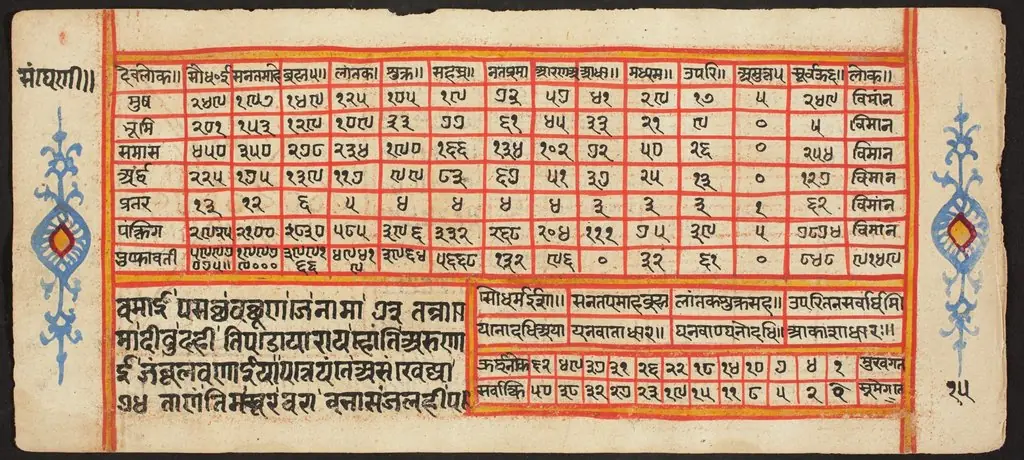
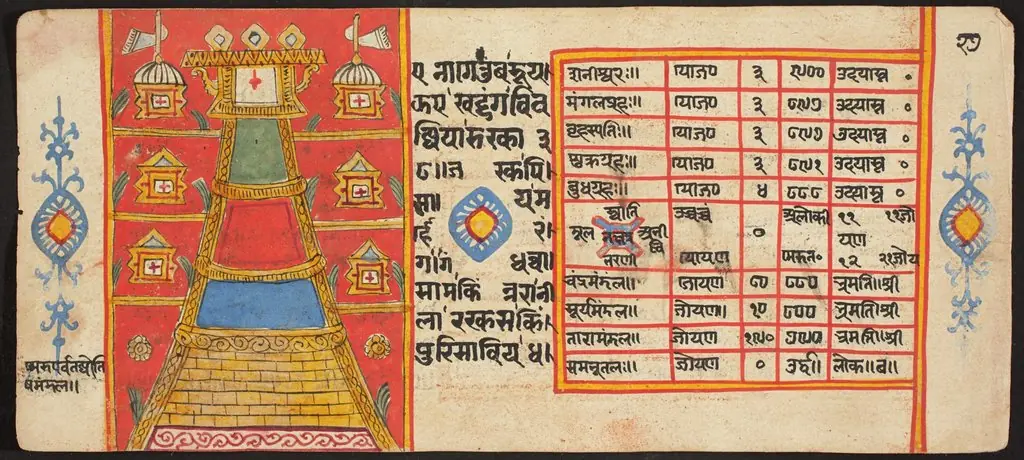
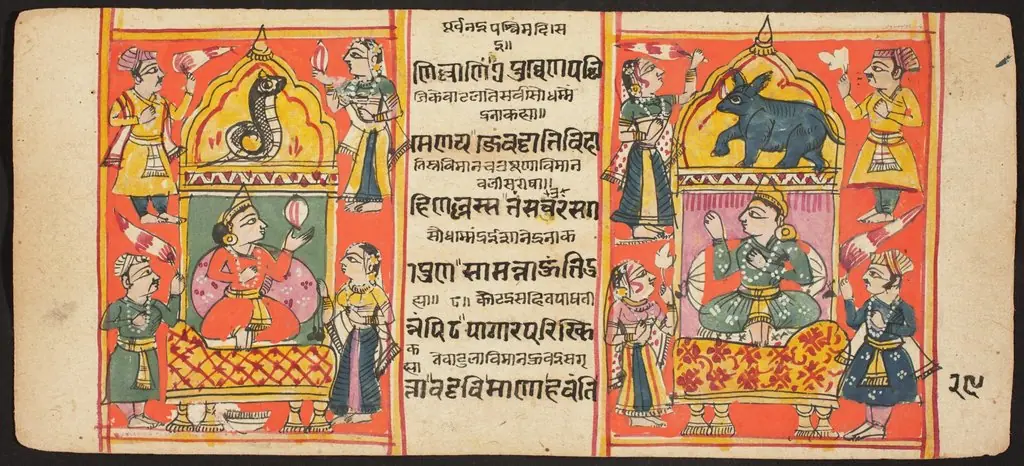
Tantric Manuscript "Sangrahani Sutra"
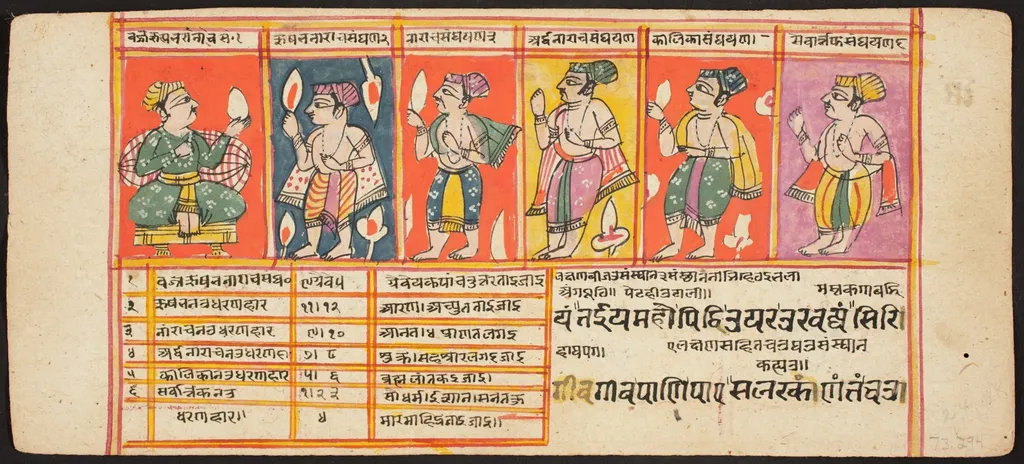
Tantric Manuscript "Sangrahani Sutra" is an unspecified painting by Unknown. It is held in the collection of the Detroit Institute of Arts.
About this work
Overview
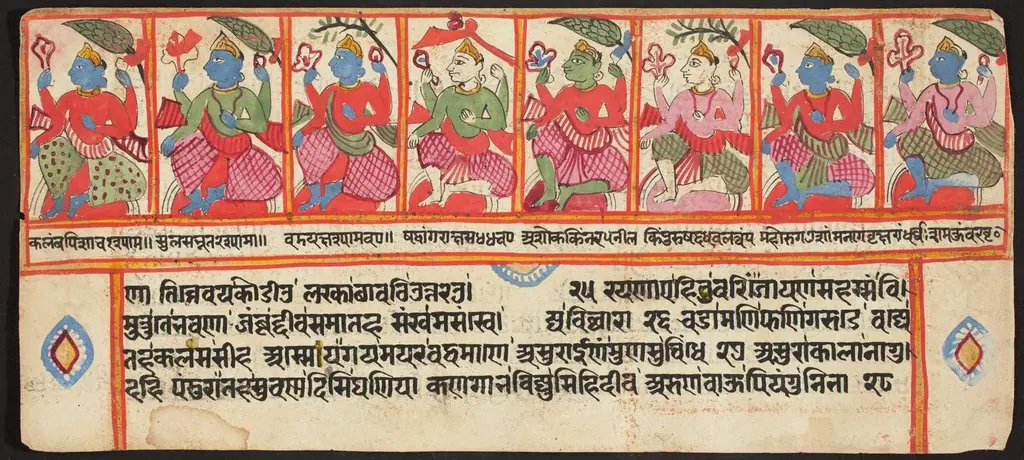
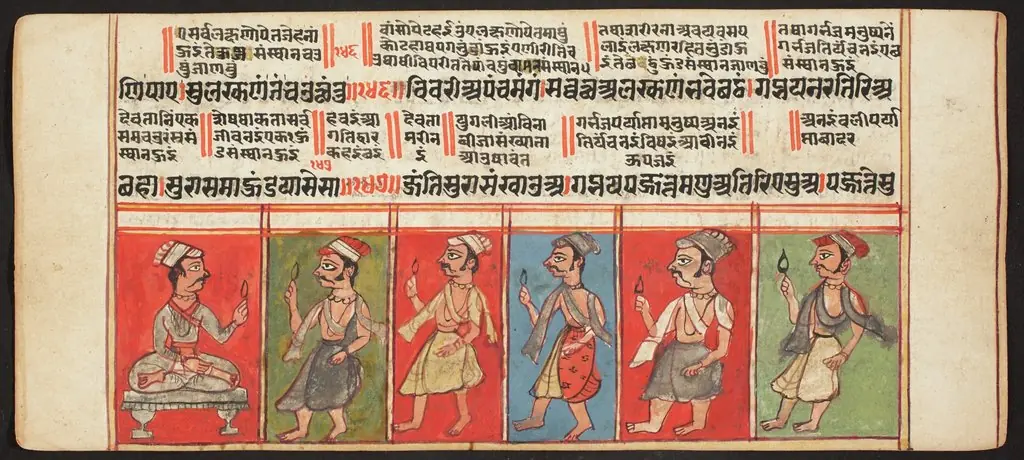
This painted manuscript page contains six figures arranged in a horizontal sequence, each rendered with individualized posture and adornment.
This painted manuscript page contains six figures arranged in a horizontal sequence, each rendered with individualized posture and adornment. The composition is divided by color: the first three figures appear against an orange field, the next three on pink. Each figure is enclosed within a narrow yellow frame, creating a rhythmic structure. Below them, an undeciphered script runs along the lower edge, suggesting ritual or liturgical function. The work originates from a tantric Buddhist textual tradition.
Subject & Meaning
The six figures likely represent tantric deities, lineage holders, or meditative adepts engaged in ritual practice. Their varied stances—seated, standing, walking—may symbolize stages of spiritual attainment or phases of a ceremonial sequence. The distinct clothing and hairstyles differentiate their roles or emanations within the tantric cosmology. The accompanying script, though unreadable here, would have been a sacred text guiding visualization or invocation during practice.
Technique & Style
The painting employs mineral pigments on paper, with precise brushwork defining intricate patterns on garments and jewelry. The use of flat, saturated color fields—orange, pink, and yellow—creates a symbolic rather than naturalistic space. Figures are rendered in profile or frontal view with minimal shading, emphasizing symbolic clarity over realism. The uniform yellow borders unify the composition while isolating each figure as a distinct spiritual presence.
History & Provenance
This page likely belonged to a larger codex produced in the Himalayan region, possibly Tibet or Nepal, between the 14th and 16th centuries. Such manuscripts were used in monastic rituals and passed down through lineages of tantric practitioners. Its survival suggests it was carefully preserved, possibly in a temple or private collection. The unknown script indicates it was copied from an earlier source, maintaining textual and visual continuity across generations.
Context
Tantric Buddhist manuscripts like this served as visual aids for meditation and ritual, aligning imagery with textual recitation. The division of color fields may correspond to directional symbolism or energetic states in tantric practice. The inclusion of script, even if illegible to modern viewers, underscores the object’s function as a sacred tool rather than purely decorative art. Similar manuscripts were often stored in ritual boxes and consulted only by initiated practitioners.
Legacy
Though no longer in active liturgical use, this manuscript page remains a key example of Himalayan tantric visual culture. It informs contemporary scholarship on the interplay of image and text in esoteric Buddhism. Its preservation in institutional collections allows for study of stylistic evolution and transmission of iconographic traditions across centuries, offering insight into the material life of spiritual practice.
Artist & collection

 Domestic Scene
 Giacomo and Cardinal Marco, investing Andrea, Abbot of San Zeno, with his Benefice
 The Nymph of Fontainebleau
 Portrait of a Woman
 Madonna and Child with Saints in the Enclosed Garden
 Venus and Minerva
 Family Group of Four on Sofa
 Wall painting from Room H of the Villa of P. Fannius Synistor at Boscoreale
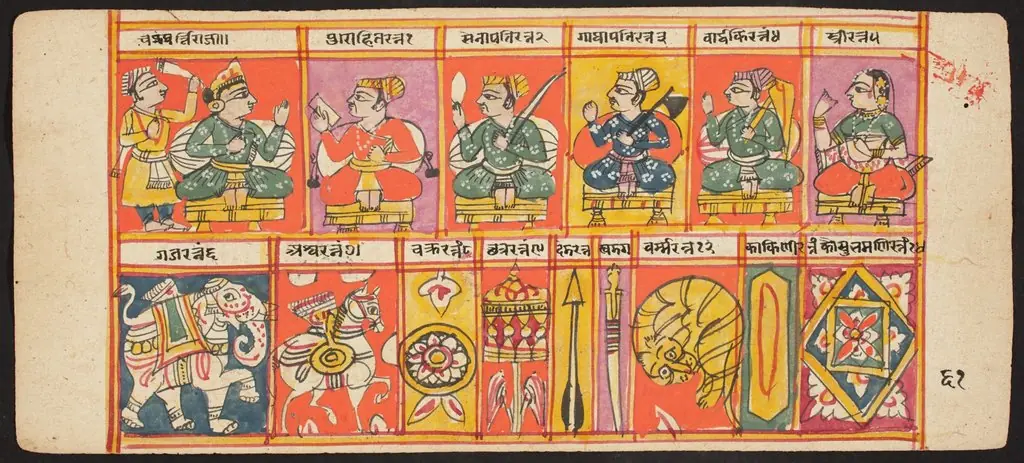 Tantric Manuscript "Sangrahani Sutra"
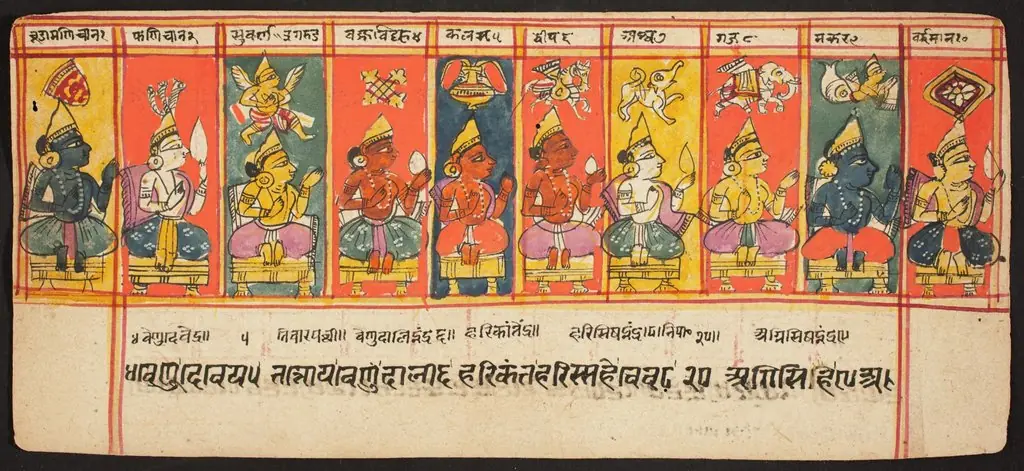 Tantric Manuscript "Sangrahani Sutra"
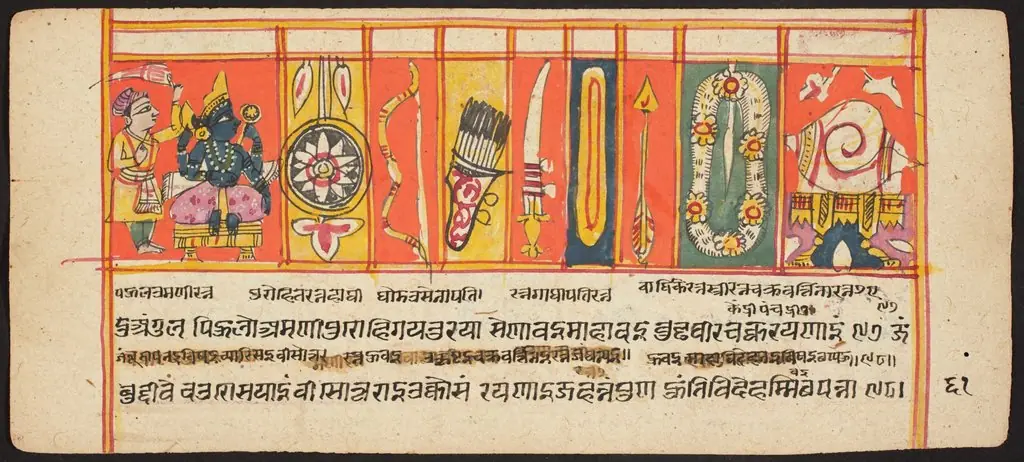 Tantric Manuscript "Sangrahani Sutra"
 Tantric Manuscript "Sangrahani Sutra"
 Tantric Manuscript "Sangrahani Sutra"
 Tantric Manuscript "Sangrahani Sutra"
 Tantric Manuscript "Sangrahani Sutra"
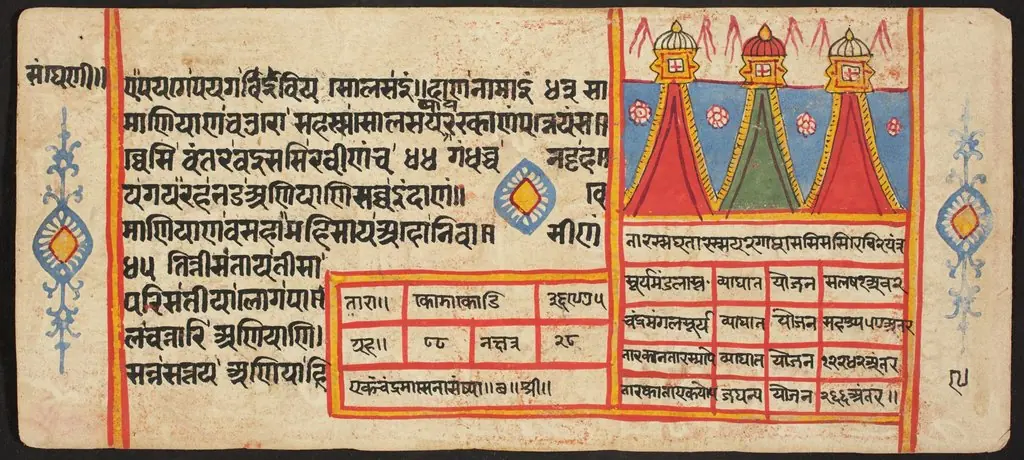 Tantric Manuscript "Sangrahani Sutra"
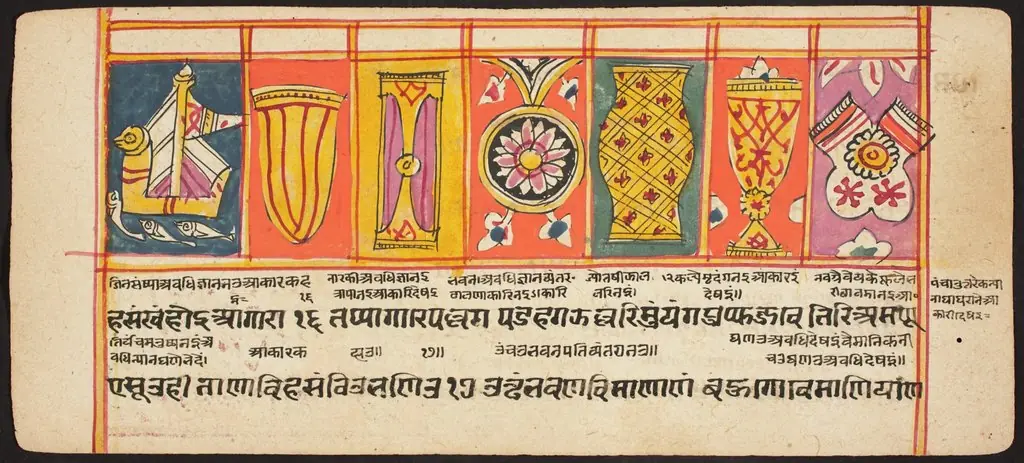 Tantric Manuscript "Sangrahani Sutra"
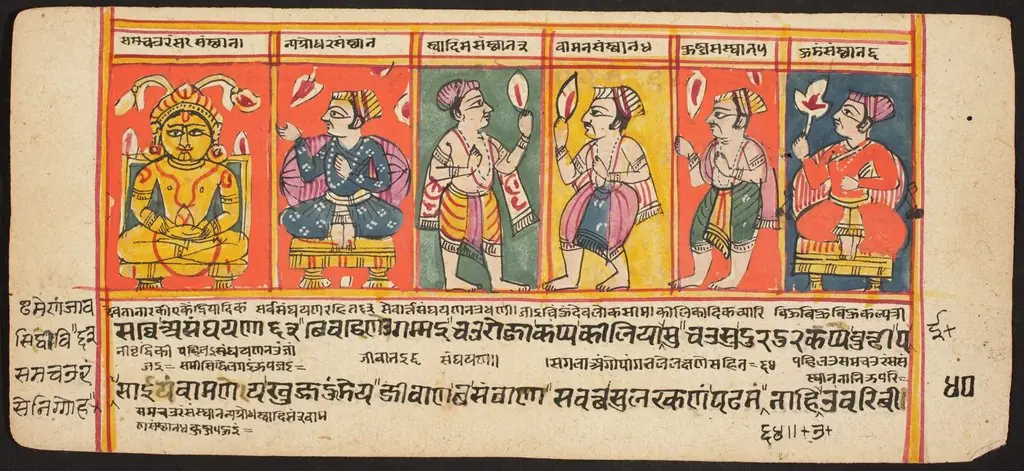 Tantric Manuscript "Sangrahani Sutra"
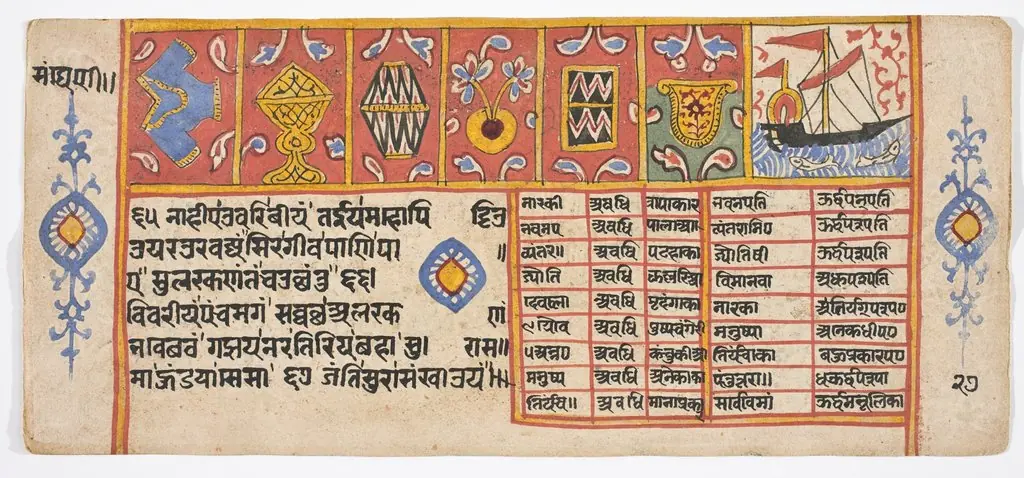 Tantric Manuscript "Sangrahani Sutra"
 Tantric Manuscript, "Sangrahani Sutra"