Artwork
Tantric Manuscript "Sangrahani Sutra"
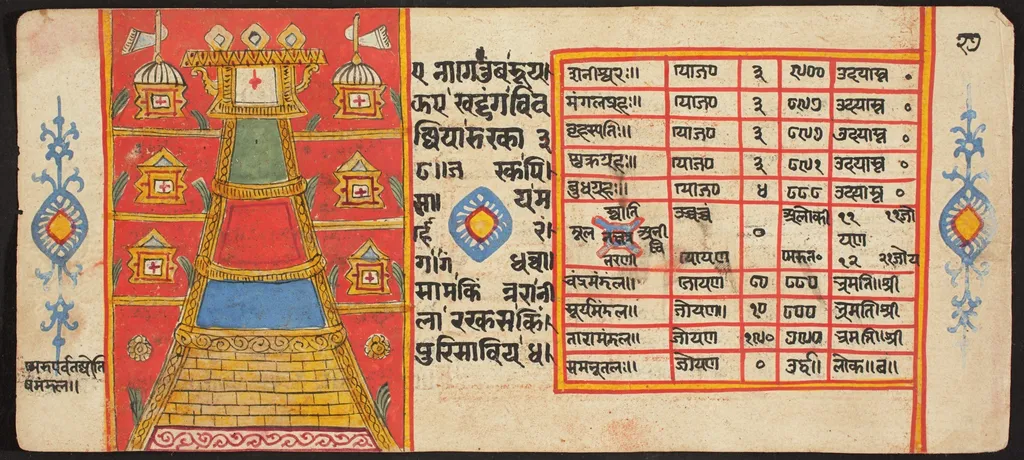
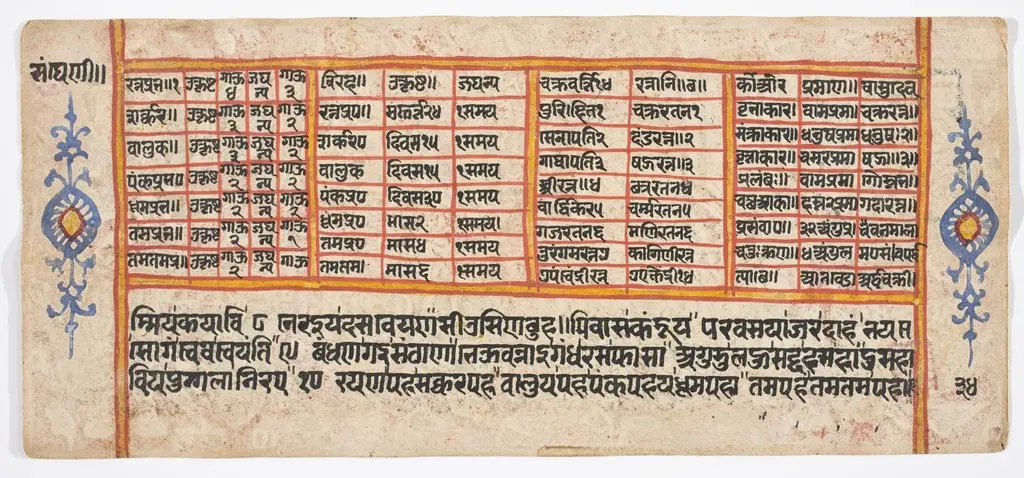
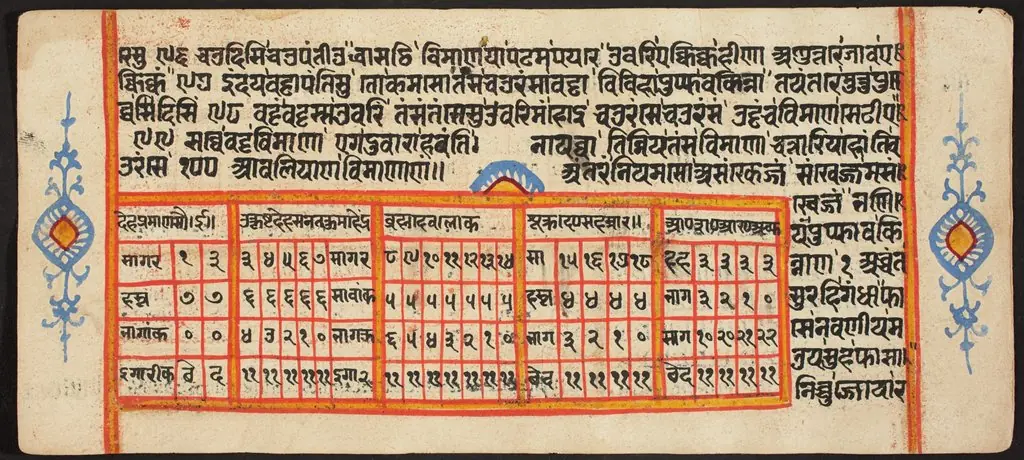
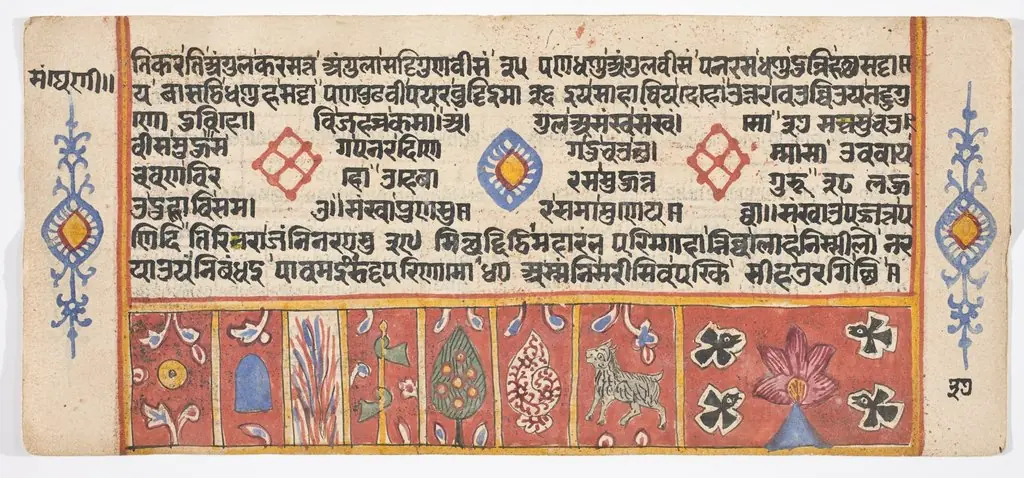
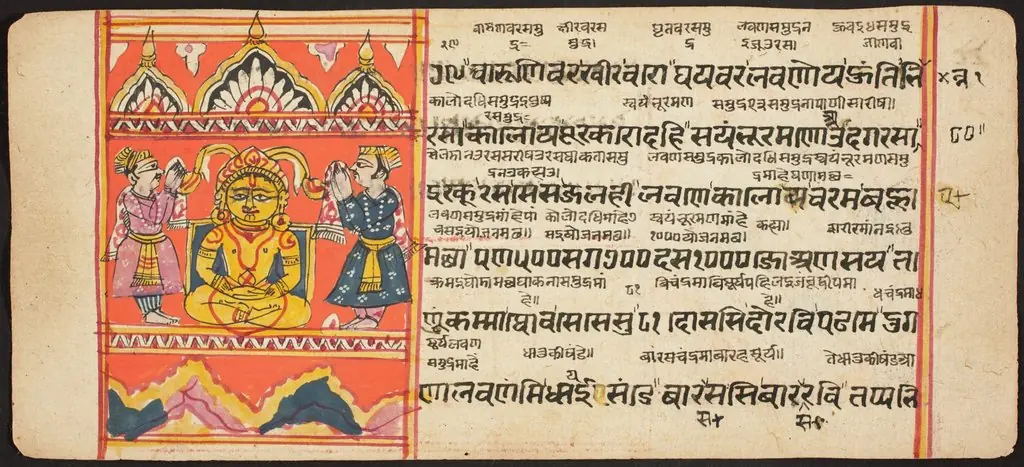
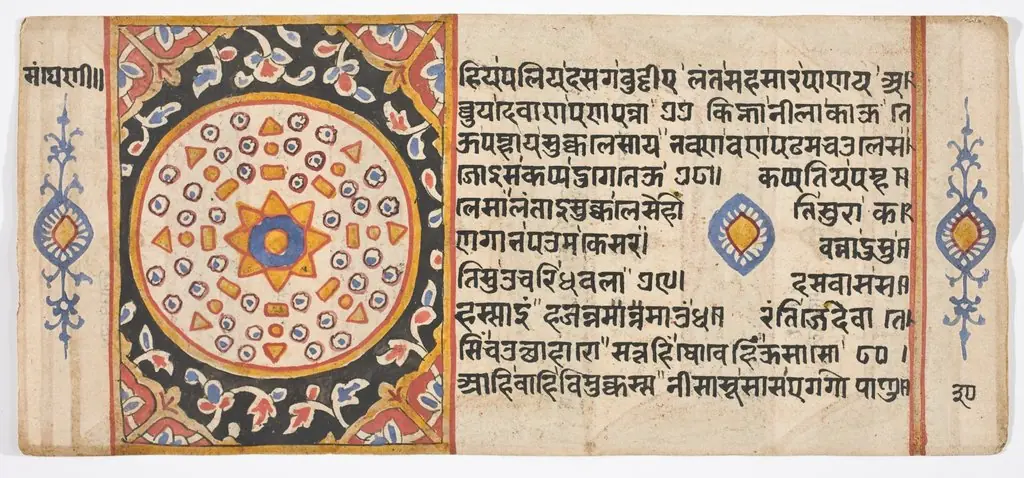
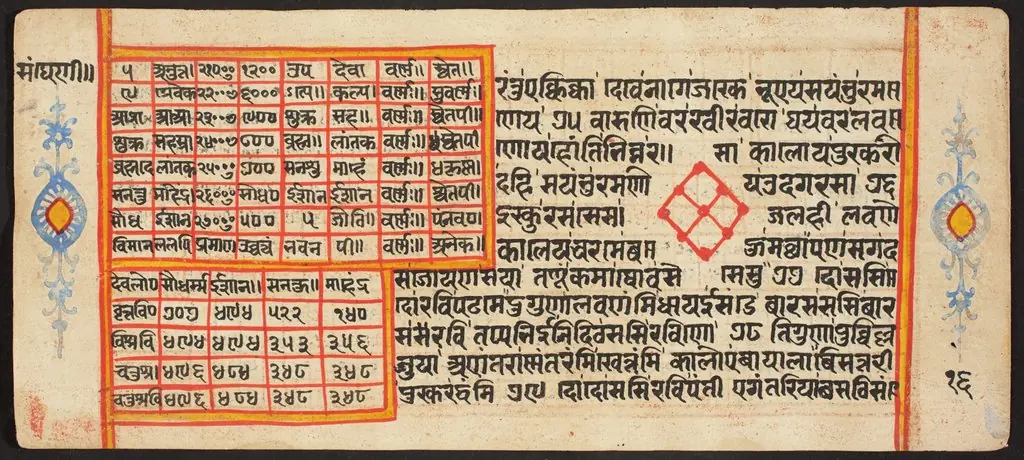
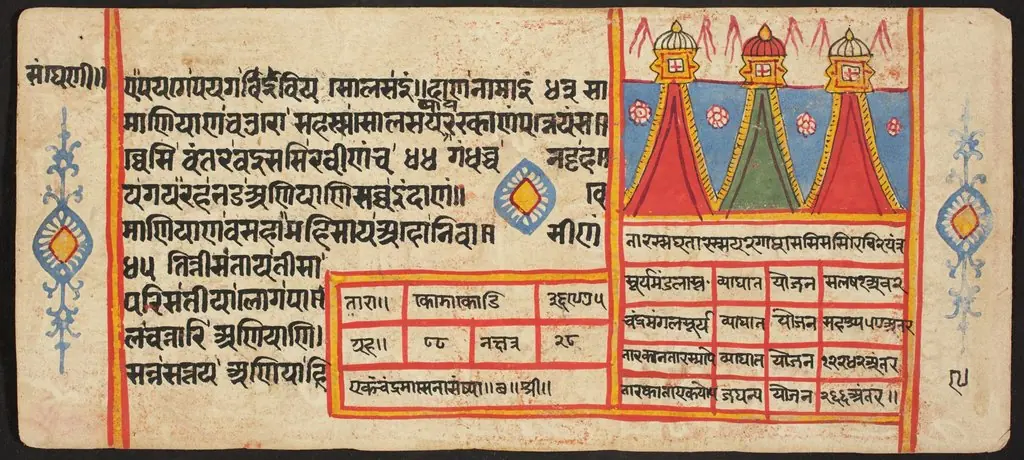
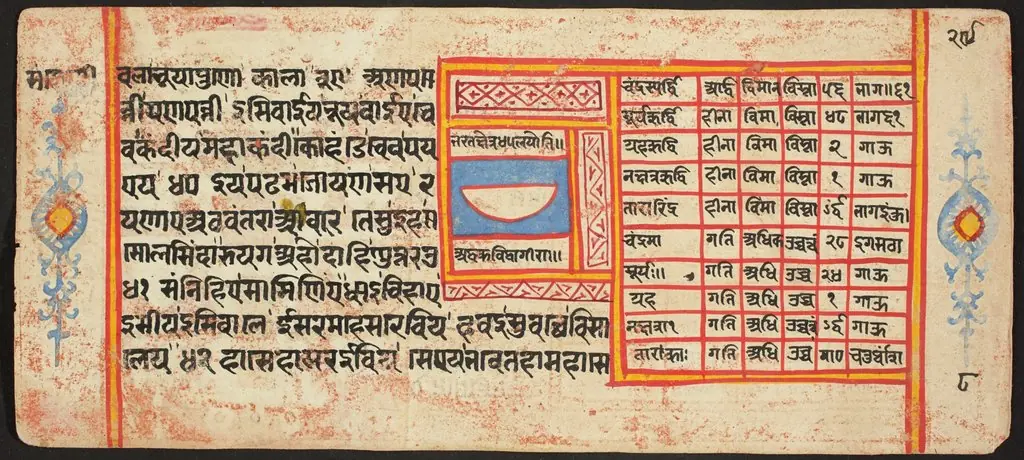
Tantric Manuscript "Sangrahani Sutra" is an unspecified painting by Unknown. It is held in the collection of the Detroit Institute of Arts. This painted manuscript page originates from a Tantric Buddhist text known as the Sangrahani Sutra.
About this work
Overview
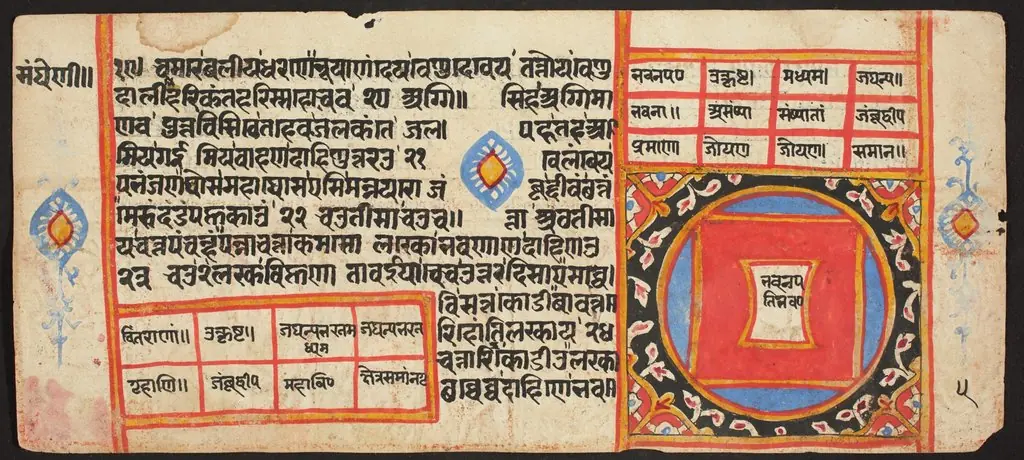
It features a centrally positioned, highly detailed architectural form resembling a stupa or mandala tower, rendered in vivid hues against a deep red field.
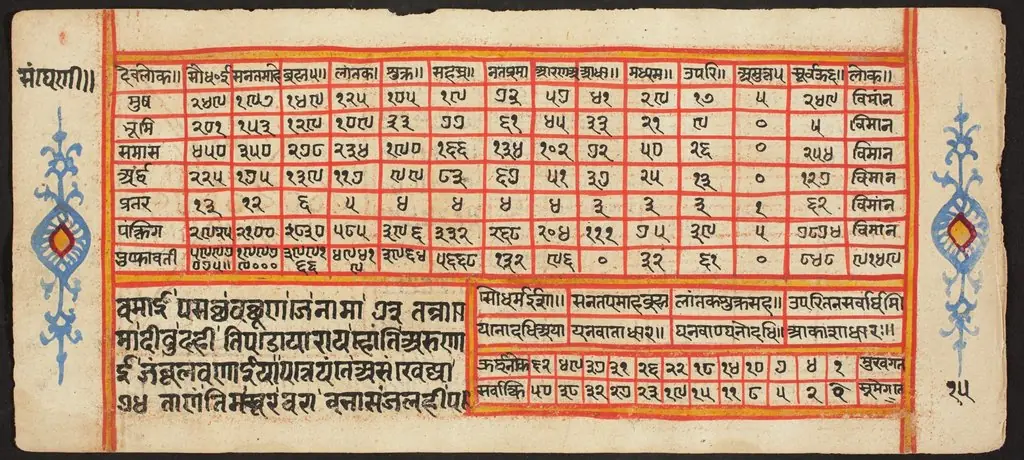
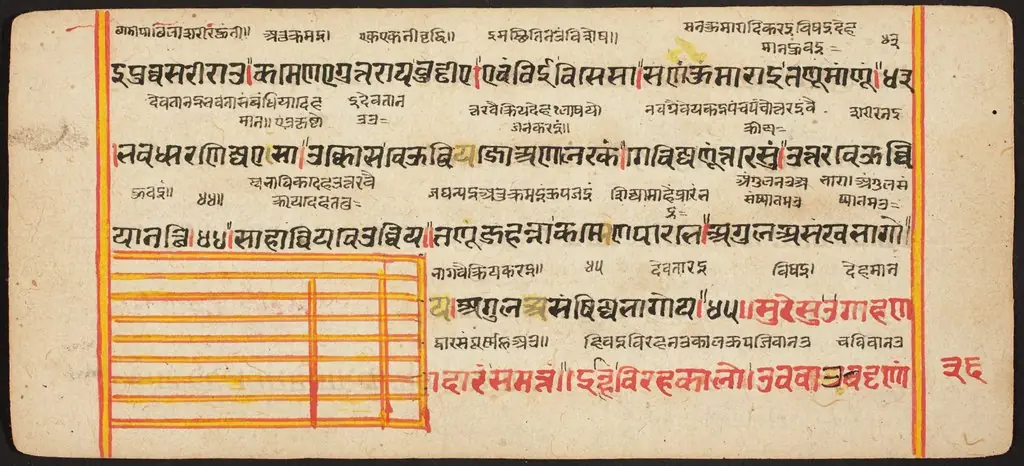
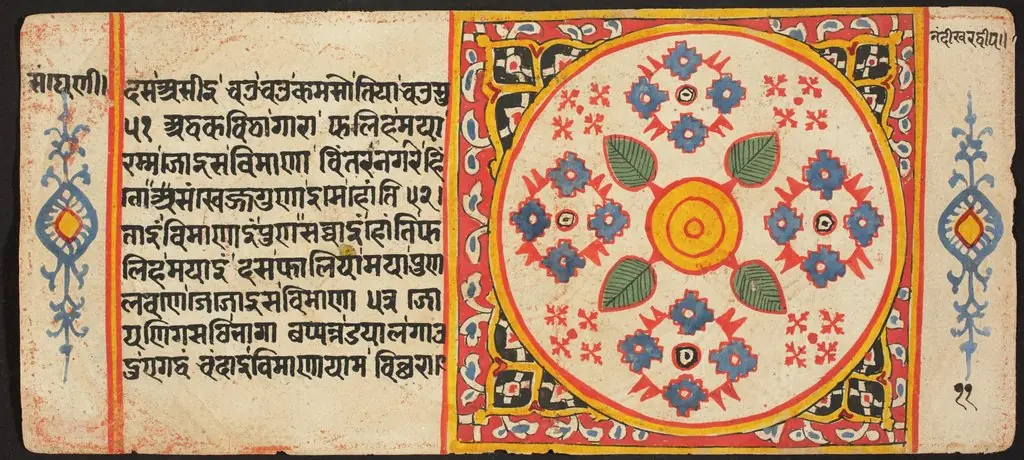
This painted manuscript page originates from a Tantric Buddhist text known as the Sangrahani Sutra. It features a centrally positioned, highly detailed architectural form resembling a stupa or mandala tower, rendered in vivid hues against a deep red field. The composition emphasizes symmetry and symbolic density, with ornamental patterns filling every surface. To the right, a vertical column of script in an undeciphered or non-standardized script complements the visual rhythm, suggesting a fusion of textual and visual sacred language.
Subject & Meaning
The central tower likely represents a cosmic axis or sacred structure central to Tantric cosmology, symbolizing the path to enlightenment. Its layered design may correspond to stages of spiritual ascent or the structure of the universe as understood in Vajrayana traditions. The red background, often associated with power and transformation in esoteric Buddhism, enhances the sense of ritual intensity. The accompanying script, though not legible to modern readers, functions as a sacred inscription, reinforcing the object’s role as a meditative aid rather than a purely narrative document.
Technique & Style
The painting employs mineral pigments and fine brushwork typical of Himalayan manuscript illumination. Details in the tower’s architecture—such as arches, niches, and decorative motifs—are rendered with precision, suggesting the work of a skilled artisan trained in monastic traditions. The use of flat, saturated colors and intricate patterning avoids naturalism in favor of symbolic clarity. The grid of script is aligned with architectural elements, creating a harmonious balance between visual and textual components that reflects the integration of word and image in tantric practice.
History & Provenance
This page likely dates to the late medieval period, possibly between the 14th and 16th centuries, and was produced in a monastic center in the Himalayan region, such as Tibet or Nepal. It was part of a larger manuscript scroll used in ritual contexts, possibly for visualization or recitation. The Detroit Institute of Arts acquired it in the 20th century as part of a broader collection of South and Southeast Asian religious art, though its specific provenance prior to that remains undocumented.
Context
Tantric Buddhist manuscripts like this were not merely texts but ritual objects, designed to be contemplated visually as well as recited orally. Their elaborate imagery served as aids for meditation, guiding practitioners through complex cosmological frameworks. Similar visual languages appear in thangkas and temple murals across the Himalayas, indicating a shared iconographic tradition. The presence of non-standard script suggests regional variations in textual transmission, possibly reflecting localized liturgical practices or esoteric lineages.
Legacy
As a surviving fragment of a devotional manuscript, this page preserves the material culture of a tradition that prioritized embodied spiritual practice over textual exegesis. Its survival into the modern era allows scholars to study the interplay of art, ritual, and esoteric doctrine in Himalayan Buddhism. While no longer used in active worship, it continues to serve as a key artifact for understanding how visual symbolism functioned as a vehicle for sacred knowledge in pre-modern Buddhist communities.
Artist & collection

 Domestic Scene
 Giacomo and Cardinal Marco, investing Andrea, Abbot of San Zeno, with his Benefice
 The Nymph of Fontainebleau
 Portrait of a Woman
 Madonna and Child with Saints in the Enclosed Garden
 Venus and Minerva
 Family Group of Four on Sofa
 Wall painting from Room H of the Villa of P. Fannius Synistor at Boscoreale
 Tantric Manuscript "Sangrahani Sutra"
 Tantric Manuscript "Sangrahani Sutra"
 Tantric Manuscript "Sangrahani Sutra"
 Tantric Manuscript "Sangrahani Sutra"
 Tantric Manuscript "Sangrahani Sutra"
 Tantric Manuscript "Sangrahani Sutra"
 Tantric Manuscript "Sangrahani Sutra"
 Tantric Manuscript "Sangrahani Sutra"
 Tantric Manuscript "Sangrahani Sutra"
 Tantric Manuscript "Sangrahani Sutra"
 Tantric Manuscript "Sangrahani Sutra"
 Tantric Manuscript "Sangrahani Sutra"