Artwork
Portrait of Lysbeth van Duvenvoorde
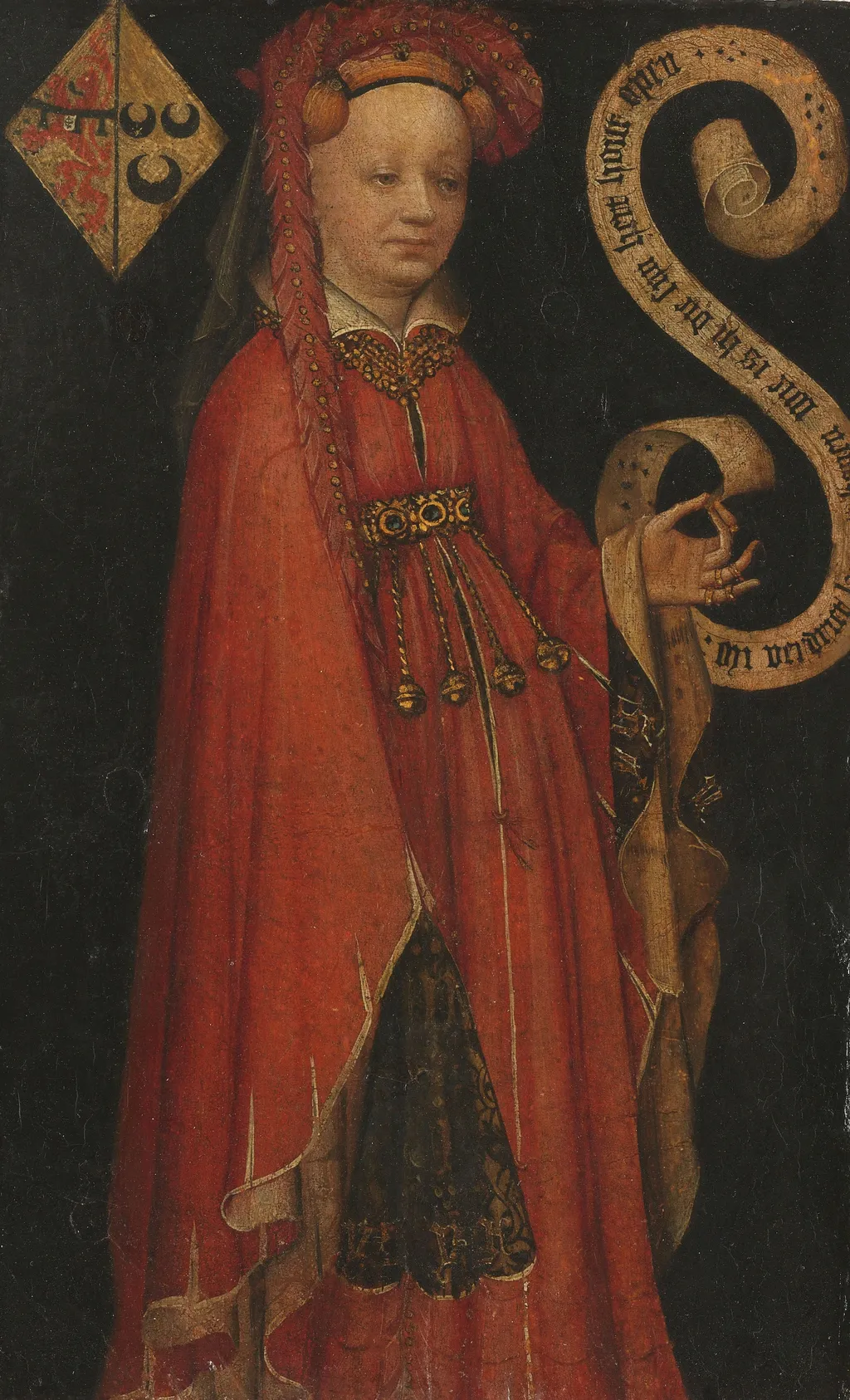
Portrait of Lysbeth van Duvenvoorde is an oil painting. It dates from 1430 and is held in the collection of the Rijksmuseum.
About this work
Overview
The work titled "Portrait of Lysbeth van Duvenvoorde" is executed on parchment, presenting a solitary female figure set against a deep, unlit background. She is dressed in a vivid red robe adorned with gold embroidery and elongated tassels, and wears an elaborate tall hat topped with a small, faded diamond-shaped ornament.
Subject & Meaning
The sitter, identified as Lysbeth van Duvenvoorde, is portrayed in a formal, static pose, suggesting a status or commemorative function. A translucent hand to her right holds a scroll bearing indecipherable script, providing the sole narrative element and hinting at a possible written dedication or record associated with the portrait.
Technique & Style
The artist employed a rough, textured brushwork that emphasizes the parchment surface, giving the image a tactile quality reminiscent of early animal‑skin media. The stark contrast between the illuminated figure and the surrounding darkness exemplifies a chiaroscuro approach, where light defines form against a tenebrous backdrop.
History & Provenance
The piece is dated to an early period when parchment was a common support for painted portraits, prior to the widespread adoption of canvas. Its provenance traces back to private collections in the Netherlands, where the van Duvenvoorde family held regional prominence.
Context
During the era of its creation, portraiture served both as a means of personal commemoration and as a display of wealth. The luxurious red garment and gold detailing reflect contemporary fashions among the affluent, while the inclusion of a scroll aligns with the period’s practice of integrating textual symbols into visual representation.
Artist & collection

![The Archangel Gabriel [middle left panel], by Cosmè Tura](https://artifactworldgallery.com/img/cosme-tura--the-archangel-gabriel-middle-left-panel--c900f72d54477be2-w320.webp)