Artwork
Saint Margaret
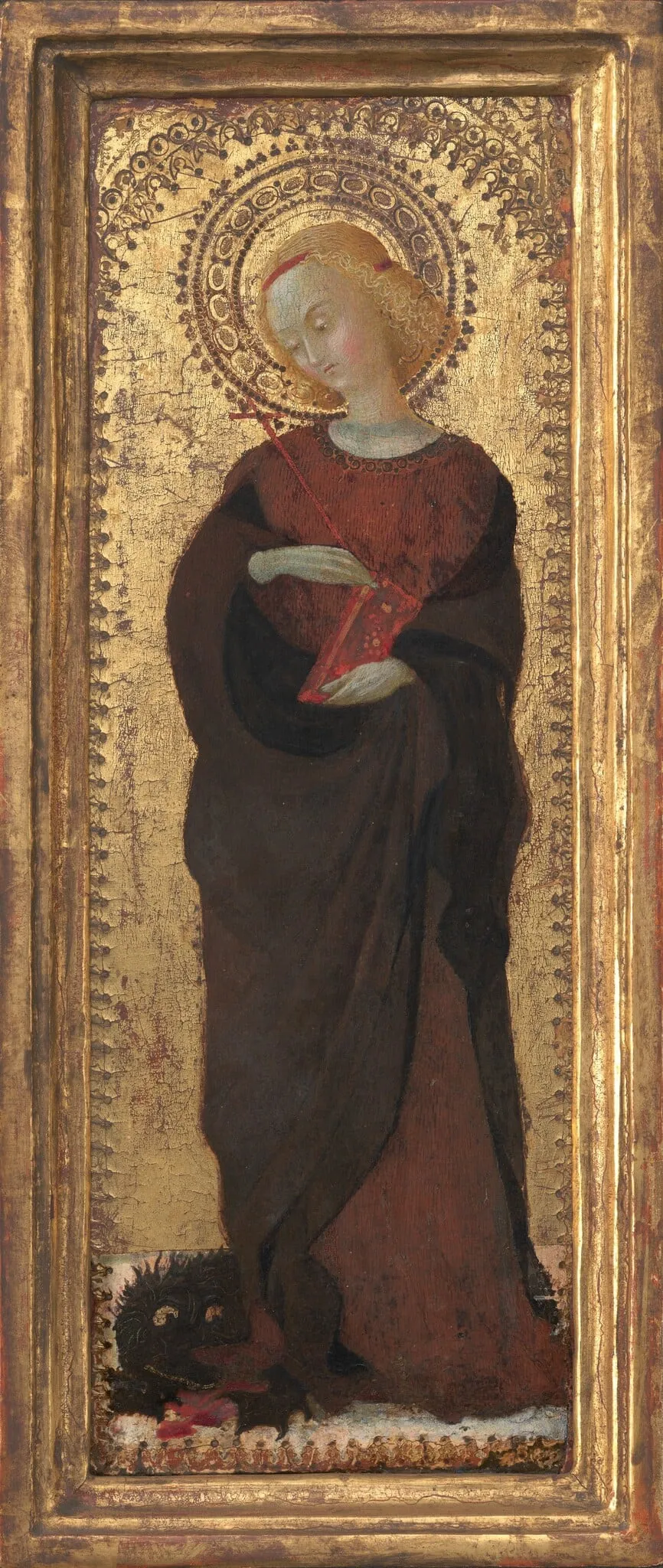
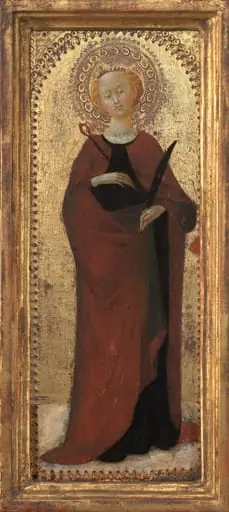
Saint Margaret is a tempera painting by the Early Renaissance artist Sassetta. It dates from 1435 and is held in the collection of the National Gallery of Art.
About this work
Overview
Executed in tempera on a poplar panel, this religious work highlights Sassetta's position as a prominent painter in Tuscany during this period.
Saint Margaret, painted by Stefano di Giovanni di Consolo, known as Sassetta, around 1435, exemplifies the Sienese School's contributions to the early Renaissance. Executed in tempera on a poplar panel, this religious work highlights Sassetta's position as a prominent painter in Tuscany during this period. The painting reflects the era's devotional focus and the developing artistic styles that characterized the transition from late Gothic to early Renaissance aesthetics.
Subject & Meaning
The painting presents a female figure, likely Saint Margaret of Antioch, rendered with a pale complexion and a subtle halo. She wears a long red robe beneath a dark cloak, holding a red book in her hands. Standing on a rocky terrain with a small animal nearby, the saint is set against a predominantly gold background, framed by an ornate border. This depiction serves a devotional purpose, common in religious art of the era, inviting contemplation of the saint's piety.
Technique & Style
Sassetta employed tempera paint on a poplar wood panel, a common technique for altarpieces and devotional images in the 15th century. The prominent gold background, a characteristic feature of Sienese art, imbues the work with a sacred aura. Stylistically, Sassetta synthesized the established Sienese artistic traditions with decorative elements reminiscent of the Gothic period, while also incorporating the nascent realism emerging from Florentine contemporaries such as Masaccio, creating a distinctive visual language.
Context
Created during the early Renaissance, Saint Margaret is situated within a period of significant artistic and cultural transformation in Tuscany. The work underscores the enduring importance of religious themes in art, which continued to serve as primary subjects for painters. It also illustrates the evolving stylistic landscape, as artists like Sassetta navigated between established regional traditions and newer trends favoring greater naturalism, contributing to the rich tapestry of Renaissance art.
Artist & collection

Artist
Stefano di Giovanni di Consolo, known as il Sassetta (c. 1392–1450) was a Tuscan painter of the Renaissance, and a significant figure of the Sienese School. While working within the Sienese tradition, he innovated the…