Artwork
A princess with attendants on a terrace
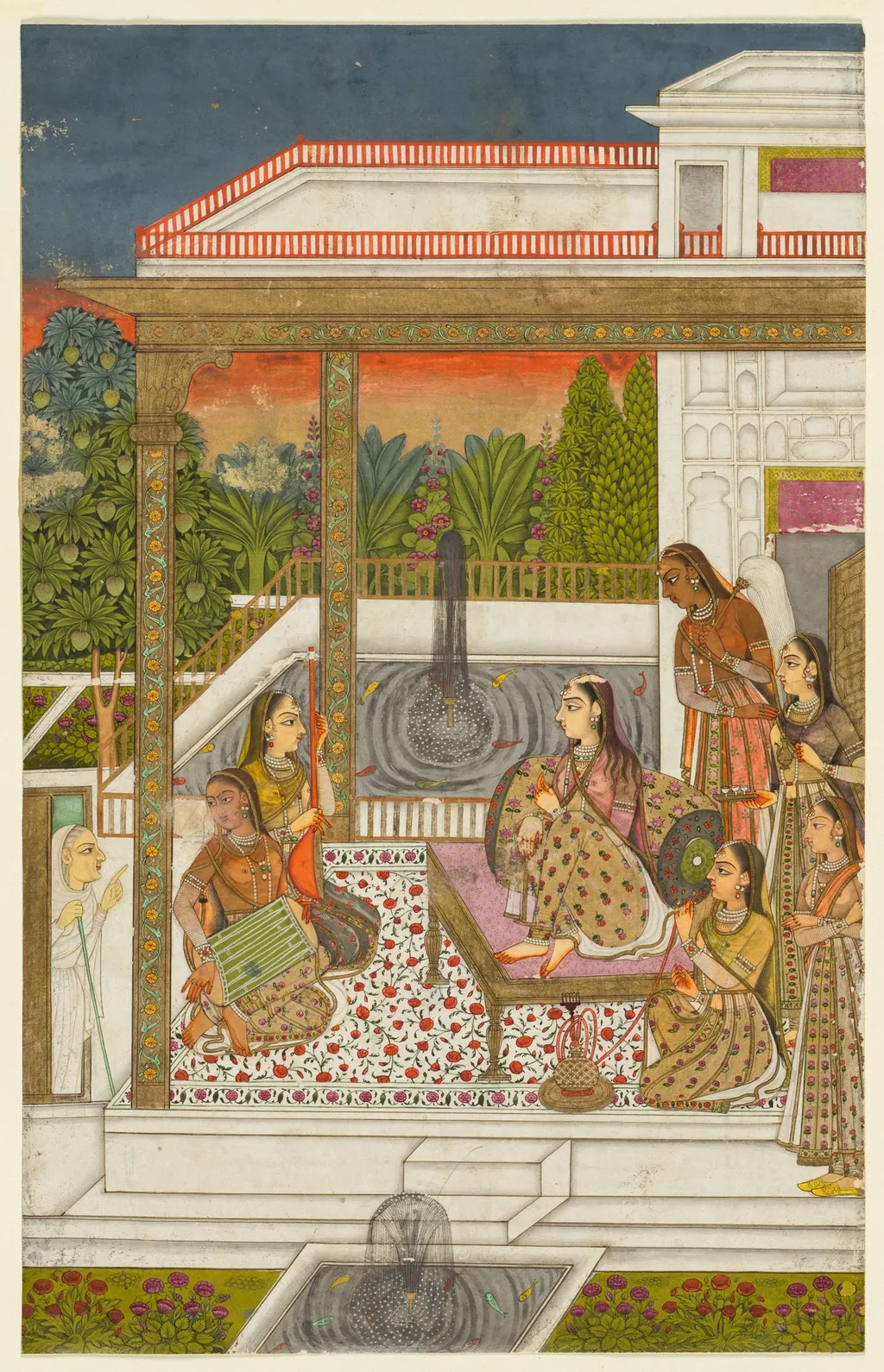
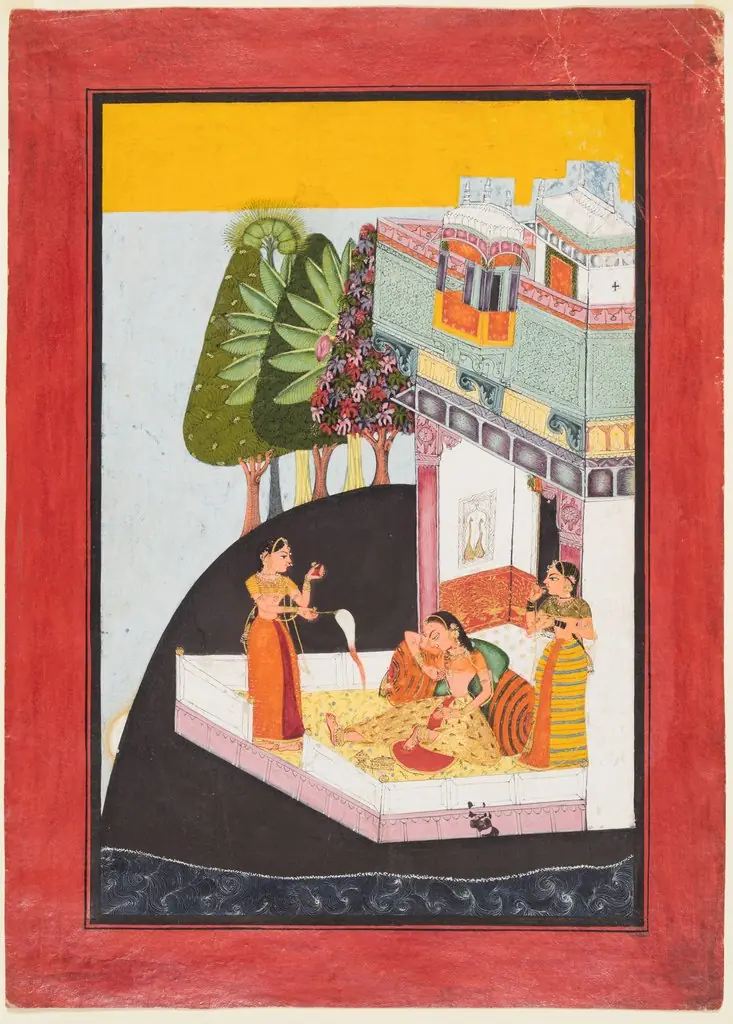
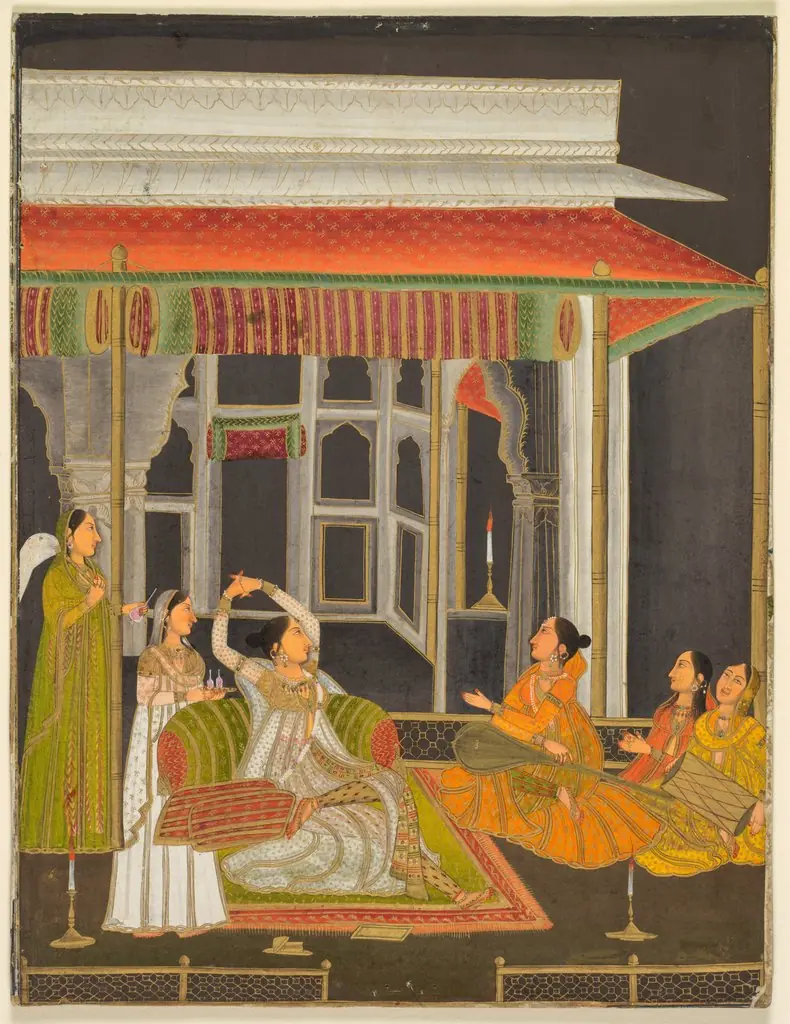
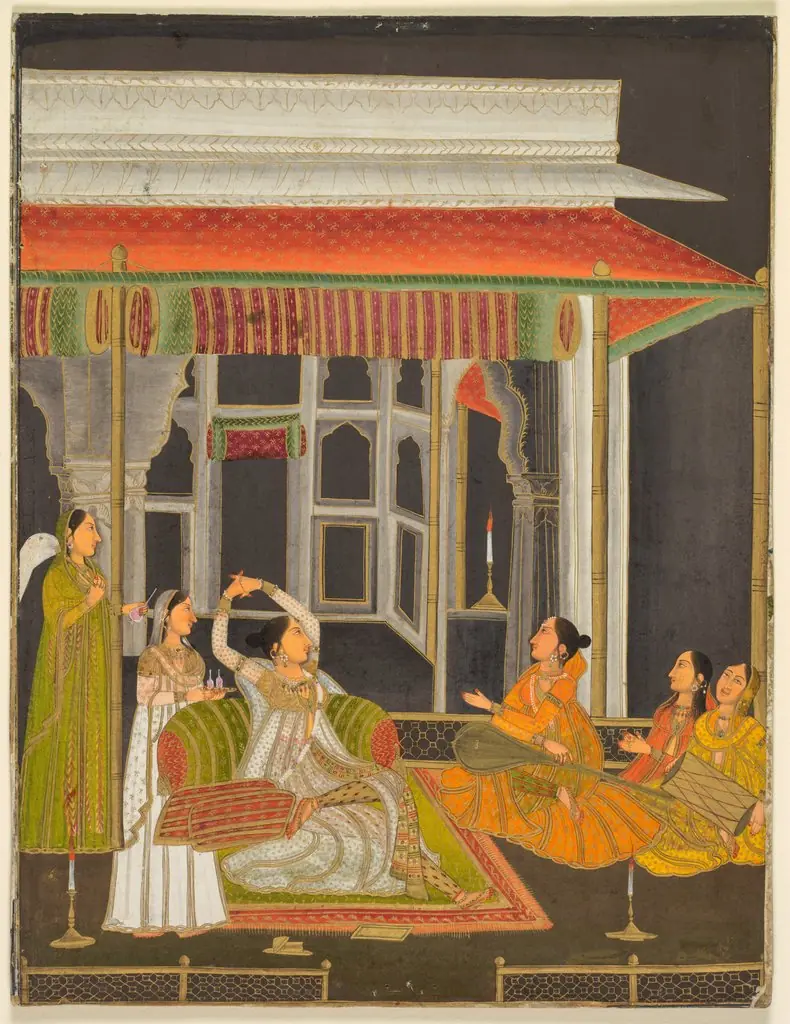
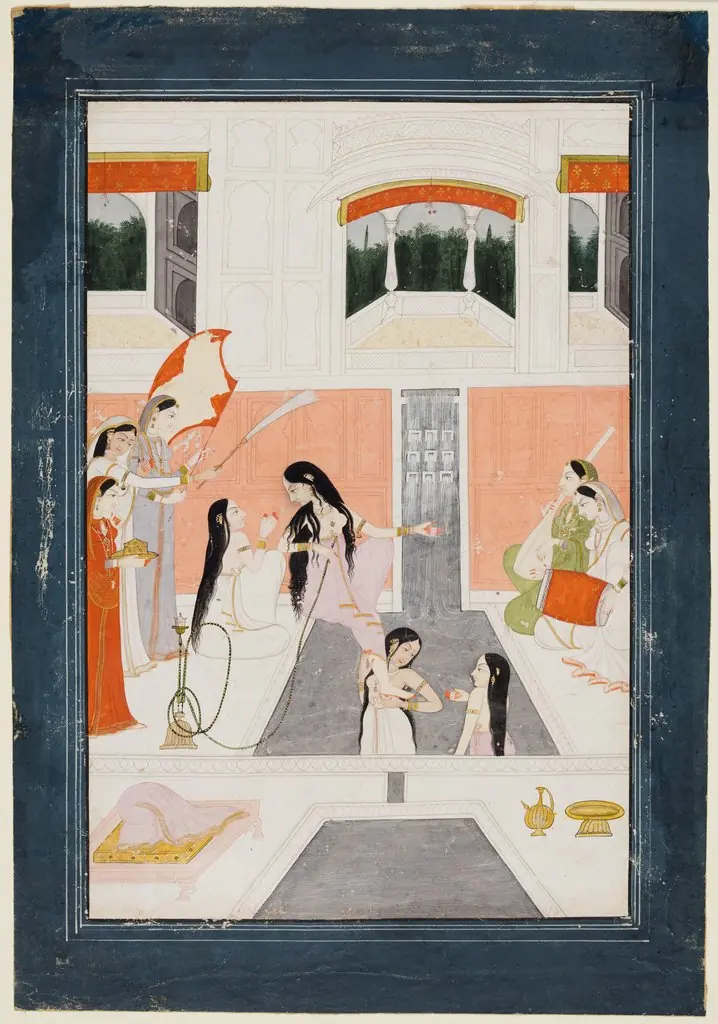
A princess with attendants on a terrace is an unspecified painting. It dates from 1725 and is held in the collection of the Cleveland Museum of Art. The work depicts a seated princess on an elevated terrace, surrounded by a small retinue of attendants.
About this work
Overview
The work depicts a seated princess on an elevated terrace, surrounded by a small retinue of attendants. She holds a fan while dressed in a flowing gown, and the figures around her carry items such as a basket and a parasol. Beyond the architectural setting, a garden with trees and flowering plants stretches into a blue sky dotted with clouds, creating a calm, composed scene.
Subject & Meaning
The composition centers on aristocratic leisure, emphasizing the princess’s status through her elevated position and the attentive service of her companions. The inclusion of everyday objects—basket, parasol—alongside the fan suggests a blend of domestic routine and ceremonial display, reflecting ideals of refined femininity and courtly poise prevalent in courtly portraiture.
Technique & Style
Rendered in muted tones of green, blue, and yellow, the painting relies on delicate brushwork to articulate intricate patterns on fabrics and the ornate terrace architecture. Fine detailing conveys texture in clothing and foliage, while a smooth, balanced handling of light produces a tranquil atmosphere without dramatic contrast, characteristic of refined, decorative court paintings.
History & Provenance
The artist’s identity remains unidentified, and the work’s provenance is undocumented in available records. Its anonymous status suggests it may have been produced for a private patron or court setting, typical of many decorative panels whose creators were not recorded in contemporary archives.
Context
The scene aligns with a broader tradition of courtly genre paintings that portray noble figures in idyllic, landscaped settings. Such works often served to reinforce social hierarchy and the cultivated tastes of elite patrons, situating the subject within an idealized, harmonious environment that blends architecture and nature.
Artist & collection