Artwork
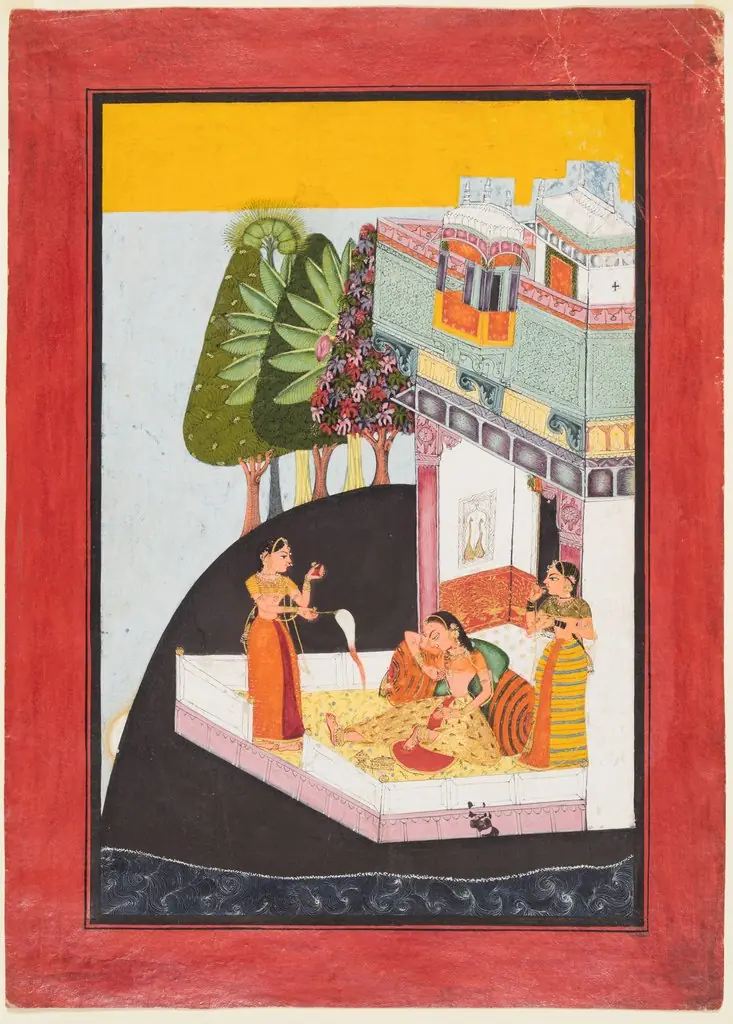
A princess on a terrace with attendants at night (recto); Calligraphy (verso)
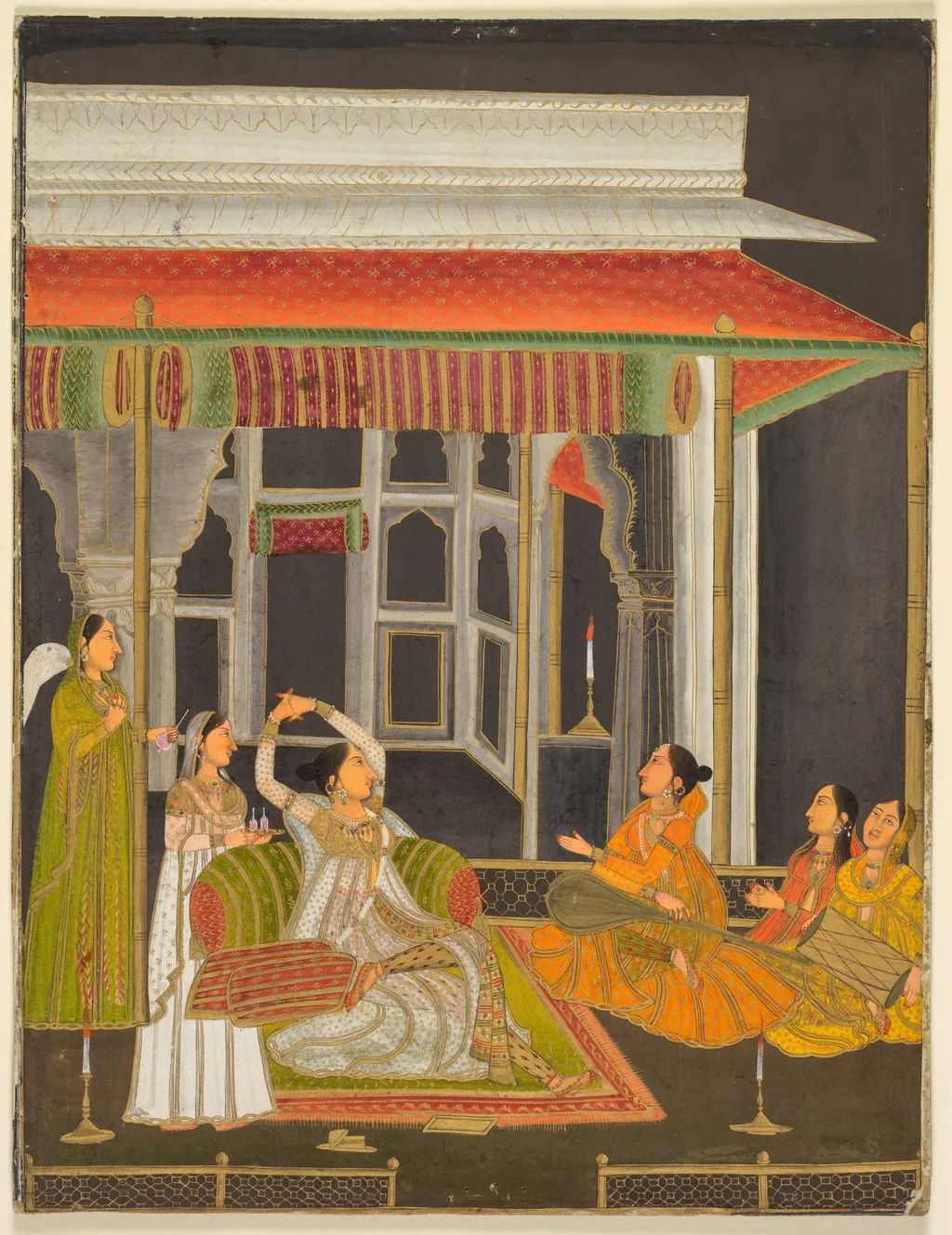
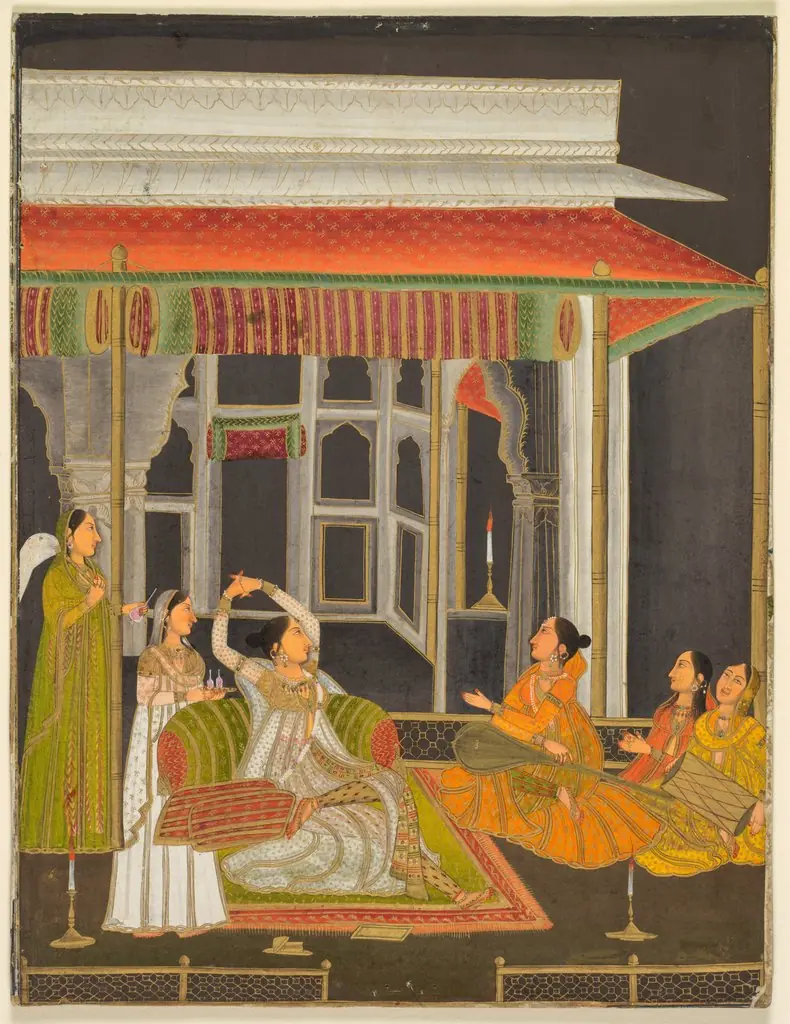
A princess on a terrace with attendants at night (recto); Calligraphy (verso) is an unspecified painting. It dates from 1760 and is held in the collection of the Cleveland Museum of Art. The work depicts a nocturnal scene on a palace terrace where a princess is seated on a green rug, surrounded by attendants.
About this work
Overview
The work depicts a nocturnal scene on a palace terrace where a princess is seated on a green rug, surrounded by attendants.
The work depicts a nocturnal scene on a palace terrace where a princess is seated on a green rug, surrounded by attendants. She wears a white garment adorned with gold embroidery and raises one arm, while an attendant behind her holds a candle. Two other attendants are positioned on the floor, each engaged in playing a musical instrument, all set beneath a red‑and‑green awning against a darkened backdrop.
Subject & Meaning
The composition centers on the princess, suggesting a ceremonial or celebratory moment within a courtly setting. The presence of music and illumination implies a festive gathering, while the candle‑lit ambience enhances the intimacy of the nighttime tableau.
Technique & Style
The artist employs chiaroscuro to model forms, creating depth through contrasts of light and shadow. Detailed rendering of fabrics—particularly the intricate gold embroidery on the dress and patterned attire of the attendants—demonstrates a meticulous approach to surface texture. The vivid red and green of the awning serve as visual anchors amid the subdued surrounding tones.
History & Provenance
The painting is paired with a calligraphic work on its reverse side, indicating it may have been part of a double‑sided panel or a composite object. No further provenance details are provided in the source material.
Context
The scene reflects courtly aesthetics typical of East Asian palace art, where music, elaborate dress, and night‑time settings are recurrent motifs. The use of a terrace as a setting aligns with traditions of depicting aristocratic leisure in garden or pavilion environments.
Artist & collection

 A Princess on a Terrace with Attendants at Night (recto)
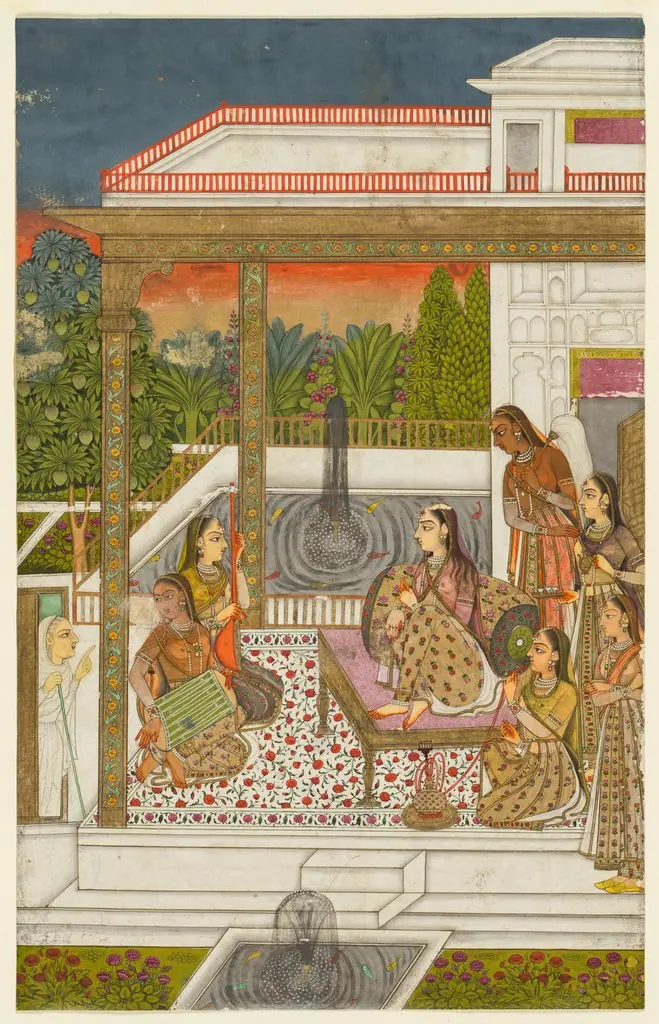 A princess with attendants on a terrace
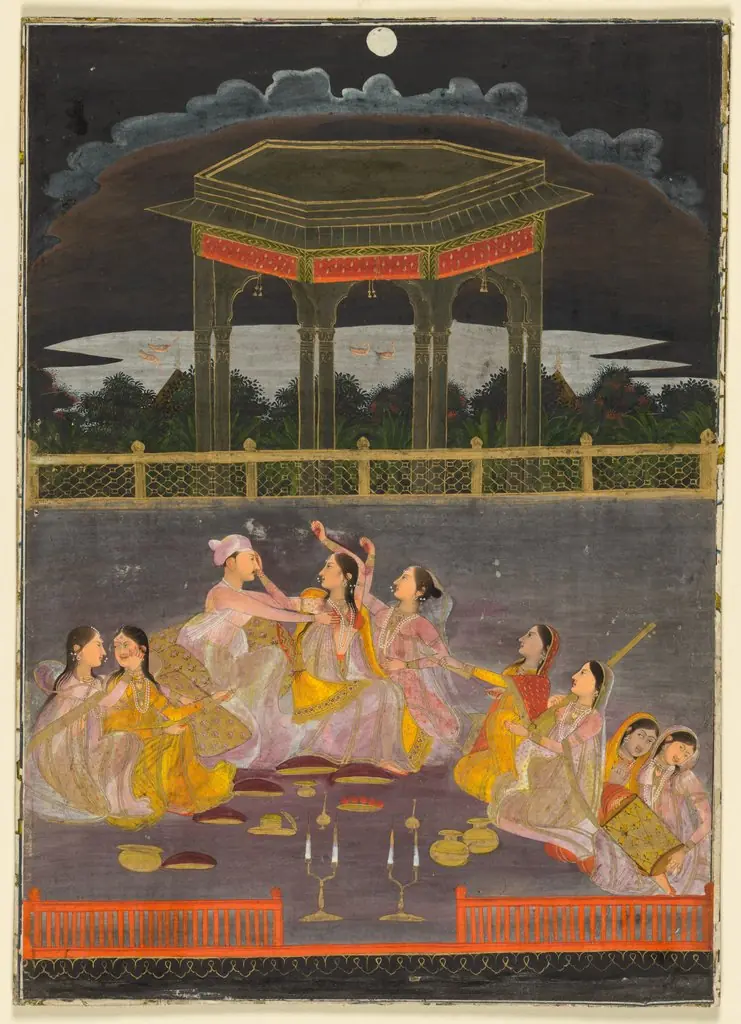 A prince celebrating Holi with palace women on a terrace at night (recto); calligraphy of a quatrain (verso)
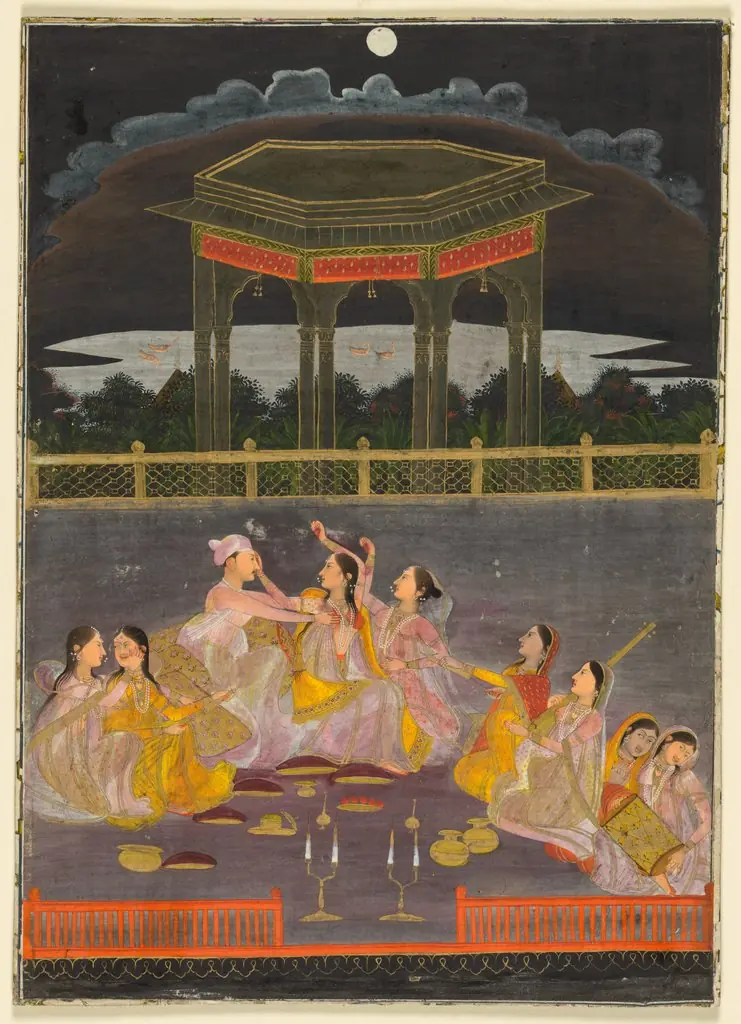 A prince celebrating Holi with palace women on a terrace at night (recto)
 A Disconsolate Lady on a Terrace with Attendants