Artwork
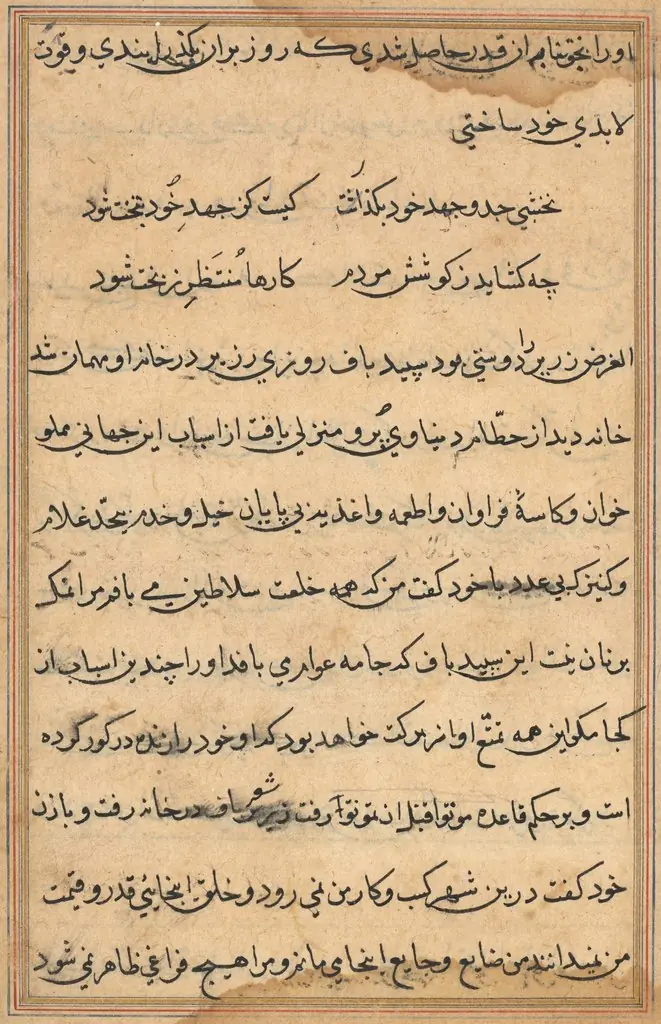
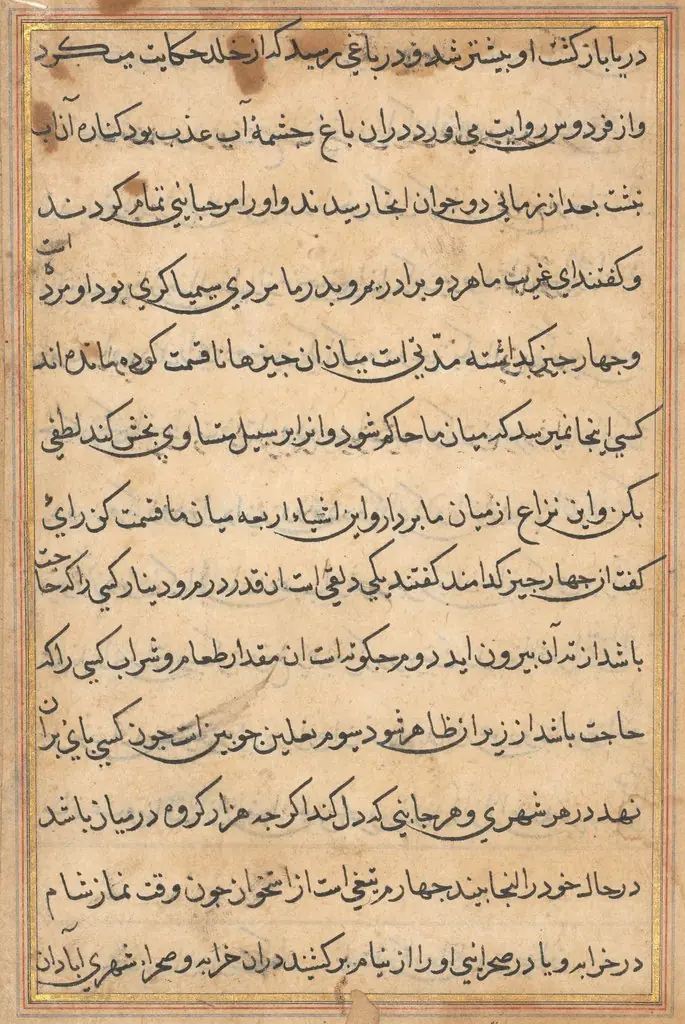
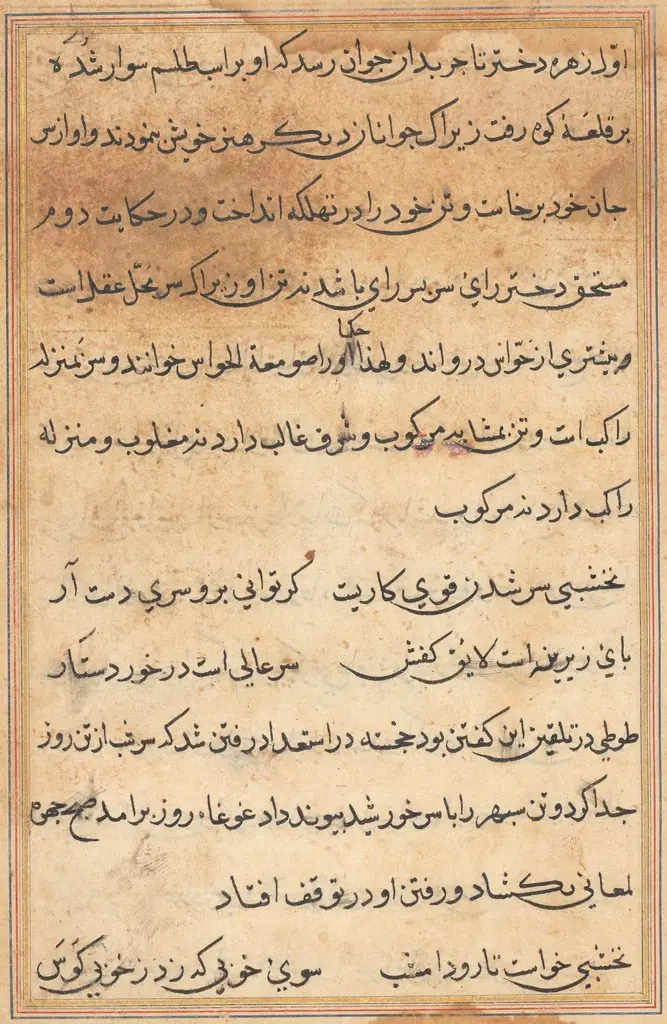
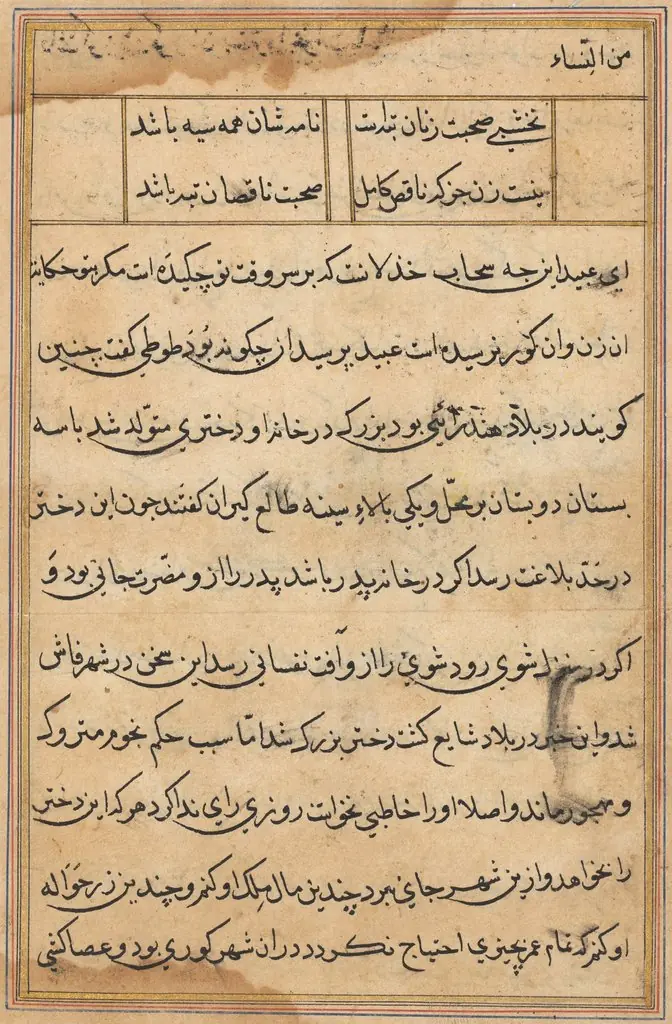
Page from Tales of a Parrot (Tuti-nama): text page
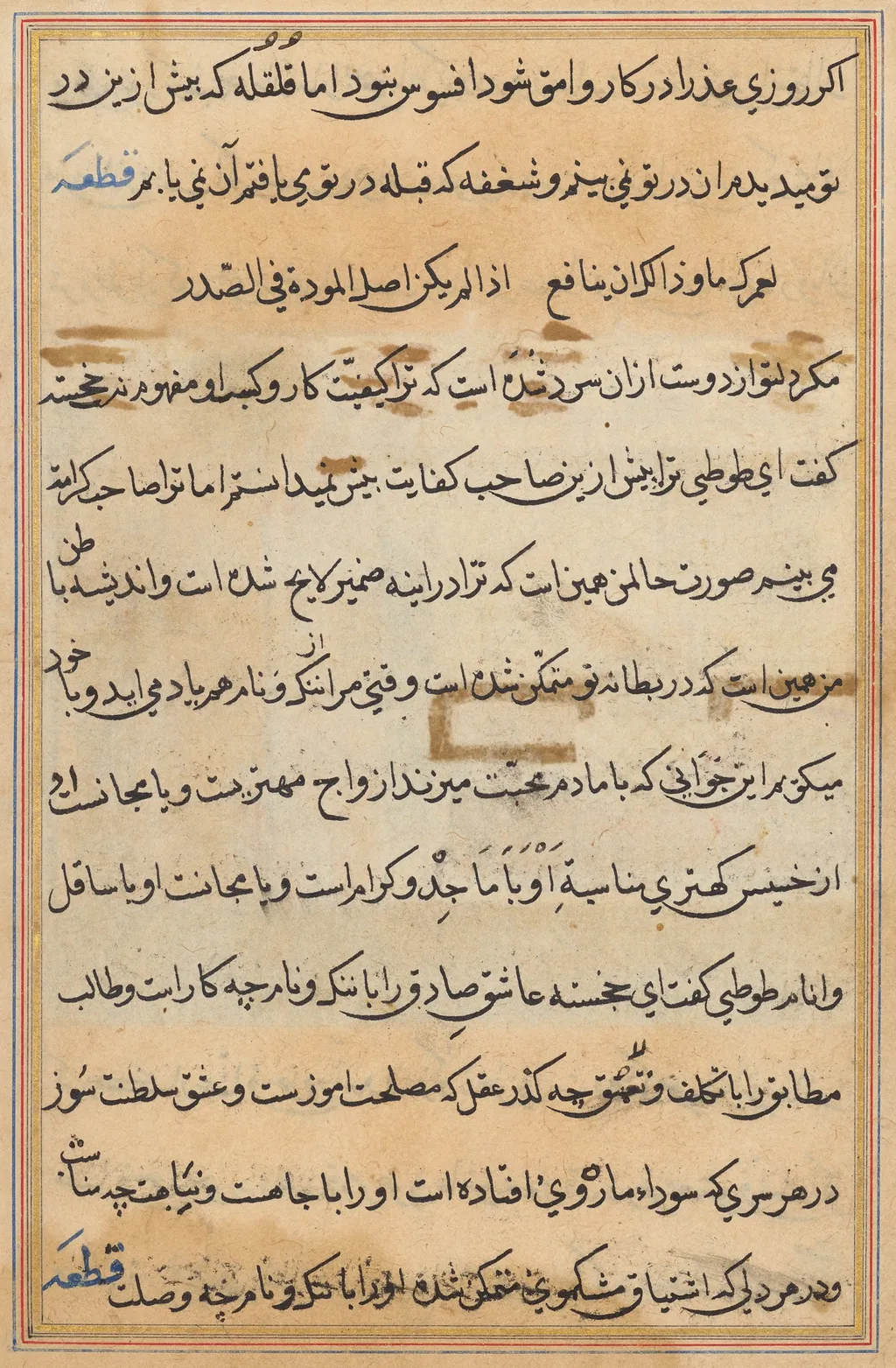
Page from Tales of a Parrot (Tuti-nama): text page is an unspecified painting. It dates from 1560 and is held in the collection of the Cleveland Museum of Art. The object is a single leaf from a manuscript titled *Tales of a Parrot* (Tuti‑nama).
About this work
Overview
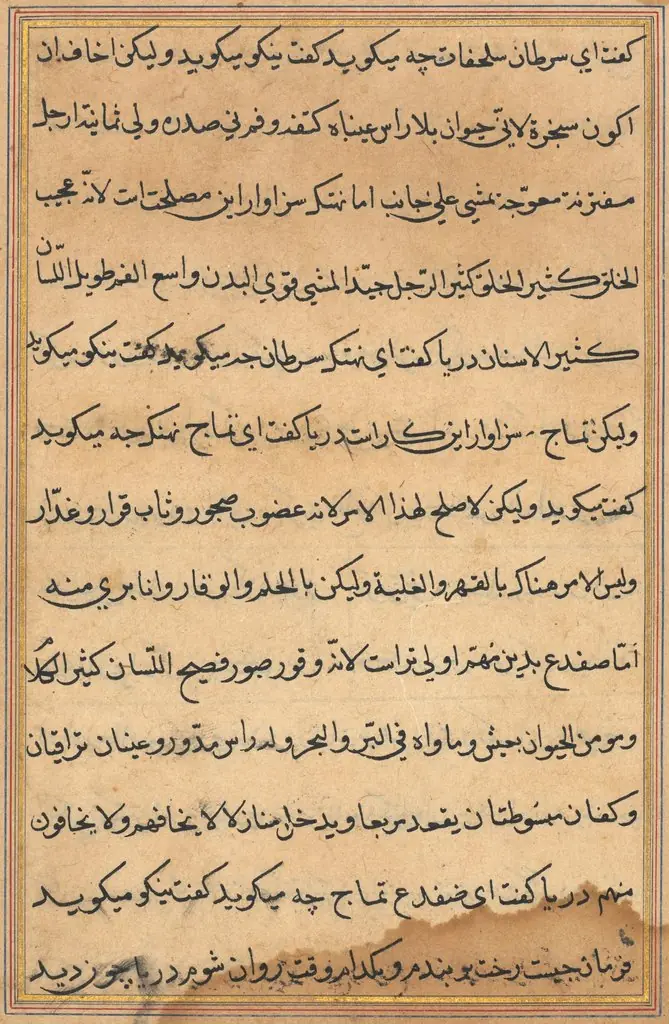
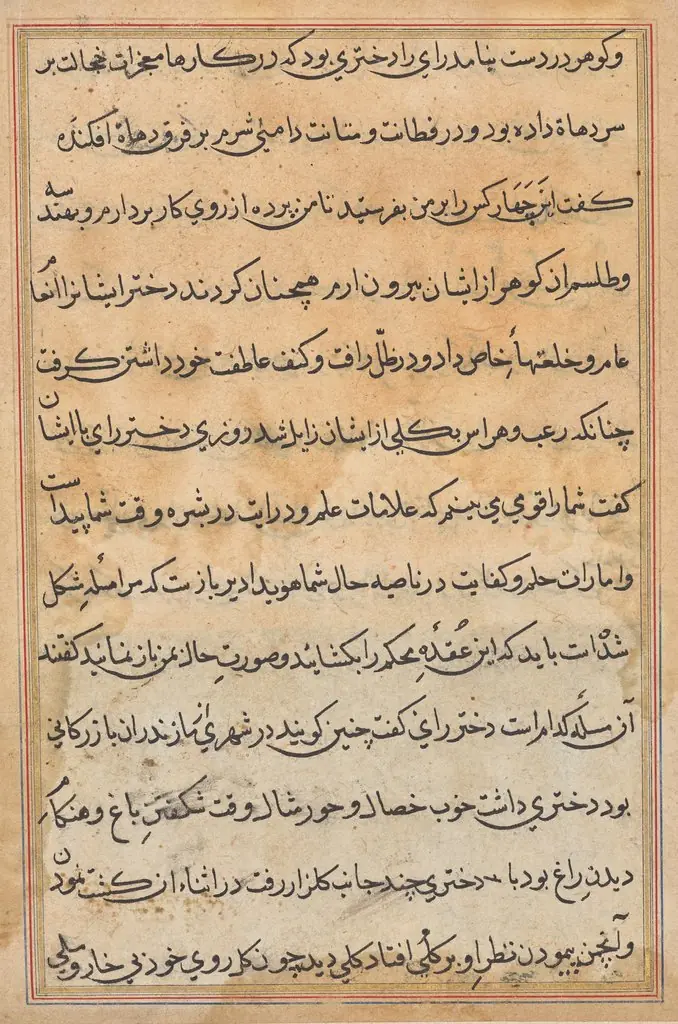
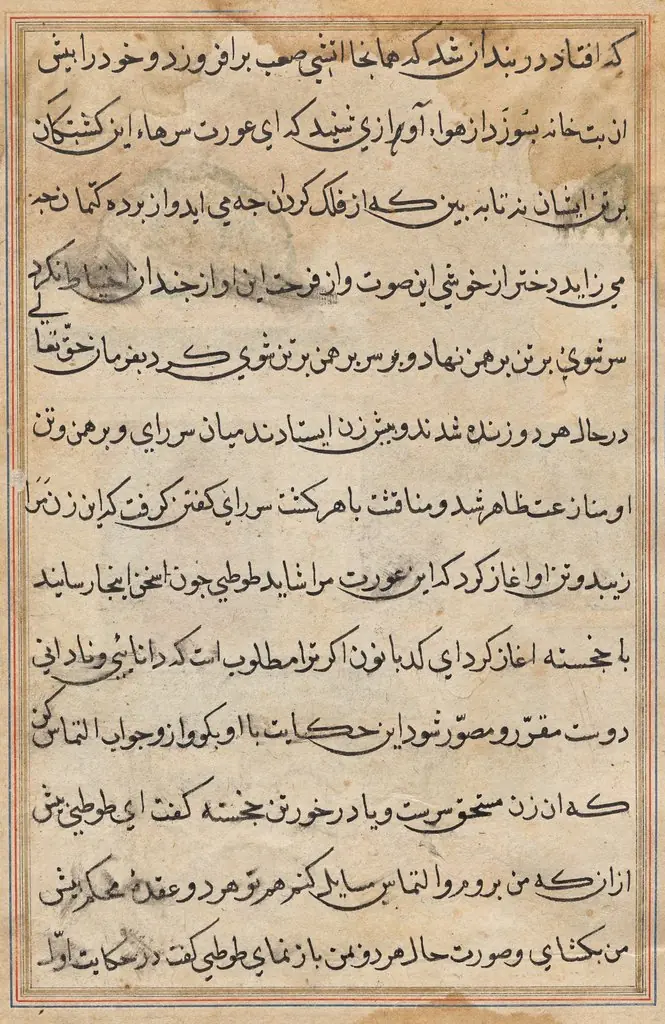
The object is a single leaf from a manuscript titled *Tales of a Parrot* (Tuti‑nama). It consists of a rectangular sheet of aged paper, its surface mottled with beige tones, brown stains, and signs of wear such as tears and creases. The page is framed by a decorative border composed of thin red, blue, and yellow lines, framing the central block of text.
Subject & Meaning
The manuscript contains narrative prose written in a cursive script derived from Arabic‑Persian calligraphy. The text appears to recount stories involving a parrot, a common motif in Persian literary tradition that often serves as a vehicle for moral instruction or courtly entertainment. Highlighted words in gold and blue suggest emphasis on key terms or proper names within the narrative.
Technique & Style
The cursive hand displays fluid strokes characteristic of late medieval Persian calligraphy.
Ink is applied in deep black, contrasting with the light paper, while ornamental borders employ colored pigments that have faded to muted reds, blues, and yellows. Gold and blue highlights are executed with metallic and mineral pigments, indicating a skilled scribe familiar with manuscript illumination practices of the Islamic world. The cursive hand displays fluid strokes characteristic of late medieval Persian calligraphy.
History & Provenance
The leaf originates from a larger codex whose precise date and place of production are not recorded in the available description. The presence of Arabic‑Persian script and decorative motifs aligns it with manuscript traditions of the Persianate cultural sphere, likely dating from the late medieval to early modern period. Its current condition reflects extensive handling, suggesting it was read or studied over many centuries.
Context
*Tuti‑nama* belongs to a genre of animal‑centered literature that flourished in Persian courts, where talking birds often convey wisdom or satire. Such texts were commonly compiled for aristocratic patrons and circulated in libraries attached to royal or scholarly institutions, providing both entertainment and moral instruction.
Artist & collection

 Page from Tales of a Parrot (Tuti-nama): text page
 Page from Tales of a Parrot (Tuti-nama): text page
 Page from Tales of a Parrot (Tuti-nama): text page
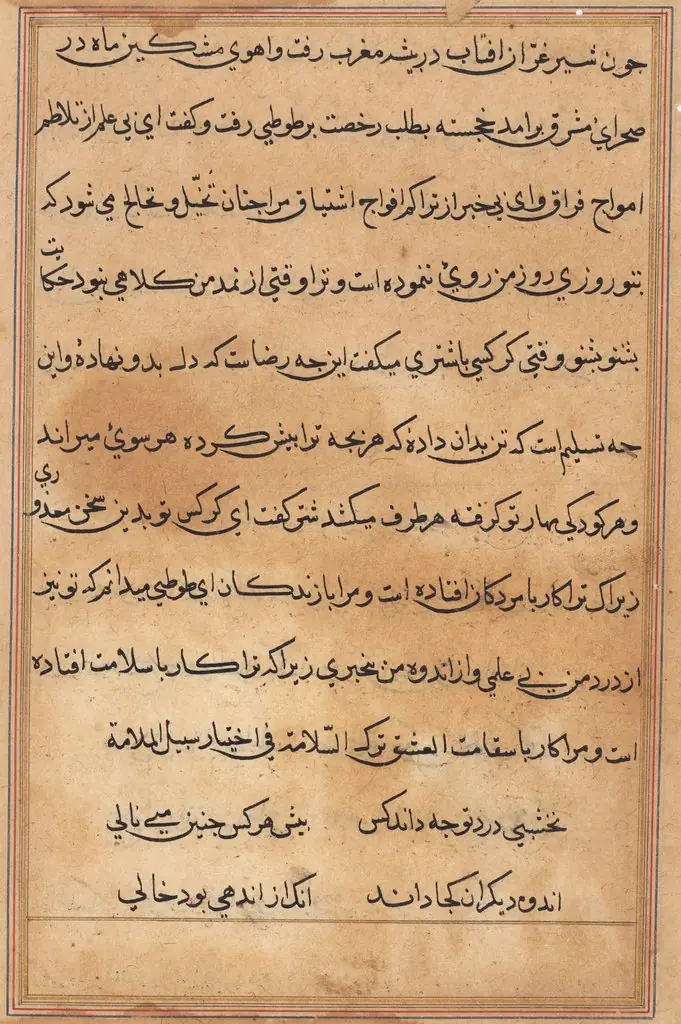 Page from Tales of a Parrot (Tuti-nama): text page
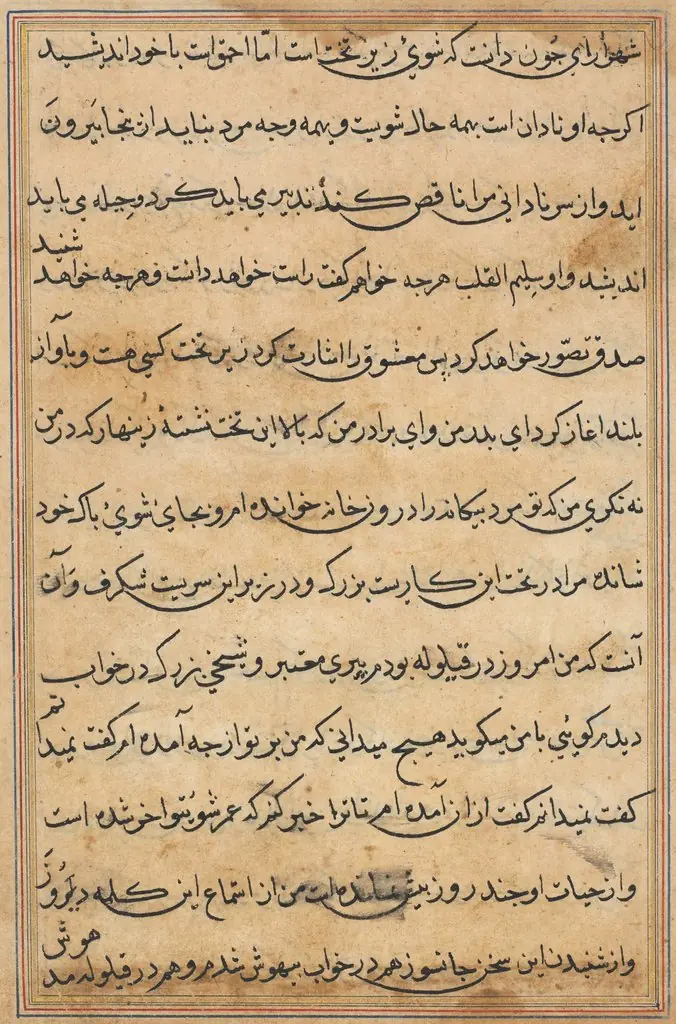 Page from Tales of a Parrot (Tuti-nama): text page
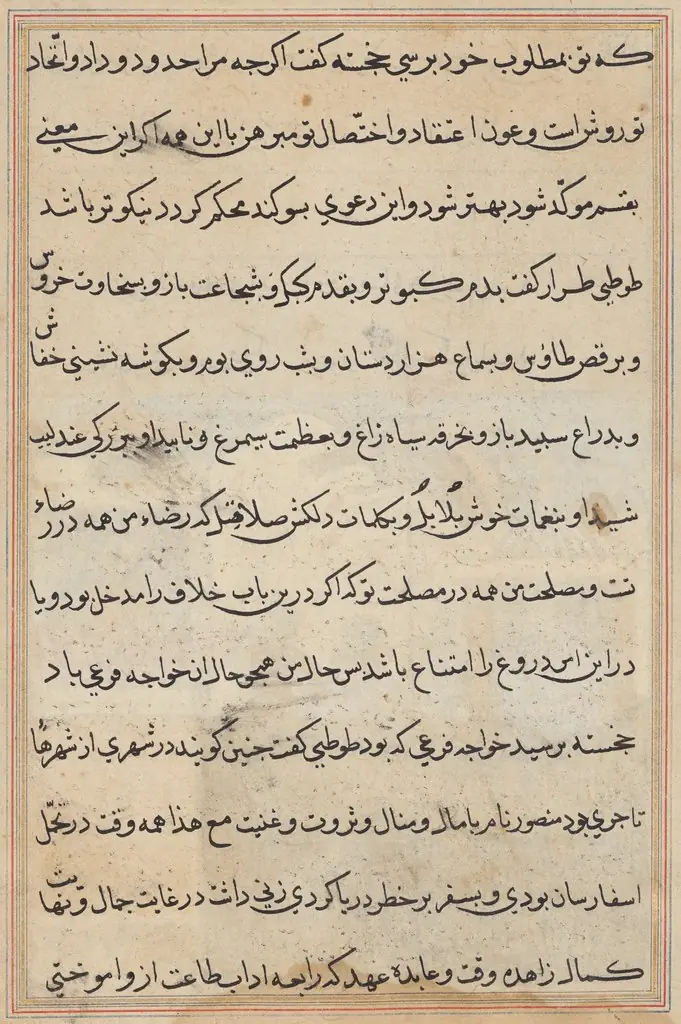 Page from Tales of a Parrot (Tuti-nama): text page
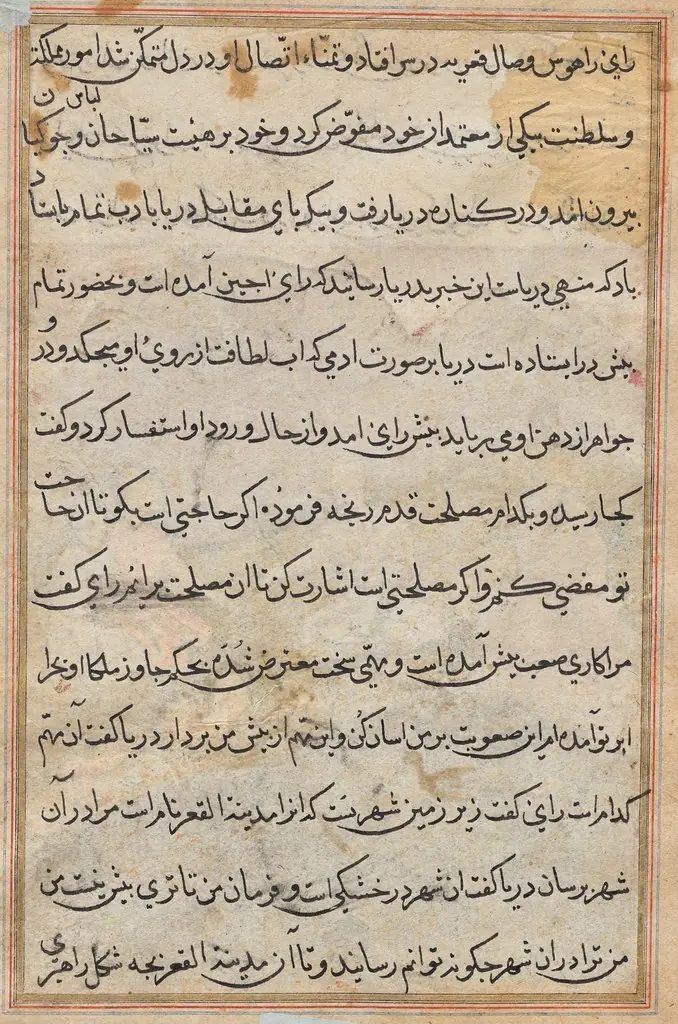 Page from Tales of a Parrot (Tuti-nama): text page